
Nylanderia consuta
- Sci. Name
- Nylanderia consuta
- Tribe
- Lasiini
- Subfamily
- Formicinae
- Author
- Wheeler, 1935
- Distribution
- Found in 1 countries
Introduction
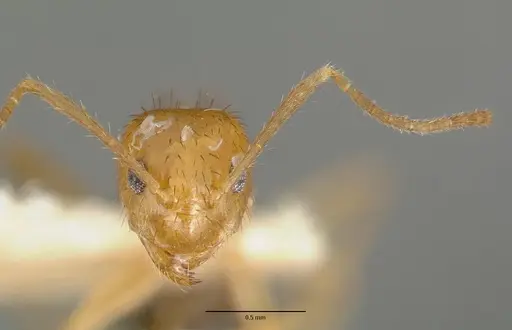
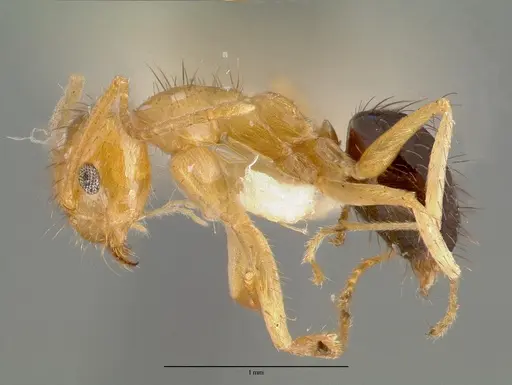
Nylanderia consuta is a small ant species native to the Solomon Islands in the Pacific. Workers measure approximately 2.7 mm and have a yellow body with a jet black gaster and reddish anal segment . This species was originally described in 1934 as Nylanderia dichroa but was renamed in 1935 . This species is poorly documented with limited research available. Its distribution is restricted to the Solomon Islands, specifically Guadalcanal, Makira, and Santa Cruz .
Quick Summary
- Difficulty: Medium, limited data available, not recommended for beginners
- Origin & Habitat: Solomon Islands (Guadalcanal, Makira, Santa Cruz), tropical island environment [2][3]
- Colony Type: Colony structure unconfirmed, no specific studies available
- Size & Growth:
- Antkeeping:
- Temperature: Unconfirmed, based on tropical distribution, keep warm roughly 24-28°C
- Humidity: Unconfirmed, tropical species likely require high humidity, keep substrate moist but not waterlogged
- Diapause: No diapause required based on tropical range
- Nesting: Unconfirmed, based on genus patterns, may nest in soil or wood, use moist substrate or artificial nests
- Behavior: Behavior unconfirmed, based on genus patterns, likely active foragers, small size means escape prevention is important
- Common Issues: small size increases escape risk, use fine mesh barriers, limited data makes care challenging, monitor conditions closely, tropical species may be sensitive to temperature drops, humidity requirements uncertain, avoid drying or waterlogging, no documented captive breeding success to reference
Species Background and Identification
Nylanderia consuta is a rare ant species endemic to the Solomon Islands. The species was first collected in 1934 from Guadalcanal Island and was originally described as Nylanderia consuta. The name was changed in 1935 because another ant species already held that name [2][3]. Workers are tiny at 2.7 mm, with a yellow body, jet black gaster, and reddish tip. They are smooth and shining with long, coarse erect hairs [1].
Natural Habitat and Distribution
This species is known only from the Solomon Islands: Guadalcanal, Makira, and Santa Cruz islands. The Solomon Islands have a tropical climate with high humidity and warm temperatures. The type specimen was collected from the Kau Kau Plantation on Guadalcanal Island in 1933 [2][3]. In their natural habitat, Nylanderia species typically nest in soil, under stones, or in rotting wood in forested areas.
Care Guidelines
Care requirements for Nylanderia consuta are unconfirmed due to limited research. Based on the tropical distribution [2], keep temperatures warm and stable, roughly 24-28°C. Humidity should be high, with substrate kept moist but not waterlogged. Nesting preferences are unconfirmed, but a naturalistic setup with moist substrate or an artificial nest like Y-tong or plaster may work. Escape prevention is critical due to small size, use fine mesh barriers. Feeding is unstudied, but generalist foraging patterns suggest offering sugar sources and small live prey.
Frequently Asked Questions
How long does it take for Nylanderia consuta to produce first workers?
The egg-to-worker timeline is unknown for this species. Based on related tropical Nylanderia species, it may take 4-8 weeks at warm temperatures, but no direct data exists [1].
What do Nylanderia consuta ants eat?
The specific diet is unstudied. Like other Nylanderia species, they likely consume honeydew and small insects. In captivity, offer sugar water or honey for energy and small live prey like fruit flies for protein [1].
Do Nylanderia consuta ants need hibernation?
No, being a tropical Solomon Islands species, they do not require diapause. Keep them warm year-round [2].
Are Nylanderia consuta good for beginners?
This species is not recommended for beginners due to limited care information. Difficulty is medium, and experience with small tropical ants is helpful.
How big do Nylanderia consuta colonies get?
Colony size is unknown, no wild colony data exists. Based on typical Nylanderia patterns, colonies may reach a few hundred workers at most.
What temperature should I keep Nylanderia consuta at?
Keep them warm at 24-28°C based on tropical distribution [2]. A gentle temperature gradient allows ants to self-regulate.
Can I keep multiple Nylanderia consuta queens together?
Colony structure is unconfirmed. Combining unrelated queens is not recommended and has not been documented.
Why are my Nylanderia consuta dying?
Common issues for poorly known tropical species include temperature stress, humidity problems, inadequate prey size, or escapes. Review care conditions if problems arise.
What size nest do Nylanderia consuta need?
Use small, tight chambers scaled to their 2.7 mm size. A naturalistic setup with moist substrate or an artificial nest with narrow passages works well, with excellent escape prevention.
Report an Issue
The current care sheet is based fully on literature. See inconsistencies, or something that's incorrect? Please , it will be resolved after review from an admin. Contributing to the blogs tab also helps providing information, to make us be able to further improve the caresheets. Thank you for your support!
References

This caresheet is licensed under CC BY-SA 4.0 .
Community Blogs
CASTYPE05029
View on AntWeb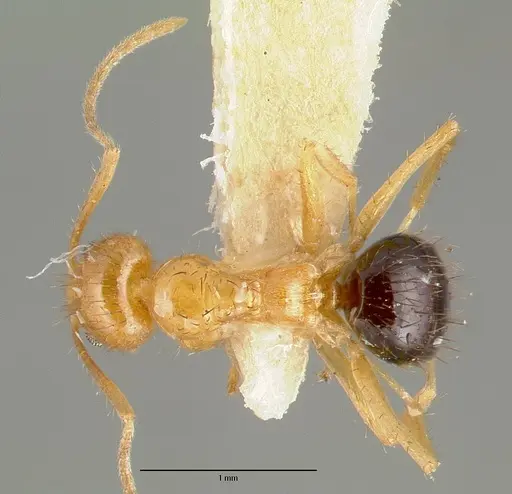
Literature
Loading distribution map...Loading products...