Novomessor cockerelli shows a June to September flight window. Peak activity occurs in July, with nuptial flights distributed across 4 months.
Novomessor cockerelli
- Sci. Name
- Novomessor cockerelli
- Tribe
- Stenammini
- Subfamily
- Myrmicinae
- Author
- André, 1893
- Distribution
- Found in 2 countries
- Nuptial Flight
- From June to September
- Peak flight Time
- 19:00
AI Identifiable
try →
Introduction
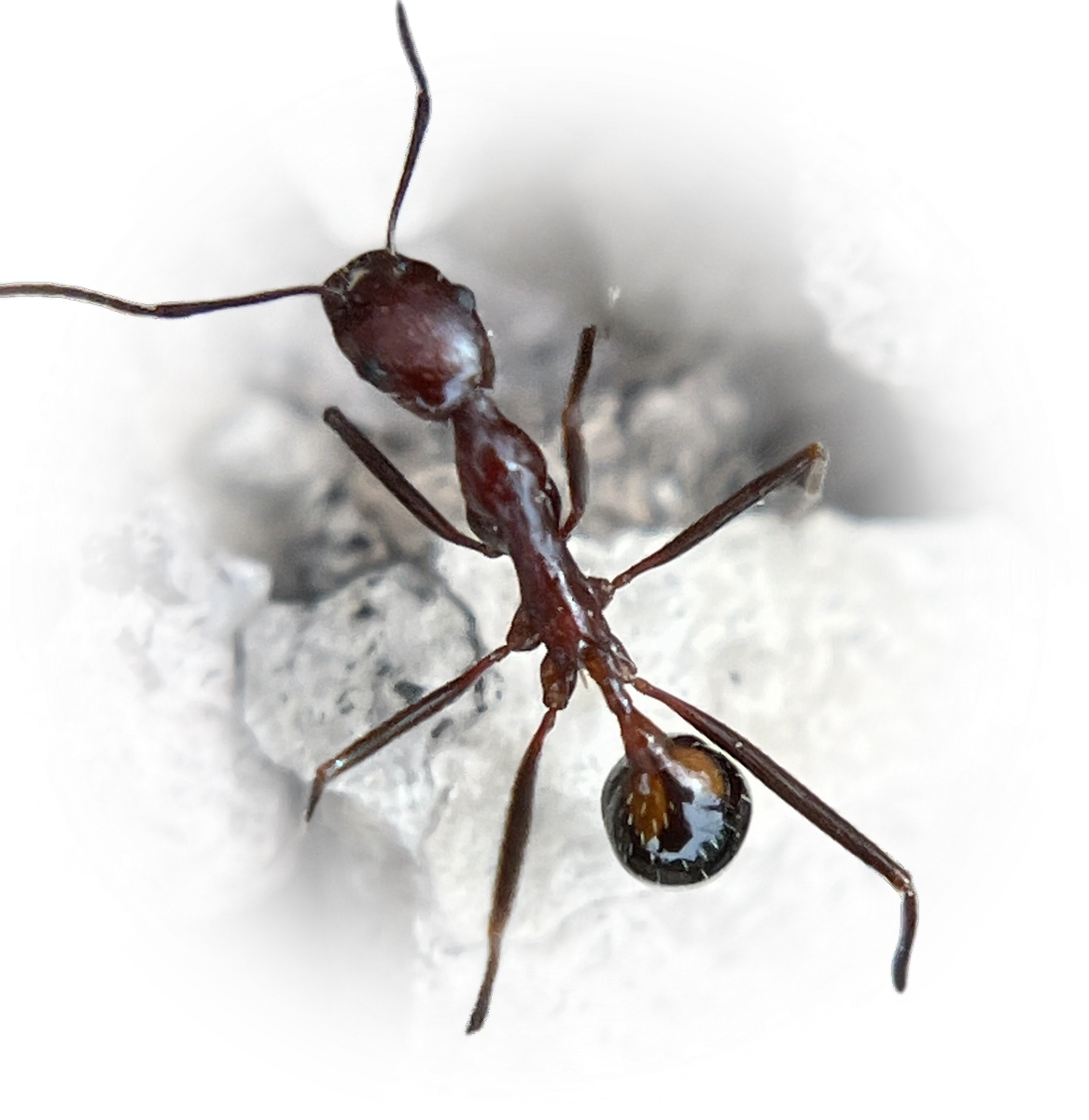
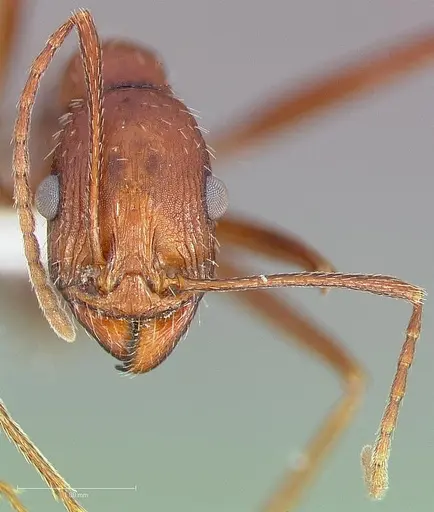
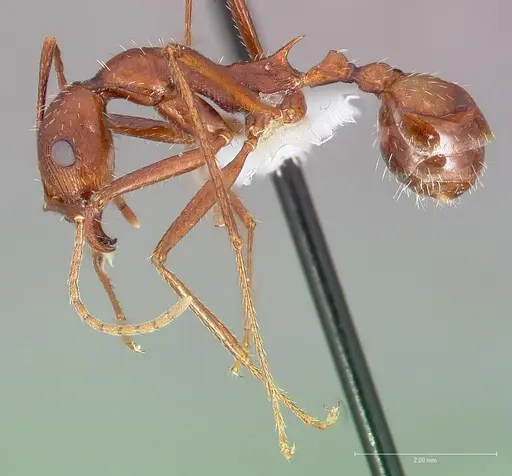
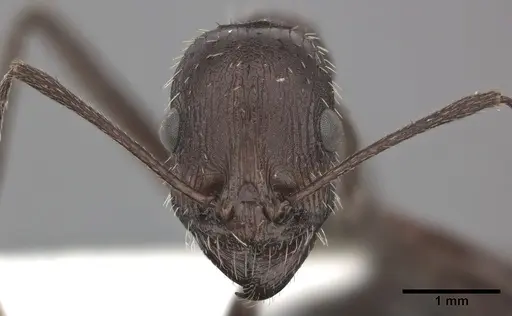
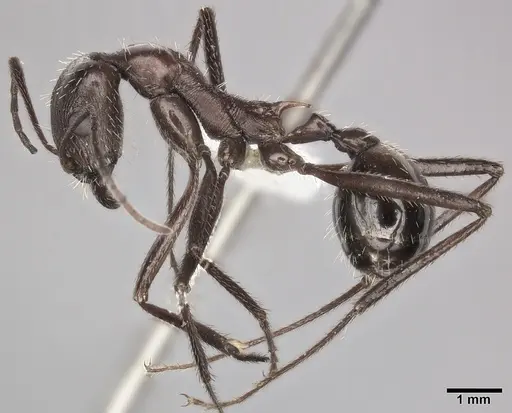
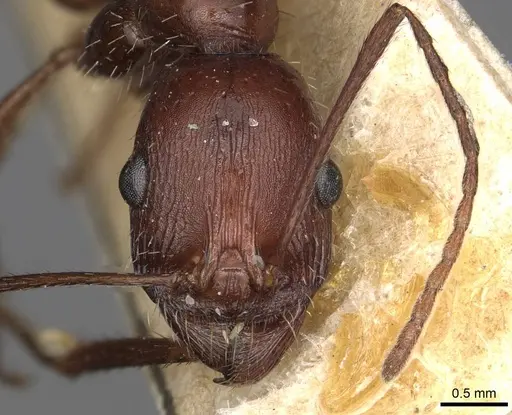
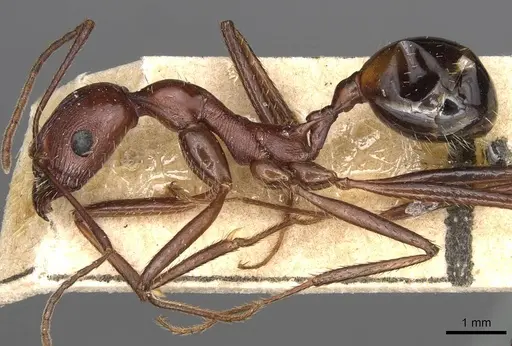
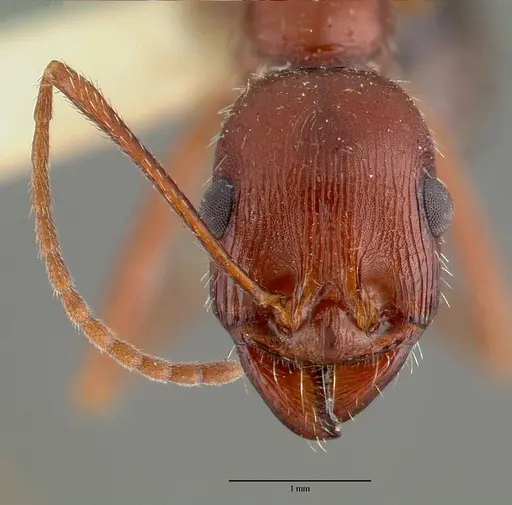
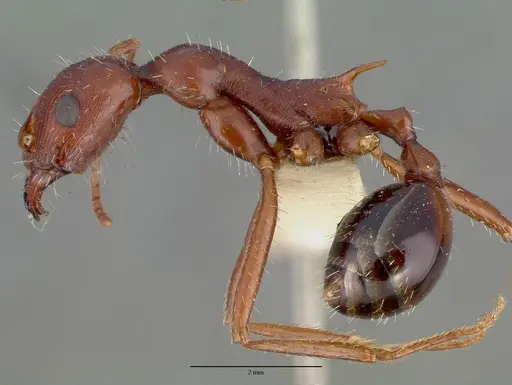
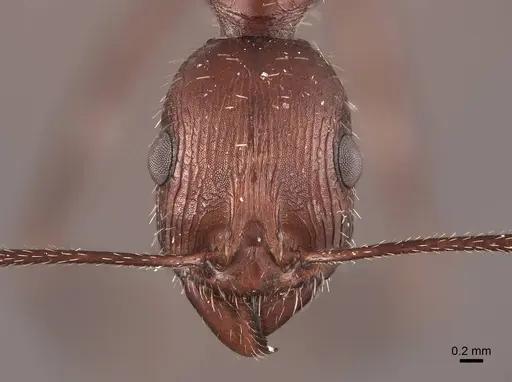
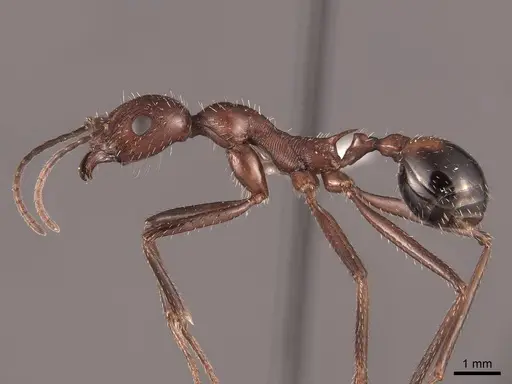
Novomessor cockerelli is a large harvester ant native to the southwestern United States and northern Mexico. Workers measure 6.7-9.8 mm in total length, with an elongated body, long legs, and two prominent propodeal spines . Their head is longer than wide, and they have a psammophore, a brush of long hairs under the head for carrying debris . The head and thorax are reddish-brown, while the gaster is darker . Colonies build nests with large, crater-like entrances surrounded by gravel discs up to 60 cm wide .
Quick Summary
- Difficulty: Medium
- Origin & Habitat: Southwestern United States (Arizona, New Mexico, Texas, Nevada, California) and northern Mexico, in desert habitats like creosote bush scrub and rocky soils up to 1550 m elevation [4][5][6].
- Colony Type: Monogyne (single queen) colonies with polydomous structure, multiple connected nest entrances [7][8]. Queenless worker reproduction is documented [9].
- Size & Growth:
- Queen: Size data unavailable, no total length measurements in research context.
- Worker: 6.7-9.8 mm total length [1][2]
- Colony: Colonies maintain multiple nest entrances and can be large, but specific worker counts are not documented in the research [10].
- Growth: Moderate, estimated from genus patterns.
- Development: Unknown, no species-specific data available. Based on related Aphaenogaster species, estimated at 8-12 weeks at 25°C [11]. (Laboratory colonies are maintained at 25°C with a 12:12 light cycle [11].)
- Antkeeping:
- Temperature: Keep nest area at 24-27°C, using a heating cable to create a gradient [11].
- Humidity: Keep substrate moderately dry, with a small water source for drinking, desert-adapted species [4].
- Diapause: Unknown, no research on hibernation needs. Based on extratropical range, a brief winter rest may be beneficial.
- Nesting: Deep soil-based or plaster nests with extensive tunnel systems, mimicking natural burrows over a meter deep [10].
- Behavior: Aggressive defenders that bite but cannot sting, attacking in large numbers [4]. Crepuscular and nocturnal foragers in summer, becoming more diurnal in cooler weather [4][12]. Use chemical and acoustic recruitment for group transport of large prey [13][14].
- Common Issues: colonies may fail if kept too humid, desert species prone to mold in damp conditions., polydomous colonies need space for multiple nest entrances, cramped setups cause stress., slow growth in founding phase may lead to overfeeding or disturbance., wild-caught colonies may have parasites or poor health., nest temperature must be stable, avoid drafts and fluctuations.
Nuptial Flight Activity Analysis 59 observations
Flight Activity by Hour 59 observations
Novomessor cockerelli nuptial flight activity peaks around 19:00 during the evening. Activity is spread across a 23-hour window (00:00–22:00). A secondary activity peak occurs around 21:00. Times may be influenced by human observation patterns.
Housing and Nest Setup
Provide deep nesting space, wild tunnels extend over a meter deep [10]. Use a large naturalistic setup with compact soil or a deep plaster formicarium. The foraging area should allow for pebble arrangements around the entrance, mimicking natural gravel discs [4]. Y-tong nests with deep chambers work well. Ensure the outworld is spacious for large food items.
Feeding and Diet
Omnivorous, feed seeds (e.g., grass, millet) and protein (dead insects) [4][3]. They recruit nestmates for large prey using pheromones [13]. Offer seeds continuously and protein 2-3 times per week.
Temperature and Heating
Maintain 24-27°C using a heating cable on top of the nest [11]. Create a temperature gradient for worker choice. Avoid extreme heat above 35°C.
Foraging and Activity Patterns
Crepuscular and nocturnal in summer, foraging throughout the day in cooler weather [4][12]. Workers forage individually but recruit for large food finds using pheromones and stridulation [14].
Colony Structure and Polydomy
Polydomous, single colony with multiple connected nest entrances [8][10]. Workers move brood and resources between nests [2]. This is normal structure, not multiple queens.
Defense and Aggression
Aggressive biters that attack in numbers [4]. Defend against army ants [15] and plug neighboring colonies' entrances to compete for resources [16]. Handle with care.
Frequently Asked Questions
How long does it take for Novomessor cockerelli to produce first workers?
First workers may appear in about 8-12 weeks at 25°C, estimated from related Aphaenogaster species [11]. Specific timing for this species is unknown.
Can I keep multiple Novomessor cockerelli queens together?
No, this species is monogyne, with single queen colonies [7]. Multiple queens will fight.
Do Novomessor cockerelli ants sting?
No, they cannot sting but bite aggressively in large numbers [4].
When do Novomessor cockerelli have nuptial flights?
Mating flights are triggered by summer rainfall [6]. In captivity, simulate with increased humidity and warmth in summer.
Are Novomessor cockerelli good for beginners?
Intermediate difficulty, they need specific conditions like deep nesting and warm temperatures, and their aggression may not suit all keepers.
Why is my Novomessor cockerelli colony not growing?
Common causes include incorrect temperature (need 24-27°C), high humidity, insufficient protein, or disturbance during founding [11].
Do Novomessor cockerelli need hibernation?
Diapause needs are unknown, based on extratropical range, a brief winter rest may be beneficial, but no research confirms this.
How big do Novomessor cockerelli colonies get?
Colonies can be large with multiple nest entrances, but specific worker counts are not documented [10].
Why are my ants active at night only?
This is normal, species is crepuscular and nocturnal in summer [4][12].
When is the nuptial flight of Novomessor cockerelli?
The nuptial flight of Novomessor cockerelli typically occurs From June to September.
What time of day does Novomessor cockerelli fly?
The nuptial flight of Novomessor cockerelli peaks around 19:00 during the evening, with most activity between 00:00 and 22:00. Times may be influenced by human observation patterns.
Report an Issue
The current care sheet is based fully on literature. See inconsistencies, or something that's incorrect? Please , it will be resolved after review from an admin. Contributing to the blogs tab also helps providing information, to make us be able to further improve the caresheets. Thank you for your support!
References

This caresheet is licensed under CC BY-SA 4.0 .
Community Blogs
CASENT0005723
View on AntWeb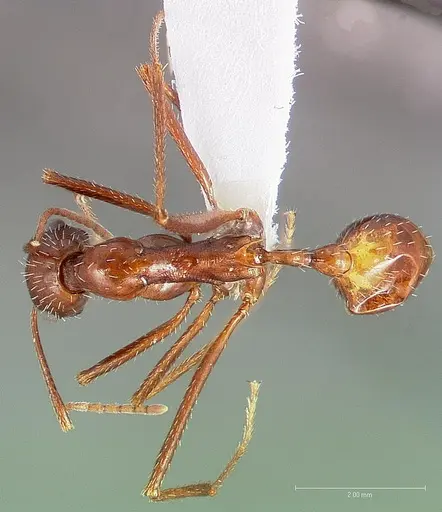
CASENT0246580
View on AntWeb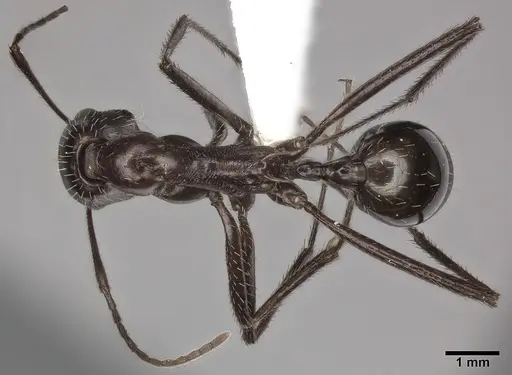
CASENT0915446
View on AntWeb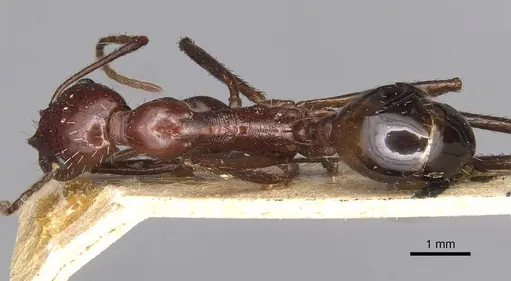
CASTYPE00622
View on AntWeb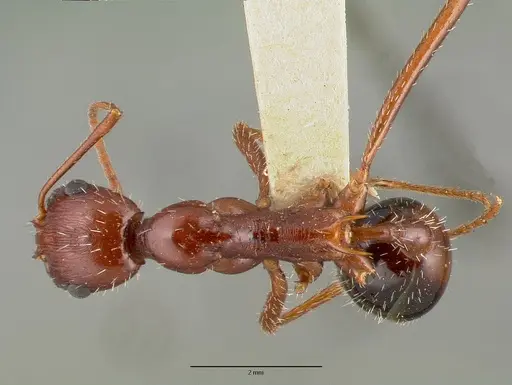
FMNHINS0000062886
View on AntWeb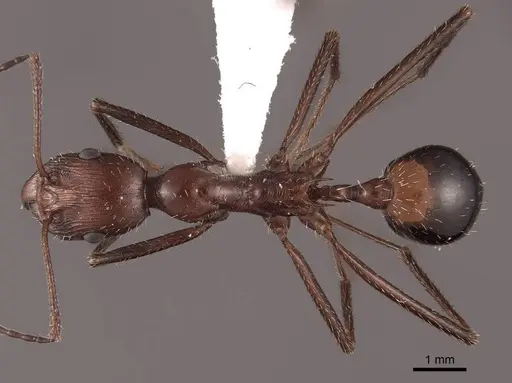
Literature
Loading distribution map...Loading products...