
Nesomyrmex minutus
- Sci. Name
- Nesomyrmex minutus
- Tribe
- Crematogastrini
- Subfamily
- Myrmicinae
- Author
- Csősz & Fisher, 2016
- Distribution
- Found in 1 countries
Introduction
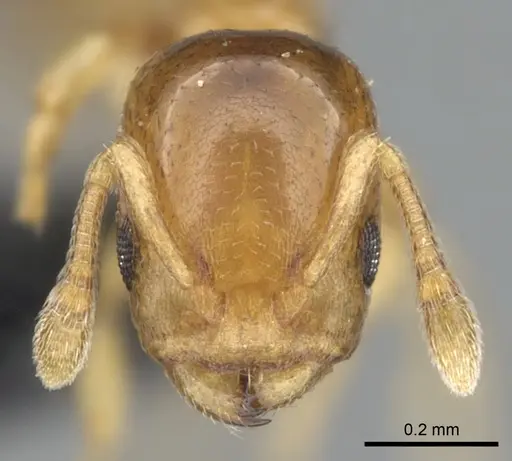
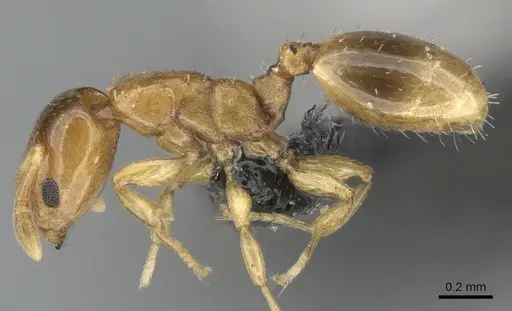
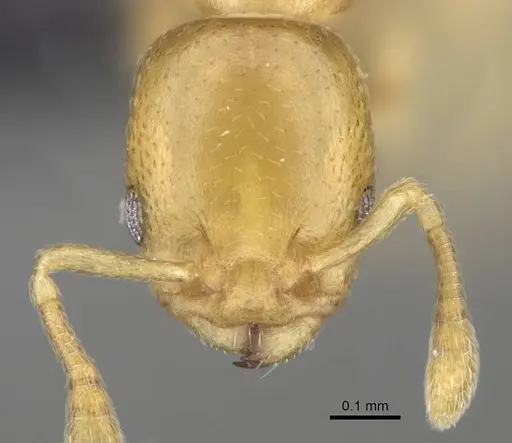
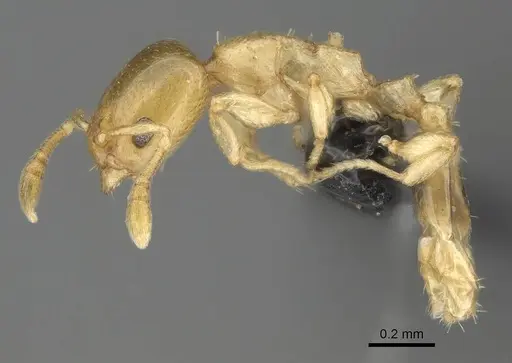
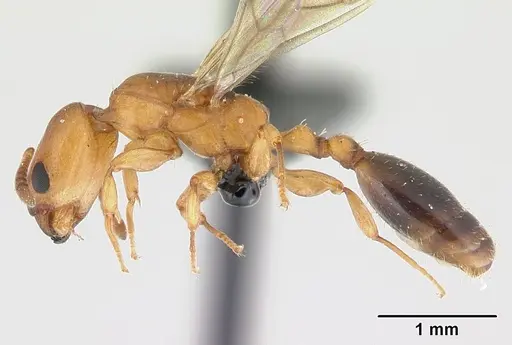
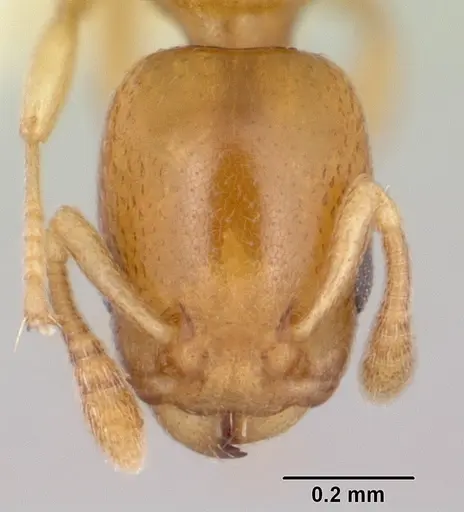
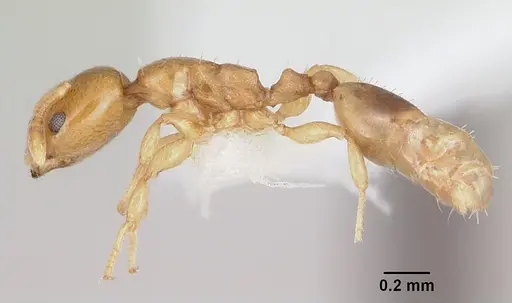
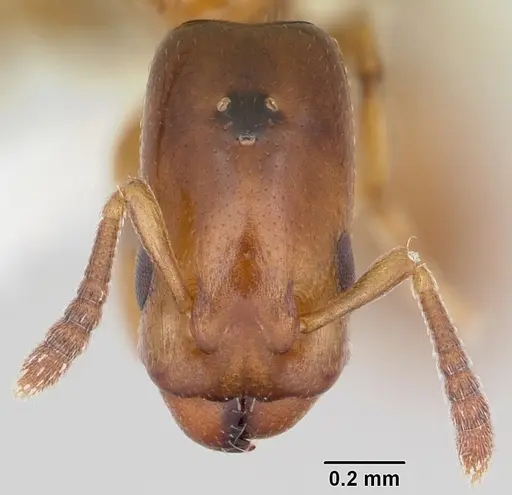
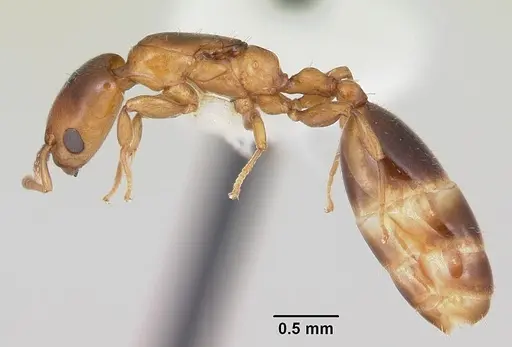
Nesomyrmex minutus is a yellow ant endemic to the rainforests of southeastern Madagascar . Workers are extremely small, but exact body size is unknown from available data. The species name refers to its small appearance . This ant lives exclusively inside the stems of Macphersonia gracilis, a plant in the Sapindaceae family, representing one of the few known ant-plant associations in Madagascar . The ants are yellow with a darker first gaster segment and are known only from a single locality near Manombo.
Quick Summary
- Difficulty: Expert
- Origin & Habitat: Rainforests of southeastern Madagascar at 30m elevation, exclusively associated with stems of Macphersonia gracilis (Sapindaceae) [1].
- Colony Type: Colony structure is unconfirmed. Based on typical Nesomyrmex genus patterns, likely single-queen colonies, but no specific data exists.
- Size & Growth:
- Queen: Unconfirmed, no detailed description available [1]
- Worker: Size data unavailable, only head size measurements exist, not full body length [1]
- Colony: Unknown
- Growth: Unknown
- Development: Unconfirmed, no direct data available (Estimates based on tropical Myrmicinae patterns, but specific timeline is unknown.)
- Antkeeping:
- Temperature: Keep warm, roughly 24-28°C, based on their lowland tropical habitat.
- Humidity: Keep nest substrate consistently moist but not waterlogged, based on their stem-nesting habitat.
- Diapause: No diapause required, as a tropical species.
- Nesting: Requires tight, humid chambers mimicking plant stems, such as Y-tong nests with small passages.
- Behavior: These ants are likely docile and non-aggressive. Their primary defense mechanism is smearing venom, as typical for Myrmicinae Crematogastrini. Due to their tiny size, escape risk is high, so excellent prevention is critical.
- Common Issues: escape prevention is critical due to their extremely small size, they can squeeze through tiny gaps, specialized habitat requirements make this species difficult to keep, they need a naturalistic stem-like environment, high humidity needs can lead to mold problems if ventilation is inadequate, lack of available information on care makes this an expert-only species, wild-caught colonies may be difficult to establish in captivity due to their specialized plant association
Natural History and Distribution
Nesomyrmex minutus is known only from a single location in southeastern Madagascar. The species was described in 2016 and represents one of the few documented ant-plant associations in Madagascar [1]. These ants live exclusively inside the stems of Macphersonia gracilis, a tropical tree in the Sapindaceae family. The type locality is the Réserve Speciale Manombo, at 30 meters elevation [1]. This lowland rainforest habitat is warm and humid year-round.
Housing and Nest Requirements
You need to recreate their unique stem-nesting environment. Workers are extremely small, so all nest passages must be correspondingly tiny [1]. Use a Y-tong nest with the smallest chambers or create custom narrow tubes. The nest must maintain high humidity at all times. Provide a water tube for drinking and keep the substrate moist but not waterlogged. Escape prevention is essential due to their minute size, use fine mesh barriers and check connections regularly.
Temperature and Humidity
As a tropical lowland species, keep temperatures warm around 24-28°C, avoiding drops below 22°C. A heating cable can create a gentle gradient. Humidity is critical, keep the nest substrate consistently moist but not waterlogged, and provide a water tube. Good ventilation prevents mold but avoid excessive airflow.
Feeding and Diet
The natural diet is not documented, but like most small ants, they likely feed on sugars and small insects. In captivity, offer sugar water or honey water as a constant sugar source. For protein, provide tiny prey like fruit flies or pinhead crickets, chopped if necessary. Remove uneaten prey promptly.
Behavior and Temperament
These ants are likely docile and non-aggressive, focused on their plant-nesting lifestyle. Their primary defense mechanism is smearing venom, as typical for Myrmicinae Crematogastrini. Due to their tiny size, they are shy and pose no sting threat to humans. Escape risk is high, so always use excellent prevention with fine mesh barriers.
Frequently Asked Questions
How big do Nesomyrmex minutus ants get?
Workers are extremely small, but exact body size is unknown from available data. The species name refers to its small appearance [1].
Where does Nesomyrmex minutus live in the wild?
This species is known only from the rainforests of southeastern Madagascar, specifically the Réserve Speciale Manombo near Farafangana at 30m elevation. They live exclusively inside the stems of Macphersonia gracilis [1].
What temperature do Nesomyrmex minutus ants need?
Keep them warm, roughly 24-28°C, based on their tropical lowland habitat. They do not tolerate cool temperatures.
Do Nesomyrmex minutus ants need hibernation?
No, as a tropical species, they do not require hibernation or diapause. Maintain warm conditions year-round.
What do Nesomyrmex minutus ants eat?
Their natural diet is not documented, but they likely feed on sugars and small insects. In captivity, offer sugar water and tiny prey like fruit flies.
Are Nesomyrmex minutus good for beginners?
No, this is an expert-only species. They are rare, have specialized habitat needs, and there is almost no care information available.
How do I set up a nest for Nesomyrmex minutus?
Use a naturalistic setup that mimics plant stems, such as a Y-tong nest with small chambers. The key requirements are tight, humid chambers and excellent escape prevention.
Do Nesomyrmex minutus ants sting?
No sting threat to humans, they are far too small to penetrate skin. Their defense mechanism is smearing venom, not stinging.
Why is Nesomyrmex minutus so special?
This species represents one of the few known ant-plant associations in Madagascar and is known only from a single locality. It was formally described in 2016 [1].
How do I prevent Nesomyrmex minutus from escaping?
Escape prevention is critical due to their extremely small size. Use fine mesh barriers, check all lid connections regularly, and seal any gaps.
Report an Issue
The current care sheet is based fully on literature. See inconsistencies, or something that's incorrect? Please , it will be resolved after review from an admin. Contributing to the blogs tab also helps providing information, to make us be able to further improve the caresheets. Thank you for your support!
References

This caresheet is licensed under CC BY-SA 4.0 .
Community Blogs
CASENT0071616
View on AntWeb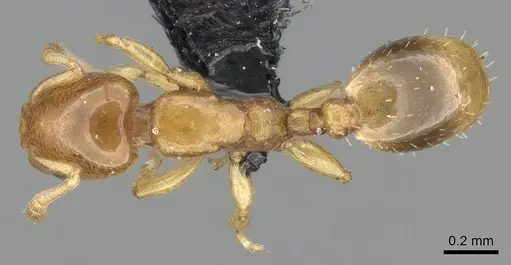
CASENT0071633
View on AntWeb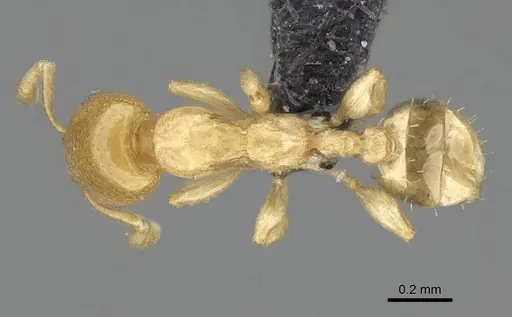
CASENT0071657
View on AntWeb
CASENT0103114
View on AntWeb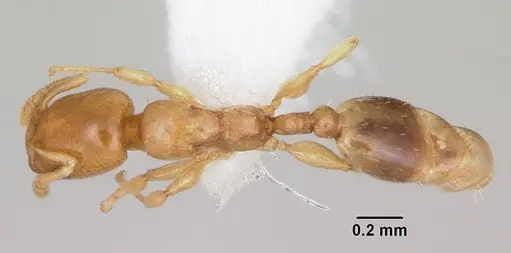
CASENT0103115
View on AntWeb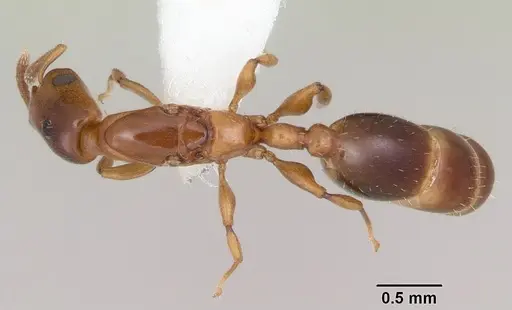
Literature
Loading distribution map...Loading products...