
Neivamyrmex planidorsus
- Sci. Name
- Neivamyrmex planidorsus
- Subfamily
- Dorylinae
- Author
- Emery, 1906
- Distribution
- Found in 1 countries
Introduction
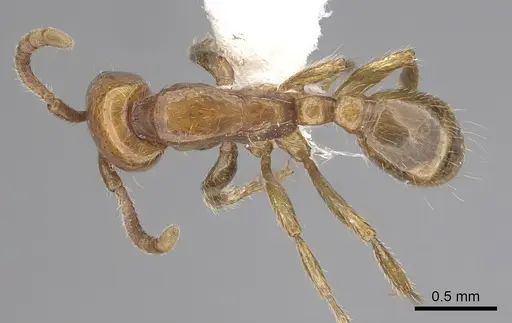
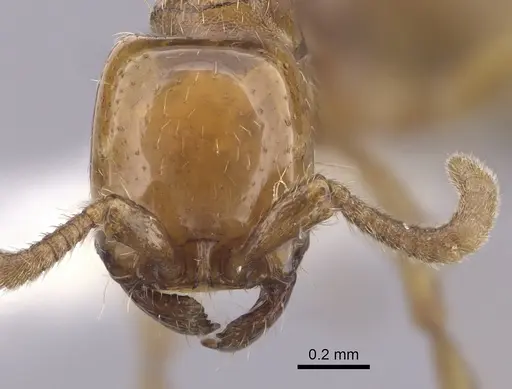
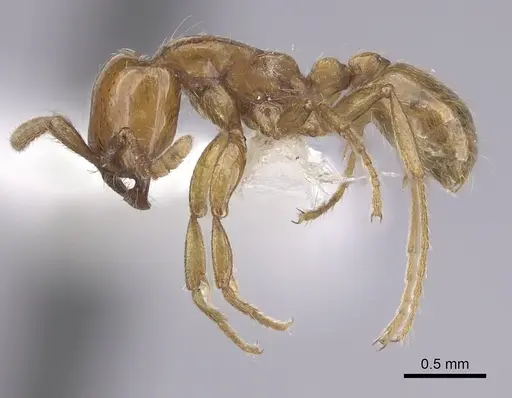
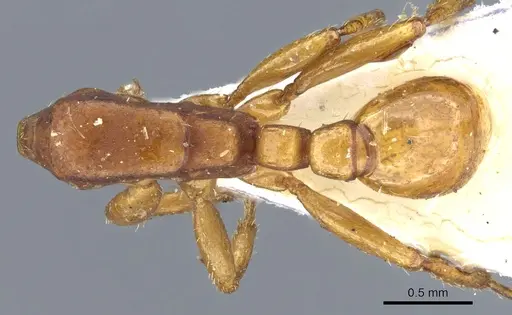
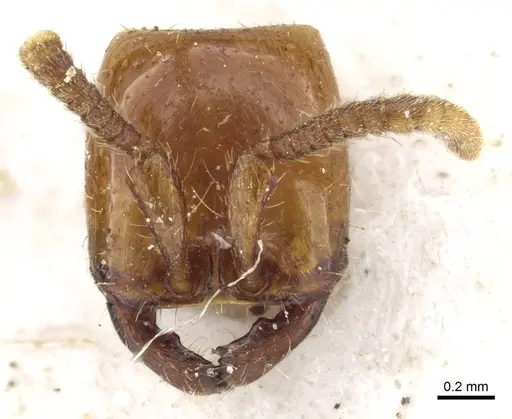
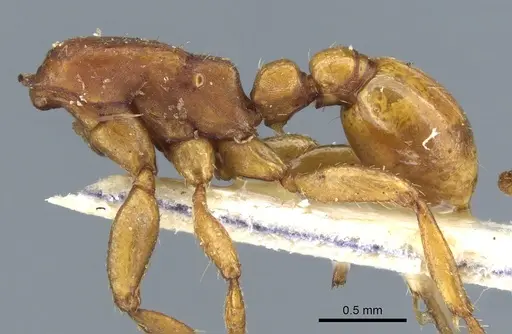
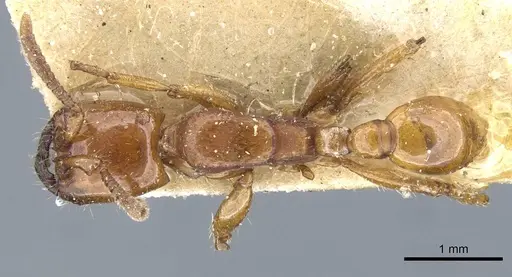
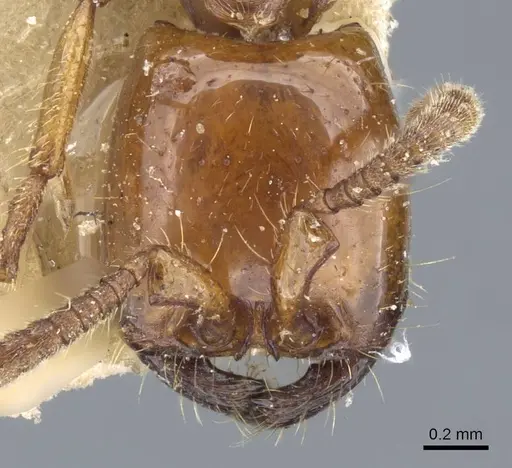
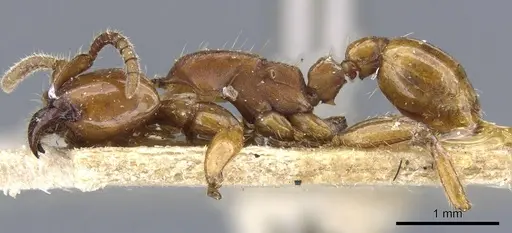
Neivamyrmex planidorsus is a small army ant from the Neotropics, found in Argentina, Brazil, Colombia, and Paraguay . Workers are 2.6-3.2 mm long with a yellowish‑reddish body, a shiny head and gaster, and a densely punctate, mostly opaque thorax . Like all Dorylinae, they have no eyes - they are completely blind and navigate using chemical trails and vibrations . This species is a Tropical Climate Specialist (TCS), recorded at about 970 m elevation in Colombia and in Argentina's Entre Ríos province .
Quick Summary
- Difficulty: Expert
- Origin & Habitat: Neotropical South America (Argentina, Brazil, Colombia, Paraguay), found in tropical and subtropical climates at mid‑elevations (~970 m in Colombia) and in the Mesopotamian region of Argentina [1][4][3].
- Colony Type: Army ant colony with multiple queens (polygynous) and nomadic raiding behavior, typical of Dorylinae, though the specific social structure of this species is unconfirmed.
- Size & Growth:
- Queen: Unknown, army ant queens are usually much larger than workers, but no measurements are available for this species.
- Worker: 2.6-3.2 mm [2]
- Colony: Likely hundreds to thousands of workers based on typical army ant colony sizes, but unconfirmed for this species.
- Growth: Fast, army ant colonies grow rapidly when established.
- Development: Estimated 3-5 weeks at tropical temperatures based on general Dorylinae development patterns, but unconfirmed for this species. (Development is probably faster than in most ants, but no specific data exist.)
- Antkeeping:
- Temperature: 24-28 °C, these are tropical ants requiring warm, stable conditions (inferred from their TCS classification and Neotropical range) [3].
- Humidity: Keep the substrate consistently moist but not waterlogged. High humidity is essential, but avoid stagnant air that promotes mold (inferred from their tropical forest floor habitat).
- Diapause: No true diapause, as tropical ants they may slow down during cooler periods but do not need hibernation (inferred from range) [1].
- Nesting: Use a naturalistic setup with deep, moist soil (at least 5-7 cm) for tunneling and bivouacking. A dark, enclosed nest chamber is essential because the ants are blind and sensitive to light. Plaster or Y‑tong (AAC) nests with narrow tunnels work well for their small size.
- Behavior: Army ant behavior: active, predatory, with coordinated raids. Workers are tiny (2.6-3.2 mm) and blind, relying solely on pheromone trails and vibrations [2]. They are likely aggressive hunters of small invertebrates. Escape prevention is critical, even tiny gaps can be exploited. They prefer dim conditions and may become stressed by bright light. As a Dorylinae, they may periodically relocate their bivouac.
- Common Issues: tiny workers (2.6-3.2 mm) make escape prevention very difficult, use fine mesh (≤0.5 mm) and check all seals regularly., obligate predators that need constant live protein prey, colony can starve if feeding is inconsistent., blind ants are easily stressed by light, keep the nest area dark and minimize disturbances., very little species‑specific data are available, most care advice is inferred from related army ants., army ant colonies are highly active and may become stressed in small enclosures, provide adequate space for raiding.
Understanding Neivamyrmex Army Ants
Neivamyrmex planidorsus belongs to the Dorylinae subfamily, the army ants. These ants are famous for their nomadic lifestyle and predatory raids. Unlike most ants they do not build permanent nests, instead they move their entire colony (bivouac) regularly as they hunt. Workers are completely blind, they have no eyes and navigate using pheromone trails and vibrations [2]. This makes them fascinating to observe but also means they are easily stressed by bright light and disturbance.
The genus Neivamyrmex contains about 150 species throughout the Americas, with the highest diversity in the Neotropics. Neivamyrmex planidorsus is one of the smaller species: workers measure just 2.6-3.2 mm [2].
Housing and Nest Setup
Because Neivamyrmex planidorsus are blind, predatory ants that prefer dark, humid conditions, you need a setup that mimics their natural habitat. Use a deep container filled with at least 5-7 cm of moist substrate (e.g., a soil‑sand mix) that allows the colony to dig tunnels and form their bivouac. The nest area must be completely dark, cover it with a black sheet or use an opaque container.
The outworld (foraging area) should be spacious enough to let them conduct raids. Provide a test‑tube water source with a tight cotton plug, and seal all connections with fine mesh (≤0.5 mm) to prevent escapes [2]. A plaster or Y‑tong (AAC) nest with narrow tunnels can also work, but ensure the chambers match their tiny size.
Feeding and Diet
Army ants are obligate predators, they need a constant supply of live protein prey. In the wild they raid to capture other invertebrates. In captivity, offer small live insects such as fruit flies, pinhead crickets, small mealworms, and other micro‑arthropods appropriate to their 2.6-3.2 mm size [2]. Feed frequently because army ant colonies have high metabolic demands. Remove uneaten prey after 24-48 hours to prevent mold. While they may accept some sugar sources, live prey is essential for triggering their natural raiding behavior and maintaining colony health.
Temperature and Seasonal Care
This species comes from tropical and subtropical South America, so it requires warm, stable year‑round temperatures. Keep the nest area at 24-28 °C, avoid temperatures below 20 °C or above 32 °C. Using a heating cable on top of the nest (not underneath) can create a gentle gradient while preventing excessive drying. As a tropical species, they do not need hibernation [1][3]. Maintain high humidity, the substrate should feel moist but not waterlogged. Mist the nest occasionally and monitor for condensation, which indicates adequate humidity. Avoid stagnant air (which encourages mold) and excessive airflow (which dries things out).
Behavior and Colony Dynamics
Army ant colonies are among the most dynamic in the ant world. Instead of staying in one place, Neivamyrmex planidorsus will periodically relocate their bivouac as they exhaust local prey. This nomadic cycle is controlled by the brood cycle and food availability. In captivity you might notice the colony becoming restless, workers clustering near the entrance and increased pheromone activity, before a move.
The colony likely contains multiple queens (polygynous), as is typical for army ants, but this has not been confirmed for this species. Workers coordinate highly efficient raids, despite their tiny size they can subdue much larger prey through sheer numbers. Because they have no eyes, they are very sensitive to vibrations and air currents, avoid sudden movements and observe them under dim red light to see their natural behavior [2].
Frequently Asked Questions
Can I keep Neivamyrmex planidorsus in a test tube?
A single test tube is not suitable. Army ants need space to raid and form a bivouac. Use a naturalistic setup with deep, moist substrate (at least 5-7 cm) or a formicarium with appropriately sized tunnels. The nest must be dark because they are blind [2].
How long until first workers in Neivamyrmex planidorsus?
No specific data are available. Based on typical Dorylinae development, the first workers might appear within 3-5 weeks at optimal tropical temperatures (24-28 °C), but this is an estimate and may vary.
Are Neivamyrmex planidorsus good for beginners?
No, this species is rated Expert difficulty. They require specific, stable conditions (high humidity, warmth, constant live prey), are easily stressed by light, and their tiny size makes escape prevention very challenging. Their complex army ant biology is better suited to experienced keepers [2].
What do Neivamyrmex planidorsus eat?
They are obligate predators that need live protein prey. Offer small live insects like fruit flies, pinhead crickets, or small mealworms, sized for their tiny workers (2.6-3.2 mm). Remove uneaten prey after 24-48 hours [2].
Can I keep multiple queens together in Neivamyrmex planidorsus?
Army ants are typically polygynous in the wild, but combining unrelated foundress queens in captivity has not been documented for this species. It is not recommended to attempt it without a proven method.
Do Neivamyrmex planidorsus need hibernation?
No, they are tropical ants (from Argentina, Brazil, Colombia, Paraguay) and do not require true hibernation. Maintain warm temperatures (24-28 °C) year‑round. They may slow down slightly during cooler periods but do not enter diapause [1][3].
Why are my Neivamyrmex planidorsus dying?
Common causes: low humidity (keep substrate moist), temperatures outside 24-28 °C, insufficient live protein prey, excessive light disturbance (they are blind and stress easily), and escapes due to their tiny size. Check all barriers and keep the nest area dark [2].
How big do Neivamyrmex planidorsus colonies get?
No specific data exist. Based on typical army ant colony sizes, they likely reach hundreds to thousands of workers, but this is an estimate.
When do Neivamyrmex planidorsus have nuptial flights?
Nuptial flight timing for this species is unconfirmed. In Neotropical regions, army ant mating flights usually occur during warm, humid periods. If you have a mature colony, watch for winged reproductives appearing several months after establishment.
Report an Issue
The current care sheet is based fully on literature. See inconsistencies, or something that's incorrect? Please , it will be resolved after review from an admin. Contributing to the blogs tab also helps providing information, to make us be able to further improve the caresheets. Thank you for your support!
References

This caresheet is licensed under CC BY-SA 4.0 .
Community Blogs
Literature
Loading distribution map...Loading products...