
Mystrium janovitzi
- Sci. Name
- Mystrium janovitzi
- Tribe
- Amblyoponini
- Subfamily
- Amblyoponinae
- Author
- Yoshimura & Fisher, 2014
- Distribution
- Found in 1 countries
Introduction
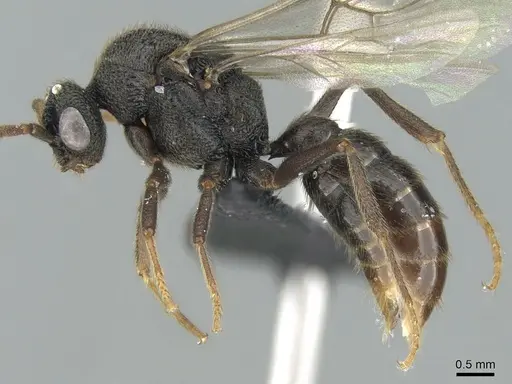
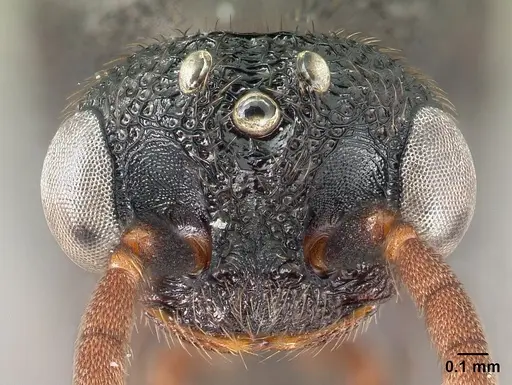
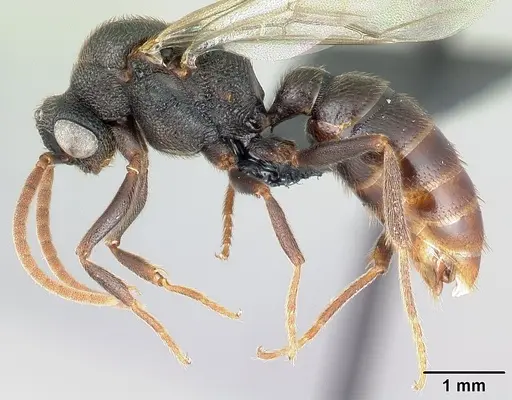
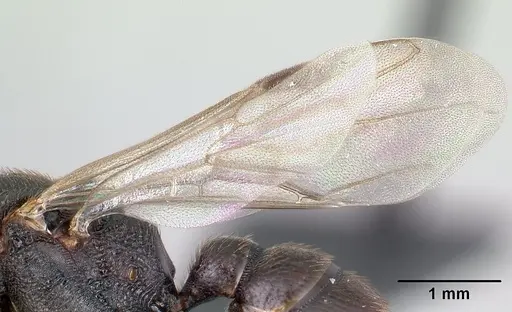
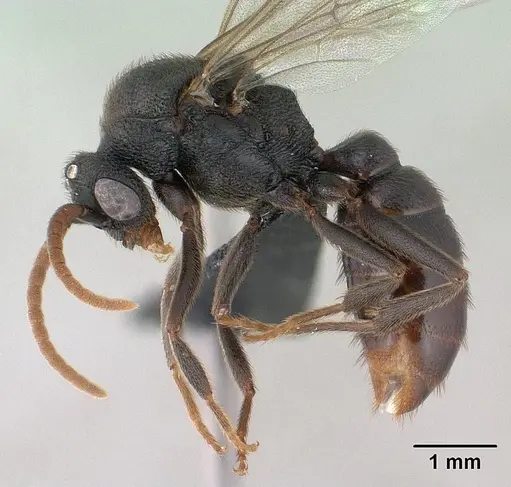
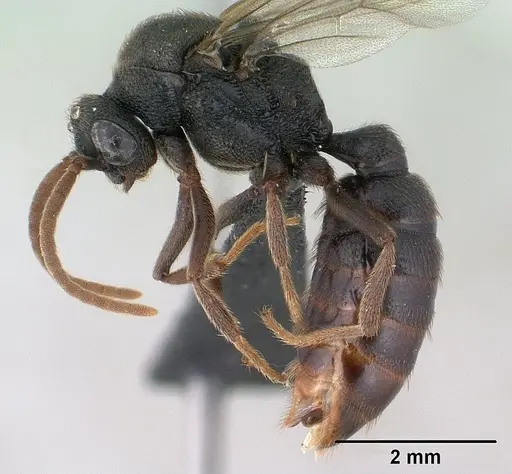
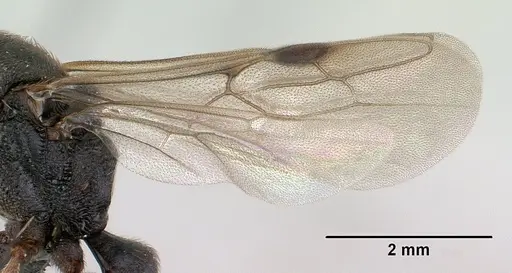
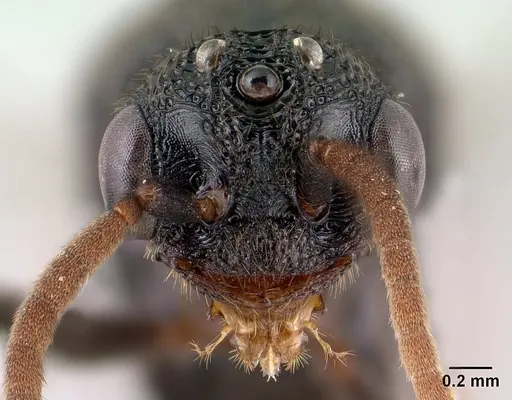
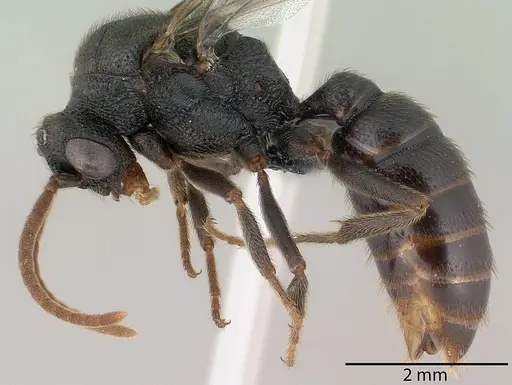
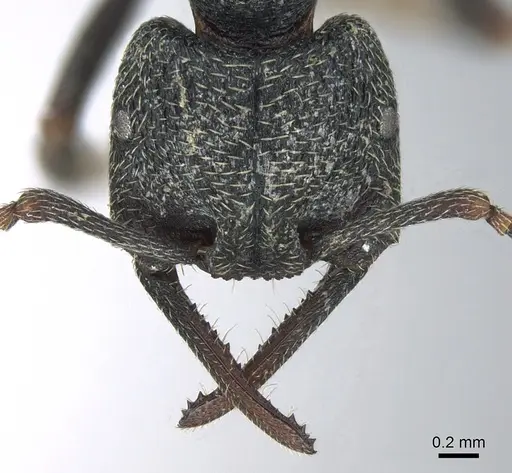
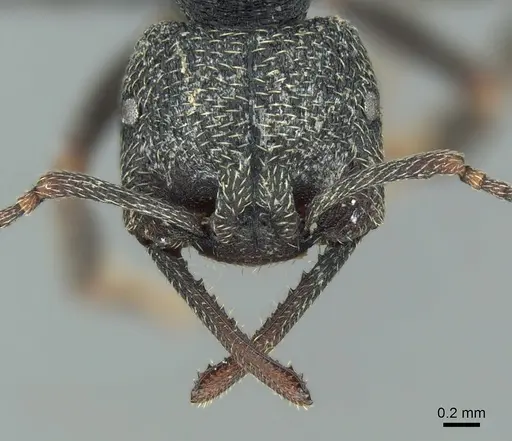
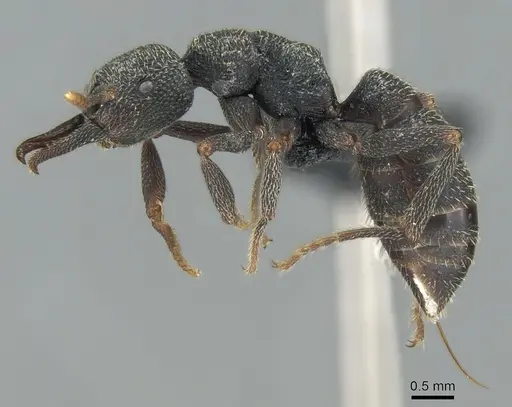
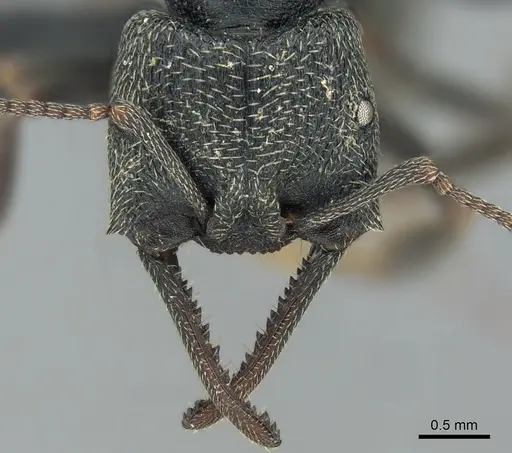
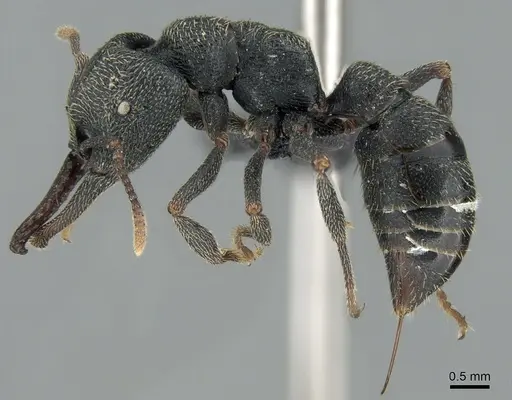
Mystrium janovitzi is a small, dark ant species endemic to Madagascar, belonging to the Amblyoponinae subfamily (commonly called 'dracula ants'). Workers are entirely black with slightly brighter antennae tips. This species is notable for its ergatoid queens - wingless females that look very similar to workers, with tiny vestigial wing remnants instead of full wings . The genus Mystrium is known for unusual colony structures where reproduction is handled by these worker-like queens rather than fully winged reproductives. The species was only described in 2014,and virtually nothing is known about its actual behavior, diet, or captive care requirements in the scientific literature.
Quick Summary
- Difficulty: Expert
- Origin & Habitat: Mystrium janovitzi is found only in Madagascar, with specimens collected from multiple locations across the island including Montagne d'Ambre, Ankarana, Binara, Nosy Be, and regions near Mahajanga. It appears to be a ground-dwelling species that prefers dry, dark microhabitats [1][3].
- Colony Type: Ergatoid queen system, reproduction is handled by wingless queens that resemble workers. These ergatoid queens have vestigial wings reduced to small appendages. The colony structure is unconfirmed, ergatoid morphology alone does not confirm monogyne or polygyne status [1][2].
- Size & Growth:
- Queen: size data unavailable, no total length measurements exist for this species. Ergatoid queens measure approximately 1.3-1.8mm in head length [1].
- Worker: size data unavailable, no total length measurements exist for this species. Workers measure approximately 1.4-2.3mm in head length [1].
- Colony: Unknown, no colony size data exists in scientific literature
- Growth: Unknown
- Development: Unknown, no development data exists for this species. (Development timeline is completely unconfirmed for this species.)
- Antkeeping:
- Temperature: No specific data exists. Based on Madagascar distribution and dry habitat preference, likely tolerates 22-28°C. Start around 24-26°C and observe colony activity.
- Humidity: Prefers dry conditions based on habitat data (dry=1 in specimen data). Keep substrate moderately dry, similar to other dry-adapted Malagasy ants.
- Diapause: Unknown, no seasonal data exists. Madagascar species may have reduced diapause requirements compared to temperate ants, but this is unconfirmed.
- Nesting: Ground-nesting species. In captivity, a test tube setup or Y-tong nest with dry to moderately moist substrate would be appropriate. Avoid overly humid conditions.
- Behavior: Behavior is completely unstudied. Based on genus and subfamily patterns, these ants are likely predatory on small arthropods using their sting. Amblyoponinae have a potent sting to paralyze prey like centipedes. Ergatoid queens may need to hunt during founding. Escape risk is moderate given their small size, use standard barrier precautions. No aggression data exists, but Amblyoponinae are not typically aggressive toward keepers.
- Common Issues: completely unknown biology, there is no scientific data on captive care requirements., ergatoid queens may require hunting during founding and could fail if not provided live prey., no development data means growth timeline is uncertain., risk of overfeeding or wrong humidity since natural conditions are unknown., very limited availability in antkeeping trade makes acquisition difficult.
Species Overview and Identification
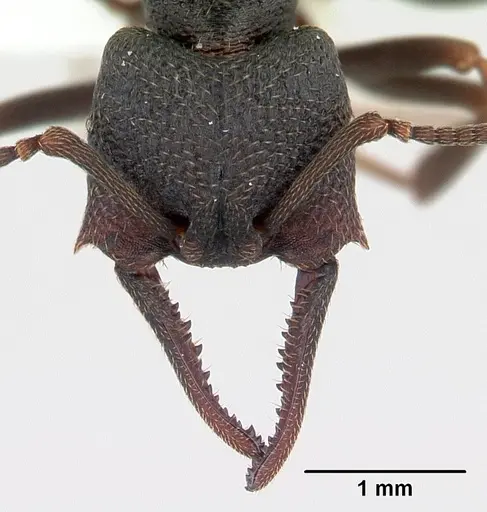
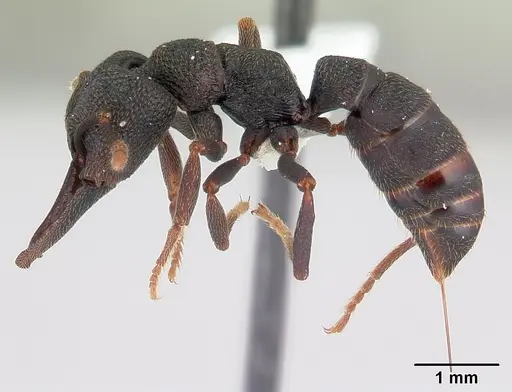
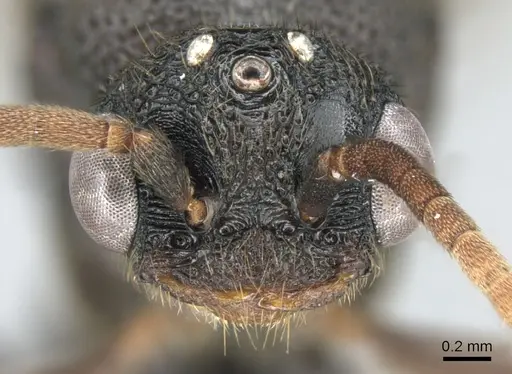
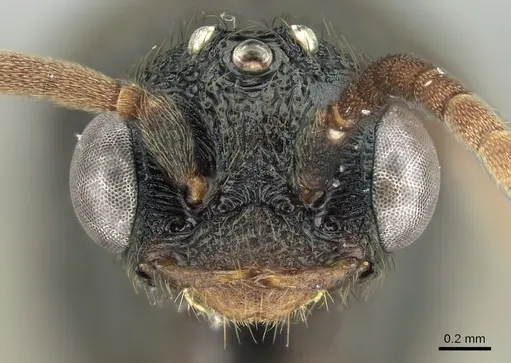
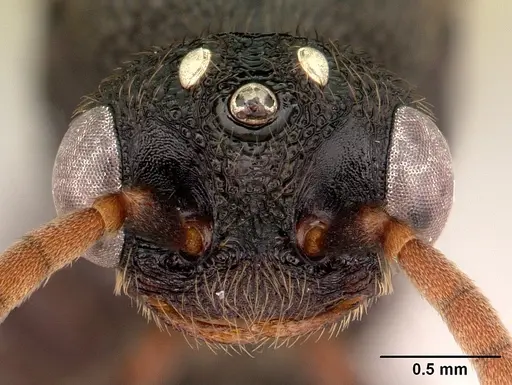
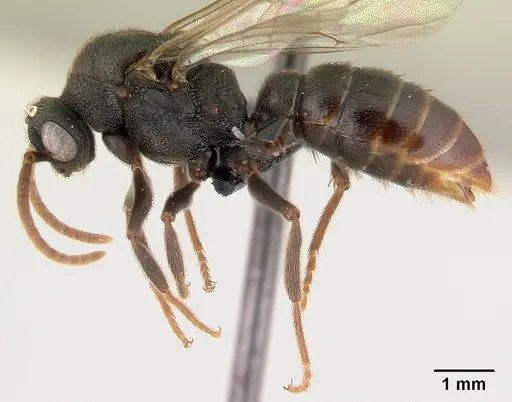
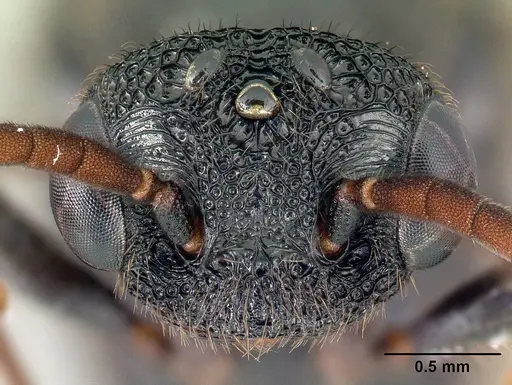
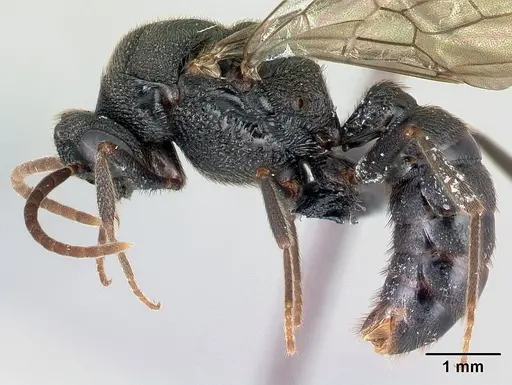
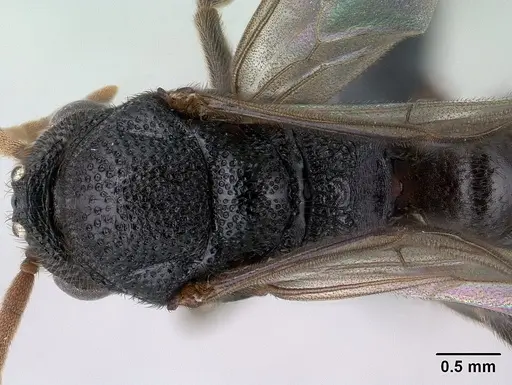
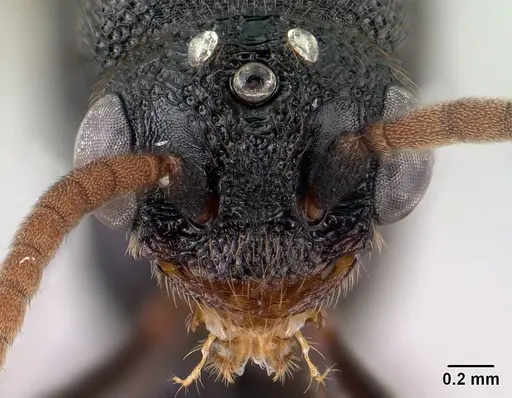
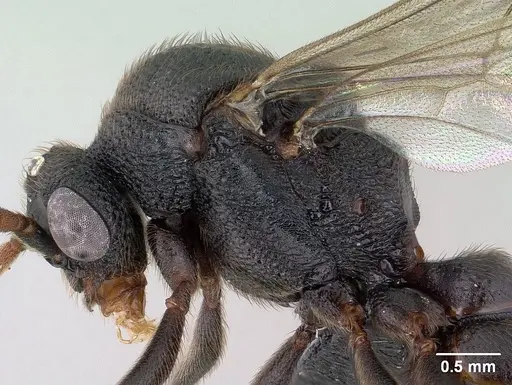
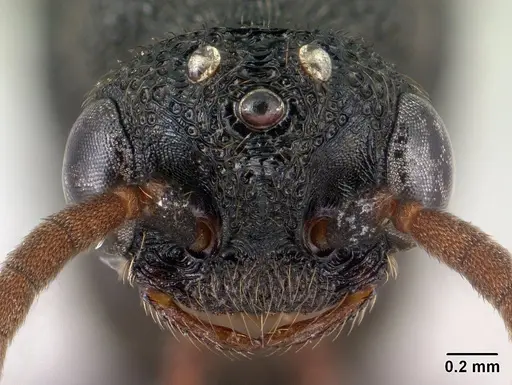
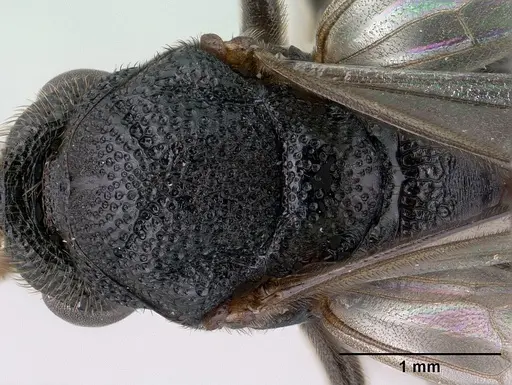
Mystrium janovitzi is one of seven Mystrium species endemic to Madagascar, described relatively recently in 2014 by Yoshimura and Fisher. Workers are entirely black with a distinctive right-angle vertex (the back of the head meets the top at nearly a 90-degree angle), and the last four segments of their antennae are slightly brighter than the rest of the body. The species can be identified by the labrum lacking a central ridge, very low clypeal setae, and wide pronotum with fine fragmented sculpture [1]. Ergatoid queens look almost identical to workers but have narrower mandibles and tiny vestigial wing remnants. Males are reddish brown to black with moderately large eyes [2].
Natural History and Distribution
This species is known only from Madagascar, with specimens collected from multiple locations across the island including Montagne d'Ambre in the north, Réserve Ankarana, Forêt de Binara, Nosy Be, and regions near Mahajanga in the northwest. The species has been found in both dry and humid forest regions, but specimen data indicates it prefers dry, dark microhabitats and is terricolous (ground-dwelling) [1][3]. The distribution spans multiple provinces including Antsiranana, Toamasina, Mahajanga, Toliara, and Fianarantsoa [2]. Nothing is known about its diet, foraging behavior, nuptial flight timing, or seasonal activity patterns in the wild.
Colony Structure and Reproduction
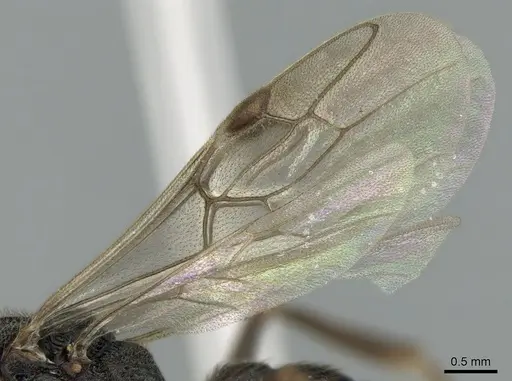
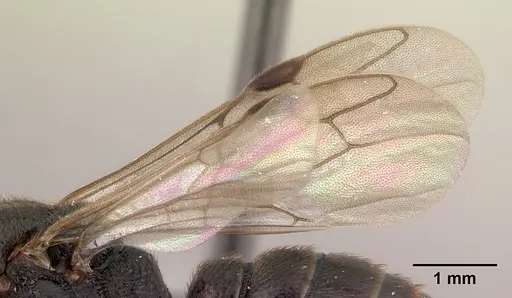
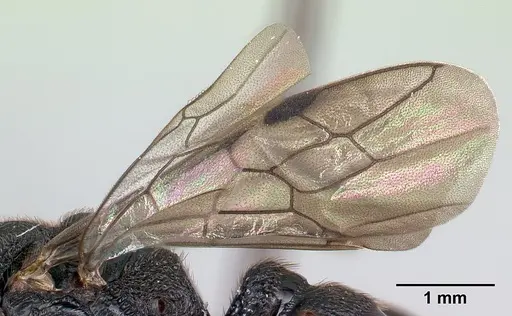
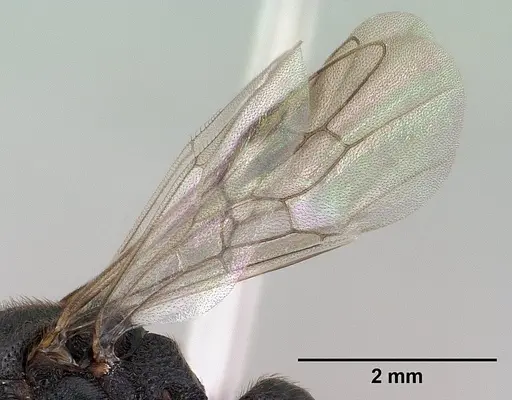
Mystrium janovitzi has an ergatoid queen system, unlike most ants that have large, winged queens, this species reproduces using wingless females that look very similar to workers. These ergatoid queens have wings that are reduced to tiny vestigial appendages that are sometimes hard to distinguish. This type of colony structure is common in the Amblyoponinae subfamily, where reproduction is handled by these worker-like queens rather than distinct reproductive castes [1][2]. The colony structure (monogyne vs polygyne) is unconfirmed, ergatoid morphology does not automatically indicate single-queen colonies. The founding behavior is completely unstudied.
Captive Care Recommendations
Since nothing is known about the biology of this species, all captive care recommendations are estimates based on related Amblyoponinae species and general antkeeping principles. Start with a standard test tube setup with moderate humidity, the dry habitat preference suggests avoiding overly wet conditions. Temperature should be in the mid-20s Celsius (around 24-26°C). Feed live small prey like fruit flies or pinhead crickets, as Amblyoponinae are typically predatory and use their sting to paralyze prey. The ergatoid queen morphology suggests founding may be semi-claustral, so providing small live prey during the founding stage may be important. This species is extremely rare in the antkeeping hobby and should be considered an expert-level species due to the complete lack of biological data.
Related Species and Taxonomic Context
Mystrium belongs to the Amblyoponinae subfamily, often called 'dracula ants' because some species in this group are known to feed on the hemolymph (blood) of other ants or their brood. The genus Mystrium is part of the XMMAS clade within Amblyoponinae, confirmed through phylogenetic analysis [4]. The voeltzkowi species group to which M. janovitzi belongs includes several other Madagascar endemics. The subfamily Amblyoponinae is morphologically distinctive with their long, slender mandibles and often unusual colony structures involving ergatoid reproductives. Defense mechanism is via sting, these are specialized subterranean predators that use their potent sting to paralyze hard-bodied prey.
Frequently Asked Questions
How do I keep Mystrium janovitzi ants?
There is no established care guide for this species, its biology is completely unstudied in scientific literature. Based on related Amblyoponinae, use a test tube setup with moderate humidity, temperatures around 24-26°C, and feed small live prey. This species should be considered expert-level due to the complete lack of biological data.
What do Mystrium janovitzi eat?
Diet is unconfirmed for this species. Based on genus patterns, they are likely predatory on small arthropods. Offer small live prey like fruit flies, springtails, or pinhead crickets. Avoid sugar sources unless acceptance is observed.
How long does it take for Mystrium janovitzi to develop from egg to worker?
The development timeline is completely unknown, no scientific data exists for this species.
Do Mystrium janovitzi queens have wings?
No, this species has ergatoid queens, which are wingless. They appear very similar to workers but can be distinguished by their slightly larger size, narrower mandibles, and tiny vestigial wing remnants [1][2].
Are Mystrium janovitzi good for beginners?
No, this species is not recommended for beginners. It was only described in 2014,and absolutely nothing is known about its captive care requirements. There are no established protocols for keeping this species successfully, and it is extremely rare in the antkeeping hobby.
Where is Mystrium janovitzi found?
This species is endemic to Madagascar, found only on that island. Specimens have been collected from multiple locations including Montagne d'Ambre, Ankarana, Nosy Be, and near Mahajanga [1][2].
Do Mystrium janovitzi ants sting?
Yes, Amblyoponinae have a potent sting. While too small to penetrate human skin effectively in most cases, they can sting if handled roughly. These ants are specialized predators that use their sting to paralyze prey.
How big do Mystrium janovitzi colonies get?
Colony size is completely unknown, no colony size data exists in scientific literature. Related Amblyoponinae species typically have colonies of several hundred workers at most.
Do Mystrium janovitzi need hibernation?
Diapause requirements are unknown. As a Madagascar species, they may not require true hibernation, but seasonal dormancy may occur. No data exists on this topic.
Can I keep multiple Mystrium janovitzi queens together?
Colony structure is unconfirmed. Ergatoid queen systems vary, some species are monogyne while others may have multiple reproductives. Combining unrelated queens is not recommended given the lack of data on this species.
What makes Mystrium janovitzi different from other ants?
They have ergatoid queens (wingless, worker-like reproductives) instead of the typical large, winged queens seen in most ant species. The entire biology of this species is unknown, it was only described in 2014 and has never been studied in the wild or captivity.
Report an Issue
The current care sheet is based fully on literature. See inconsistencies, or something that's incorrect? Please , it will be resolved after review from an admin. Contributing to the blogs tab also helps providing information, to make us be able to further improve the caresheets. Thank you for your support!
References

This caresheet is licensed under CC BY-SA 4.0 .
Community Blogs
CASENT0006082
View on AntWeb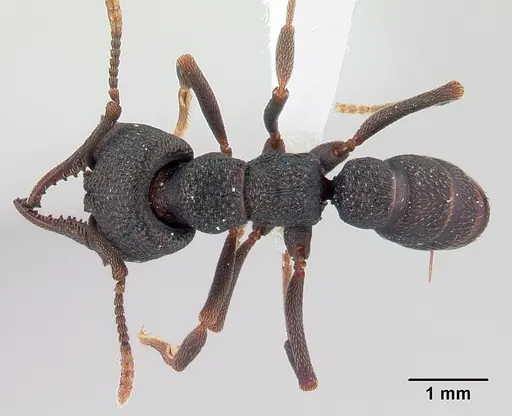
CASENT0007820
View on AntWeb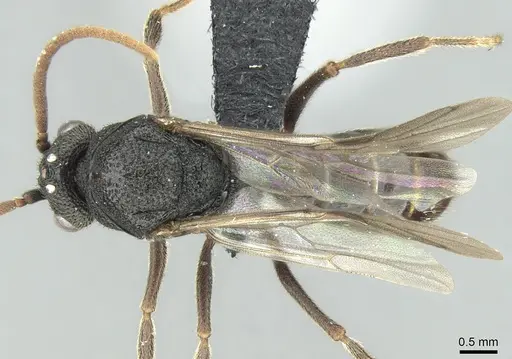
CASENT0007826
View on AntWeb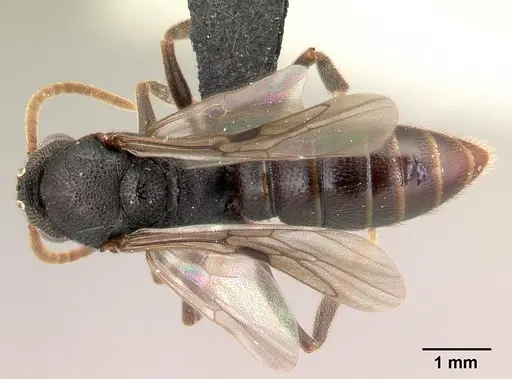
CASENT0064213
View on AntWeb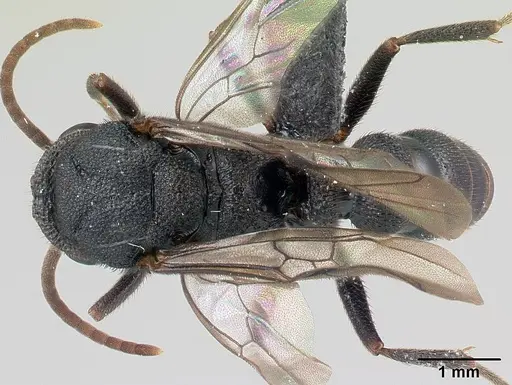
CASENT0080644
View on AntWeb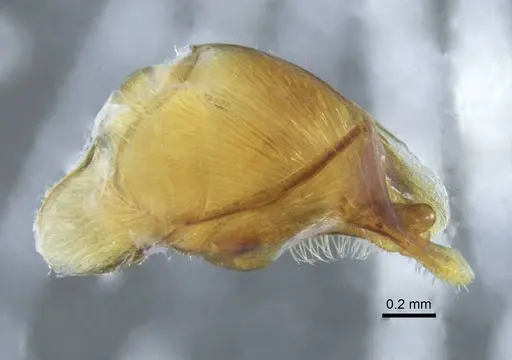
CASENT0110785
View on AntWeb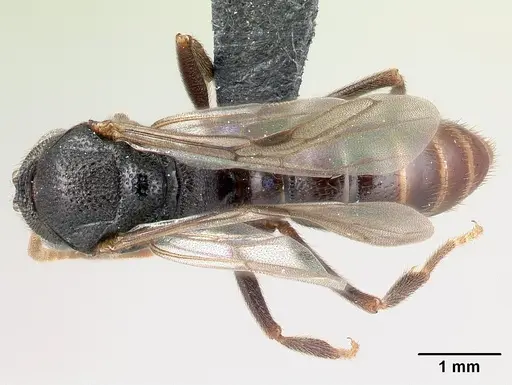
CASENT0135946
View on AntWeb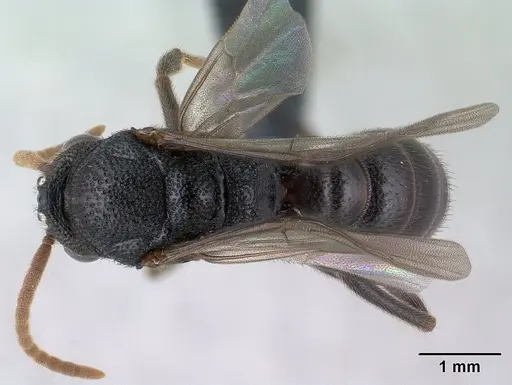
CASENT0144988
View on AntWeb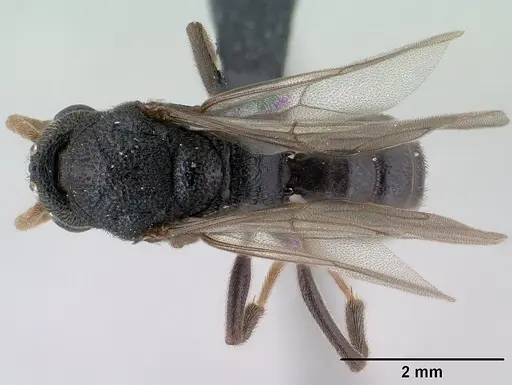
CASENT0145028
View on AntWeb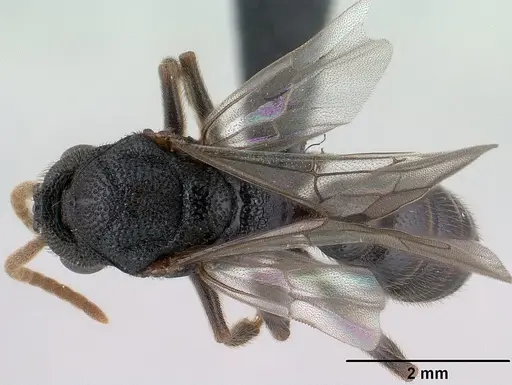
CASENT0482696
View on AntWeb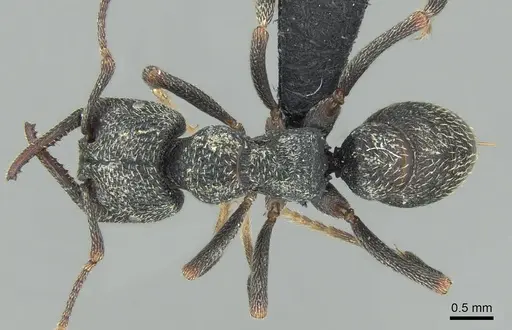
CASENT0482698
View on AntWeb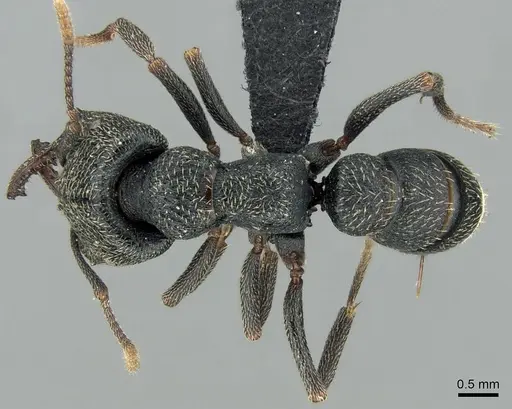
Literature
Loading distribution map...Loading products...