
Myrmoteras diastematum
- Sci. Name
- Myrmoteras diastematum
- Subgenus
- Myagroteras
- Tribe
- Myrmoteratini
- Subfamily
- Formicinae
- Author
- Moffett, 1985
- Distribution
- Found in 1 countries
Introduction
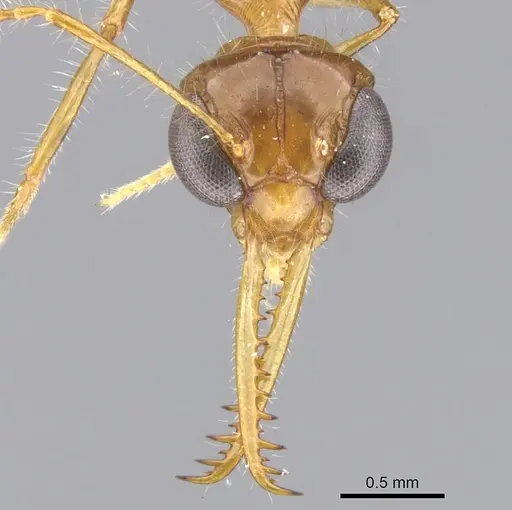
Myrmoteras diastematum is a rare trap-jaw ant species endemic to the rainforests of Borneo and surrounding regions in Southeast Asia. Workers measure approximately 5.4mm total length with a distinctive appearance featuring a conspicuous gap (sulcus) between the clypeus and frons, along with exceptionally wide frontal sulcus and orbital grooves that create unique trench-like markings on their orange to reddish-orange head. Queens are slightly larger at 5.4-6.0mm total length and share the same distinctive head structure. This species belongs to the tribe Myrmoteratini within the Formicinae subfamily, making it taxonomically distinct. They are found in leaf litter extractions in lowland dipterocarp and rainforest habitats, indicating they are ground-nesting litter ants .
Quick Summary
- Difficulty: Expert
- Origin & Habitat: Borneo (Sarawak, Brunei, Sabah), Indonesia, Malaysia, lowland dipterocarp rainforest and mixed dipterocarp forest, typically collected from leaf litter [1][2]
- Colony Type: Unconfirmed, colony structure has not been documented in scientific literature
- Size & Growth:
- Queen: 5.4-6.0mm total length [2]
- Worker: 5.4mm total length [2]
- Colony: Unknown, no colony size data available
- Growth: Unknown, no development data available
- Development: Unknown, no development data exists for this species (Development timeline has not been studied. Any timeline would be pure speculation.)
- Antkeeping:
- Temperature: Unknown for this species. Based on their Bornean rainforest habitat, they likely prefer warm, stable conditions. No specific requirements have been documented.
- Humidity: Likely requires high humidity similar to other Bornean rainforest ants. Keep the nest substrate consistently moist but not waterlogged. Provide a humidity gradient so ants can choose their preferred zone.
- Diapause: Unknown, no research on seasonal behavior. Bornean rainforest ants may not require true hibernation.
- Nesting: In nature they nest in leaf litter and soil in rainforest floors. In captivity, a naturalistic setup with moist substrate or a Y-tong/plaster nest with high humidity works well. They are small litter ants, so tight chambers scaled to their size are important.
- Behavior: Behavior is poorly documented. As trap-jaw ants in the Myrmoteras genus, they likely have rapid mandible strike behavior for capturing prey, similar to other trap-jaw ants in related genera. They are probably predatory on small invertebrates in their leaf litter habitat. Escape risk is moderate due to their small size, use standard barrier methods. Temperament is unknown but likely defensive like many Formicinae.
- Common Issues: this species has never been kept in captivity by hobbyists, no established care protocols exist, no information on founding behavior means it's unclear whether queens are claustral or semi-claustral, diet preferences are completely unknown, what to feed is uncertain, no data on colony growth rates makes it difficult to plan long-term care, extremely rare in the antkeeping hobby, finding a colony may be impossible, poorly understood biology means many aspects of care are educated guesses
Discovery and Taxonomy
Myrmoteras diastematum was first described by Mark Moffett in 1985 from specimens collected in Gunung Mulu National Park in Sarawak, Borneo. The species name comes from the Greek word 'diastema' meaning gap, referring to the distinctive wide sulcus (groove) between the clypeus and frons that makes this species easily identifiable. The type specimens were collected during the Royal Geographical Society's Mulu expedition between May and August 1978. This ant belongs to the tribe Myrmoteratini, which is unique within the Formicinae subfamily, making it taxonomically distinct from most other ants keepers might be familiar with. The genus Myrmoteras is known for its trap-jaw mandibles, though this behavior has not been specifically documented for M. diastematum. [2]
Identification and Appearance
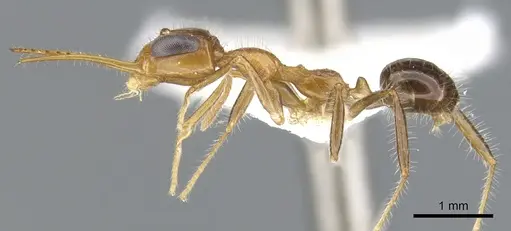
Workers of Myrmoteras diastematum measure approximately 5.4mm in total length. The most distinctive feature is the conspicuous sulcus (deep groove) between the clypeus and frons, combined with exceptionally wide frontal sulcus and orbital grooves that create visible trench-like markings on the head capsule. These grooves are bordered in black, making them stand out against the orange coloration of the head. Workers have mandibles with 8 to 11 teeth and 3 to 4 preapical denticles. The body is covered in very dense pilosity with long hairs, more than 40 hairs break the dorsal margin of the trunk when viewed in profile. Queens are slightly larger at 5.4-6.0mm total length with similar coloration but more developed thoracic structures including conspicuous longitudinal rugae on the mesonotum. [2]
Natural Habitat and Distribution
This species is endemic to Borneo and surrounding regions in Southeast Asia, specifically found in Brunei Darussalam, Indonesia (Kalimantan), Malaysia (Sarawak and Sabah), and likely adjacent areas. They inhabit lowland dipterocarp rainforest and mixed dipterocarp forest at elevations ranging from near sea level to approximately 200 meters. The primary collection method has been leaf litter extraction, indicating they are litter-dwelling ants that nest in the forest floor's moist, decomposing material rather than in trees or on vegetation. The Heterick and Kitching 2022 study confirmed their presence in a one-hectare plot of lowland dipterocarp forest in Brunei, further supporting their preference for primary rainforest habitats. [1][2]
Keeping Myrmoteras diastematum in Captivity
This is one of the most challenging ants to keep because virtually no captive care information exists. They have never been documented in the antkeeping hobby, and scientific research on their biology is extremely limited. Based on their rainforest leaf-litter habitat, they likely require high humidity and warm temperatures. A naturalistic setup with a deep layer of moist leaf litter and soil would best approximate their natural environment. For nesting, a Y-tong or plaster nest with high humidity chambers works well. Regarding diet, nothing is confirmed, they are likely predatory on small invertebrates given their genus, so offering small live prey like fruit flies, pinhead crickets, or other tiny arthropods would be the most logical approach. Sugar acceptance is unknown. Because of their small size and unknown behavior, excellent escape prevention is recommended despite limited data on their abilities.
Challenges and Unknowns
Prospective keepers must understand that this is essentially an unknown species in captivity. No one has documented successful captive husbandry of Myrmoteras diastematum, meaning there are no established protocols, feeding guidelines, or growth timelines to reference. The most significant unknowns include: colony structure (monogyne vs polygyne), founding behavior (claustral vs semi-claustral), exact temperature and humidity requirements, diet preferences, development timeline, and nuptial flight timing. Even basic behavior like whether they are aggressive, docile, or have special defensive mechanisms remains unstudied. Anyone attempting to keep this species would essentially be pioneering captive husbandry for a completely undocumented ant, which carries high risk of failure. This makes it an expert-only species at best, and realistically one that should be left to researchers with specific collection permits.
Frequently Asked Questions
Can I keep Myrmoteras diastematum as a pet ant?
This is not recommended. This species has never been kept in captivity by antkeepers, and there is no established care information. The complete lack of documented husbandry means success would be extremely unlikely. Additionally, they are extremely rare in the wild and not available through any legal antkeeping channels.
What do Myrmoteras diastematum ants eat?
This is completely unknown. Based on the genus Myrmoteras being trap-jaw ants, they likely prey on small invertebrates. However, their specific diet preferences, feeding schedules, and whether they accept sugar or protein sources have never been studied. Any feeding would be experimental at best.
How long does it take for Myrmoteras diastematum to develop from egg to worker?
Unknown, no development data exists for this species. Any timeline would be pure speculation.
Do Myrmoteras diastematum queens need to hibernate?
Unknown. As a Bornean rainforest species, they likely experience year-round warm conditions in the wild and may not require true hibernation. However, seasonal activity patterns have not been studied at all.
What is the colony structure of Myrmoteras diastematum?
Unconfirmed. No research has documented whether colonies have single queens (monogyne) or multiple queens (polygyne). The colony structure is completely unknown.
What temperature and humidity do Myrmoteras diastematum need?
Unknown with any certainty. Based on their Bornean rainforest habitat, they likely prefer warm temperatures and high humidity. However, no specific requirements have been documented through research or captive observation.
Where can I get Myrmoteras diastematum ants?
This species is essentially unavailable to antkeepers. It is extremely rare in the wild, found only in Borneo, and has never been documented in the antkeeping hobby. There are no breeders or suppliers, and collecting them would require research permits for their native habitat.
Is Myrmoteras diastematum a good beginner ant?
No. This is not an appropriate species for any level of antkeeping experience due to complete lack of captive care information. Even experienced antkeepers would have no framework for successfully maintaining this species.
How big do Myrmoteras diastematum colonies get?
Unknown. No colony size data exists in scientific literature. As litter-dwelling ants, they likely form smaller colonies than ground-nesting species, but this is purely speculative.
Report an Issue
The current care sheet is based fully on literature. See inconsistencies, or something that's incorrect? Please , it will be resolved after review from an admin. Contributing to the blogs tab also helps providing information, to make us be able to further improve the caresheets. Thank you for your support!
References

This caresheet is licensed under CC BY-SA 4.0 .
Community Blogs
CASENT0903239
View on AntWeb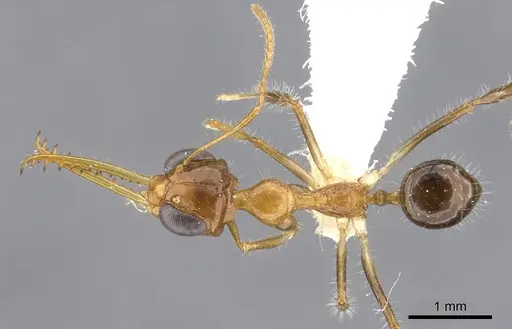
Literature
Loading distribution map...Loading products...