
Myrmica serica
- Sci. Name
- Myrmica serica
- Tribe
- Myrmicini
- Subfamily
- Myrmicinae
- Author
- Wheeler, 1928
- Distribution
- Found in 1 countries
Introduction
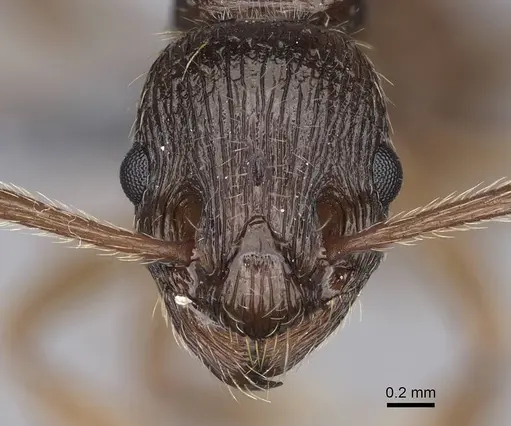
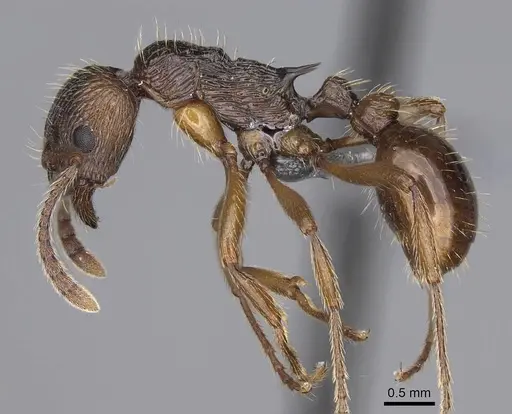
Myrmica serica is a medium-sized ant in the ritae species group, native to mountainous regions of central and southern China, Taiwan, and northern Vietnam . Workers are smaller than Myrmica titanica and can be identified by having at least six sinuous rugae on the frons . These ants inhabit high-altitude forests between 1200-2200 meters, nesting in rotting wood, under stones, in tree stumps, and in dead bamboo . Colonies can contain over 1000 workers and are one of the commonest species in their range . M. serica adapts to various nesting sites based on availability, using deeply embedded stones in sunny areas or rotten wood within forests . Workers are less aggressive than other Myrmica species and have a mild sting . Nuptial flights occur in early August, with mating high above the trees .
Quick Summary
- Difficulty: Medium
- Origin & Habitat: Mountain forests of central and southern China, Taiwan, and northern Vietnam at altitudes of 1200-2200 meters, nesting in rotting wood, under stones, in tree stumps, and in dead bamboo [1][2].
- Colony Type: Colonies can be single-queen or have multiple queens, with polygynous nests observed [1].
- Size & Growth:
- Antkeeping:
- Temperature: Keep cool, roughly 18-22°C, based on their mountain habitat [1].
- Humidity: Moderate to high, keep nest substrate consistently moist but not waterlogged [1].
- Diapause: Yes, requires winter diapause for 3-4 months at 5-10°C, based on their temperate range [2].
- Nesting: They accept various nest types such as Y-tong, plaster, or naturalistic setups with damp substrate [1].
- Behavior: Workers are less aggressive than other Myrmica species and have a mild sting. Escape risk is moderate, use standard barriers like Fluon [1][2].
- Common Issues: overheating can kill colonies due to their cool habitat origin., lack of hibernation may prevent reproductive success., too dry conditions can desiccate brood., colonies can grow large, requiring housing upgrades., wild-caught colonies may have parasites.
Nest Preferences and Housing
Myrmica serica adapts to various nesting sites in the wild, using rotting wood, under stones, in dead bamboo, and natural cavities [1]. In captivity, they do well in Y-tong nests, plaster nests, or naturalistic setups with wood and stones. Provide tight chambers scaled to their worker size, with consistently damp substrate. They prefer darker nest areas and may expand into foraging spaces. A water tube helps maintain humidity [1].
Feeding and Diet
Based on typical Myrmica patterns, M. serica is omnivorous. Workers forage for honeydew, hunt small insects, and scavenge on sweet secretions [1]. In captivity, offer protein sources like small crickets or fruit flies twice weekly, and provide sugar water or honey constantly. Fresh water should always be accessible [2].
Temperature and Seasonal Care
These ants prefer cool temperatures due to their mountain habitat. Keep them at roughly 18-22°C, and avoid overheating. During autumn, prepare for hibernation by providing 3-4 months of cold at 5-10°C [1][2].
Behavior and Temperament
Workers are less aggressive than other Myrmica species and have a mild sting. They are active foragers and explore their outworld. Use standard barriers to prevent escapes [1][2].
Colony Growth and Development
Colonies can grow up to 1000 workers [1][2]. Founding behavior is unconfirmed. Development timeline from egg to worker is unknown, as no specific data is available. Growth rate is moderate [2].
Frequently Asked Questions
Can I keep Myrmica serica in a test tube?
Yes, test tubes work well for founding colonies. Make sure to provide a water reservoir and keep the tube in a dark, cool location. Once the colony reaches a reasonable size, consider moving them to a larger formicarium [2].
What temperature do Myrmica serica ants need?
Keep them at roughly 18-22°C, they are mountain ants from cool high-altitude forests and do not tolerate heat well [1].
Do Myrmica serica ants sting?
Yes, they can sting but it is no more painful than other Myrmica species of similar size. They are not particularly aggressive [1][2].
How long does it take for Myrmica serica to raise first workers?
The timeline is unknown, as no specific data is available. Development is likely temperature-dependent [2].
Do Myrmica serica need hibernation?
Yes, they require a winter dormancy period of 3-4 months at temperatures around 5-10°C, based on their temperate range [2].
How big do Myrmica serica colonies get?
Colonies can reach up to 1000 workers in established nests [1][2].
Can I keep multiple Myrmica serica queens together?
Yes, this species can have multiple queens in a colony, as observed in the wild [1][2]. However, introduce them carefully and monitor for aggression.
What do Myrmica serica ants eat?
They are omnivorous. Offer protein sources like small insects twice weekly, and provide sugar water or honey constantly [1].
Are Myrmica serica good for beginners?
They are moderate difficulty, not the easiest but not challenging. Their main requirements are cooler temperatures, proper hibernation, and maintaining damp conditions.
When should I move Myrmica serica to a formicarium?
Move them once the test tube is becoming cramped. They prefer darker nests, so ensure the new setup has damp substrate and appropriate chamber sizes [2].
Report an Issue
The current care sheet is based fully on literature. See inconsistencies, or something that's incorrect? Please , it will be resolved after review from an admin. Contributing to the blogs tab also helps providing information, to make us be able to further improve the caresheets. Thank you for your support!
References

This caresheet is licensed under CC BY-SA 4.0 .
Community Blogs
CASENT0248686
View on AntWeb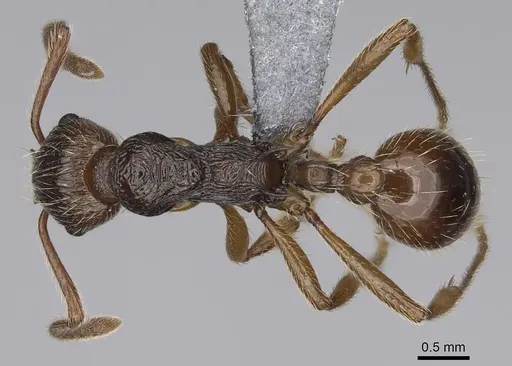
Literature
Loading distribution map...Loading products...