
Myrmelachista bettinae
- Sci. Name
- Myrmelachista bettinae
- Tribe
- Myrmelachistini
- Subfamily
- Formicinae
- Author
- Forel, 1903
- Distribution
- Found in 1 countries
Introduction
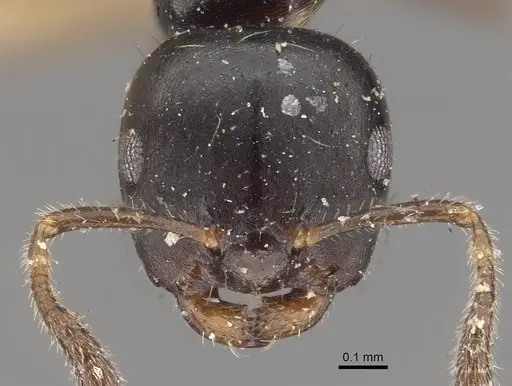
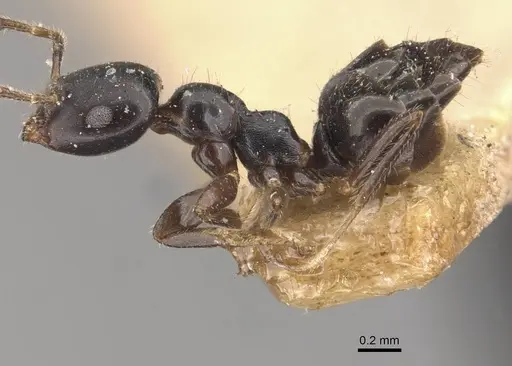
Myrmelachista bettinae is an ant species native to Brazil in the Neotropical region . Body size data is unavailable for this species. They are tree-nesting ants, constructing colonies in hollow branches and wood cavities in forest canopies . This species was described by Forel in 1903 and has taxonomic revisions through subgenera . What makes Myrmelachista bettinae interesting is its arboreal lifestyle, living high in forest canopies. They are rarely encountered in ground-level surveys, with very low frequency and abundance in field studies .
Quick Summary
- Difficulty: Medium
- Origin & Habitat: Native to Brazil, living in tree canopies in tropical forests [1][2].
- Colony Type: Colony structure is unconfirmed. No specific data on queen number or social structure.
- Size & Growth:
- Antkeeping:
- Temperature: Keep warm, roughly 24-28°C, based on tropical habitat inference [1].
- Humidity: Provide a humidity gradient, keep nest substrate moist but not waterlogged, based on arboreal tropical inference [1].
- Diapause: No diapause required, as a tropical species [1].
- Nesting: Arboreal setups recommended, such as Y-tong nests or wood-based nests, mimicking natural tree-hollow habitats [1].
- Behavior: Temperament unknown, based on Myrmelachista genus patterns, likely docile. Escape risk moderate due to small size, but body size data is unavailable.
- Common Issues: arboreal setup requirements may be challenging for standard soil nests, temperature sensitivity due to tropical origin, cold rooms can slow development, low frequency in wild suggests specialized nesting preferences, experimentation may be needed
Natural History and Distribution
Myrmelachista bettinae is endemic to Brazil, found in the Neotropical region [1][2]. These ants are strictly arboreal, meaning they live in trees rather than on the ground. They nest in pre-existing cavities in wood, such as hollow branches and dead twigs [1]. Their very low frequency (0.36%) and abundance (0.04%) in field surveys suggests they are patchily distributed or prefer canopy-level habitats [1].
Housing and Nest Setup
Because Myrmelachista bettinae is an arboreal species, your setup should reflect their natural tree-nesting preferences. Y-tong nests or wood-based nests work well, especially those with narrow chambers scaled to their small size. You can also use cork nests or setups that include wooden branches to mimic their natural habitats [1]. The outworld should include climbing structures like branches or cork pieces for foraging pathways. A water tube for humidity is essential, but avoid creating a constantly wet environment.
Feeding and Diet
Feeding habits for Myrmelachista bettinae are not well-documented. Based on general Formicinae patterns, they are likely omnivorous, feeding on sugar sources and small insects. In captivity, offer sugar water or honey as a constant energy source, and provide small insects like fruit flies for protein 2-3 times per week. Remove uneaten prey after 24-48 hours to prevent mold.
Temperature and Seasonal Care
As a Brazilian Neotropical species, Myrmelachista bettinae requires warm conditions. Keep the nest area at roughly 24-28°C, based on tropical habitat inference [1]. A heating cable on one side of the nest can create a temperature gradient. No diapause is required, as they are from a tropical climate with minimal seasonal variation [1].
Colony Development
Colony development data is unavailable for Myrmelachista bettinae. No specific information on founding, growth rates, or timelines exists in the research [1]. General ant care practices should be followed, but expect slower development due to the species' low frequency in surveys.
Frequently Asked Questions
What do Myrmelachista bettinae ants eat?
Feeding habits are not documented, but based on Formicinae patterns, they are likely omnivorous. Offer sugar water and small insects like fruit flies [1].
How long does it take for Myrmelachista bettinae to produce first workers?
Development timeline is unknown for this species [1].
What type of nest is best for Myrmelachista bettinae?
Arboreal setups are recommended, such as Y-tong or wood-based nests, mimicking their natural tree-hollow nesting [1].
Do Myrmelachista bettinae ants need hibernation?
No, as a tropical species, they do not require diapause [1].
Are Myrmelachista bettinae good for beginners?
They are rated Medium difficulty due to arboreal setup requirements and tropical temperature needs [1].
How big do Myrmelachista bettinae colonies get?
Colony size is unknown for this species [1].
Can I keep multiple Myrmelachista bettinae queens together?
Colony structure is unconfirmed. No data on multi-queen arrangements exists [1].
What temperature do Myrmelachista bettinae need?
Keep them at roughly 24-28°C, based on tropical habitat inference [1].
Why are my Myrmelachista bettinae not growing?
Check temperature and humidity first, as they require warm, stable conditions. Poor growth may also indicate issues with nest setup acceptance [1].
Report an Issue
The current care sheet is based fully on literature. See inconsistencies, or something that's incorrect? Please , it will be resolved after review from an admin. Contributing to the blogs tab also helps providing information, to make us be able to further improve the caresheets. Thank you for your support!
References

This caresheet is licensed under CC BY-SA 4.0 .
Community Blogs
CASENT0909916
View on AntWeb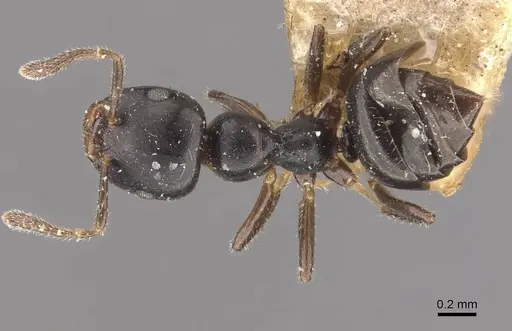
Literature
Loading distribution map...Loading products...