
Hairless Honeypot Ant
Myrmecocystus depilis
- Sci. Name
- Myrmecocystus depilis
- Tribe
- Lasiini
- Subfamily
- Formicinae
- Author
- Forel, 1901
- Common Name
- Hairless Honeypot Ant
- Distribution
- Found in 2 countries
Introduction
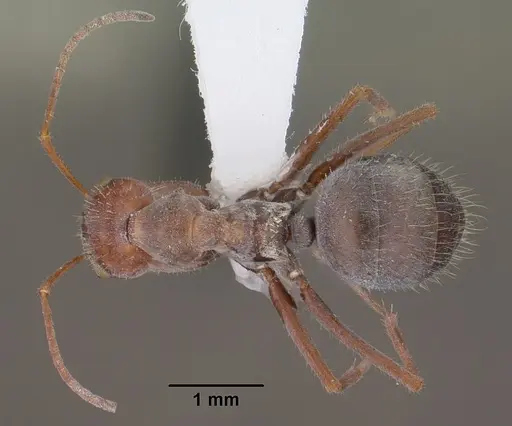
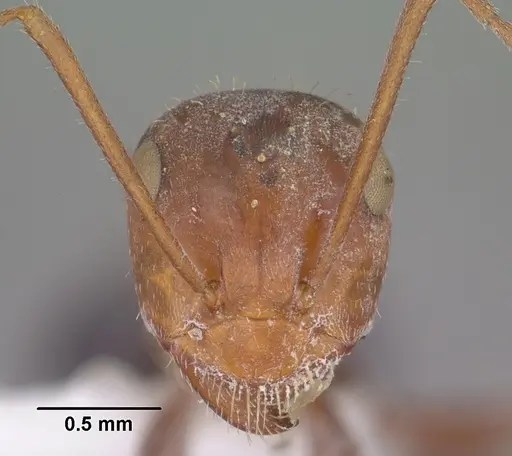
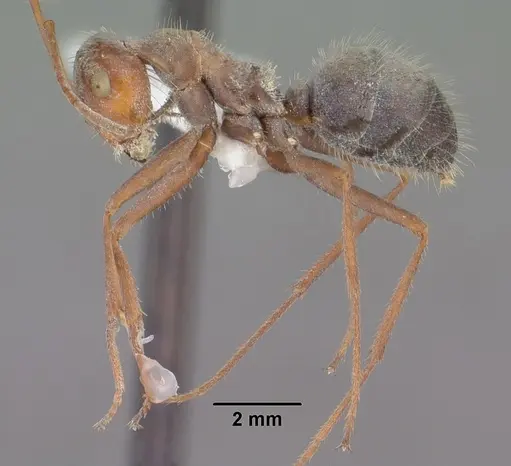
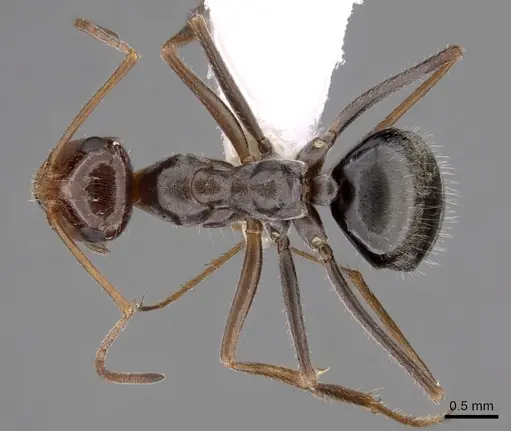
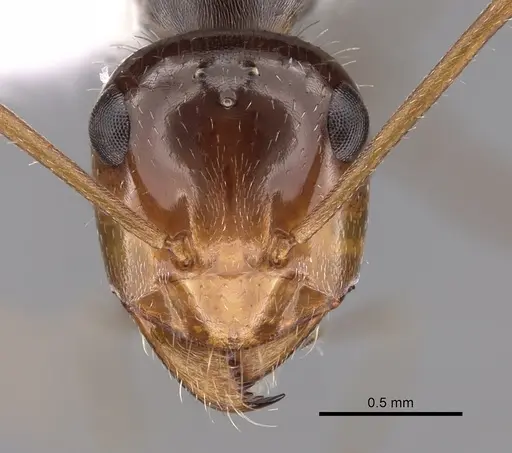
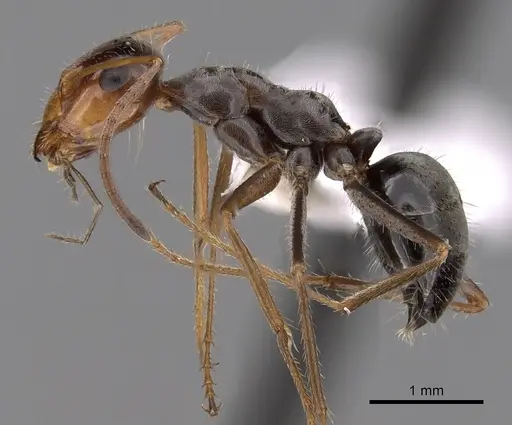
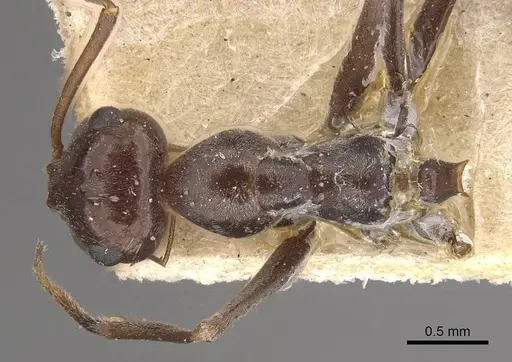
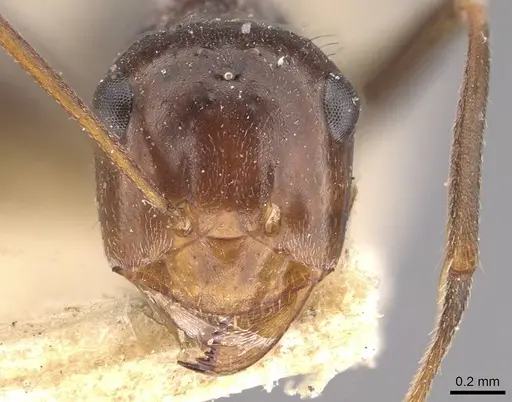
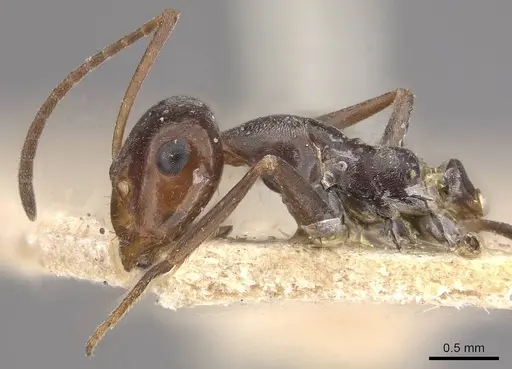
Myrmecocystus depilis is a honey ant native to deserts of the American Southwest and central Mexico. Workers have a blackish gaster and brownish head and mesosoma with dark markings. Major workers possess long pronotal hairs that can equal or exceed eye length, and queens are robust. This species was long confused with Myrmecocystus mimicus in scientific literature . M. depilis exhibits facultative slavery, raiding colonies of its own species and M. mimicus to enslave workers. Genetic studies show about 25% of wild colonies contain enslaved workers, making their social structure complex .
Quick Summary
- Difficulty: Medium
- Origin & Habitat: Deserts from western Texas to southern Nevada, south to central Mexico. Found in creosote bush desert, trans-Pecos shrub savannah, mesquite woodlands, and sandy soils [1][2][5].
- Colony Type: Single-queen colonies (obligatory monogyne), with potential enslaved workers from other M. depilis colonies or M. mimicus colonies [6][3].
- Size & Growth:
- Queen: Size data unavailable, full body length not documented [1].
- Worker: Size data unavailable, full body length not documented [1].
- Colony: Up to 1,900 workers [7].
- Growth: Moderate
- Development: Estimated 6-10 weeks based on related Formicinae species. (Development time is inferred from genus patterns, direct measurements for this species are not available.)
- Antkeeping:
- Temperature: Keep warm, roughly 22-28°C. Foraging peaks at 27-37°C after rainfall, based on field observations [1].
- Humidity: Low to moderate. Desert species, keep substrate dry, provide a shallow water dish, and avoid waterlogging [1].
- Diapause: Yes, inferred from desert species, provide a winter rest period at 10-15°C for 2-3 months to mimic natural seasonal cycles.
- Nesting: Nests in sandy soil with entrance tumuli in the wild. Use Y-tong, plaster, or soil-based nests with a dry nesting chamber [1].
- Behavior: Calm toward keepers. Workers forage individually or in small groups for honeydew, nectar, and small arthropods. They exhibit raiding behavior, which can escalate to physical fights between colonies [3].
- Common Issues: raiding behavior can stress colonies if kept with M. mimicus, overly humid conditions can cause mold and colony death, escape risk exists due to medium size, use tight-fitting lids and barriers, lack of diapause can lead to colony decline over time, wild-caught colonies may harbor parasitic beetles like Cremastocheilus stathamae
Housing and Nest Setup
Use a test tube setup for founding colonies with a water reservoir and cotton plug. Once workers emerge, transfer to a Y-tong, plaster, or soil-based nest. Keep the nesting chamber dry, as this is a desert species. Provide an outworld with sandy substrate and a shallow water dish. Avoid acrylic nests, use breathable materials [1].
Feeding and Diet
Offer a constant sugar source like honey water or diluted maple syrup. Provide protein 2-3 times weekly with small insects such as fruit flies or pinhead crickets. In the wild, they collect nectar from plants like Opuntia and Parthenium incanum, and honeydew from aphids. Remove uneaten prey to prevent mold [1][8].
Temperature and Seasonal Care
Keep temperatures between 22-28°C, with a gradient allowing warmer areas. Foraging activity peaks at 27-37°C after rainfall. Provide a winter diapause at 10-15°C for 2-3 months to maintain colony health [1].
Colony Structure and Social Behavior
Colonies are monogyne with one queen, confirmed across hundreds of wild colonies. However, they exhibit facultative slavery, raiding other M. depilis or M. mimicus colonies to enslave workers. About 25% of wild colonies contain enslaved individuals [6][3].
Growth and Development
Colonies can grow to up to 1,900 workers. Development from egg to worker is estimated at 6-10 weeks based on related species. Repletes (honey-storing workers) develop as the colony matures [7][1].
Frequently Asked Questions
Is Myrmecocystus depilis good for beginners?
This species is medium difficulty. It requires a winter diapause and careful humidity control, making it more challenging than basic species like Lasius.
How long does it take for the first workers to appear?
First workers typically emerge 6-10 weeks after the queen lays eggs, based on related Formicinae species.
Can I keep multiple queens together?
No. Myrmecocystus depilis is obligatory monogyne, only one queen per colony. Attempts to initiate pleometrotic founding have failed [6].
What makes Myrmecocystus depilis unique?
They have repletes that store honeydew and exhibit facultative slavery, raiding other colonies to enslave workers [3][4].
Do they need hibernation?
Yes, provide a winter diapause at 10-15°C for 2-3 months, inferred from their desert habitat.
Can I keep M. depilis with other Myrmecocystus species?
Not recommended. M. depilis raids M. mimicus colonies and may enslave their workers, causing stress [3].
How big do colonies get?
Wild colonies reach up to 1,900 workers. In captivity, similar sizes are possible with good care [7].
What should I feed Myrmecocystus depilis?
Offer sugar sources like honey water and protein from small insects 2-3 times weekly. They also collect nectar and honeydew in the wild [1][8].
Why are some workers' abdomens swollen?
Those are repletes, special workers that store honeydew to feed the colony during scarce times. This is a sign of a healthy colony [1].
Report an Issue
The current care sheet is based fully on literature. See inconsistencies, or something that's incorrect? Please , it will be resolved after review from an admin. Contributing to the blogs tab also helps providing information, to make us be able to further improve the caresheets. Thank you for your support!
References

This caresheet is licensed under CC BY-SA 4.0 .
Community Blogs
Literature
Loading distribution map...Loading products...