
Myrmecina urbanii
- Sci. Name
- Myrmecina urbanii
- Tribe
- Crematogastrini
- Subfamily
- Myrmicinae
- Author
- Tiwari, 1994
- Distribution
- Found in 1 countries
Introduction
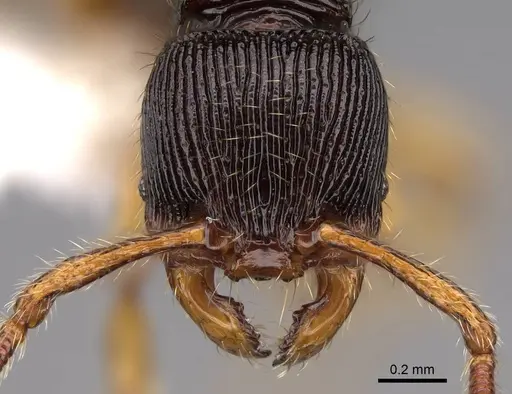
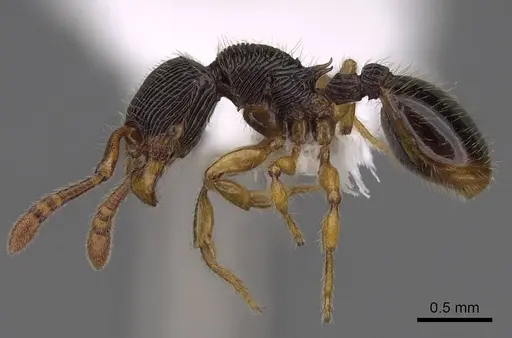
Myrmecina urbanii is a tiny myrmicine ant endemic to India, found in the Western Ghats and eastern regions. Workers have a distinctive appearance with deep striations on the head and mesosoma, and a 'Y'-shaped striation pattern on the thorax. They have 12-segmented antennae with a 3-segmented club, long propodeal spines that curve upward, and small teeth on the pronotum and metanotum. Worker body length ranges from 2.96 to 4.20mm . Queens are larger, with a total length of 4.4mm, a robust, gibbous mesosoma, and fully developed eyes with ocelli . This species nests in leaf litter and forages individually, quickly hiding among the forest floor debris when threatened . Workers show considerable size variation, with some individuals approaching queen-like dimensions, though no true soldier caste exists .
Quick Summary
- Difficulty: Medium
- Origin & Habitat: Endemic to India, recorded from Karnataka, Kerala, Orissa, and Tamil Nadu [3]. Nests in leaf litter in tropical and subtropical forest habitats [2][1].
- Colony Type: Colony structure is unconfirmed. No published data on whether this species is monogyne (single queen) or polygyne (multiple queens).
- Size & Growth:
- Queen: 4.4mm total length [1]
- Worker: 2.96-4.20mm total length [1]
- Colony: Unknown, no colony size data published
- Growth: Unknown, no development timing data available
- Development: Estimated 6-10 weeks, inferred from typical patterns in related Myrmecina species (No direct development data exists for this species. Expect slow to moderate growth.)
- Antkeeping:
- Temperature: Aim for 22-26°C based on its tropical Indian forest habitat. Provide a gentle temperature gradient so the ants can choose their preferred spot. No specific published data.
- Humidity: Keep the nest substrate consistently moist but not waterlogged. A naturalistic leaf-litter setup helps retain moisture. Adjust based on worker activity – if they cluster near moisture or seem sluggish, increase humidity. Specific percentages have not been studied.
- Diapause: Unknown. True hibernation is likely not required since the species comes from tropical India. A cooler period (15-18°C) for 2-3 months during winter may be beneficial but is not mandatory. This is speculative.
- Nesting: Naturalistic setup with leaf litter material works best. Y-tong (AAC) or plaster nests with very small chambers suit their tiny size. Provide plenty of dark, humid hiding spaces in both the nest and outworld.
- Behavior: Shy and secretive. They forage individually rather than in trails, and quickly vanish into leaf litter when disturbed [1]. They are non-aggressive and their primary defense is to hide, not to sting – instead they smear venom using a flattened spatulate stinger (cannot pierce human skin). Escape risk is moderate to high due to their small size (workers ~3mm), use fine mesh and tight-fitting lids. They pose no danger to keepers.
- Common Issues: humidity loss is the quickest way to kill the colony – keep substrate moist at all times, escape prevention requires fine-mesh barriers because workers are tiny, slow colony growth can test patience, especially with no published care guidelines, unknown founding behavior means queens may fail if conditions aren't right – be flexible
Housing and Nest Setup
Myrmecina urbanii is a leaf-litter specialist, so your setup should mimic that microhabitat. A naturalistic terrarium-style formicarium works best – fill it with a layer of moist soil topped with dried leaves, twigs, and other forest floor debris. This gives the ants the cover they need to feel secure and forage naturally [2][1]. Alternatively, a Y-tong nest with very small chambers (scaled to their 3-4mm workers) or a plaster nest with fine tunnels works well. The key is providing plenty of dark, humid spaces. In the outworld, add leaf litter, small pieces of bark, and other debris so they can forage individually. A shallow water dish completes the setup. Avoid acrylic nests – they don't hold humidity well.
Feeding and Diet
The diet of Myrmecina urbanii has not been specifically studied, but based on other Myrmecina species, they likely feed on small invertebrates and honeydew. Offer small live prey like fruit flies, pinhead crickets, and tiny mealworms – these match the workers' small size. Keep sugar water, honey, or diluted jam available at all times. Since they forage individually, place food in several spots in the outworld rather than at a single station. Remove uneaten prey after 24-48 hours to prevent mold. Feed protein 2-3 times per week and keep sugar sources constantly available.
Temperature and Humidity
No specific data exists for this species, but given its tropical Indian origin, warmth and humidity are both important. Keep temperatures in the 22-26°C range – a heating cable on one side of the nest creates a gradient so the ants can regulate themselves. Humidity should be high: the nest substrate should feel consistently damp but never waterlogged. Mist the outworld occasionally, and use a water reservoir in plaster nests. Good ventilation prevents mold. If workers cluster near moisture or seem sluggish, increase humidity, if they avoid dry areas, lower humidity. Adjust based on observation.
Behavior and Colony Dynamics
Myrmecina urbanii is shy and secretive. Workers forage alone, searching leaf litter for small prey and honeydew [1]. When threatened, they swiftly disappear into the debris – this is their primary defense [2]. They do not sting, instead they use a spatulate stinger to smear venom, which cannot pierce human skin (based on Myrmicinae tribe Crematogastrini defense mechanisms). Colonies likely grow slowly, and worker size varies – some workers are nearly as large as the queen [1]. Give the colony 1-2 years to establish before expecting significant growth. Handle with care and provide many hiding spaces to reduce stress.
Seasonal Care
As a tropical Indian species, Myrmecina urbanii does not experience harsh winters in its native range. True hibernation is probably not required. However, providing a cooler period during winter months (roughly November–February) may help synchronize natural rhythms. Reduce temperatures to 15-18°C for 2-3 months rather than a full cold diapause. Reduce feeding during this time but keep water available. If your room temperature stays above 20°C year-round, the colony may remain active – that's fine, but watch for signs of stress. Avoid extreme temperature swings. No research directly supports this advice, it's based on general tropical ant husbandry.
Frequently Asked Questions
How long does it take for Myrmecina urbanii to produce first workers?
No specific development data exists for this species. Based on related Myrmecina species, expect 6-10 weeks from egg to first worker at optimal temperature (around 24°C). Founding colonies may take longer as the queen raises her first brood alone.
Can I keep multiple Myrmecina urbanii queens together?
We don't know the natural colony structure of this species. It is not recommended to combine unrelated foundress queens, as aggression is likely. Wait until you have a confirmed established colony before considering any colony splitting.
What size colony does Myrmecina urbanii reach?
Colony size data has not been published. Based on related Myrmecina species, expect colonies of perhaps 100-500 workers at maturity. Growth is likely slow – give them time.
Do Myrmecina urbanii ants sting?
No, these ants do not sting. They have a flattened, spatulate stinger used to smear venom onto attackers rather than piercing skin. They are completely harmless to keepers. Their defense is hiding in leaf litter rather than confrontation.
Are Myrmecina urbanii good for beginners?
This species is rated Medium difficulty. While not aggressive, they require high humidity, a naturalistic setup, and patience – more demanding than simple test-tube setups. Some antkeeping experience is helpful, but motivated beginners can succeed with proper research.
What do I feed Myrmecina urbanii?
Offer small live prey like fruit flies, tiny crickets, and small mealworms. Keep sugar water, honey, or diluted jam available at all times. Remove uneaten prey after a day to prevent mold. Place food in several spots since they forage individually.
Do Myrmecina urbanii need hibernation?
True hibernation is likely not required since they come from tropical India. A cooler period (15-18°C) for 2-3 months during winter may be beneficial but is not mandatory. If room temperature stays warm year-round, they can remain active. This is speculative – no research supports it.
Why are my Myrmecina urbanii dying?
The most common cause is dry conditions. Keep the nest substrate consistently moist. Other causes: temperature extremes, stress from too much disturbance, or escape (check for tiny gaps). Ensure your setup maintains high humidity and 22-26°C, and that the ants have plenty of hiding spaces.
When should I move Myrmecina urbanii to a formicarium?
Wait until the colony has at least a few workers and is actively foraging. For this species, a naturalistic setup from the start is often better than moving from a test tube. If you start in a test tube, transfer when the colony outgrows it and add leaf litter to the outworld. Avoid moving too early.
Report an Issue
The current care sheet is based fully on literature. See inconsistencies, or something that's incorrect? Please , it will be resolved after review from an admin. Contributing to the blogs tab also helps providing information, to make us be able to further improve the caresheets. Thank you for your support!
References

This caresheet is licensed under CC BY-SA 4.0 .
Community Blogs
CASENT0922975
View on AntWeb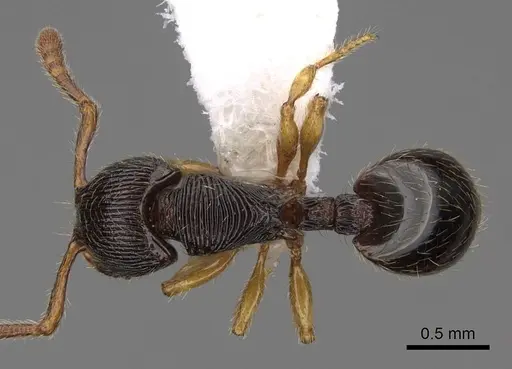
Literature
Loading distribution map...Loading products...