
Myrmecina eruga
- Sci. Name
- Myrmecina eruga
- Tribe
- Crematogastrini
- Subfamily
- Myrmicinae
- Author
- Shattuck, 2009
- Distribution
- Found in 1 countries
Introduction
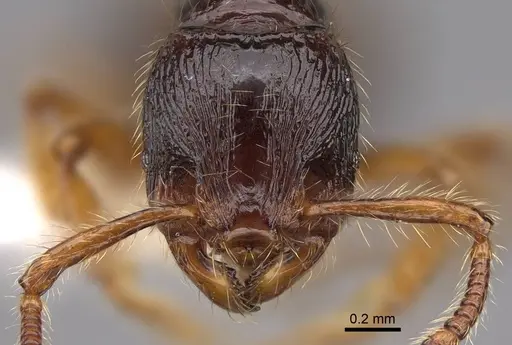
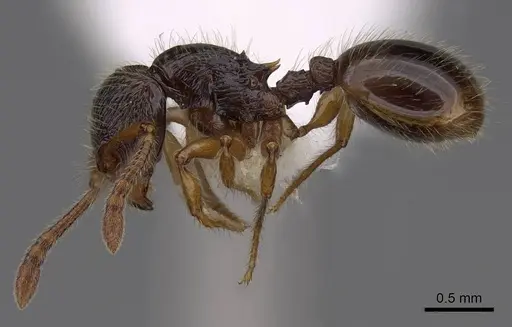
Myrmecina eruga is a tiny, cryptic ant species described by Shattuck in 2009,found only in the rainforests and Melaleuca forests of northern Queensland coastal areas in Australia . Workers are small and dark brown-black with yellow-brown antennae, mandibles, and legs. They have distinctive longitudinal sculpturing on their pronotum and relatively long propodeal spines. These ants are part of a genus known for being among the most restricted and high-elevation specialist ants in Australia, with several species occupying tiny ranges in Queensland's wet tropics . This species is part of a genus where larvae have exceptionally small heads adapted for feeding on oribatid mites - a specialized predatory relationship not commonly seen in ants . Myrmecina eruga is uncommonly encountered in the wild, most often collected through leaf litter sampling rather than observed at foragers or in obvious nests .
Quick Summary
- Difficulty: Medium
- Origin & Habitat: Northern Queensland coastal areas, Australia, specifically rainforest and Melaleuca forest habitats [1][2]. Found in leaf litter samples and nesting in rotten logs and under rocks.
- Colony Type: Small colonies. Colonies occur in soil with or without coverings, between rocks, in twigs on the ground, or in rotten wood [2]. Colony type (monogyne vs polygyne) is unconfirmed.
- Size & Growth:
- Queen: Size data unavailable, no species-specific measurements exist
- Worker: Size data unavailable, the context provides only head measurements (HW 0.71-0.79mm, HL 0.72-0.79mm), not total body length
- Colony: Small colonies, under 100 workers based on genus patterns [2]
- Growth: Moderate to slow
- Development: Unknown, no species-specific development data available (Tropical origin suggests development may be faster at warmer temperatures, but specific timelines are unstudied.)
- Antkeeping:
- Temperature: Keep at 24-28°C, they are a tropical Australian species from northern Queensland [1]. A gentle gradient allowing warmer and cooler areas is ideal.
- Humidity: High humidity required, rainforest species. Keep nest substrate consistently moist but not waterlogged. These ants naturally live in leaf litter and rotting wood where humidity stays high.
- Diapause: Unknown, being a tropical species from northern Queensland, they may not require true diapause, but specific seasonal behavior is unstudied.
- Nesting: Prefers humid, dark spaces. Natural nesting sites include rotten logs, under rocks, in soil, and in twigs on the ground [2]. In captivity, a small test tube setup with moist substrate or a small Y-tong/plaster nest with high humidity works well. Keep the nest dark and humid.
- Behavior: Very cryptic and docile. As a small leaf-litter ant, they are not aggressive and rarely venture into open spaces. Workers are slow-moving and spend most of their time in the nest or immediately surrounding areas. Escape prevention is critical due to their tiny size, they can easily slip through standard barriers. They are predatory on micro-arthropods, particularly oribatid mites, which they are morphologically adapted to hunt [2]. This species uses a smear defense mechanism, they have a modified, flattened stinger used to wipe venom onto enemies rather than piercing.
- Common Issues: escape prevention is critical, their tiny size means they can slip through the smallest gaps, use fine mesh and tight-fitting lids, maintaining high humidity without causing mold growth can be challenging, slow colony growth may lead keepers to overfeed or disturb the colony unnecessarily, they are extremely small and easily crushed during nest maintenance, difficulty establishing colonies from founding queens, their natural colony foundation is slow
Housing and Nest Setup
Myrmecina eruga requires a small, humid enclosure that mimics their natural leaf-litter habitat. A small test tube setup works well for founding colonies, fill a test tube one-third with water, plug with cotton, and place the queen in the dark. For established colonies, a small Y-tong or plaster nest with a water reservoir maintains the humidity they need. Keep the nest area dark, these ants naturally live in concealed spaces under rocks, in rotting wood, and within leaf litter [2]. The nest chambers should be small and appropriately scaled to their tiny size. Avoid large, open spaces that would cause them stress. A small outworld area for foraging is sufficient, they are not active foragers like some larger ant species.
Feeding and Diet
Myrmecina eruga is predatory on small micro-arthropods, particularly oribatid mites, this is a specialized feeding relationship unique to the genus. Their larvae have exceptionally small heads, an adaptation that allows them to feed on the partially opened bodies of oribatid mites [2]. In captivity, offer small live prey such as springtails, tiny soil mites, or fruit fly pupae. They will likely accept small insects but may struggle with prey larger than their tiny size. Sugar sources are not typically accepted by predatory Myrmecina species, focus on protein prey rather than honey or sugar water. Feed small amounts of prey every few days, removing any uneaten remains to prevent mold.
Temperature and Humidity
As a tropical species from northern Queensland, Myrmecina eruga needs warm temperatures in the range of 24-28°C. Northern Queensland coastal areas have a tropical climate with year-round warmth, so these ants do not require hibernation or cooling periods. Temperature can be maintained using a heating cable on one side of the nest to create a gentle gradient, or simply keeping the colony in a warm room. Humidity is critical, these ants naturally occur in rainforest and Melaleuca forest leaf litter where conditions stay consistently moist [1]. Keep the nest substrate damp but not waterlogged, and provide a water source in the outworld. Avoid allowing the nest to dry out completely.
Colony Founding and Growth
Founding behavior is unconfirmed for this species. The first workers (nanitics) will be very small, as is typical for the genus. Colony growth is slow, Myrmecina colonies remain small even at maturity, typically under 100 workers [2]. Do not expect rapid population explosions. Be patient during the founding phase and avoid disturbing the queen. Once workers emerge, they will begin foraging for small prey. The colony will gradually expand over many months or even years. Avoid the temptation to expand to larger setups too quickly, these ants prefer tight, confined spaces.
Handling and Observation
Due to their extremely small size, Myrmecina eruga requires careful handling. Workers are tiny and can easily be crushed or lost during nest maintenance [1]. When cleaning or moving colonies, use soft tools and work slowly. These ants are not aggressive and do not have a painful sting, so they pose no danger to keepers. However, their cryptic nature means you will not see much activity, they prefer to stay hidden in their nest chambers. Observation is best done using a magnifying glass or by setting up the nest for indirect observation through a magnifying lens or camera.
Frequently Asked Questions
How long does it take for Myrmecina eruga to produce first workers?
Unknown, no species-specific development data is available. Expect the process to take several months given their slow colony growth and small colony size. This is an estimate based on typical Myrmicinae patterns.
Can I keep Myrmecina eruga in a test tube?
Yes, test tubes work well for founding colonies. Use a small test tube with a water reservoir (cotton-plugged), keep it humid, and place it in darkness. The queen will seal herself in and raise her first brood. You may need to move the colony to a slightly larger setup once worker numbers grow, but these ants prefer small spaces even when established.
What do Myrmecina eruga ants eat?
They are predatory on small micro-arthropods, particularly oribatid mites. In captivity, offer small live prey like springtails, tiny soil mites, or fruit fly pupae. They are unlikely to accept sugar sources like honey. Feed small amounts of live prey every few days.
How big do Myrmecina eruga colonies get?
Colonies remain small, typically under 100 workers even at maturity. This is typical for the genus Myrmecina, which is known for small colony sizes [2]. Do not expect large colonies.
Do Myrmecina eruga ants sting?
They are not known to sting and pose no danger to keepers. Their small size and docile nature make them harmless, though the tiny workers can easily be crushed during handling.
Are Myrmecina eruga good for beginners?
This species is better suited for intermediate to advanced antkeepers. Their tiny size makes them challenging to house and maintain, and they require careful attention to humidity and escape prevention. They are also slow-growing, which can be frustrating for beginners expecting visible progress.
Do Myrmecina eruga need hibernation?
Unknown, being a tropical species from northern Queensland, they likely do not require true hibernation, but specific seasonal behavior is unstudied. They may show reduced activity during cooler periods.
Why are my Myrmecina eruga dying?
Common causes include: escape through tiny gaps (they are extremely small), drying out from low humidity, mold from excessive moisture, stress from too much light or open spaces, or being crushed during maintenance. Ensure excellent escape prevention, maintain high humidity without stagnation, and minimize disturbances to the colony.
When should I move Myrmecina eruga to a formicarium?
Move them only when the colony has grown significantly and the test tube is becoming crowded. However, these ants prefer small spaces, so even an established colony may do well in a small test tube setup with a humid outworld. If moving to a formicarium, choose a small Y-tong or plaster nest with appropriately sized chambers.
What temperature should I keep Myrmecina eruga at?
Keep them at 24-28°C, which mimics their tropical Queensland habitat. A gentle temperature gradient allowing workers to choose their preferred warmth level is ideal. A heating cable on part of the nest can help maintain these temperatures.
Report an Issue
The current care sheet is based fully on literature. See inconsistencies, or something that's incorrect? Please , it will be resolved after review from an admin. Contributing to the blogs tab also helps providing information, to make us be able to further improve the caresheets. Thank you for your support!
References

This caresheet is licensed under CC BY-SA 4.0 .
Community Blogs
CASENT0922969
View on AntWeb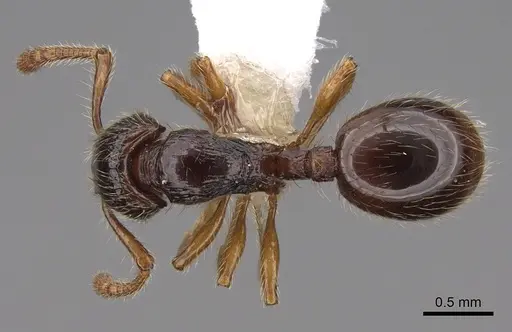
Literature
Loading distribution map...Loading products...