
Myrmecia queenslandica
- Sci. Name
- Myrmecia queenslandica
- Tribe
- Myrmeciini
- Subfamily
- Myrmeciinae
- Author
- Forel, 1915
- Distribution
- Found in 1 countries
Introduction
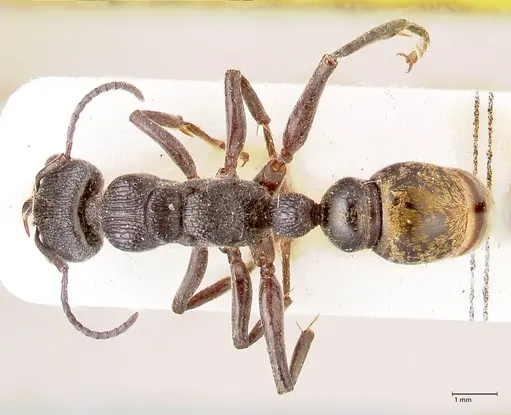
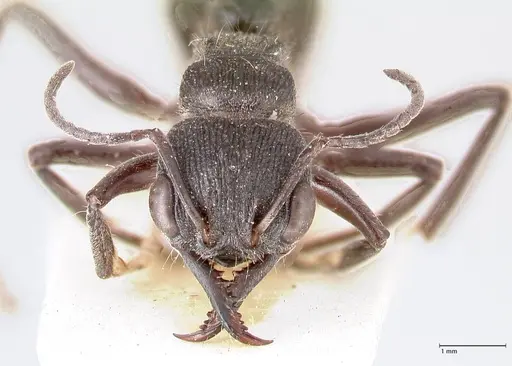
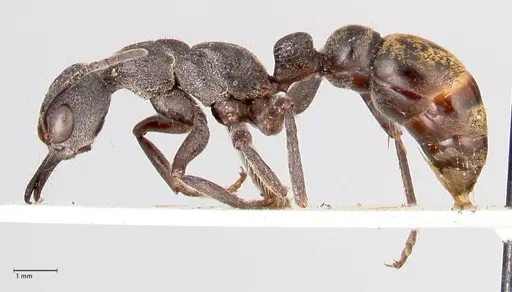
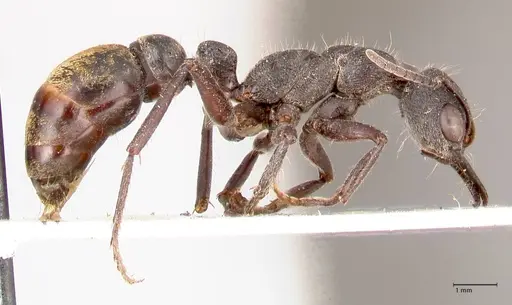
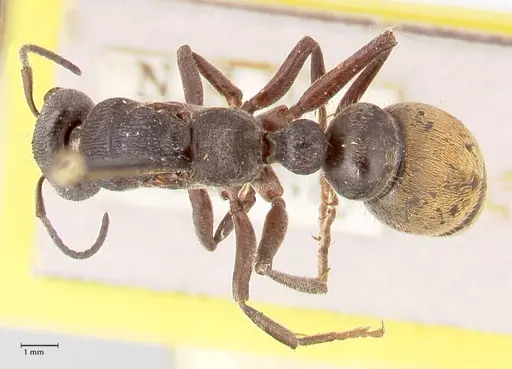
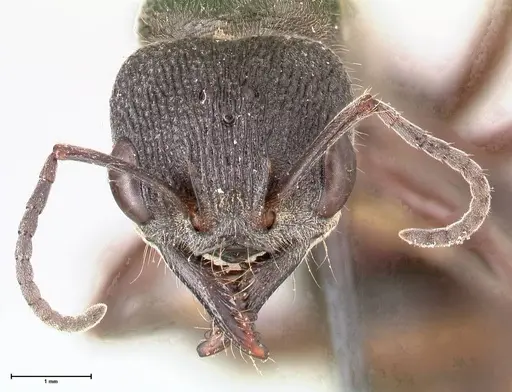
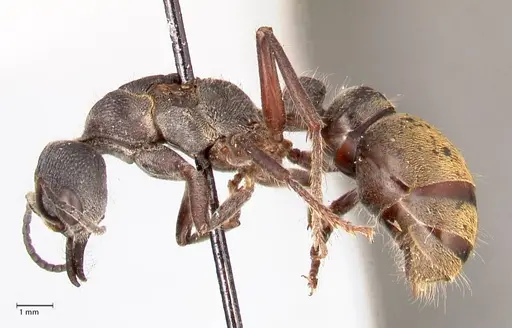
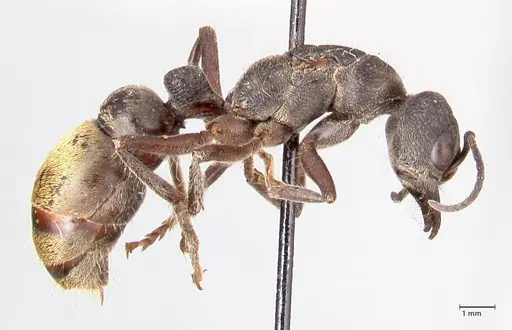
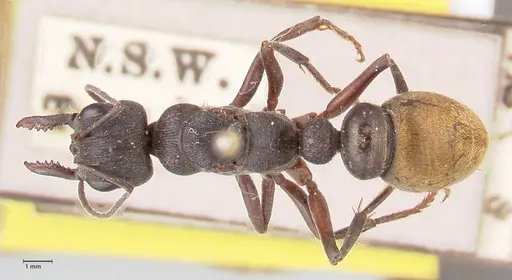
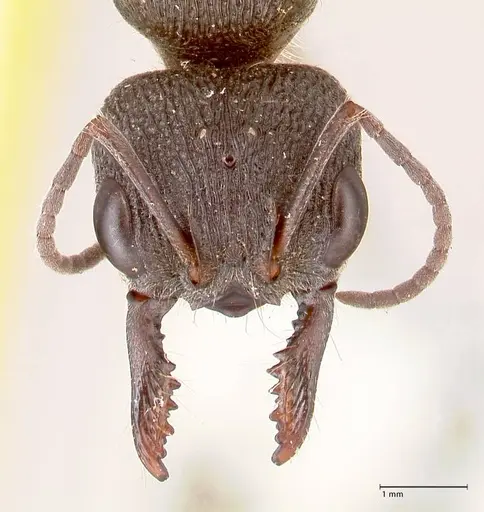
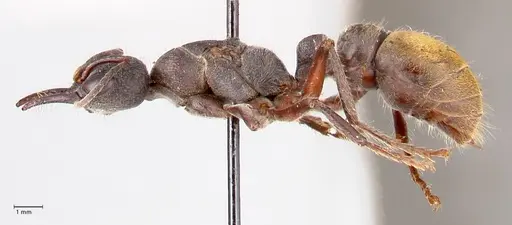
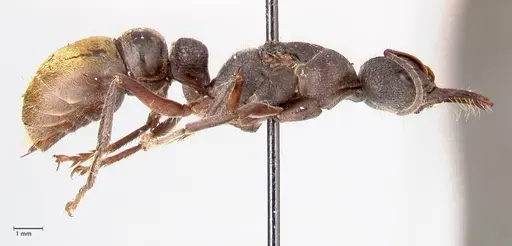
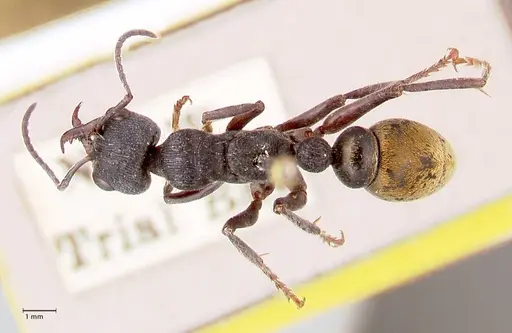
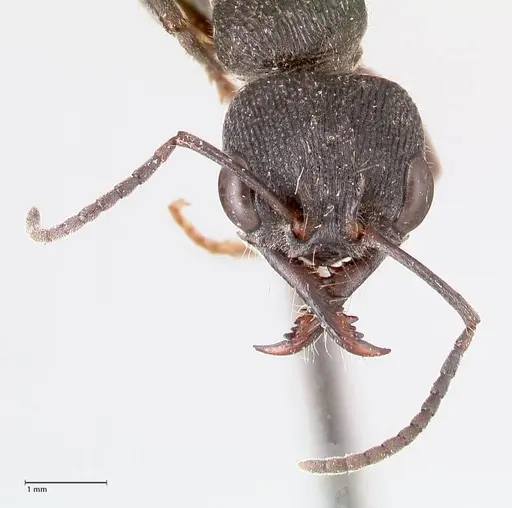
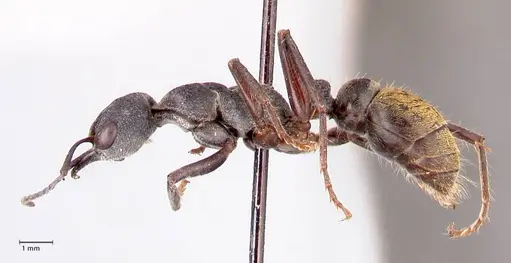
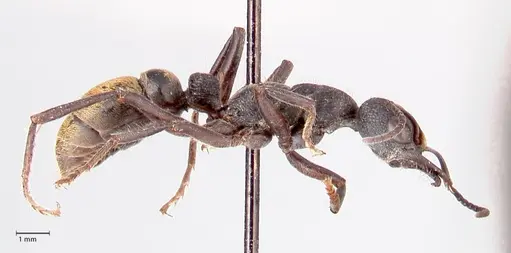
Myrmecia queenslandica is a large ant species native to Queensland, Australia . Workers are typically up to 18 mm in length, with a reddish-brown head and thorax and a darker abdomen . They have powerful mandibles and a stinger, and are known for their aggressive defense behavior . This species is particularly notable for its painful sting, which can cause allergic reactions in humans.
Quick Summary
- Difficulty: Medium
- Origin & Habitat: Queensland, Australia, found in open forests, woodland edges, and grassland areas [1][2]
- Colony Type: Colony structure is unconfirmed, but based on Myrmecia genus patterns, likely monogyne (single queen) colonies [2].
- Size & Growth:
- Queen: Up to 22 mm, inferred from Myrmecia genus [2]
- Worker: Up to 18 mm, inferred from Myrmecia genus [2]
- Colony: Up to several hundred workers in mature colonies[2]
- Growth: Moderate, based on Myrmecia genus patterns [2]
- Development: Approximately 8-12 weeks at optimal temperature[2] (Development is temperature-dependent, warmer conditions accelerate growth but should not exceed species tolerance [2])
- Antkeeping:
- Temperature: Keep nest area at 22-26°C with a gradient[2]
- Humidity: Moderate humidity, substrate slightly moist but not waterlogged[2]
- Diapause: Yes, a winter rest period of 2-3 months at 10-15°C is recommended[2]
- Nesting: Large test tubes for founding, transitioning to Y-tong or naturalistic setups[2]
- Behavior: Workers are aggressive defenders with excellent vision [2]. The sting is painful and can cause allergic reactions.
- Common Issues: sting risk, these ants have painful stings and may attack when threatened, handle with extreme caution [2], colonies grow slowly, beginners may lose patience with the multi-month development timeline, winter dormancy is essential, skipping diapause can weaken or kill colonies over time, large size requires appropriately sized enclosures and feeding spaces [2], wild-caught colonies may be defensive or damaged during collection, making them harder to establish
Housing and Nest Setup
For founding colonies, use large test tubes filled with water and sealed with a cotton plug [2]. Keep the tube in darkness and avoid disturbances during founding [2]. Once the colony reaches a reasonable size, transition to a Y-tong or naturalistic setup with appropriately sized chambers [2]. Provide a water tube for drinking access and use a deep escape barrier on rims [2].
Feeding and Diet
Myrmecia queenslandica is a predatory species that hunts live insects [2]. Offer appropriately sized prey such as crickets or mealworms 2-3 times per week, and provide sugar sources like honey weekly [2]. Remove uneaten prey after 24 hours to prevent mold [2].
Temperature and Seasonal Care
Maintain nest temperatures between 22-26°C with a gradient using a heating cable [2]. During winter, simulate a 2-3 month diapause at 10-15°C by moving the colony to a cooler location [2]. Reduce feeding during diapause and resume gradually in spring [2].
Behavior and Safety
Workers are aggressive defenders with excellent vision and will investigate threats [2]. The sting is painful and can cause allergic reactions, handle with extreme caution and use long-handled tools when necessary [2].
Frequently Asked Questions
How long does it take for Myrmecia queenslandica to produce first workers?
Expect 8-12 weeks from egg to first worker at optimal temperature (22-26°C) [2]. Development is slower than many tropical ant species [2].
Do Myrmecia queenslandica ants sting?
Yes, they have a painful sting and are aggressive defenders [2]. Stings can cause intense pain and allergic reactions [2].
What do I feed Myrmecia queenslandica?
Feed live insects like crickets or mealworms as the primary food,2-3 times per week [2]. Also provide sugar sources like honey weekly [2].
Do Myrmecia queenslandica need hibernation?
Yes, a winter diapause of 2-3 months at 10-15°C is recommended [2]. Reduce feeding during this period and resume gradually in spring [2].
Are Myrmecia queenslandica good for beginners?
No, they are recommended for intermediate to experienced antkeepers due to their aggressive behavior, painful sting, and specific seasonal requirements [2].
How big do Myrmecia queenslandica colonies get?
Mature colonies reach up to several hundred workers [2]. Growth is moderate and takes months to years [2].
Can I keep multiple Myrmecia queenslandica queens together?
No, Myrmecia species are typically monogyne, and multiple queens will fight [2]. Pleometrosis is not recommended for this species [2].
What temperature do Myrmecia queenslandica need?
Keep nest areas at 22-26°C with a gradient [2]. Avoid temperatures below 18°C or above 30°C [2].
When should I move Myrmecia queenslandica to a formicarium?
Keep them in a test tube until the colony reaches a reasonable size, then transition to a Y-tong or naturalistic setup [2].
Why is my Myrmecia queenslandica colony dying?
Common causes include skipping diapause, improper temperatures, overfeeding leading to mold, or excessive disturbance [2]. Ensure proper seasonal cycling and feeding [2].
Report an Issue
The current care sheet is based fully on literature. See inconsistencies, or something that's incorrect? Please , it will be resolved after review from an admin. Contributing to the blogs tab also helps providing information, to make us be able to further improve the caresheets. Thank you for your support!
References

This caresheet is licensed under CC BY-SA 4.0 .
Community Blogs
Literature
Loading distribution map...Loading products...