
Myrmecia gratiosa
- Sci. Name
- Myrmecia gratiosa
- Tribe
- Myrmeciini
- Subfamily
- Myrmeciinae
- Author
- Clark, 1951
- Distribution
- Found in 1 countries
Introduction
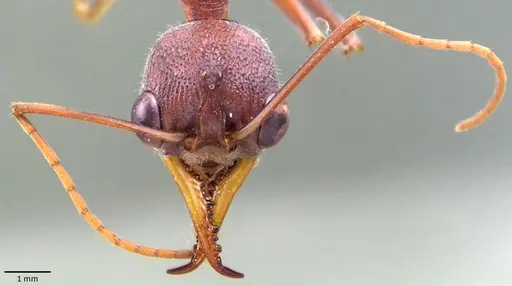
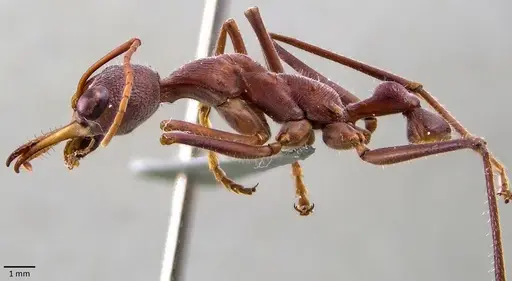
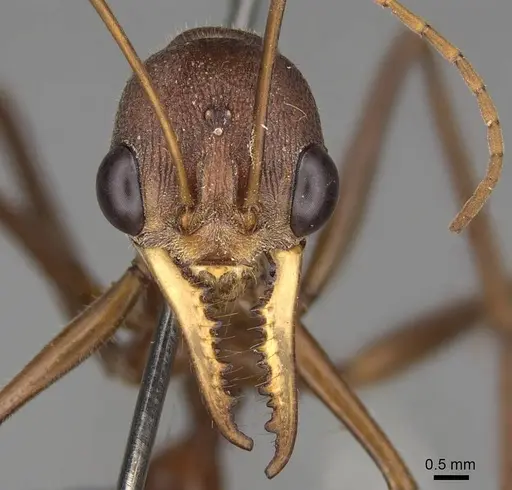
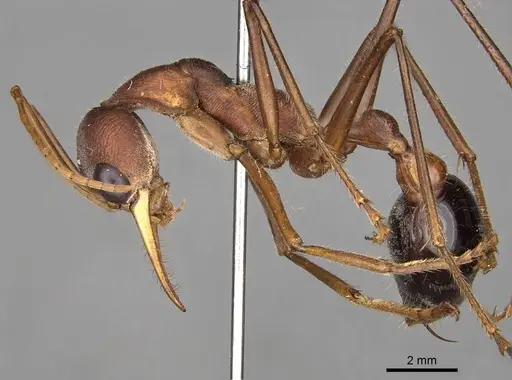
Myrmecia gratiosa is a large bulldog ant measuring 20–30 mm in length . It belongs to the Myrmecia gulosa species group and is found only in Western Australia, especially the Darling Scarp area east of Perth . These ants have the classic bulldog look: a reddish body with a red, brown, or black head and a black gaster (abdomen) . What makes this species stand out is its aggressive, visual hunting style. They actively chase down prey rather than foraging for sugar. Their venom is practically identical to that of Myrmecia pavida and Myrmecia nigriceps, and can cause severe allergic reactions in sensitive people . They are formidable predators that will defend their nest with a powerful sting.
Quick Summary
- Difficulty: Medium
- Origin & Habitat: Endemic to Western Australia, particularly the Darling Scarp area east of Perth [1][2]. The natural habitat is dry scrubland and forest, where they hunt as visual predators.
- Colony Type: Unknown – no specific data. Myrmecia species are typically single-queen (monogyne), but this has not been confirmed for M. gratiosa.
- Size & Growth:
- Queen: Size data unavailable – no queen measurements have been published.
- Worker: 20–30 mm [1][2]
- Colony: Unknown – no colony size data available for this species.
- Growth: Unknown – no data on growth rate.
- Development: Unknown – no published data on development time. (No information is available on how temperature affects brood development in this species.)
- Antkeeping:
- Temperature: Unknown – no specific data. Based on the Western Australian climate, moderate temperatures around 22–26°C are a reasonable starting point. Create a gradient and observe the ants' behavior.
- Humidity: Provide a water source (e.g., a test tube with cotton) but keep the nest substrate dry to slightly moist – avoid wet conditions. No exact humidity range is known.
- Diapause: Unknown – no data. Given their temperate origin, a cool rest period may be beneficial but is not confirmed. If you try diapause, keep temperatures around 15–18°C for 4–6 weeks and monitor.
- Nesting: Y-tong (AAC) or plaster nests with large chambers that can accommodate ants up to 30 mm. Provide a spacious outworld with hiding spots.
- Behavior: Myrmecia gratiosa is an aggressive, visual predator. Workers actively hunt using excellent eyesight. They do not feed on sugar – they need live prey. Their sting is potent and can cause severe allergic reactions (anaphylaxis) in sensitive individuals [1][2]. They are strong and can escape if lids are loose, use tight-fitting covers and barrier grease. Active during daytime.
- Common Issues: powerful sting – handle with extreme caution, especially if you have insect venom allergies [1][2], escape prevention is critical – these large ants can push through loose lids, strict protein diet – they will not accept sugar water or honey, slow colony growth (if any) during founding – be patient and avoid disturbance, wild-caught colonies may carry parasites that affect survival in captivity
Housing and Nest Setup
Because workers can reach 30 mm, you need a nest with large chambers – at least 20 mm tall. Y-tong (AAC) blocks or plaster nests work well. The outworld should be roomy (e.g.,30×20 cm for a small colony) with some decorations like bark or stones. Make sure all tubes and connections are wide enough for these big ants to move through easily. Always provide a water source (a test tube with a cotton plug) in the outworld.
Feeding and Diet
Based on their aggressive predatory behavior, Myrmecia gratiosa are strict carnivores. Offer live insects such as crickets, roaches, or mealworms. Provide prey that is about half the worker's size or smaller. Feed every 2–3 days and remove uneaten prey after 24 hours. They will not accept sugar water, honey, or fruit. Fresh water must always be available.
Temperature and Heating
No precise temperature requirements have been published. Since these ants come from the temperate Darling Scarp region, a range of 22–26°C is a good starting point. Use a heating cable on one side of the nest to create a gradient, so the ants can choose their preferred zone. Avoid direct heat that can dry out the nest. Monitor with a thermometer.
Behavior and Temperament
Myrmecia gratiosa are highly aggressive and will sting if disturbed. They are visual hunters that chase prey during the day [1][2]. Their venom can cause anaphylaxis in allergic people [1][2]. Workers are strong and can lift tight lids – secure the enclosure well. No supercolonies or complex social structures are known, each colony seems to have a single queen (typical of the genus, but unconfirmed for this species).
Colony Founding
There is no published information on how Myrmecia gratiosa queens found colonies. Many Myrmecia species use claustral founding (the queen seals herself in a chamber), but this has not been confirmed. If you obtain a queen, keep her in a dark, quiet place and disturb as little as possible. Founding success is unpredictable.
Growth and Development
Little is known about colony development. Workers in this species are large (20–30 mm), which suggests a relatively slow life cycle, but no data exists on egg-to-worker time, colony growth rate, or mature colony size. Patience is essential if you keep this species.
Frequently Asked Questions
Can I keep Myrmecia gratiosa in a test tube?
No – test tubes are too small for 20–30 mm ants. Use a Y-tong (AAC) or plaster nest with chambers at least 20 mm tall and a spacious outworld.
What do Myrmecia gratiosa eat?
They are strict predators. Offer live insects like crickets, roaches, or mealworms. They will not accept sugar water, honey, or fruit. Fresh water is essential.
How long until first workers in Myrmecia gratiosa?
Unknown – there is no published data on development time. Expect any estimate to be speculative.
Are Myrmecia gratiosa good for beginners?
No – they are rated medium difficulty. Their large size, aggression, potent sting, and unknown care requirements make them unsuitable for beginners. Start with an easier species.
Do Myrmecia gratiosa need hibernation?
Unknown – no data. They come from a temperate region, so a cool period may be beneficial, but it's not confirmed. If you try, keep them at 15–18°C for 4–6 weeks and monitor.
How big do Myrmecia gratiosa colonies get?
Unknown – no colony size data exists for this species. Myrmecia colonies can be large, but this is unconfirmed for M. gratiosa.
Can I keep multiple Myrmecia gratiosa queens together?
Probably not – most Myrmecia are monogyne (single queen), but this has not been confirmed. It is safest to keep only one queen per colony.
Why is my Myrmecia gratiosa colony declining?
Possible causes include: disturbance during founding, incorrect diet (they need live prey), temperatures too cold, or parasites. Since little is known, adjusting conditions based on observation is your best approach.
When should I move Myrmecia gratiosa to a formicarium?
There is no rule of thumb for this species because colony size data is lacking. Move them when the founding chamber becomes crowded, but wait until at least a few workers are present to reduce stress. Connect the new nest and let them relocate naturally.
Are Myrmecia gratiosa ants invasive?
No – they are native only to Western Australia and have not been introduced elsewhere. Keeping them outside their native range is allowed, but never release them into the wild.
What makes Myrmecia gratiosa different from other Myrmecia?
It is part of the Myrmecia gulosa species group, found only in the Darling Scarp region of WA. Its venom is practically identical to that of M. pavida and M. nigriceps [1][2].
Report an Issue
The current care sheet is based fully on literature. See inconsistencies, or something that's incorrect? Please , it will be resolved after review from an admin. Contributing to the blogs tab also helps providing information, to make us be able to further improve the caresheets. Thank you for your support!
References

This caresheet is licensed under CC BY-SA 4.0 .
Community Blogs
ANTWEB1041851
View on AntWeb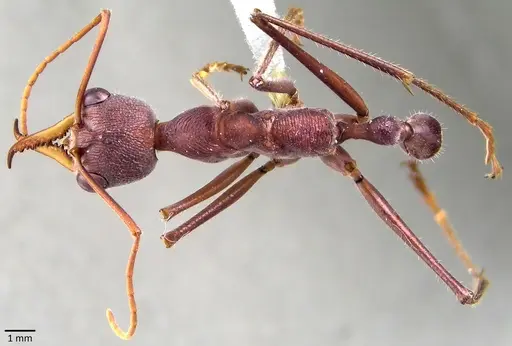
CASENT0914024
View on AntWeb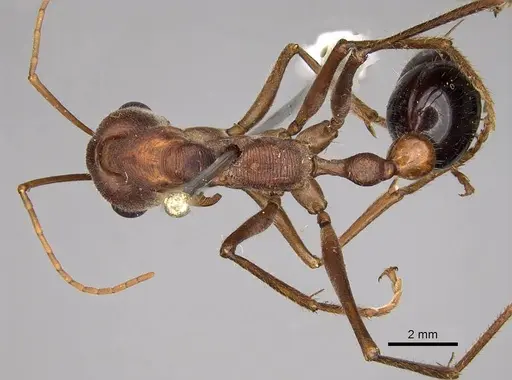
Literature
Loading distribution map...Loading products...