
Myrmecia elegans
- Sci. Name
- Myrmecia elegans
- Tribe
- Myrmeciini
- Subfamily
- Myrmeciinae
- Author
- Clark, 1943
- Distribution
- Found in 1 countries
Introduction
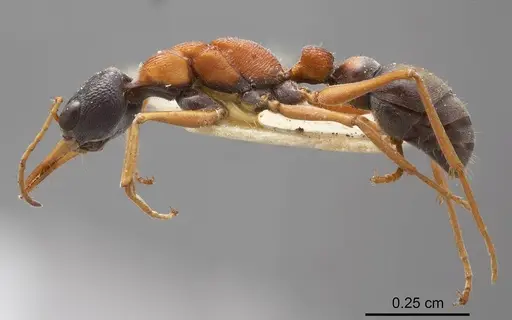
Myrmecia elegans is a bulldog ant native to Western Australia. It has mandibles that can be light yellow or dark, and the mesosoma varies from red-orange to dark red and black. Key identification features include yellowish pubescence on the clypeus and shorter antennal scape compared to similar species . Size data for this species is unavailable. As a member of the Myrmeciinae subfamily, it possesses a powerful sting, typical of bulldog ants.
Quick Summary
- Difficulty: Hard
- Origin & Habitat: Western Australia, Australia. Found in southwestern regions around Hovea, Mt Dale, and Mundaring [1].
- Colony Type: Based on Myrmecia genus patterns, likely monogyne (single queen). Species-specific data is limited.
- Size & Growth:
- Queen: size data unavailable
- Worker: size data unavailable
- Colony: unknown
- Growth: Moderate
- Development: Unknown (No species-specific data available.)
- Antkeeping:
- Temperature: Temperature needs are unclear, start around 22-25°C and observe.
- Humidity: Provide a humidity gradient, mostly dry nest chamber with one small moist area.
- Diapause: Unknown for this species.
- Nesting: Y-tong nests or soil nests may be suitable. Provide a foraging area with escape prevention.
- Behavior: Bulldog ants are aggressive and have a potent sting. Workers are active foragers. Escape prevention is important due to their size and strength [1].
- Common Issues: sting hazard, use caution when servicing the colony, escape risk, ensure outworld is sealed properly, colony growth may be slow due to limited data
Housing and Nest Setup
Data on specific nest preferences for Myrmecia elegans is unavailable. Based on genus patterns, Y-tong nests or soil nests may be suitable. Provide a foraging area with escape prevention, such as using fluon on edges and ensuring tight lids. A dark background can help the ants feel secure.
Feeding and Diet
Myrmecia ants are predators by nature. Feed them live insects such as crickets or mealworms, and provide sugar sources like honey water. Protein-rich foods are essential for colony growth. Remove uneaten prey after 24 hours to prevent mold.
Temperature and Seasonal Care
Maintain temperatures around 22-25°C during active seasons. Avoid temperatures below 12°C or above 30°C. A heating cable can create a gradient if needed. Monitor colony activity for signs of stress.
Handling and Safety
Myrmecia elegans has a potent sting and should be handled with extreme caution. Use gentle puffs of air instead of blowing on them. Seek medical attention if stings cause severe reactions. Always use protective gear when servicing the colony [1].
Colony Development
Colony growth data is unavailable. Based on genus patterns, colonies may develop slowly. Queens likely seal themselves in during founding, but specific behavior is unconfirmed.
Frequently Asked Questions
How long does it take for Myrmecia elegans to produce first workers?
Unknown, no species-specific data is available.
Do Myrmecia elegans ants sting?
Yes, they have a powerful sting typical of bulldog ants [1].
What do I feed Myrmecia elegans?
Feed them live insects like crickets or mealworms, and provide sugar sources. Protein is essential for colony growth.
Are Myrmecia elegans good for beginners?
No, they are not recommended for beginners due to their potent sting and aggressive nature.
What temperature do Myrmecia elegans need?
Temperature needs are unclear, start around 22-25°C and observe.
How big do Myrmecia elegans colonies get?
Colony size is unknown for this species.
Can I keep multiple Myrmecia elegans queens together?
This species is likely monogyne, but data is limited. Combining queens is not recommended.
Do Myrmecia elegans need hibernation?
Diapause is unknown for this species.
When should I move Myrmecia elegans to a formicarium?
Data on colony size thresholds is unavailable. Wait until the colony is established before moving.
Why is my Myrmecia elegans colony dying?
Common causes include improper humidity, temperature stress, or poor nutrition. Check conditions and ensure stable care.
Report an Issue
The current care sheet is based fully on literature. See inconsistencies, or something that's incorrect? Please , it will be resolved after review from an admin. Contributing to the blogs tab also helps providing information, to make us be able to further improve the caresheets. Thank you for your support!
References

This caresheet is licensed under CC BY-SA 4.0 .
Community Blogs
ANTWEB1008282
View on AntWeb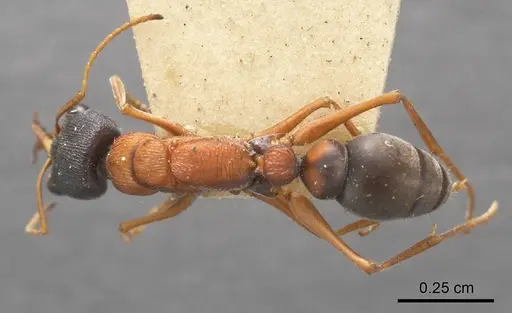
Literature
Loading distribution map...Loading products...