
Myrmecia borealis
- Sci. Name
- Myrmecia borealis
- Tribe
- Myrmeciini
- Subfamily
- Myrmeciinae
- Author
- Ogata & Taylor, 1991
- Distribution
- Found in 1 countries
Introduction
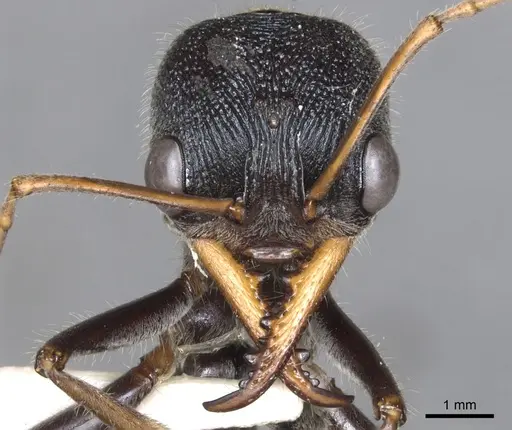
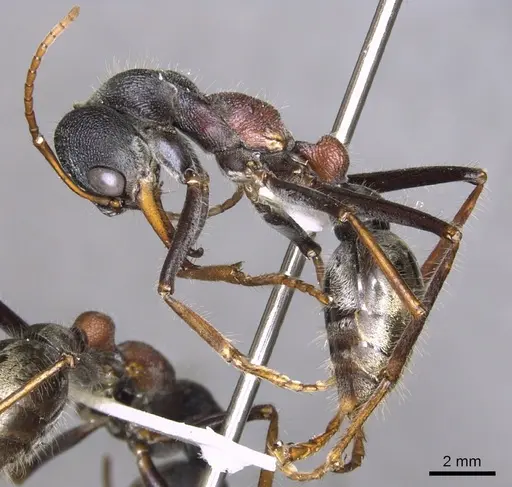
Myrmecia borealis is a large ant species native to northern Australia, belonging to the bulldog ant group known for their powerful sting and bold behavior. Workers display reddish-brown to dark brown coloration with distinctive mandibles adapted for capturing prey. The species name 'borealis' means northern, referring to its geographic distribution across Queensland, Northern Territory, and Western Australia. Queens are significantly larger than workers and establish colonies through claustral founding. These ants are diurnal foragers, actively hunting insects and collecting nectar during daylight hours. As part of the Myrmeciinae subfamily, they possess a large, smooth stinger capable of delivering painful venom injections .
Quick Summary
- Difficulty: Medium
- Origin & Habitat: Northern Australia including Queensland, Northern Territory, and Western Australia in tropical and subtropical savanna habitats. Nests in soil, often under rocks or in decaying wood, creating underground galleries [1].
- Colony Type: Likely monogyne based on typical Myrmecia genus patterns, single queen colonies are common in this group.
- Size & Growth:
- Queen: Approximately 25-30mm, inferred from Myrmecia genus patterns
- Worker: Approximately 15-20mm, inferred from Myrmecia genus patterns
- Colony: Up to several hundred workers, estimated from typical Myrmecia colony sizes
- Growth: Moderate, Myrmecia species typically take several months to a year to establish solid worker populations
- Development: Approximately 8-12 weeks at warm temperatures, estimated based on related Myrmecia species (Development is temperature-dependent, warmer conditions within safe range accelerate development. First workers (nanitics) are typically smaller than mature workers.)
- Antkeeping:
- Temperature: Keep nest area at 24-28°C with a slight gradient. Australian Myrmecia species benefit from warm conditions but should have access to cooler areas to regulate body temperature. Room temperature (22-25°C) is acceptable as a baseline.
- Humidity: Moderate humidity around 50-60%. Nest substrate should be kept slightly moist but never waterlogged. Allow portions of the nest to dry between water additions.
- Diapause: Not required, Myrmecia are tropical/subtropical species that do not undergo true hibernation. However, a slight reduction in temperature during winter months (down to 18-20°C) may be beneficial to simulate seasonal slowdown.
- Nesting: Y-tong (AAC) nests work well for their size. Provide a spacious outworld for foraging. Naturalistic setups with soil and decorative elements are also suitable. Ensure chambers are appropriately scaled to their large worker size.
- Behavior: Myrmecia borealis is bold, aggressive, and highly defensive of their nest. Workers are active foragers that hunt insects and collect nectar. They have excellent vision and will readily investigate disturbances. Their sting is painful and can cause allergic reactions in sensitive individuals, handle with caution. Escape risk is moderate due to their large size, but standard barriers are usually sufficient. They are diurnal, with peak activity during warmer parts of the day.
- Common Issues: queens can be difficult to establish in captivity, founding colonies require patience and minimal disturbance, their powerful sting poses a safety concern, especially for keepers with insect venom allergies, large size requires appropriately sized enclosures and careful escape prevention, overheating can be fatal, never exceed 32°C and always provide temperature gradients, wild-caught colonies may carry parasites that can devastate captive populations
Housing and Nest Setup
Myrmecia borealis requires spacious housing due to their large worker size. Y-tong (AAC) nests are the most practical option, providing clear visibility while allowing you to monitor colony activity. Chamber dimensions should accommodate their large workers comfortably, passages and chambers should be appropriately wide. The outworld should be generously sized, at least 3-4 times the nest area, to allow for foraging and hunting activities. Use a deep substrate layer in the outworld to allow for natural digging behavior if desired. Escape prevention is straightforward due to their large size, standard fluon barriers on smooth surfaces are highly effective. However, ensure all connections between nest and outworld are secure as workers can force loose connections. [1]
Feeding and Nutrition
Myrmecia borealis is predatory and requires protein-rich diets to thrive. Offer live insects such as crickets, mealworms, roaches, and flies, appropriately sized to worker size. A cricket or cockroach roughly half the worker size is ideal. Feed protein 2-3 times per week, adjusting based on colony size and brood production. They also accept sugar sources, honey or sugar water can be offered occasionally, though protein should form the primary diet. Fresh water must always be available. Growing colonies with lots of brood will consume significantly more protein than established colonies. Remove uneaten prey after 24-48 hours to prevent mold issues. [1]
Temperature and Seasonal Care
As a northern Australian species, Myrmecia borealis prefers warm conditions. Maintain nest temperatures between 24-28°C, with an ideal range of 25-26°C. A heating cable or mat on one side of the nest creates a beneficial temperature gradient, allowing ants to self-regulate. Never exceed 32°C as this can be fatal. During winter months in temperate climates, you can reduce temperatures slightly to 18-22°C to simulate natural seasonal patterns, but true hibernation is not required. Reduced temperatures will slow activity and brood development, this is normal and not harmful. Keep humidity moderate (50-60%) and ensure good ventilation to prevent mold. [1]
Behavior and Handling
Myrmecia bulldog ants are known for their aggressive, defensive behavior. Workers will readily attack any perceived threat to the colony, charging out with mandibles open and delivering painful stings. The sting of Myrmecia species is considered one of the most painful in the ant world and can cause allergic reactions in sensitive individuals. When working with this species, use long forceps and avoid direct hand contact near the colony. They are diurnal foragers, most active during daylight hours and warmer temperatures. Workers are solitary hunters, using their excellent vision to locate prey rather than recruiting through chemical trails. This hunting behavior makes them fascinating to watch but means they will not form persistent foraging trails like some ant species. [1]
Colony Establishment
Establishing a Myrmecia borealis colony from a founding queen requires patience. Captured queens should be placed in a claustral setup (test tube or small container) with minimal disturbance. The queen will seal herself in a chamber and lay eggs, surviving entirely on her stored fat reserves until the first workers emerge. Do not feed during the founding phase, opening the nest can stress the queen and cause her to abandon or consume her brood. First workers (nanitics) will be smaller than mature workers but will immediately begin foraging once the colony is established. Only introduce food after nanitics have hardened. Growth is gradual, expect 6-12 months to reach 20-50 workers under optimal conditions. [1]
Frequently Asked Questions
How long does it take for Myrmecia borealis to produce first workers?
First workers typically emerge 8-12 weeks after the queen lays eggs, assuming temperatures around 25-28°C. This timeline is estimated based on related Myrmecia species, exact development time for M. borealis has not been specifically documented.
What do I feed Myrmecia borealis?
They require a protein-rich diet of live insects. Crickets, mealworms, roaches, and flies are ideal. Offer appropriately sized prey, roughly half the worker size. Feed protein 2-3 times per week. Sugar sources like honey water can be offered occasionally but should not be the primary food.
Are Myrmecia borealis good for beginners?
They are rated as medium difficulty. While visually impressive, their painful sting and specific temperature requirements make them better suited for keepers with some antkeeping experience. Beginners should start with less dangerous species.
What temperature do Myrmecia borealis need?
Keep nest temperatures between 24-28°C, ideally around 25-26°C. Provide a temperature gradient so ants can regulate their own body temperature. Never exceed 32°C as this can be fatal.
How big do Myrmecia borealis colonies get?
Mature colonies likely reach up to several hundred workers based on typical Myrmecia genus sizes. Exact maximum colony size for this specific species has not been documented.
Do Myrmecia borealis need hibernation?
No, true hibernation is not required as they are a tropical/subtropical species. However, a slight temperature reduction to 18-22°C during winter months can benefit the colony by simulating natural seasonal patterns.
Can I keep multiple Myrmecia borealis queens together?
Myrmecia species are typically monogyne (single queen). Combining unrelated queens is not recommended as they will likely fight. If you capture a queen, establish her alone in a claustral setup.
When should I move Myrmecia borealis to a formicarium?
Wait until the colony has at least 30-50 workers and the queen has stopped producing nanitics. Moving too early can stress the colony. A Y-tong or AAC nest works well for their large size.
Why is my Myrmecia borealis colony declining?
Common causes include: temperature extremes (too hot or too cold), improper humidity (too dry or waterlogged), insufficient protein in diet, parasites from wild-caught colonies, or excessive disturbance during founding. Review all care parameters and ensure the queen is still alive and laying eggs.
Report an Issue
The current care sheet is based fully on literature. See inconsistencies, or something that's incorrect? Please , it will be resolved after review from an admin. Contributing to the blogs tab also helps providing information, to make us be able to further improve the caresheets. Thank you for your support!
References

This caresheet is licensed under CC BY-SA 4.0 .
Community Blogs
CASENT0902791
View on AntWeb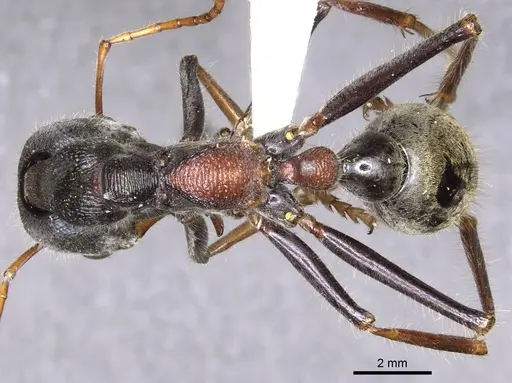
Literature
Loading distribution map...Loading products...