
Monomorium strangulatum
- Sci. Name
- Monomorium strangulatum
- Tribe
- Solenopsidini
- Subfamily
- Myrmicinae
- Author
- Santschi, 1921
- Distribution
- Found in 4 countries
Introduction
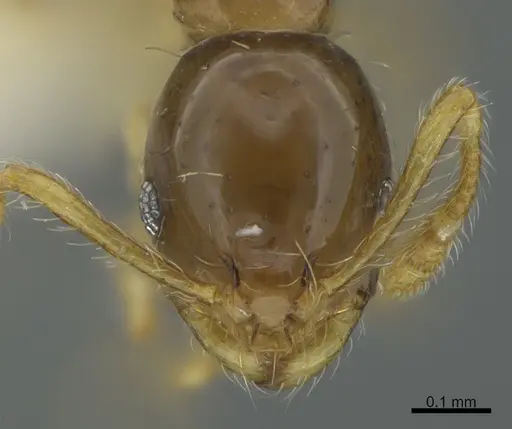
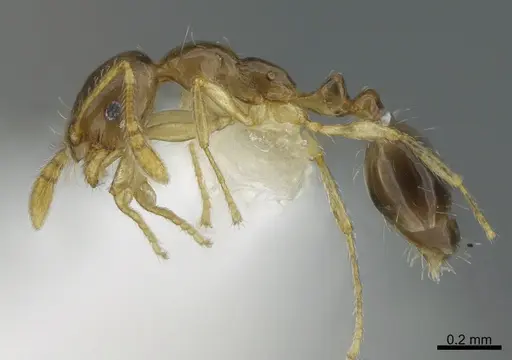
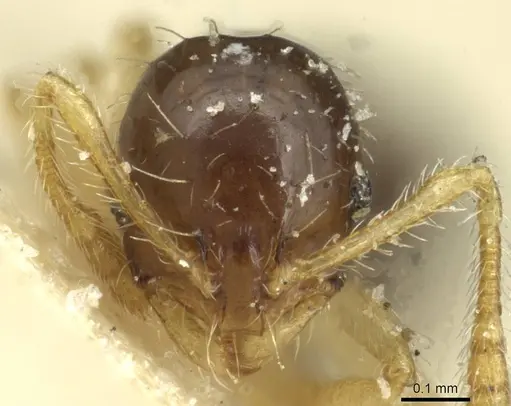
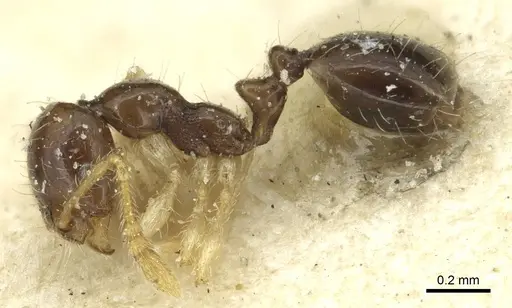
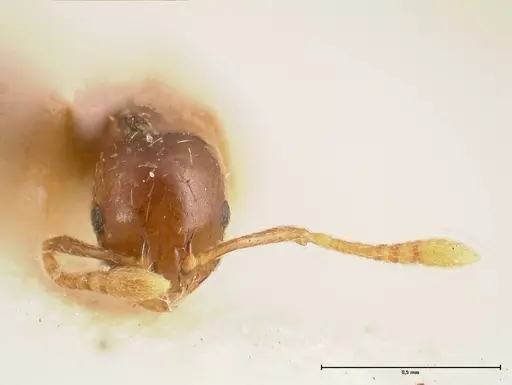
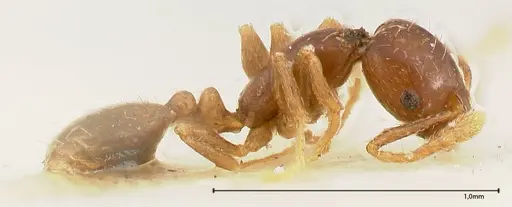
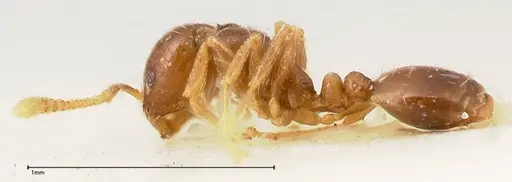
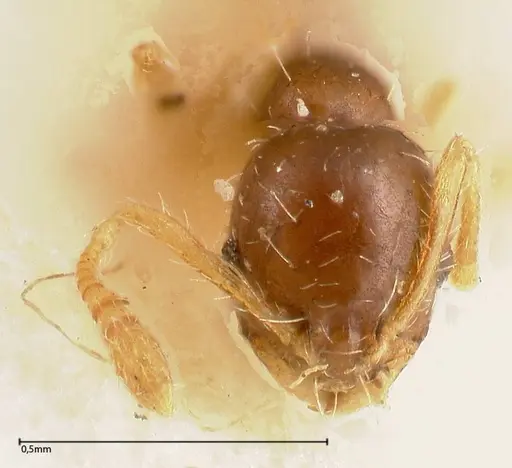
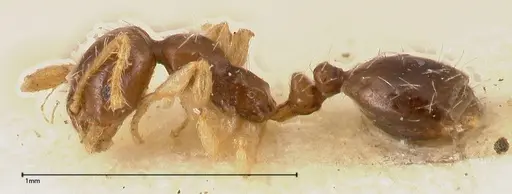
Monomorium strangulatum is a tiny ant species native to Central Africa, found in Gabon, Tanzania, Uganda, the Democratic Republic of Congo, and the Central African Republic. Workers measure 1.8-2.0mm in total length . They have a dark brown body with contrasting yellow appendages and 11-segmented antennae, which is unusual within their species group where most relatives have 12 segments . This species inhabits mesic forests at elevations from 110m to 640m, collected from leaf litter and vegetation beating . In the wild, these ants live on the forest floor in humid, shaded environments. They appear to be ground-nesting or litter-dwelling, though exact nesting habits are poorly documented .
Quick Summary
- Difficulty: Medium
- Origin & Habitat: Central African forests in Gabon, Tanzania, Uganda, DRC, and Central African Republic at elevations of 110-640m, found in mesic (damp) forest environments [2][3][1].
- Colony Type: Colony structure is unconfirmed, no research documents whether this species is monogyne (single queen) or polygyne (multiple queens) [1].
- Size & Growth:
- Queen: Unknown, queen size has not been documented in available literature
- Worker: 1.8-2.0mm [1]
- Colony: Unknown, no colony size data available
- Growth: Unknown, no development timing data available
- Development: Unknown, no direct measurements. Based on typical Monomorium patterns in tropical species, it may take 4-8 weeks at warm temperatures, but this is inferred [1]. (Estimate based on genus patterns, not directly studied for this species)
- Antkeeping:
- Temperature: Unknown, no specific temperature data. Inferred from tropical Central African habitat, likely warm conditions around 24-28°C are suitable.
- Humidity: High humidity is needed, from mesic forest habitat, keep nest substrate consistently moist but not waterlogged.
- Diapause: Unknown, no research on seasonal behavior. Tropical species likely do not require hibernation.
- Nesting: Likely ground-nesting in humid substrate, use naturalistic setup with moist leaf litter or well-humidified nests.
- Behavior: These ants are tiny and secretive, typical of forest-litter species. They have a stinger but it is likely harmless to humans due to their small size. Escape risk is high because of their minute size, excellent prevention is critical.
- Common Issues: escape prevention is critical, their tiny size means they can squeeze through small gaps, high humidity requirements can lead to mold if ventilation is inadequate, slow growth and small colonies may frustrate beginners, lack of documented care information means pioneering husbandry is needed
Housing and Nest Setup
Replicate their natural humid forest floor environment. Use a naturalistic setup with moist leaf litter, twigs, and debris, or a well-humidified nest with small chambers scaled to their size. Escape prevention is non-negotiable, use tight-fitting lids, fluon on rims, and secure tubing connections. A small outworld connected to the nest works for feeding [2][3][1].
Feeding and Diet
Offer small live prey like fruit flies or pinhead crickets, and sugar sources like honey water. Feed protein twice weekly and keep sugar water available. Remove uneaten food promptly to prevent mold [1].
Temperature and Humidity Management
Keep temperatures warm, around 24-28°C, with a gentle gradient. Maintain high humidity by keeping the nest substrate moist but not waterlogged. Avoid dry air from vents.
Colony Establishment and Growth
If starting with a queen, observe closely as founding behavior is unconfirmed. Expect slow growth, first workers will be tiny. Patience is key [1].
Handling and Temperament
These ants are fragile and not aggressive. Handle gently to avoid crushing them. Their stinger is unlikely to penetrate human skin, but care is still needed.
Frequently Asked Questions
How long does it take for Monomorium strangulatum to go from egg to worker?
Unknown, no research documents their development timeline. Based on typical Monomorium patterns, it may take 4-8 weeks at warm temperatures, but this is an inference [1].
Are Monomorium strangulatum good for beginners?
Probably not ideal, they have no documented care information, require high humidity and excellent escape prevention, and grow slowly. Suitable for experienced keepers [1].
What do Monomorium strangulatum eat?
Based on typical Monomorium diet, they likely accept small live prey and sugar sources. Offer fruit flies, tiny crickets, and honey water [1].
What temperature do Monomorium strangulatum need?
Unknown, no specific data. Inferred from tropical habitat, likely 24-28°C is suitable.
How big do Monomorium strangulatum colonies get?
Unknown, no research documents colony size [1].
Can I keep multiple queens together?
Unknown, colony structure is unconfirmed. Without evidence, it is not recommended to combine queens [1].
Do Monomorium strangulatum need hibernation?
Unknown, tropical species likely do not require hibernation.
Why are my Monomorium strangulatum escaping?
Their tiny size allows them to squeeze through small gaps. Check all equipment and use fluon or fine mesh for prevention [1].
When should I move Monomorium strangulatum to a formicarium?
Keep a queen in a test tube until you have at least 20-30 workers. For wild colonies, allow them to settle before moving [1].
Report an Issue
The current care sheet is based fully on literature. See inconsistencies, or something that's incorrect? Please , it will be resolved after review from an admin. Contributing to the blogs tab also helps providing information, to make us be able to further improve the caresheets. Thank you for your support!
References

This caresheet is licensed under CC BY-SA 4.0 .
Community Blogs
CASENT0408162
View on AntWeb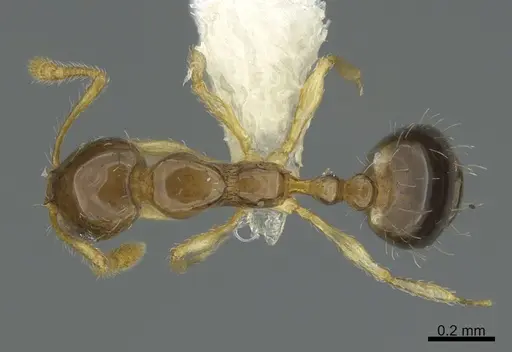
CASENT0913856
View on AntWeb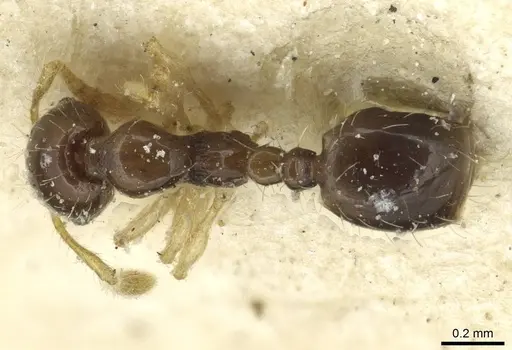
CASENT0914388
View on AntWeb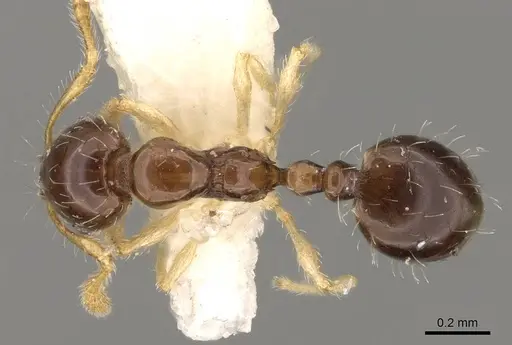
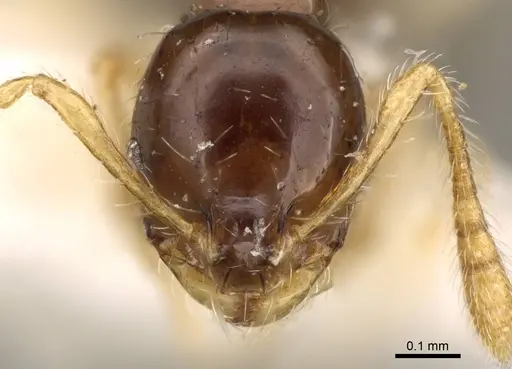
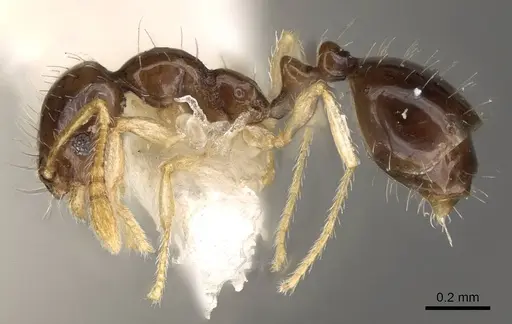
FOCOL0419
View on AntWeb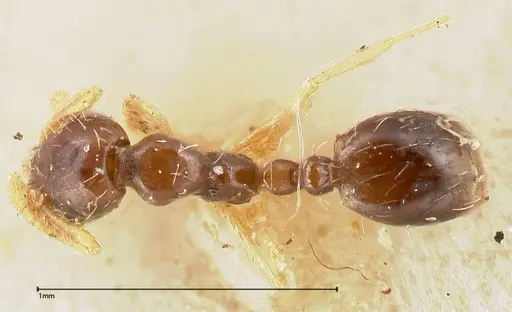
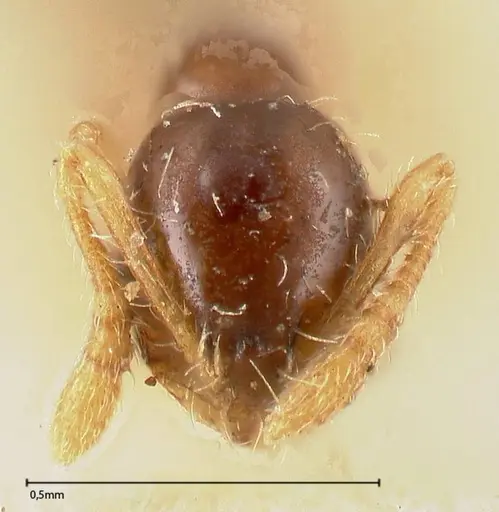
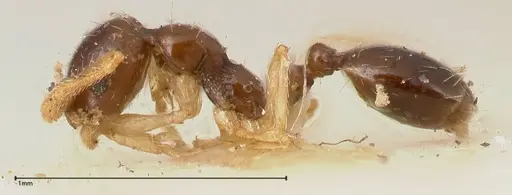
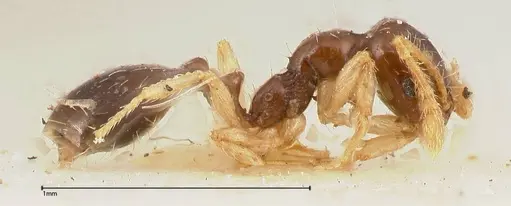
FOCOL0420-1
View on AntWeb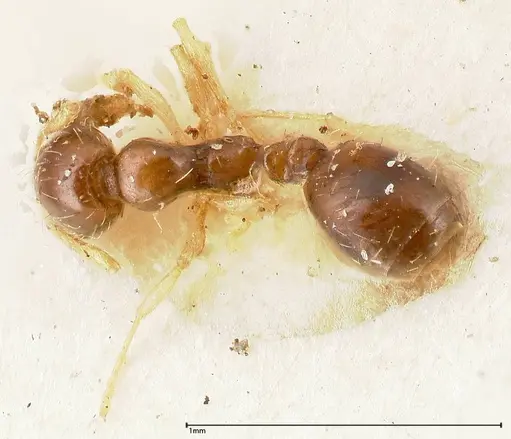
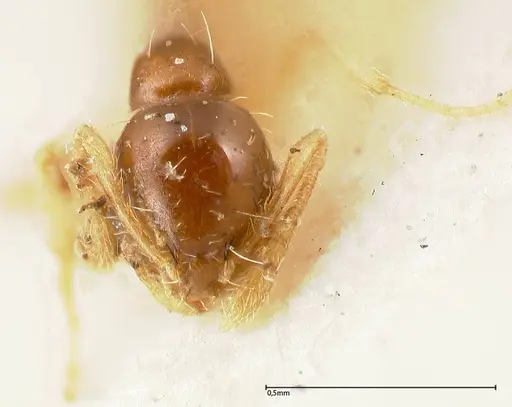
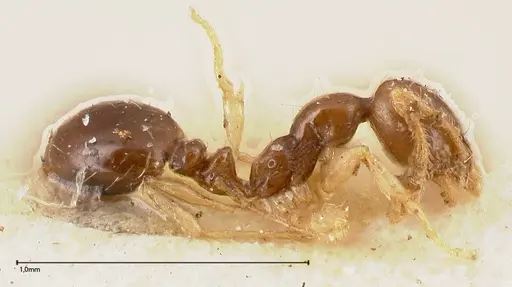
FOCOL0420-2
View on AntWeb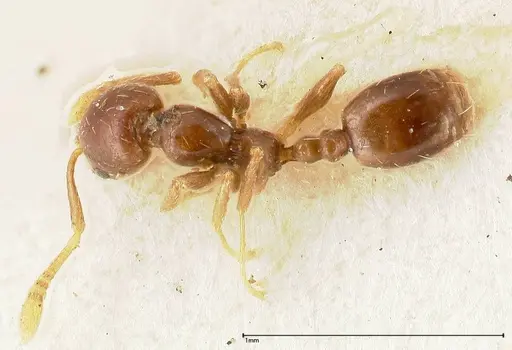
FOCOL0420-3
View on AntWeb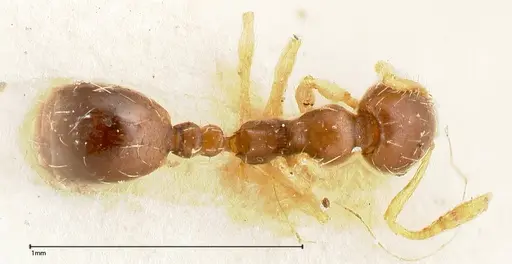
Literature
Loading distribution map...Loading products...