
Monomorium damarense
- Sci. Name
- Monomorium damarense
- Tribe
- Solenopsidini
- Subfamily
- Myrmicinae
- Author
- Forel, 1910
- Distribution
- Found in 3 countries
Introduction
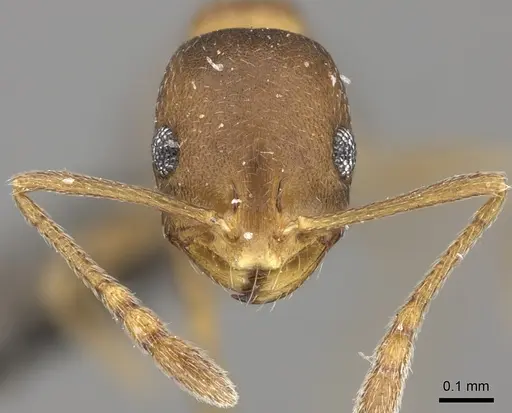
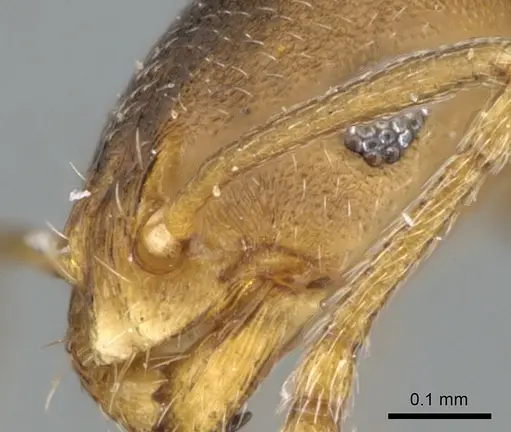
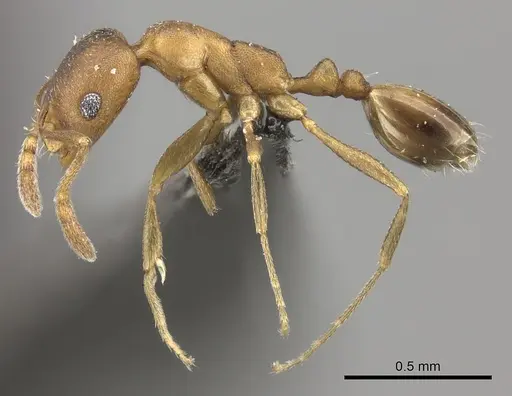
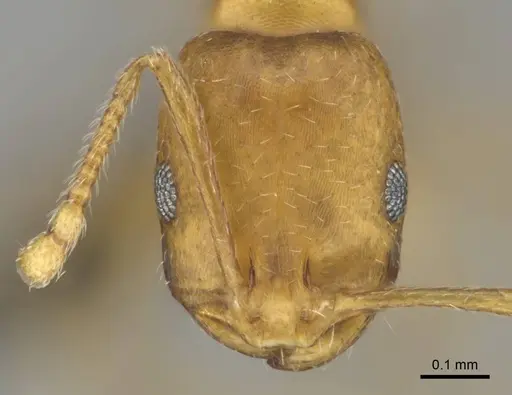
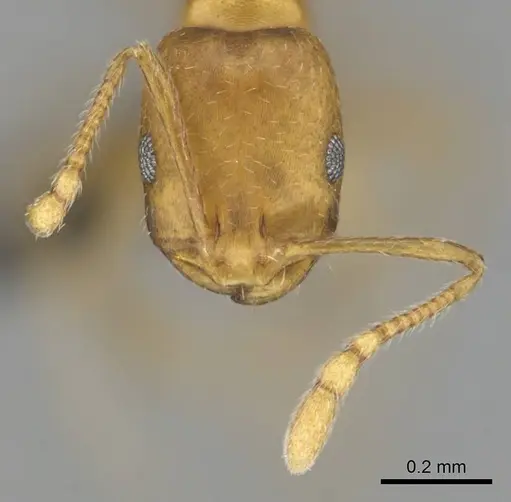
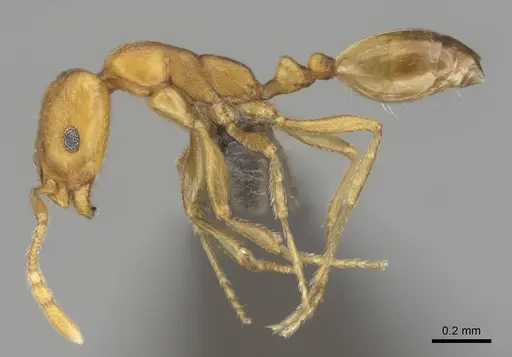
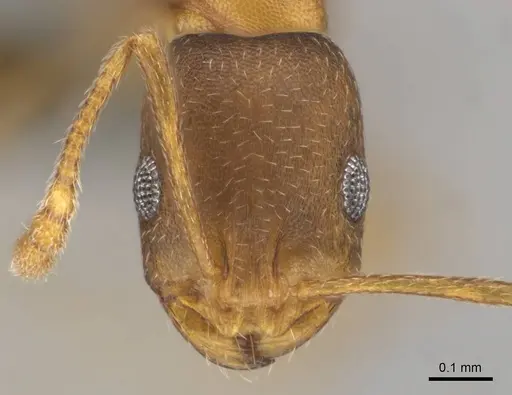
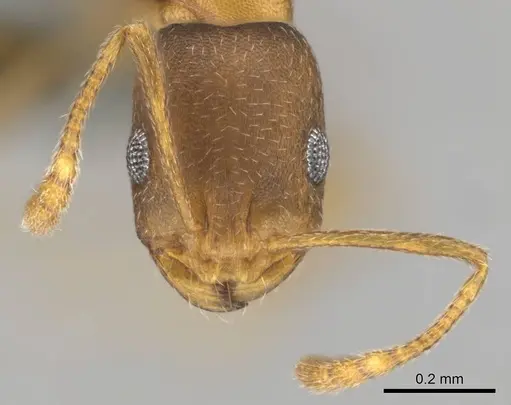
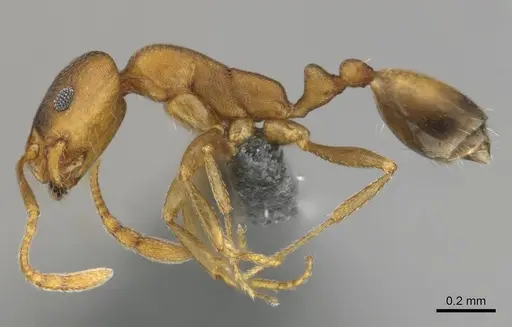
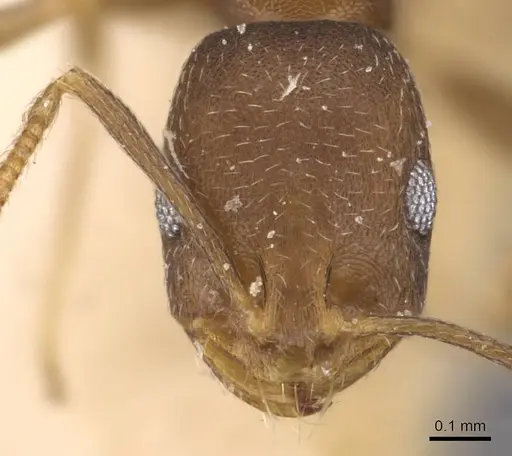
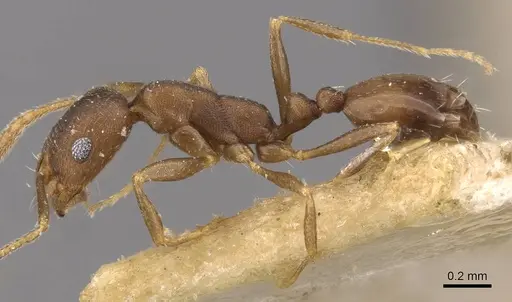
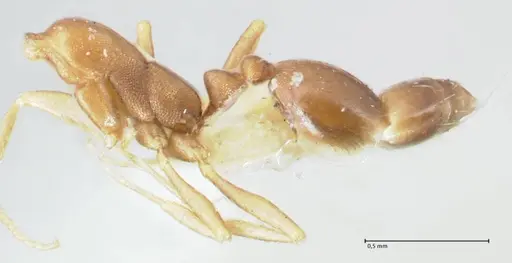
Monomorium damarense is a small, light brown to medium brown ant from the Myrmicinae subfamily. Workers average 3.2-3.9 mm in length, making them a relatively tiny species . They are native to the arid regions of southern Africa, specifically Namibia and Botswana, where they live in open habitats like grassland, savanna, and Bushveld . This ant is easily recognized by its extremely reduced dorsal pilosity (almost no body hairs), strong head sculpture, and notably long scapes (antenna segments) that exceed the head length . What makes this species stand out is its queen system. Monomorium damarense has only ergatoid (wingless) queens instead of typical winged (alate) queens . That means they don't produce queens that fly off to start new colonies. Instead, some workers can develop into wingless reproductives that mate inside the nest. This completely changes how you'd keep them compared to most ant species.
Quick Summary
- Difficulty: Medium
- Origin & Habitat: Namibia and Botswana, arid desert and savanna habitats, including saltpan areas, grassland, savanna, and Bushveld [2][4]. This ground-dwelling species prefers open, dry environments.
- Colony Type: Ergatoid queen system, colonies contain only wingless ergatoid queens that develop from workers, not typical alate queens [3]. It functions as a single-queen system with internal replacement reproductives.
- Size & Growth:
- Queen: Ergatoid (wingless) queens, exact measurements unconfirmed, but workers average 3.2-3.9 mm [1]
- Worker: 3.2-3.9 mm average [1]
- Colony: Likely up to several hundred workers, no precise data, but high abundance in pitfall samples suggests productive colonies [5]
- Growth: Moderate, based on typical Myrmicinae development
- Development: Estimated 6-8 weeks at optimal temperature, based on related Monomorium species (no direct data for this species) (Development timeline is not directly studied. Related species in the genus take around 6-8 weeks under warm conditions.)
- Antkeeping:
- Temperature: Keep at 24-28°C. They are adapted to warm arid conditions like the Namib Desert [4]. A heating cable on one side of the nest creates a suitable gradient.
- Humidity: Low to moderate, arid-adapted species. Keep the substrate mostly dry with occasional slightly moist areas. Do not over-humidify. Think desert conditions, not rainforest.
- Diapause: Probably not needed. Being an arid-zone species from southern Africa, they may reduce activity in cooler months but likely don't require true hibernation. Keep at room temperature (20-24°C) year-round.
- Nesting: Use a dry nest setup, Y-tong, plaster, or soil nests work well. Avoid acrylic nests. This species prefers dry conditions. Provide a small water chamber for drinking but avoid high humidity. They are ground-dwelling and do well in nests with narrow chambers scaled to their small size.
- Behavior: This is a diurnal, ground-active species that forages in the open [1]. They are highly dominant at food baits in their native habitat, monopolizing 100% of baits when present [4]. Workers are small but active foragers. They can sting (common to Solenopsidini) but are not aggressive toward humans and are considered harmless. Escape prevention is critical due to their tiny size, use fine mesh barriers and tight-fitting lids.
- Common Issues: colonies may be hard to establish because of the ergatoid queen system, there are no alate queens to catch, so you must buy an established colony, small size means escape prevention must be excellent, they can squeeze through gaps that seem sealed, arid-adapted species is sensitive to over-humidity, too much moisture can kill the colony, slow founding phase is common with ergatoid systems, don't disturb founding colonies, you cannot collect wild colonies from nuptial flights because they don't have alate queens
Understanding the Ergatoid Queen System
Monomorium damarense is one of the few ant species with an ergatoid-only queen system. That means colonies don't produce typical winged (alate) queens that fly off to start new colonies. Instead, some workers develop into wingless ergatoid queens that mate with males inside the nest and can take over as the primary reproductive when needed [3]. This has major implications for keepers: you can't collect this species from nuptial flights, and colony establishment relies on either purchasing an established colony or capturing a dealate queen (though dealates are extremely rare). The ergatoid system also means colonies are typically single-queen with replacement reproductives ready if the queen dies or becomes unproductive.
Housing and Nest Setup
This arid-adapted species needs dry housing conditions. A Y-tong (aerated concrete) nest or plaster nest with small chambers works well, scale the chambers to their tiny 3-4 mm worker size. Provide a separate outworld for foraging with a small water tube for drinking. Avoid high humidity setups, this is a desert species that thrives in dry conditions. Use excellent escape prevention, their small size means they can slip through gaps that would hold larger ants. Apply Fluon or use fine mesh (at least 0.5 mm) on all openings. Keep nesting material dry but offer a gradient with slight moisture in one area so ants can choose their preferred humidity zone. [4][2]
Feeding and Diet
Like other Monomorium species, Monomorium damarense is likely omnivorous with a preference for protein and sugars. In their native habitat, they dominate food baits completely, indicating strong competitive foraging ability [4]. Offer sugar water or honey as a constant energy source. For protein, provide small insects like fruit flies, pinhead crickets, or mealworm pieces. Given their small size, prey items should be very small. They are diurnal foragers [1], so offer food during daylight hours for best acceptance.
Temperature Requirements
Native to the Namib Desert and Botswana savanna, this species thrives in warm conditions. Maintain temperatures between 24-28°C for optimal colony activity and development. A heating cable on one end of the nest creates a temperature gradient so ants can regulate their own temperature. They are adapted to arid warmth and will be less active at cooler temperatures. Avoid temperatures below 20°C for extended periods. Warm conditions also help with digestion and brood development. [4]
Colony Establishment and Growth
Establishing Monomorium damarense colonies requires patience. Because they have ergatoid queens rather than alates, you cannot start a colony from a wild-caught queen. The best approach is to purchase an established colony from a reputable breeder. Growth rate is moderate, expect 6-12 months to reach 50-100 workers from a starting colony. The ergatoid system means queen replacement happens internally, so colonies are stable long-term but slow to expand initially. Do not disturb founding colonies excessively, they need quiet conditions to establish. [3]
Frequently Asked Questions
How do I start a Monomorium damarense colony?
Unlike most ant species, Monomorium damarense has ergatoid (wingless) queens rather than winged queens, so you cannot catch a queen from a nuptial flight. The best approach is to purchase an established colony from a breeder who specializes in African ants. Starting from scratch is not practical with this species.
What temperature do Monomorium damarense ants need?
Keep them warm at 24-28°C. This arid-adapted species from the Namib Desert thrives in warm conditions. A heating cable on one end of the nest creates a suitable gradient.
How big do Monomorium damarense colonies get?
Based on related species in the Monomorium salomonis group, colonies likely reach several hundred workers. They are highly abundant in their native habitat, one study captured over 3,000 individuals in pitfall traps, though that mixes multiple colonies.
Do Monomorium damarense need hibernation?
Probably not. Being an arid-zone species from southern Africa, they likely do not require true hibernation. Keep them at room temperature (20-24°C) year-round. They may reduce activity in cooler months but should not enter full diapause.
Why are my Monomorium damarense escaping?
Their small 3-4 mm size means they can squeeze through tiny gaps. Use fine mesh (at least 0.5 mm), apply Fluon to barrier surfaces, and check all connections for gaps. Escape prevention is critical with this species.
Can I keep multiple Monomorium damarense queens together?
This species has an ergatoid queen system with functional single-queen colonies. Unlike polygynous species, they do not naturally have multiple reproductive queens. Do not attempt to combine unrelated queens, this is not documented for this species.
Are Monomorium damarense good for beginners?
They are moderate difficulty. The main challenge is obtaining a colony since they cannot be caught from nuptial flights. Once established, they are relatively easy to care for, just provide warmth, dry conditions, and appropriate food. Their small size and non-aggressive nature make them interesting to watch.
Report an Issue
The current care sheet is based fully on literature. See inconsistencies, or something that's incorrect? Please , it will be resolved after review from an admin. Contributing to the blogs tab also helps providing information, to make us be able to further improve the caresheets. Thank you for your support!
References

This caresheet is licensed under CC BY-SA 4.0 .
Community Blogs
CASENT0235922
View on AntWeb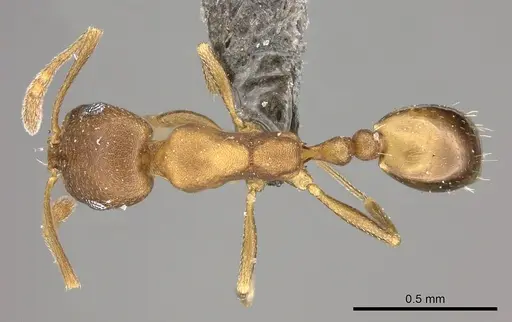
CASENT0256697
View on AntWeb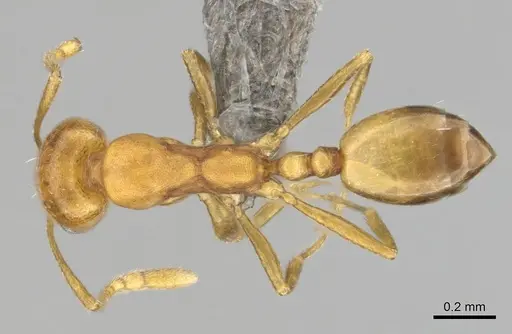
CASENT0258370
View on AntWeb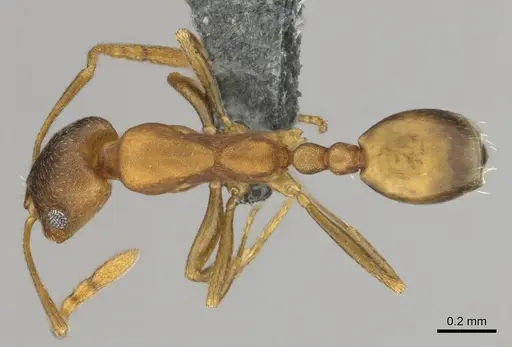
CASENT0908736
View on AntWeb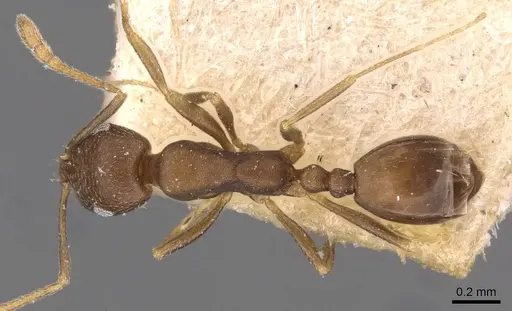
FOCOL1734
View on AntWeb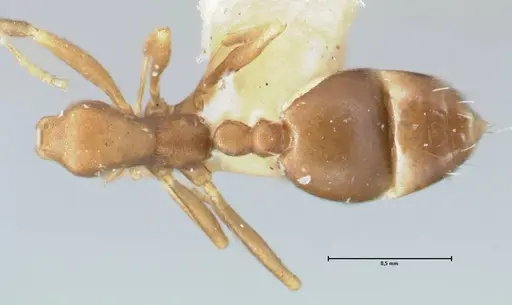
Literature
Loading distribution map...Loading products...