
Metapone greeni
- Sci. Name
- Metapone greeni
- Tribe
- Crematogastrini
- Subfamily
- Myrmicinae
- Author
- Forel, 1911
- Distribution
- Found in 1 countries
Introduction
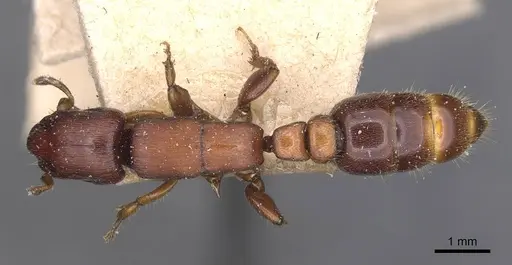
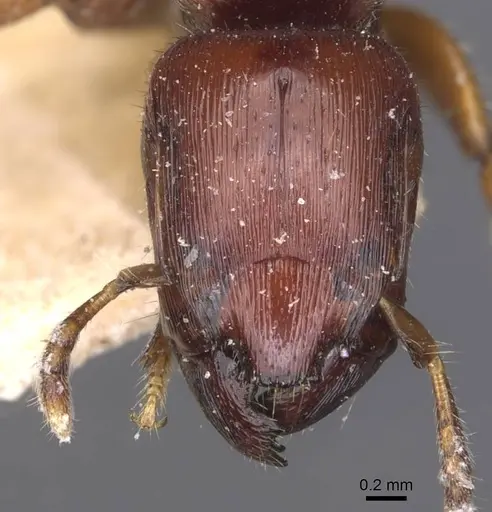
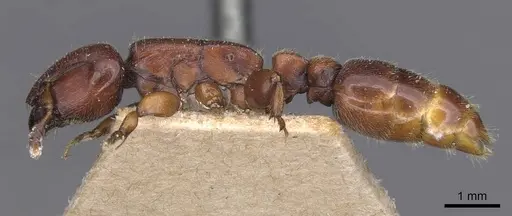
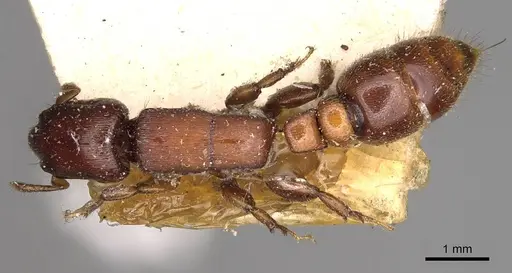
Metapone greeni is a rare myrmicine ant endemic to Sri Lanka. Workers measure 6.4-8.2mm in total length, with distinctive features including a rostrate clypeus (a projecting front part of the head), relatively large eyes, and a rectangular subpetiolar extension. Queens reach approximately 9.8mm. This species is termitophilous, it lives in galleries within decaying wood infested by termites, making it one of the few ants with a close association with termites. The genus Metapone contains fewer than 20 known species worldwide, and M. greeni is the type species, originally described by Forel in 1911 from specimens collected in Peradeniya .
Quick Summary
- Difficulty: Expert
- Origin & Habitat: Sri Lanka, specifically Peradeniya near Kandy in the central highlands (approximately 07°15'N,80°36'E). Found in galleries within decaying branches that were also infested by termites [1][2].
- Colony Type: Unknown. No documented information exists on queen number or colony organization.
- Size & Growth:
- Antkeeping:
- Temperature: Unconfirmed, likely needs tropical conditions around 24-28°C based on Sri Lankan habitat. Start in this range and observe colony activity.
- Humidity: Unconfirmed, the natural habitat in decaying wood within termite galleries suggests high humidity is important. Keep nest substrate moist but not waterlogged.
- Diapause: Unlikely, Sri Lanka is tropical with minimal seasonal temperature variation. No diapause is expected.
- Nesting: In nature, they nest in galleries within decaying wood in association with termites. In captivity, a naturalistic setup with damp rotting wood or a well-humidified Y-tong/plaster nest would be most appropriate. The presence of termites or termite-derived materials may be essential for their survival.
- Behavior: This species is extremely poorly documented in captivity. Based on its termitophilous nature, it likely has specialized requirements and may be shy. Workers are moderately sized (6.4-8.2mm) so escape prevention should be standard. As Myrmicinae ants, they have a stinger and can sting.
- Common Issues: this species is almost never available in the antkeeping hobby and has never been successfully captive-bred, they appear to require termite associations which is nearly impossible to replicate in captivity, no available care information exists, there are no successful husbandry protocols to follow, wild-caught colonies may decline rapidly, stress from collection and transport often kills termitophilous species
Rarity and Availability
Metapone greeni is one of the rarest ants to keep. The genus Metapone contains fewer than 20 recognized species, all of which are difficult to find and study. M. greeni is known only from specimens collected in Sri Lanka. There are no documented cases of this species being successfully kept or bred in captivity. Unlike common ants that have well-established care protocols, Metapone greeni represents a complete unknown in antkeeping. Unless you have access to field-collected colonies from Sri Lanka and are prepared for experimental husbandry, this species is not practical for most antkeepers. [1][2]
Termitophilous Lifestyle
The most remarkable aspect of Metapone greeni is its association with termites. The original type series was collected from galleries in a decaying branch that was simultaneously infested by two species of termites. This termitophilous lifestyle is extremely rare among ants. The nature of this relationship is not fully understood. It may be a form of social parasitism where the ants benefit from the termite's nest infrastructure, or perhaps a mutualistic arrangement. Replicating this association in captivity would be extraordinarily difficult. The termites may provide essential nutrients, humidity regulation, or other requirements that the ants cannot obtain elsewhere. [1]
Natural History and Distribution
Metapone greeni is endemic to Sri Lanka, meaning it is found nowhere else on Earth. The type locality is Peradeniya, near Kandy in the central highlands of Sri Lanka. This region has a tropical highland climate with year-round warm temperatures and high humidity. The elevation of around 500-1000 meters provides slightly cooler conditions than the coastal lowlands. The original specimens were collected from a decaying branch, suggesting they prefer shaded, humid microhabitats in forested areas. The species was originally described by Forel in 1911,with additional specimens collected from Hantana at 3000-4000 feet elevation. Metapone greeni (described by Karavaiev in 1933) was formally synonymized with M. greeni by Taylor and Alpert in 2016 [1][3].
Identification and Morphology
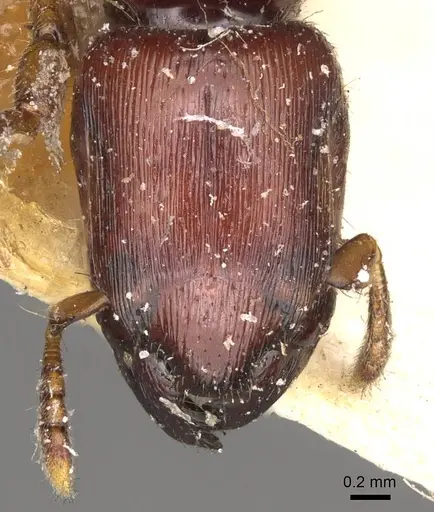
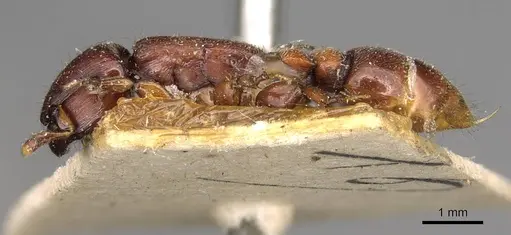
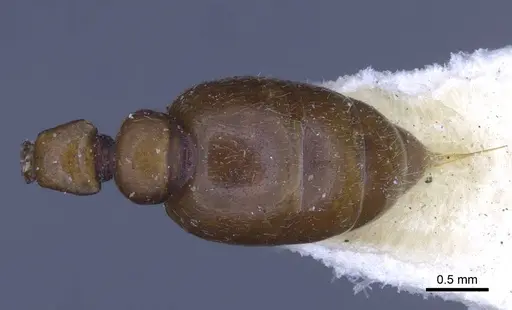
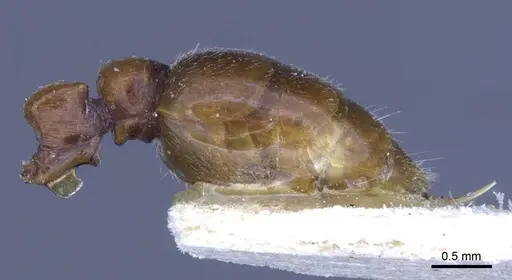
Workers of Metapone greeni can be identified by several distinctive features. The clypeus is anteriorly rostrate, meaning it projects forward in a beak-like shape. The free lateral margins of the clypeus converge toward the tip, with rounded anterolateral corners and a broadly convex anterior border. The eyes are relatively large, with the maximum diameter approximately equaling the width of the final antennal segment, and they contain many small irregular facets. The subpetiolar extension is relatively large and rectangular, about twice as long as it is high, with narrowly rounded corners. Workers measure 6.4-8.2mm in total length. Queens are larger at approximately 9.8mm total length. [1]
Why This Species Is Not Recommended for Most Antkeepers
There are several fundamental reasons why Metapone greeni should not be attempted by anyone except the most experienced antkeepers with specific research interests. First, the species is essentially unavailable, there are no known captive breeding programs, and wild collection in Sri Lanka would require permits and expertise. Second, even if you obtained a colony, there is zero established husbandry knowledge, every aspect of their care would be experimental guesswork. Third, their apparent dependence on termites suggests they may be obligate termitophiles that cannot survive without termite associations. Fourth, the scientific literature contains no information on their diet, founding behavior, temperature preferences, or any of the basic parameters needed to keep them alive.
Frequently Asked Questions
Can I keep Metapone greeni as a pet ant?
No. This species is essentially unavailable in the antkeeping hobby and has never been successfully kept or bred in captivity. There are no established care protocols, and their apparent requirement for termite associations makes captive maintenance nearly impossible. This is an expert-only species that should not be attempted by anyone without specific research interests and access to field-collected specimens.
Where can I get Metapone greeni ants?
You cannot. This species is endemic to Sri Lanka and has never been documented in the antkeeping trade. There are no breeders, no suppliers, and no captive colonies known to exist outside of museum collections. Even if you traveled to Sri Lanka and collected specimens (which would require proper permits), keeping them alive would be extremely challenging given our complete lack of husbandry knowledge.
What do Metapone greeni eat?
Unknown. No scientific study has documented the diet of this species. Based on their termitophilous lifestyle, they may feed on termite brood, fungal gardens, or other termite-derived nutrients. In captivity, this would be essentially impossible to replicate.
How long do Metapone greeni colonies live?
Unknown. No colony lifecycle data exists for this species. Even basic information like queen lifespan, worker longevity, or colony longevity has never been documented. Without any captive colonies to study, this information may remain unknown for the foreseeable future.
Do Metapone greeni queens need to hibernate?
Unlikely. Sri Lanka is tropical with minimal seasonal temperature variation. There is no evidence of diapause or hibernation behavior in this species, and none would be expected based on their natural habitat in the tropical highlands of central Sri Lanka.
Are Metapone greeni ants aggressive?
Unknown. No behavioral observations of this species in captivity or the wild have been documented. Their termitophilous lifestyle suggests they may be relatively docile. However, without any observations, it is impossible to characterize their temperament. As Myrmicinae ants, they possess a stinger, but nothing is known about their sting pain level or frequency.
What is the best nest type for Metapone greeni?
Unknown, no captive husbandry has ever been documented. In nature, they live in galleries within decaying wood in association with termites. A naturalistic setup with damp rotting wood might theoretically work, but the critical factor appears to be the presence of termites, which cannot be replicated in captivity.
How fast do Metapone greeni colonies grow?
Unknown. No development data exists for this species. Even basic questions like how many eggs a queen lays, how long until eggs hatch, or how long until first workers emerge have never been studied.
Can I keep multiple Metapone greeni queens together?
Unknown. No information exists on colony structure for this species. The number of queens per colony, whether they are monogyne or polygyne, and any queen-queen interactions have never been documented.
Why are Metapone greeni ants so rare?
This species has an extremely limited geographic range, being found only in Sri Lanka. Additionally, their termitophilous lifestyle means they live in very specific microhabitats (termite galleries in decaying wood) that are difficult to locate and sample. The original type series was collected over a century ago, and very few specimens have been documented since then. This combination of restricted range, specialized habitat, and cryptic behavior makes them one of the rarest ants in the world.
Report an Issue
The current care sheet is based fully on literature. See inconsistencies, or something that's incorrect? Please , it will be resolved after review from an admin. Contributing to the blogs tab also helps providing information, to make us be able to further improve the caresheets. Thank you for your support!
References

This caresheet is licensed under CC BY-SA 4.0 .
Community Blogs
Literature
Loading distribution map...Loading products...