
Messor mcarthuri
- Sci. Name
- Messor mcarthuri
- Tribe
- Stenammini
- Subfamily
- Myrmicinae
- Author
- Steiner <i>et al.</i>, 2018
- Distribution
- Found in 2 countries
Introduction
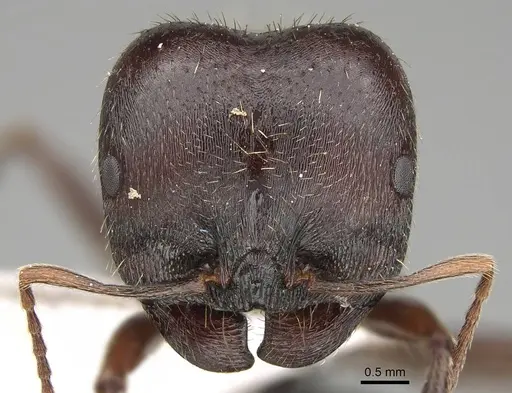
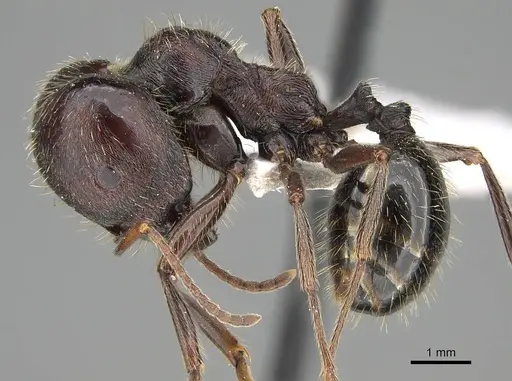
Messor mcarthuri is a large harvester ant species native to Greece, Turkey, and Bulgaria, recently described in 2018. Workers have a distinctive appearance with brown to brownish-red heads and mesosoma, dark brown abdomen, and a unique regular costate (ridged) sculpture covering their entire body including the petiole . Major workers can appear entirely dark brown. They have abundant erect hairs on the sides of their head from the occiput to mandibular insertion . This species belongs to the Messor structor species group and was named in honor of ant taxonomist Archie J. McArthur . Unlike many harvester ants, M. mcarthuri colonies on Crete have been documented as polygynous, meaning they contain multiple queens . These ants are commonly found nesting under stones in open habitats ranging from arid pastures to humid stream valleys .
Quick Summary
- Difficulty: Easy
- Origin & Habitat: Greece, Turkey, and Bulgaria. Found in various open habitats including pastures, stone hills, roadsides, oak forest edges, olive plantations, ruderal areas in tourist resorts, and limestone gorges or stream valleys with open deciduous forests up to 820m elevation [3][2].
- Colony Type: Polygynous (multiple queens per colony), confirmed on Crete [2].
- Size & Growth:
- Queen: Large, similar in size to Messor muticus, Messor ponticus and Messor structor [1]. Size data unavailable in mm.
- Worker: Large, similar to Messor ponticus, usually larger than Messor ibericus, Messor muticus, and Messor structor [1]. Size data unavailable in mm.
- Colony: Colony size data unavailable
- Growth: Moderate
- Development: Estimated 6-10 weeks based on genus patterns (Development time follows typical Messor patterns, exact timeline unconfirmed for this species)
- Antkeeping:
- Temperature: Keep at room temperature (20-25°C). They tolerate a range from cool to warm conditions, matching their Mediterranean habitat [3].
- Humidity: Moderate, they nest under stones in both arid and humid areas. Keep nest substrate moderately moist but allow some drying between waterings [2].
- Diapause: Yes, as a Mediterranean species, they require a winter rest period. Reduce temperature to 10-15°C for 2-3 months during winter.
- Nesting: Nests under stones in the wild. Use a naturalistic setup with flat stones on sandy soil, or a Y-tong (AAC) or plaster nest with chambers sized for their large body size. They do well in dry to moderately humid conditions.
- Behavior: Harvester ants that collect and store seeds as their primary food source. Workers are active foragers that search for seeds and other organic matter. They are not aggressive and rarely sting. Colonies are polygynous with multiple queens. Escape risk is moderate, their large size makes them easier to contain than tiny ants, but they can still climb smooth surfaces.
- Common Issues: seed storage mold, keep seeds dry and remove uneaten seeds regularly to prevent fungal growth, queen conflicts during establishment, monitor for aggression even though polygynous, hibernation failure, colonies that don't receive proper winter rest may have reduced longevity, overheating, despite being Mediterranean, extreme heat can stress colonies, colonies may abandon chambers if conditions are too wet, provide dry resting areas
Housing and Nest Setup
Messor mcarthuri does well in naturalistic setups that mimic their natural nesting preferences. In the wild, they nest under stones in open habitats, so flat stones placed on sandy soil work excellently. You can also use Y-tong (AAC) nests or plaster nests with chambers sized appropriately for their large worker size. Provide a foraging area with a sand or soil substrate where they can search for seeds. Because they are polygynous (multiple queens), you don't need to separate queens during founding if you're starting with an established colony. For founding colonies, a test tube setup works well until the colony reaches 20-30 workers, then move to a formicarium. Ensure the nest has both humid chambers for brood and drier areas for seed storage. [3][2]
Feeding and Diet
As harvester ants, Messor mcarthuri primarily collects and stores seeds. Provide a variety of seeds including grass seeds, bird seed mix, and millets. They will also accept protein sources like small insects (fruit flies, small crickets, mealworms) and can be fed sugar water or honey occasionally. Unlike some harvester ants that rely heavily on seeds, they do accept protein and will forage for it. Remove uneaten seeds regularly to prevent mold. Fresh water should always be available. Their large size means they can handle larger seeds than tiny ant species. [2][3]
Temperature and Seasonal Care
These Mediterranean ants thrive at room temperature (20-25°C) and can tolerate temperatures from 15°C to 30°C. They do not require heating in most homes. During winter, provide a diapause (hibernation) period of 2-3 months at 10-15°C. This mimics their natural seasonal cycle and helps maintain colony health. Reduce feeding during winter and keep the nest slightly drier. In summer, ensure they have access to fresh water and avoid placing the colony in direct sunlight that could cause overheating. Their native range includes both cool highland areas and warm lowlands, giving them flexibility. [3]
Colony Structure and Growth
Messor mcarthuri is polygynous, meaning colonies naturally have multiple queens. On Crete, researchers have documented colonies with multiple reproductive queens [2]. This is unusual compared to many ant species and means your colony may have better survival odds, if one queen dies, others can continue reproducing. Growth is moderate. The species is large-bodied, so their chambers should be appropriately sized. Major workers (larger individuals) develop as the colony grows and help with seed processing. Note: specimens from some Bulgarian locations show intermediate characteristics between M. mcarthuri and Messor hellenius, which may indicate hybridization [4].
Behavior and Foraging
These are typical harvester ants with active foraging behavior. Workers venture out to collect seeds and bring them back to the nest for storage. They are not particularly aggressive and will flee rather than attack when disturbed. Their large size makes them easy to observe. Colonies establish multiple entrance holes and maintain clear foraging trails. You may observe workers returning with seeds held overhead in their mandibles, a classic harvester ant behavior. They are primarily diurnal, most active during daylight hours. The polygynous colony structure means you may see multiple queens in the nest without aggression between them. [3][2]
Frequently Asked Questions
How long does it take for Messor mcarthuri to produce first workers?
Expect first workers (nanitics) within 6-10 weeks after the queen lays eggs, depending on temperature. This follows typical Messor genus development patterns. The exact timeline for M. mcarthuri specifically has not been documented, but genus-level data suggests this range at room temperature.
Can I keep multiple Messor mcarthuri queens together?
Yes, this species is naturally polygynous, meaning colonies have multiple queens. Unlike many ant species where multiple queens fight, M. mcarthuri queens can coexist peacefully. This makes them easier to start than single-queen species.
What do Messor mcarthuri ants eat?
They are harvester ants that primarily collect seeds. Provide a mix of grass seeds, bird seed, and millets. They also accept protein like small insects (fruit flies, mealworms) and occasionally sugar water or honey. Remove uneaten seeds to prevent mold.
Do Messor mcarthuri ants need hibernation?
Yes, they benefit from a winter rest period. Reduce temperature to 10-15°C for 2-3 months during winter. This mimics their natural Mediterranean seasonal cycle and helps maintain colony health.
Are Messor mcarthuri good for beginners?
Yes, they are considered easy to keep. They are large (easy to see), not aggressive, and tolerate a range of conditions. Their polygynous structure also makes them more forgiving if something goes wrong.
What size colony do Messor mcarthuri reach?
Colony size is not precisely documented. As a large polygynous Messor species, colonies likely grow substantial but exact maximum is unknown.
When should I move Messor mcarthuri from a test tube to a formicarium?
Move them when the colony reaches 20-30 workers or when the test tube's water reservoir is depleted. They do well in naturalistic setups with a foraging area. Ensure the formicarium has both humid chambers for brood and dry areas for seed storage.
Do Messor mcarthuri ants sting?
They are not known for stinging and are generally docile. Their large size makes them easy to handle, and they will typically flee rather than attack when disturbed.
What is the best nest type for Messor mcarthuri?
Naturalistic setups with flat stones on sandy soil work best, mimicking their natural nesting under stones. Y-tong (AAC) nests or plaster nests with appropriately sized chambers also work well. Provide both humid and dry areas.
Where is Messor mcarthuri found in the wild?
They are native to Greece, Turkey, and Bulgaria. They live in open habitats including pastures, stone hills, roadsides, oak forest edges, olive plantations, and limestone gorges from lowlands to 820m elevation.
Report an Issue
The current care sheet is based fully on literature. See inconsistencies, or something that's incorrect? Please , it will be resolved after review from an admin. Contributing to the blogs tab also helps providing information, to make us be able to further improve the caresheets. Thank you for your support!
References

This caresheet is licensed under CC BY-SA 4.0 .
Community Blogs
CASENT0922405
View on AntWeb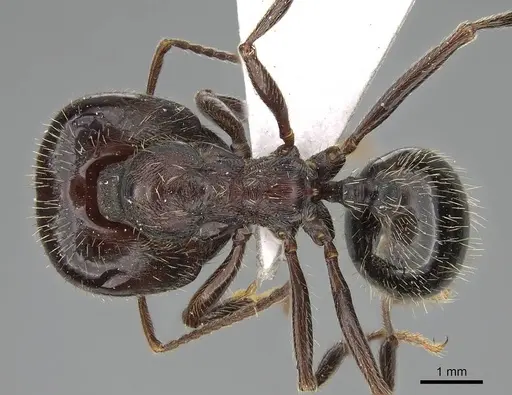
Literature
Loading distribution map...Loading products...