
Messor buettikeri
- Sci. Name
- Messor buettikeri
- Tribe
- Stenammini
- Subfamily
- Myrmicinae
- Author
- Collingwood, 1985
- Distribution
- Found in 2 countries
Introduction
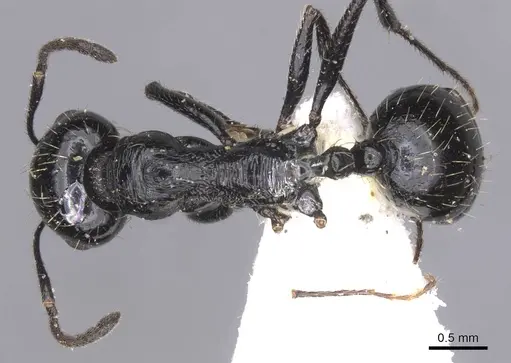
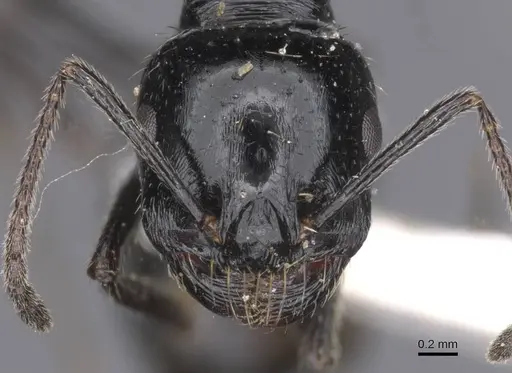
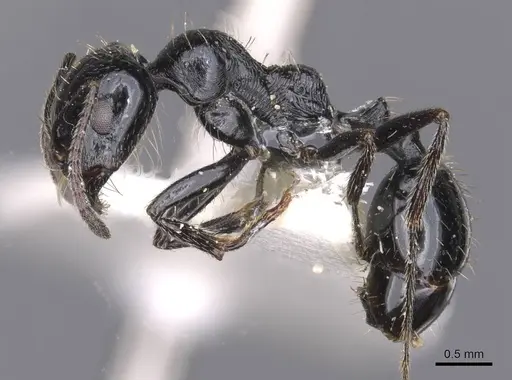
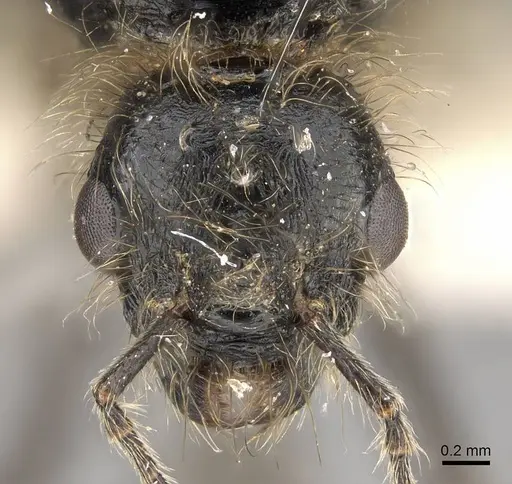
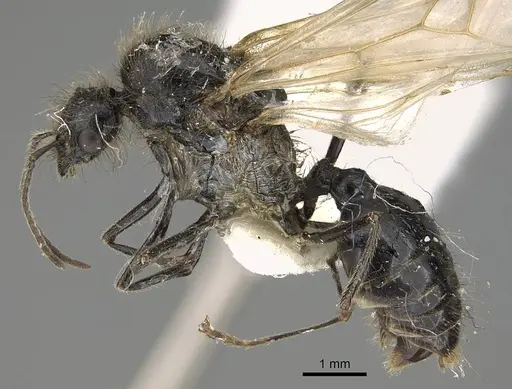
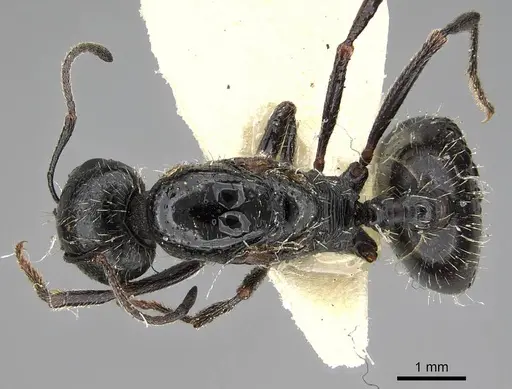
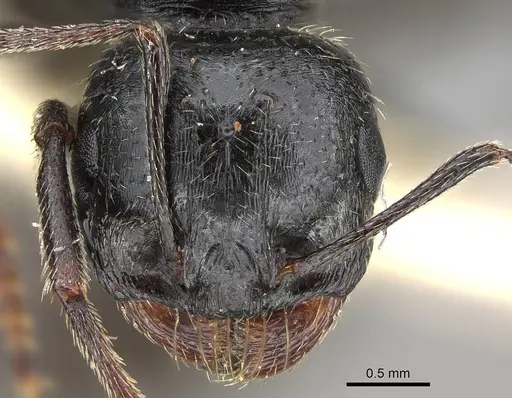
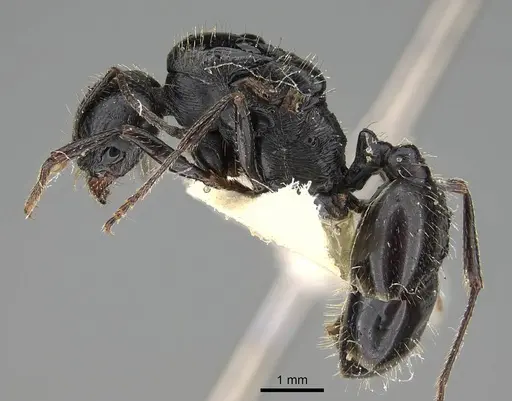
Messor buettikeri is a medium-sized harvester ant species native to the Middle East, found in Saudi Arabia, Kuwait, and Iraq . Workers are smooth-sculptured and uniformly black or dark brown, with large eyes and a distinctive postpetiole that has a flat ventral surface without an anterior projection . As a member of the Stenammini tribe, this species collects and processes seeds as their primary food source.
Quick Summary
- Difficulty: Easy
- Origin & Habitat: Desert and arid regions of the Middle East, Saudi Arabia, Kuwait, and Iraq. They inhabit hot, dry environments with sparse vegetation [1][2].
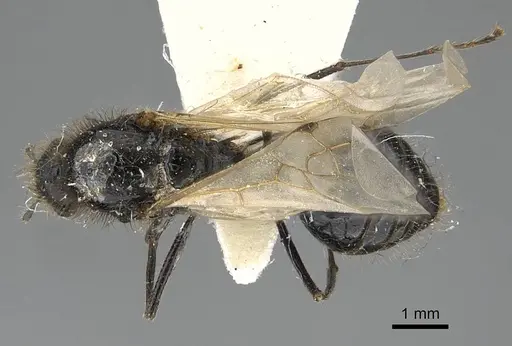
- Colony Type: Based on Messor genus patterns, likely single-queen (monogyne) colonies. Queens are larger than workers and have fully developed wings for nuptial flights.
- Size & Growth:
- Queen: Size data unavailable, no total length measurements in research. Inferred from Messor genus: queens are typically larger than workers.
- Worker: Inferred from Messor genus: ~4-12 mm. Direct body size measurements not available in research.
- Colony: Up to several thousand workers, estimated from Messor genus patterns, but not confirmed in research.
- Growth: Moderate, seed-eating ants typically grow steadily.
- Development: Approximately 6-10 weeks at optimal temperature, inferred from genus patterns. (Development time varies with temperature, warmer conditions accelerate development.)
- Antkeeping:
- Temperature: Based on desert habitat, keep nest area warm, roughly 25-30°C. Provide a temperature gradient for self-regulation. No specific data in research.
- Humidity: Keep nest substrate mostly dry with a small moist area, mimicking arid desert conditions. Avoid waterlogged substrates.
- Diapause: No, species is adapted to year-round warm desert conditions. No winter dormancy required.
- Nesting: Dry, sandy substrate works best. Y-tong nests or test tube setups with sand fill suit this species. They prefer compact chambers.
- Behavior: Based on Messor genus patterns, generally peaceful and not aggressive toward keepers. Workers are active foragers that collect and store seeds. Escape risk is moderate due to size, use standard barrier methods.
- Common Issues: overhumidity leading to mold in nest chambers, seed storage can attract pests if not managed properly, colonies may become sluggish if temperatures drop too low
Housing and Nest Setup
Messor buettikeri does best in dry, well-drained nest setups. A Y-tong nest with sand-filled chambers works well, or a test tube setup with a sand layer. Keep the nesting area dry, these are desert ants that can rot in damp conditions. Provide a small water tube for drinking, but the nest itself should remain relatively dry. Outworld space should include sandy areas for foraging and seed sorting [3].
Feeding and Diet
As a harvester ant, Messor buettikeri primarily eats seeds. Offer grass seeds, bird seed mix, or ant seed mixes. They also accept small amounts of protein like dead insects. Remove uneaten seeds to prevent mold. Sugar water or honey is occasionally accepted but not primary [3].
Temperature and Heating
This species thrives in warm conditions reflecting its desert origin. Keep the nest area between 25-30°C with a temperature gradient. Room temperature around 24°C is acceptable, but warmer conditions promote activity. Avoid prolonged temperatures below 20°C [1][2].
Colony Founding
Founding behavior is unconfirmed based on research. For Messor genus, queens may seal themselves in chambers, but this is not specified for this species. Do not disturb during founding. Once workers emerge, they will forage for seeds.
Growth and Development
Colony growth is steady. Newly founded colonies may take months to produce first workers. Growth accelerates with more foragers. Major workers for seed processing appear as colonies grow. Development time depends on temperature [3].
Frequently Asked Questions
Can I keep Messor buettikeri in a test tube?
Yes, test tubes work well for founding colonies. Use a small test tube with a cotton ball providing water but keeping the chamber dry. Once the colony reaches 30-50 workers, consider moving to a larger setup like a Y-tong nest.
What do Messor buettikeri ants eat?
They primarily eat seeds, grass seeds, bird seed, or commercial ant seed mixes. They also accept small dead insects. Remove uneaten seeds regularly to prevent mold.
How long until first workers appear?
Expect first workers approximately 6-10 weeks after egg laying, depending on temperature. Warmer conditions speed development.
Do Messor buettikeri ants sting?
No, they are not dangerous to humans. They focus on seed collection and are not aggressive.
Are Buettiker's harvester ants good for beginners?
Yes, they are considered easy to keep. They are forgiving of minor care mistakes and don't require hibernation. Just avoid overhumidity.
Do they need hibernation?
No, Messor buettikeri does not require hibernation. They come from desert regions with year-round warm temperatures.
How big do colonies get?
Mature colonies can reach several thousand workers, but this is estimated from genus patterns. Growth is steady rather than fast.
When should I move to a formicarium?
Move from a test tube once the colony reaches 30-50 workers and the test tube becomes crowded. A Y-tong nest with sand chambers works well.
Can I keep multiple queens together?
Research does not confirm if this species is monogyne or polygyne. Based on Messor genus patterns, it is likely monogyne, but multiple queens may fight. Only combine a queen with workers from her own colony.
Why are my ants not eating seeds?
Ensure seeds are small enough for workers to handle. Verify temperature is warm enough (above 24°C), cold ants become sluggish. Fresh seeds are more attractive.
Report an Issue
The current care sheet is based fully on literature. See inconsistencies, or something that's incorrect? Please , it will be resolved after review from an admin. Contributing to the blogs tab also helps providing information, to make us be able to further improve the caresheets. Thank you for your support!
References

This caresheet is licensed under CC BY-SA 4.0 .
Community Blogs
Literature
Loading distribution map...Loading products...