
Meranoplus mars
- Sci. Name
- Meranoplus mars
- Tribe
- Crematogastrini
- Subfamily
- Myrmicinae
- Author
- Forel, 1902
- Distribution
- Found in 1 countries
Introduction
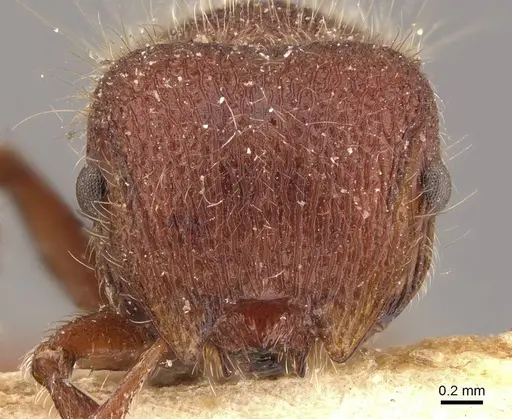
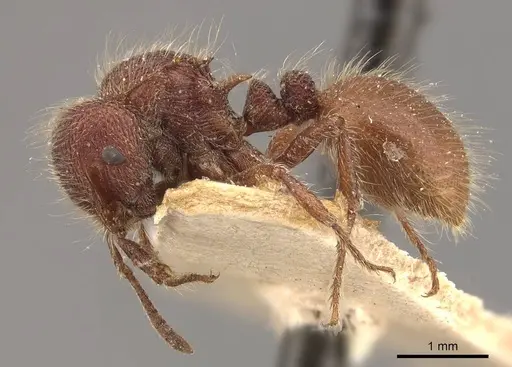
Meranoplus mars is a medium-sized ant native to coastal Australia, from south-central to north-east regions. Workers measure 5.45-6.50 mm in total length and are uniformly brown . They have large compound eyes, hook-like mesonotal projections, and moderately long diverging propodeal spines . This species nests in the ground and is granivorous, meaning they eat seeds rather than hunting live prey . It is part of the M. tricuspidatus complex . Their seed-harvesting behavior is a key characteristic, making care distinct from typical predatory ants.
Quick Summary
- Difficulty: Medium
- Origin & Habitat: Coastal Australia from south-central to north-east Queensland. Nests in the ground in subtropical to tropical habitats [1][3].
- Colony Type: Colony structure is unconfirmed. Based on typical Meranoplus patterns, likely single-queen colonies, but no specific data available [1].
- Size & Growth:
- Queen: Size data unavailable for queens. Based on Meranoplus genus patterns, queen size is likely around 8-10 mm, but direct measurements are not documented.
- Worker: 5.45-6.50 mm [1]
- Colony: Maximum colony size is unknown, but estimated to be several hundred workers based on medium worker size.
- Growth: Moderate
- Development: Estimated 6-10 weeks at 24-28°C (Direct development data unavailable, estimate based on typical Myrmicinae development.)
- Antkeeping:
- Temperature: Temperature needs are unclear, start around 24-28°C and observe [3].
- Humidity: Keep substrate consistently moist but not waterlogged [3].
- Diapause: Likely required, reduce temperature to 15-18°C for 2-3 months during winter [3].
- Nesting: Ground-nesting species. Use Y-tong, plaster, or soil nests [1][3].
- Behavior: Generally peaceful ants with moderate activity. They are granivorous, so diet is seed-based [1]. Workers are medium-sized and can escape through small gaps, so prevention is needed.
- Common Issues: granivorous diet requires specific seed-based food, refusal can lead to starvation [1], colony founding may be slow, patience required during claustral period, escape prevention needed despite medium size, they can still squeeze through small gaps, winter dormancy is likely required, colonies may struggle without seasonal temperature drop [3]
Housing and Nest Setup
Meranoplus mars is a ground-nesting ant [1]. Use Y-tong, plaster, or soil nests with chambers scaled to their medium size [1]. For founding colonies, a test tube setup can be used, but founding behavior is unconfirmed [1]. Provide an outworld for foraging to observe seed-harvesting behavior. Use escape prevention like fluon on barriers.
Feeding and Diet
This species is granivorous, meaning they eat seeds as a primary food source [1]. Offer small seeds such as grass seeds, millet, sesame, or commercial ant seed mixes. Provide a sugar source like honey water and occasional small insects for protein. Fresh water should always be available [1].
Temperature and Seasonal Care
As a Queensland coastal species, they prefer warm conditions around 24-28°C [3]. A temperature gradient can be created using a heating cable on one side of the nest. During winter, simulate dormancy by reducing temperatures to 15-18°C for 2-3 months [3].
Colony Development and Growth
The founding process is unconfirmed, but likely follows claustral patterns where the queen seals herself in a chamber [1]. Once workers emerge, growth is moderate. Patience is key as founding can appear slow before rapid growth begins.
Behavior and Observation
Workers are relatively peaceful and moderately active, foraging for seeds in the outworld [1]. Their large compound eyes suggest visual orientation. They defend the nest if threatened but are not aggressive toward keepers.
Frequently Asked Questions
What do Meranoplus mars ants eat?
They are primarily granivorous, seed-eating ants. Offer small seeds like grass seeds, millet, sesame, or commercial ant seed mixes as their primary food [1]. They also need a sugar source like honey water and occasional small insects for protein.
How long does it take for Meranoplus mars to produce first workers?
The exact development time is not documented for this species [1]. Based on typical Myrmicinae patterns, it may take 6-10 weeks at 24-28°C [3].
What temperature do Meranoplus mars ants need?
Keep them at 24-28°C. As a Queensland coastal species, they prefer warm conditions [3].
Do Meranoplus mars ants need hibernation?
Yes, they likely require a winter dormancy period. Reduce temperatures to 15-18°C for 2-3 months during the winter months [3].
Are Meranoplus mars good for beginners?
They are rated as medium difficulty. Their unusual granivorous diet requires specific food preparation [1], and they likely need seasonal temperature cycling [3].
How big do Meranoplus mars colonies get?
The exact maximum colony size is unknown, but estimated to be several hundred workers based on medium worker size.
Can I keep multiple Meranoplus mars queens together?
The colony structure is not well-documented. Based on typical Meranoplus patterns, they likely form single-queen colonies [1]. Combining unrelated queens is not recommended without evidence.
What size are Meranoplus mars workers?
Workers measure 5.45-6.50 mm in total length, making them medium-sized ants [1].
Where is Meranoplus mars found in the wild?
They are native to coastal Australia, from south-central to north-east Queensland [1]. They nest in the ground in subtropical to tropical habitats [3].
Do Meranoplus mars ants sting?
They are not known for painful stings. While they have a stinger like all Myrmicinae, their sting is not particularly potent and they are generally peaceful toward keepers [3].
Report an Issue
The current care sheet is based fully on literature. See inconsistencies, or something that's incorrect? Please , it will be resolved after review from an admin. Contributing to the blogs tab also helps providing information, to make us be able to further improve the caresheets. Thank you for your support!
References

This caresheet is licensed under CC BY-SA 4.0 .
Community Blogs
CASENT0908943
View on AntWeb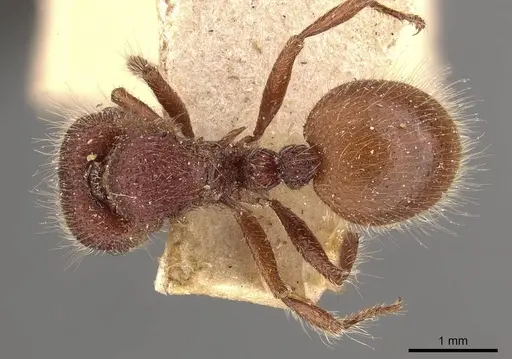
Literature
Loading distribution map...Loading products...