
Meranoplus diversus
- Sci. Name
- Meranoplus diversus
- Tribe
- Crematogastrini
- Subfamily
- Myrmicinae
- Author
- Smith, 1867
- Distribution
- Found in 1 countries
Introduction
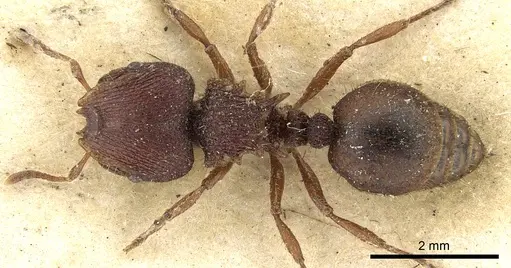
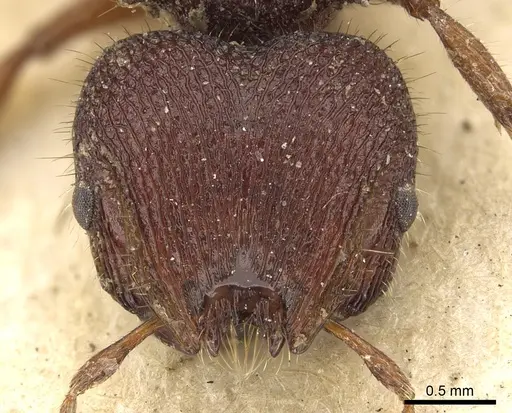
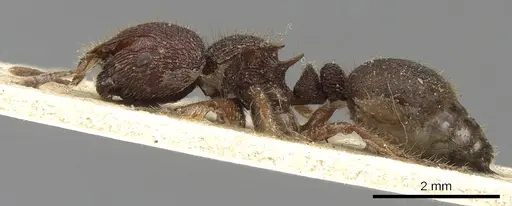
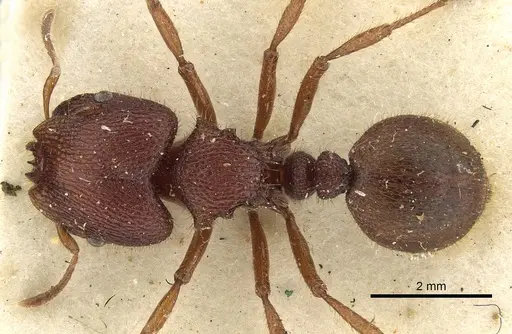
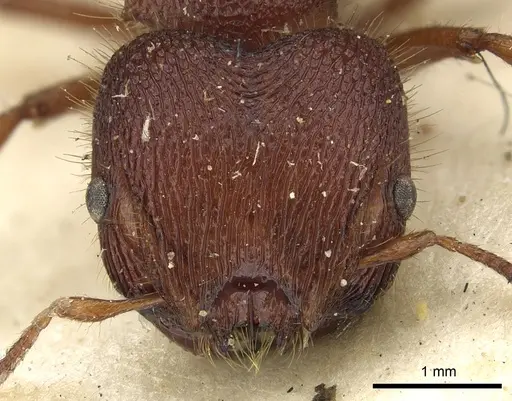
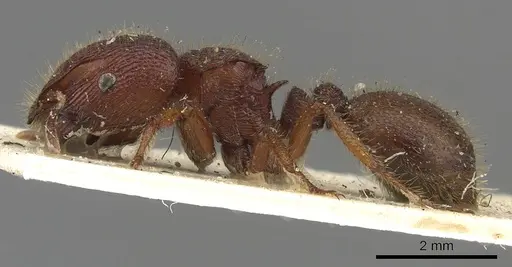
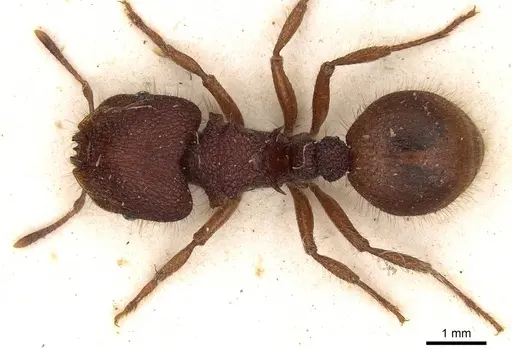
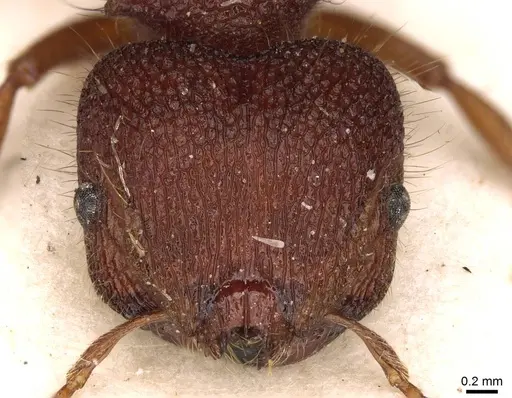
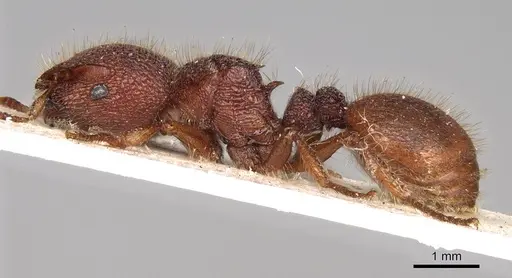
Meranoplus diversus is a large Australian ant species known for its massive head that extends well beyond the humeral angles. Workers measure 5.85-6.95 mm in total length, with a distinctive deeply forked (bifurcate) clypeus and a flanged promesonotal shield. They are concolorous brown to fuscous, often with a slightly brighter gaster. This species is a specialist granivore, meaning it primarily harvests and feeds on seeds - a relatively rare diet specialization among ants. Found throughout the arid and semi-arid zones of central and Western Australia, from the west coast (Geraldton) inland to central regions .
Quick Summary
- Difficulty: Medium
- Origin & Habitat: Western Australia to central Australia, arid and semi-arid zones. Nests in the ground [1].
- Colony Type: Unconfirmed colony structure. No published data on whether this species is single-queen (monogyne) or multi-queen (polygyne).
- Size & Growth:
- Queen: Size data unavailable, no specific measurements for queens exist. Based on genus patterns, queens are likely larger than workers (approximately 8-10 mm).
- Worker: 5.85-6.95 mm [1]
- Colony: Up to several thousand workers based on typical Meranoplus species.
- Growth: Moderate, seed-eating ants typically grow at moderate rates compared to predatory species.
- Development: Unknown, no specific study on M. diversus development exists. (Development time is not documented for this species. Temperature will significantly affect speed if colonies are established.)
- Antkeeping:
- Temperature: Keep at 25-30°C. Being from arid central Australia, they prefer warmer conditions. A heating cable on one side of the nest creates a suitable gradient.
- Humidity: Low to moderate. These are desert ants, keep substrate relatively dry, not waterlogged. Allow some areas to dry out completely between waterings.
- Diapause: Likely required based on geographic range (temperate Australia). Consider a cool period (15-18°C) for 2-3 months during winter months.
- Nesting: Ground-nesting species. In captivity, a naturalistic setup with compact soil chambers or a Y-tong or plaster nest works well. They prefer tight, enclosed chambers over open spaces.
- Behavior: Specialist seed harvester, they collect and process seeds as their primary food source. Workers are moderately active foragers who search for fallen seeds. They have a well-developed Dufour gland that produces a sticky, nonvolatile secretion containing fatty acids and sugars, this is unusual among ants and may serve as a trail pheromone or defensive substance. They are not aggressive but will defend their nest. Escape risk is moderate, workers are a good size so standard barrier methods work well.
- Common Issues: seed-based diet requires proper variety, they may reject some seeds, leading to starvation if not supplemented., colonies may decline if humidity is too high, these are arid-adapted ants., limited availability, this is not a common species in the antkeeping hobby., winter dormancy confusion, keepers may mistake natural slow periods for problems.
Housing and Nest Setup
Meranoplus diversus is a ground-nesting ant that prefers enclosed, compact nesting spaces. In captivity, a Y-tong or plaster nest with narrow chambers works well. Because they are specialist seed-eaters, a naturalistic setup with a soil-filled area allows them to store and process seeds, they will cache seeds in chamber corners just like they do in the wild. The nest should have a small outworld for foraging where you can offer seeds and protein. Use a test tube setup for founding colonies, then transition to a formicarium once the colony reaches 20-30 workers. Escape prevention is straightforward since workers are a decent size, standard fluon barriers on smooth surfaces work well. [1][2]
Feeding and Diet
As specialist granivores, Meranoplus diversus primarily eats seeds. In the wild, they harvest fallen seeds and crack them open using their massive heads and mandibles. In captivity, offer a variety of small seeds, grass seeds, millet, chia, and similar small seeds are ideal. They will also accept protein sources like crushed insects or protein jelly, but seeds should form the bulk of their diet. Unlike predatory ants, they do not hunt live prey. Fresh water should always be available. Some keepers report success with commercial ant foods formulated for seed-eating species. The unusual Dufour gland chemistry (containing sugars and fatty acids) suggests they may have unique nutritional needs related to carbohydrate processing [3].
Temperature and Heating
Being from arid central Australia, these ants prefer warm conditions. Keep the nest area at 25-30°C for optimal activity and brood development. A heating cable placed on one side of the nest creates a temperature gradient so ants can self-regulate. During the cooler Australian winter (roughly May-August in their native range), consider reducing temperatures to 15-18°C to simulate seasonal changes. This species is adapted to temperature extremes in its desert habitat, so brief temperature variations are generally tolerated. Avoid keeping them in consistently cool, damp conditions, this is a warm, dry habitat species. [1]
Humidity and Water
These are arid-adapted ants from semi-desert regions of Western Australia. Keep humidity low to moderate, the substrate should dry out between waterings. Unlike tropical ants, they do not need constant moisture. A water test tube connected to the nest provides drinking water, and occasional light misting of the outworld is sufficient. The key is avoiding damp, stagnant conditions that can lead to mold. Some dry areas in the nest are actually beneficial, this lets them behaviorally regulate their moisture exposure. [1]
Behavior and Defense
Meranoplus diversus workers are moderate foragers who search for seeds on the ground surface. They are not particularly aggressive toward humans but will defend their nest vigorously if threatened. Their well-developed Dufour gland produces a sticky, nonvolatile secretion, this is unusual among ants and may serve as a chemical defense or trail-marking substance [3]. The gland contains hydroquinone, a compound rarely found in ants, and sugars which is a novel discovery [3]. Workers are large enough that standard escape prevention works well, they cannot squeeze through the tiny gaps that plague smaller ant species.
Frequently Asked Questions
What do Meranoplus diversus ants eat?
They are specialist seed-eaters (granivores). Offer small seeds like grass seeds, millet, or chia as a primary food. They may also accept protein sources like crushed insects or protein jelly, but seeds should form the bulk of their diet.
How long does it take for Meranoplus diversus to raise first workers?
Unknown, no specific study on development time exists for this species. Based on typical Myrmicinae patterns, it likely takes several months at optimal temperature (25-30°C).
What temperature do Meranoplus diversus need?
Keep them warm at 25-30°C. They are from arid central Australia and prefer heat. A heating cable on one side of the nest creates a suitable gradient.
Are Meranoplus diversus good for beginners?
They are intermediate difficulty. Their seed-based diet is straightforward once you learn what seeds they accept, but they have specific humidity requirements (dry conditions) and may need winter cooling. Not the easiest species but manageable for those with some antkeeping experience.
Do Meranoplus diversus ants sting?
They have a stinger but are not particularly aggressive. They will defend their nest if threatened but rarely bother keepers. The stinger is primarily used for venom and chemical defense.
How big do Meranoplus diversus colonies get?
Up to several thousand workers based on typical Meranoplus species. No specific colony size data exists for this species.
Can I keep multiple Meranoplus diversus queens together?
Unknown, no published data exists on whether this species is single-queen (monogyne) or multi-queen (polygyne). Do not combine unrelated foundress queens unless you observe them accepting each other.
Do Meranoplus diversus need hibernation?
Likely required. Being from temperate Australia, they experience cooler winters and benefit from a 2-3 month cool period at 15-18°C during winter months.
What size nest should I use for Meranoplus diversus?
Use a nest with compact, narrow chambers scaled to their 6mm worker size. A Y-tong or plaster nest works well. They prefer enclosed spaces over open areas.
Why is my Meranoplus diversus colony declining?
Common causes: too high humidity (they need dry conditions), poor seed variety (they need acceptable seeds), or temperatures too cool. Check that substrate is relatively dry and temperatures are in the 25-30°C range.
Report an Issue
The current care sheet is based fully on literature. See inconsistencies, or something that's incorrect? Please , it will be resolved after review from an admin. Contributing to the blogs tab also helps providing information, to make us be able to further improve the caresheets. Thank you for your support!
References

This caresheet is licensed under CC BY-SA 4.0 .
Community Blogs
Literature
Loading distribution map...Loading products...