
Meranoplus birmanus
- Sci. Name
- Meranoplus birmanus
- Tribe
- Crematogastrini
- Subfamily
- Myrmicinae
- Author
- Schödl, 1999
- Distribution
- Found in 1 countries
Introduction
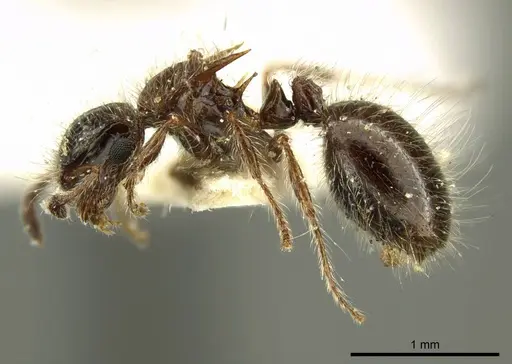
Meranoplus birmanus is a small ant species described from Myanmar, measuring about 4mm in total length. Workers have a distinctive bicolored appearance with a dark head and gaster contrasting against a reddish-brown alitrunk, petiole, and postpetiole. The genus name Meranoplus means 'shield bearer' referring to their characteristic flattened pronotum that forms a shield-like plate over their back. This species is externally very similar to its close relative Meranoplus bicolor, which occurs in the same region. The main distinguishing features are the shorter petiole and slightly broader promesonotal shield compared to M. bicolor. Found in degraded secondary forest at around 200m elevation in central Myanmar, this species prefers sandy soil habitats with leaf litter. Nothing is known about their specific biology, colony structure, or captive care requirements .
Quick Summary
- Difficulty: Unknown
- Origin & Habitat: Central Myanmar (Sagaing Division), found in degraded secondary Dipterocarpus tuberculatus forest at approximately 200m elevation with sandy soil and occasional leaf litter [2]
- Colony Type: Unconfirmed, colony structure and queen number have not been documented
- Size & Growth:
- Antkeeping:
- Temperature: Start around 22-26°C and observe colony activity. No specific thermal data available for this species, infer from lowland Myanmar habitat
- Humidity: Keep substrate moderately moist. Based on forest floor habitat with sandy soil in Myanmar, provide some damp areas but avoid waterlogging
- Diapause: Unknown, no seasonal data available. Lowland tropical species may not require formal hibernation but may show reduced activity during cooler months
- Nesting: Natural nesting in sandy soil under leaf litter suggests test tube setups work for founding, but established colonies may benefit from naturalistic setups with soil substrate
- Behavior: Behavior is unstudied. Based on genus patterns, they are likely ground-nesting and may be generalist foragers. Their small size means escape prevention is important, use fine mesh barriers. Likely not aggressive but may bite if threatened
- Common Issues: no biological data exists, all care recommendations are estimates based on genus patterns, colony may fail if kept at incorrect humidity since natural habitat has specific sandy soil conditions, escape prevention is critical due to small worker size, without documented diet acceptance, finding suitable food may require experimentation, temperature tolerance is unknown, start conservative and observe colony response
Discovery and Identification
Meranoplus birmanus was described in 1999 by Stefan Schödl from specimens collected in the Chatthin Wildlife Sanctuary in central Myanmar. The species name refers to Burma (now Myanmar), the country of its origin. The type series consisted of a holotype worker and 27 paratype workers collected in October 1998 at an elevation of approximately 200 meters. This species is externally very similar to Meranoplus bicolor, which is found throughout Southeast Asia. The main distinguishing features are the shorter petiole and slightly broader promesonotal shield in M. birmanus, compared to the nearly equal petiole height and length in M. bicolor. The promesonotal shield in M. birmanus also lacks the distinct rugo-reticulum (net-like wrinkle pattern) seen in M. bicolor [1][2].
Natural Habitat
The type locality is in the Chatthin Wildlife Sanctuary, Sagaing Division, central Myanmar. This area features degraded secondary forest dominated by Dipterocarpus tuberculatus trees, with sandy soil and only occasional leaf litter. The elevation of approximately 200m places this in a lowland tropical to subtropical zone. The habitat suggests this species prefers relatively open forest floor conditions with well-drained sandy soils, rather than deep shade or permanently damp areas. This aligns with general Meranoplus genus preferences for ground-nesting in soil or under stones in forested areas [2].
Appearance and Morphology
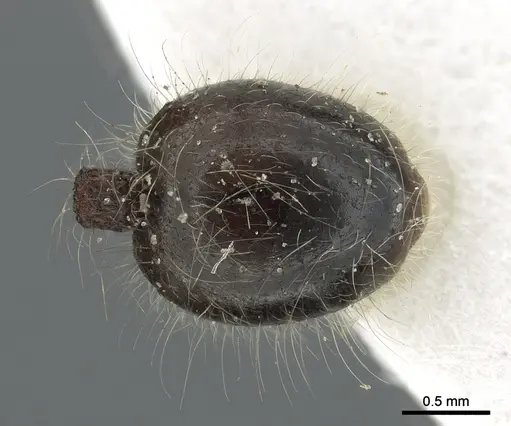
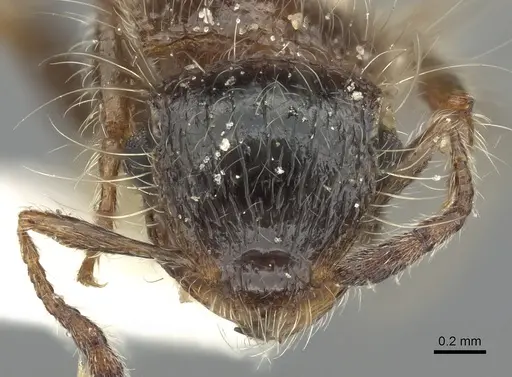
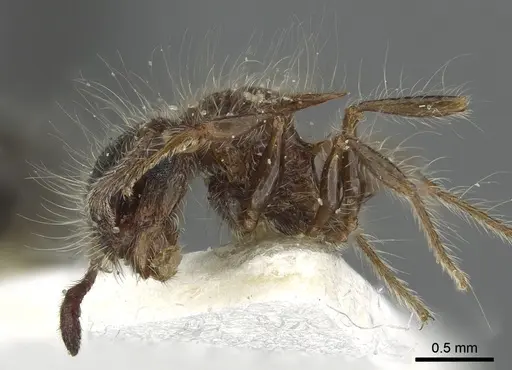
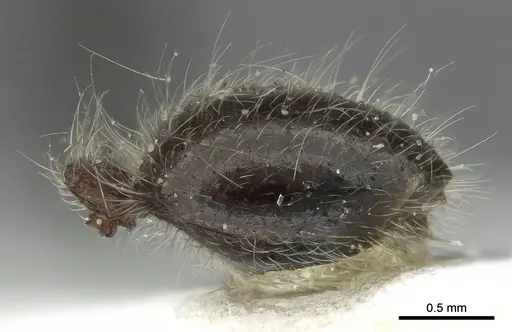
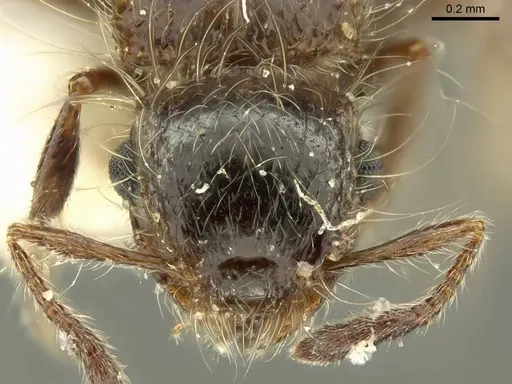
Workers measure 3.8-4.4mm in total length, making them small but not tiny ants. They have a distinctive bicolored appearance: the head and gaster are dark piceous (glossy blackish-brown), while the alitrunk, petiole, postpetiole, and legs are ferrugineous to dark brown (reddish-brown). The genus Meranoplus is characterized by a flattened pronotum that forms a shield-like plate, which is also present in this species. The promesonotal shield is slightly broader than long, with lateral margins that overhang the sides of the alitrunk. The propodeum is distinctly overhung by the hind margin of the mesonotum. Workers have relatively long hairs on their dorsal surfaces, giving them a somewhat fuzzy appearance [1][2].
Known Biology
Nothing is known about the biology of Meranoplus birmanus. This includes colony structure (single queen vs. multiple queens), founding behavior, development timeline, diet preferences, and seasonal activity patterns. The original description focused solely on morphology, and no subsequent biological studies have been published on this species. This makes creating a definitive care guide impossible, all recommendations must be based on inference from related species and genus patterns rather than direct observation of this specific species. Keepers should approach keeping this species as an experimental endeavor and document their observations carefully to contribute to our understanding of this ant [2].
Keeping Meranoplus birmanus - What We Can Infer
Since direct care information is unavailable, we must infer from genus patterns and related species. Meranoplus ants are typically ground-nesting. For founding, use a standard test tube setup with a water reservoir. The natural habitat in sandy forest soil suggests moderate humidity, damp but not waterlogged. Temperature should likely be warm (22-26°C) given the tropical lowland origin in Myanmar. Workers are small, so escape prevention using fine mesh is essential. For feeding, start with standard ant foods: sugar water/honey, and protein sources like mealworms or fruit flies. Monitor acceptance and adjust. Without confirmed diet data, experimentation may be needed.
Challenges and Considerations
The biggest challenge in keeping Meranoplus birmanus is the complete lack of biological data. Unlike many commonly kept ant species, there are no studies on their diet preferences, temperature tolerance, humidity requirements, or colony development. This means keepers must be prepared for some experimentation and should document their observations carefully. The similar species Meranoplus bicolor is more widely distributed and studied, so keepers might reference care guides for that species as a starting point. However, M. birmanus may have different requirements given its more restricted distribution in central Myanmar. Start with conservative conditions and adjust based on colony health and activity levels.
Frequently Asked Questions
How do I keep Meranoplus birmanus ants?
Since no biological data exists for this species, all care is based on inference from genus patterns. Use a test tube setup for founding with a water reservoir. Keep at 22-26°C with moderate humidity. Feed sugar water and protein sources. This is experimental antkeeping, document your observations carefully.
What do Meranoplus birmanus eat?
Diet is unconfirmed for this species. Based on typical Meranoplus behavior, they likely accept sugar sources (honey, sugar water) and protein (insects, mealworms). Start with these standard foods and observe what the colony accepts. You may need to experiment to determine preferences.
How long does it take for Meranoplus birmanus to produce first workers?
Development timeline is unknown, no studies have documented egg-to-worker time for this species. Development is unstudied for this species.
Are Meranoplus birmanus ants aggressive?
Aggression level is unstudied. Based on genus patterns, Meranoplus ants are generally not particularly aggressive. They may bite if threatened but are not known for aggressive swarming or painful stings. Their small size means they pose minimal danger to humans.
Do Meranoplus birmanus need hibernation?
Diapause requirements are unknown. As a lowland tropical species from Myanmar, they likely do not require formal hibernation. However, they may show reduced activity during cooler months. Monitor colony behavior and provide stable temperatures year-round.
What is the colony size of Meranoplus birmanus?
Maximum colony size is unknown, no wild colony data has been documented. Most Meranoplus species form moderate-sized colonies, but without data, we cannot provide estimates.
Can I keep multiple Meranoplus birmanus queens together?
Colony structure is unconfirmed. We do not know whether this species is single-queen or multi-queen. Without this data, combining unrelated queens is not recommended, the safest approach is single-queen founding.
What makes Meranoplus birmanus different from Meranoplus bicolor?
M. birmanus is very similar to M. bicolor but can be distinguished by its shorter petiole and slightly broader promesonotal shield. The promesonotal shield also lacks the distinct rugo-reticulum (net-like wrinkles) seen in M. bicolor. M. bicolor has a wider distribution across Southeast Asia, while M. birmanus is only known from central Myanmar [1][2].
Are Meranoplus birmanus good for beginners?
Difficulty level cannot be determined. With no biological data available and all care being inferential, this species is not recommended for beginners. Experienced antkeepers interested in an experimental species may find it interesting, but be prepared for challenges.
What temperature should I keep Meranoplus birmanus at?
Optimal temperature is unknown. Based on the lowland tropical habitat in Myanmar, start around 22-26°C. Observe colony activity, if workers are active and foraging, the temperature is likely suitable. Adjust slightly up or down based on colony response.
Report an Issue
The current care sheet is based fully on literature. See inconsistencies, or something that's incorrect? Please , it will be resolved after review from an admin. Contributing to the blogs tab also helps providing information, to make us be able to further improve the caresheets. Thank you for your support!
References

This caresheet is licensed under CC BY-SA 4.0 .
Community Blogs
CASENT0902034
View on AntWeb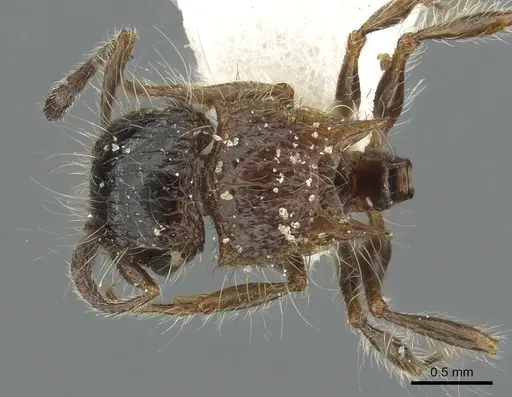
CASENT0919716
View on AntWeb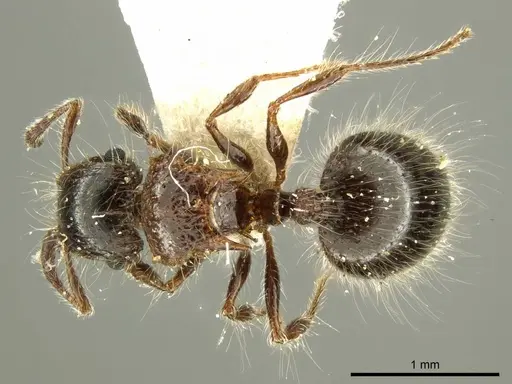
Literature
Loading distribution map...Loading products...