
Megalomyrmex milenae
- Sci. Name
- Megalomyrmex milenae
- Tribe
- Solenopsidini
- Subfamily
- Myrmicinae
- Author
- Boudinot <i>et al.</i>, 2013
- Distribution
- Found in 1 countries
Introduction
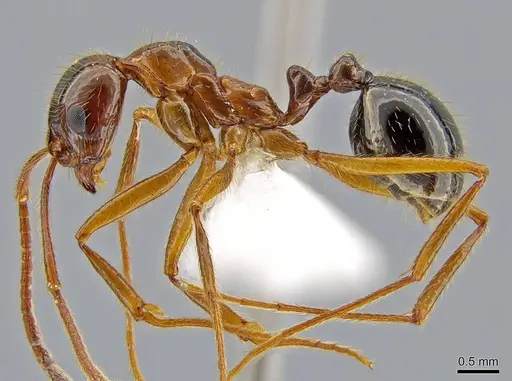
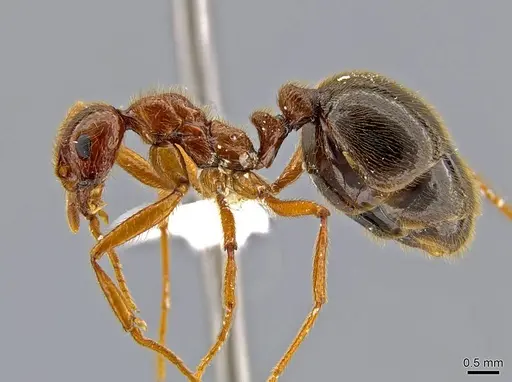
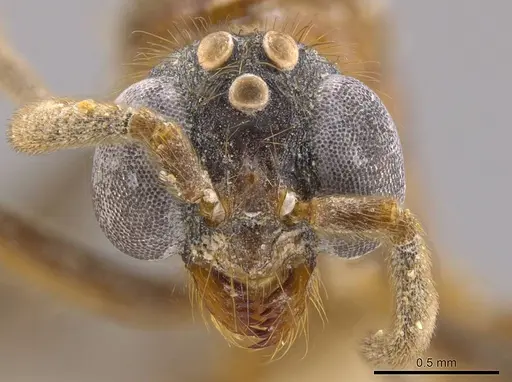
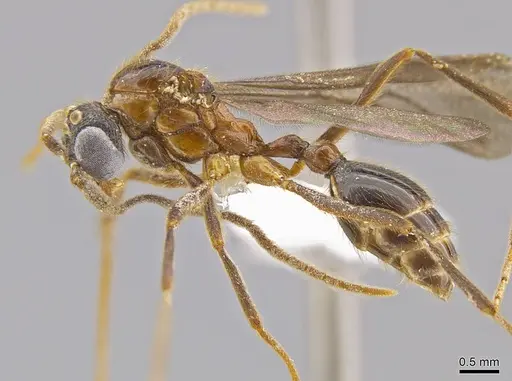
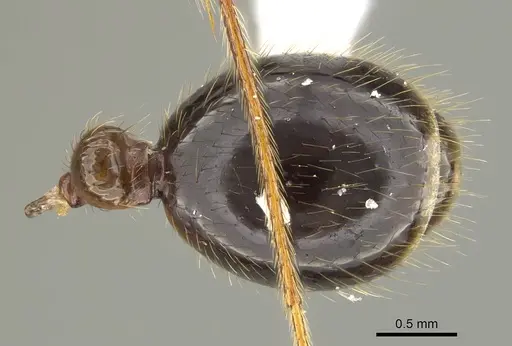
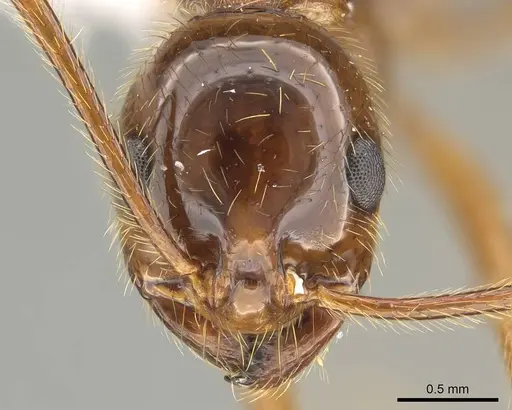
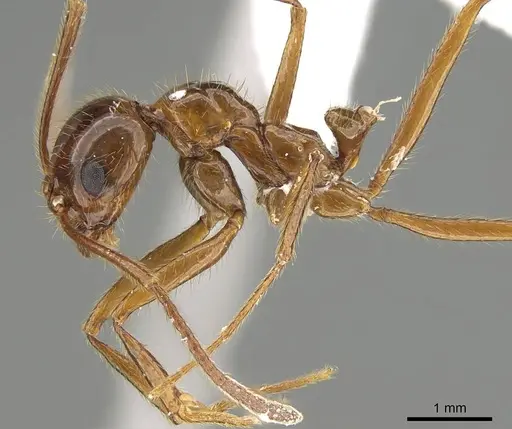
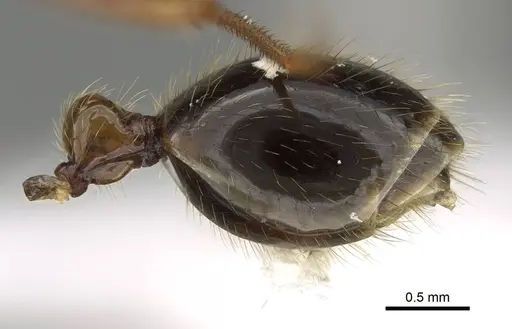
Megalomyrmex milenae is a small ant species native to Panama's lowland forests near creeks. Workers have a reddish-orange head and antennae, an orange-brown mesosoma, and a dark brown to black gaster. They are identified by large eyes and five robust mandibular teeth. Queens are ergatoid (wingless) and similar in appearance to workers but with a larger gaster. Colonies are monogynous (single queen) and nest in soil embankments with inconspicuous entrances. This species is attracted to sweet baits like cookies .
Quick Summary
- Difficulty: Medium
- Origin & Habitat: Panama, from sea-level to 100m elevation in lowland tropical forests near creeks and streams [1][2]
- Colony Type: Monogynous colonies with a single ergatoid queen. Queens are wingless and similar to workers but larger [1]
- Size & Growth:
- Queen: size data unavailable
- Worker: size data unavailable
- Colony: Up to 462 workers [1]
- Growth: Moderate, based on typical Myrmicinae patterns
- Development: Estimated 6-10 weeks at tropical temperatures, inferred from related species (Development time is inferred, as specific studies are not available for this species)
- Antkeeping:
- Temperature: Keep warm, roughly 24-28°C, as inferred from tropical habitat [2]
- Humidity: Keep nest substrate consistently moist but not waterlogged [2]
- Diapause: No, as a tropical species from Panama [2]
- Nesting: Natural nesting in soil embankments, in captivity, use Y-tong, plaster, or soil nests with moist substrate [1][2]
- Behavior: Workers are moderately active foragers, attracted to sweet baits, and have a functional sting but are not aggressive towards humans. Escape risk is moderate due to small size, ensure enclosures have tight-fitting lids [1][2]
- Common Issues: cold temperatures can suppress activity and brood development, dry conditions can be fatal to the colony, mold from overwatering or uneaten food, parasites in wild-caught colonies, escape due to small size if enclosures are not secure
Housing and Nest Setup
Megalomyrmex milenae does well in captive setups using Y-tong, plaster, or soil nests. These ants naturally nest in soil embankments, so a moist, compactable substrate mimics their environment. Keep the nest area consistently moist but never waterlogged. The outworld should be separate and dry to prevent mold. Because workers are small, ensure connections between nest and outworld are secure to prevent escapes [1][2]
Feeding and Diet
In the wild, colonies are attracted to sweet baits like cookies, indicating they consume carbohydrates. In captivity, offer sugar water, honey, or similar liquids. They likely hunt small prey, so provide protein sources like fruit flies or pinhead crickets. Feed protein 2-3 times per week and keep sugar available always. Remove uneaten prey after 24-48 hours to prevent mold [1][2]
Temperature and Humidity
As a tropical species, keep temperatures warm year-round, roughly 24-28°C. Use a gentle heat gradient if needed. Maintain humidity by keeping the nest substrate moist but not waterlogged, as these ants live near creeks in the wild [2]
Colony Structure and Ergatoid Queens
Colonies have a single ergatoid queen, which is wingless and similar to workers. Worker numbers range up to 462 in mature colonies. Queenless subcolonies with males have been observed, suggesting workers can produce males if the queen is lost [1][2]
Behavior and Temperament
Workers are moderately active foragers and will defend the nest if threatened. They have a functional sting, but due to their small size, it is unlikely to penetrate human skin significantly. Escape prevention is important due to their small size [1][2]
Frequently Asked Questions
How long does it take for Megalomyrmex milenae to produce first workers?
Specific development timing is unconfirmed, but based on related species, expect 6-10 weeks from egg to worker at optimal tropical temperatures [1]
Can I keep multiple Megalomyrmex milenae queens together?
No, wild colonies are monogynous with a single queen. Combining unrelated queens is not recommended [1]
What do Megalomyrmex milenae eat?
They accept sweet foods like honey and sugar water, and protein sources like small insects. In the wild, they are attracted to cookies [1][2]
Are Megalomyrmex milenae good for beginners?
They are rated Medium difficulty due to specific temperature and humidity needs, and their small size requires attention to escape prevention [2]
Do Megalomyrmex milenae need hibernation?
No, as a tropical species from Panama, they do not require hibernation and should be kept warm year-round [2]
How big do Megalomyrmex milenae colonies get?
When should I move my colony to a formicarium?
Start with a test tube setup for founding colonies. Once the colony has 30-50 workers and consistent activity, transition to a Y-tong or plaster nest that maintains humidity [2]
Why are my Megalomyrmex milenae dying?
Common causes include cold temperatures, dry conditions, mold from overwatering, or parasites in wild-caught colonies. Check heating, humidity, and remove uneaten food promptly [2]
Report an Issue
The current care sheet is based fully on literature. See inconsistencies, or something that's incorrect? Please , it will be resolved after review from an admin. Contributing to the blogs tab also helps providing information, to make us be able to further improve the caresheets. Thank you for your support!
References

This caresheet is licensed under CC BY-SA 4.0 .
Community Blogs
CASENT0630042
View on AntWeb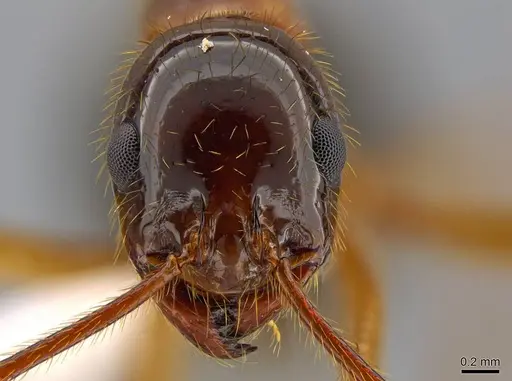
CASENT0630043
View on AntWeb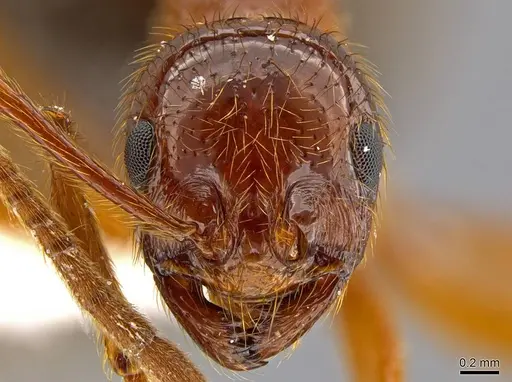
CASENT0630869
View on AntWeb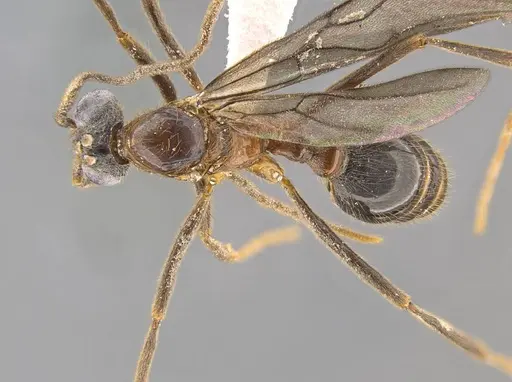
CASENT0630984
View on AntWeb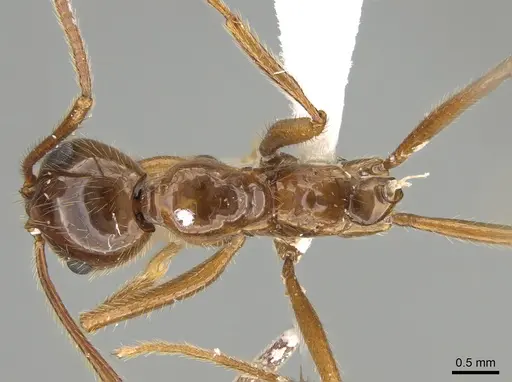
Literature
Loading distribution map...Loading products...