
Megalomyrmex cyendyra
- Sci. Name
- Megalomyrmex cyendyra
- Tribe
- Solenopsidini
- Subfamily
- Myrmicinae
- Author
- Brandão, 1990
- Distribution
- Found in 1 countries
Introduction
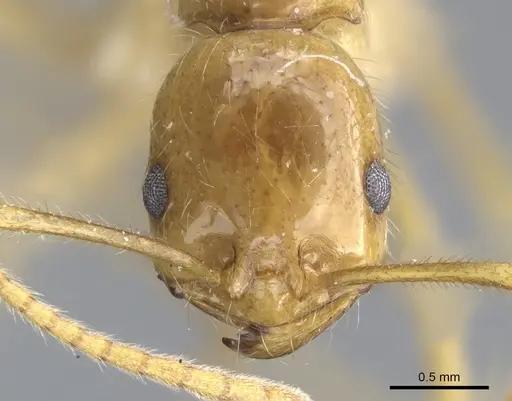
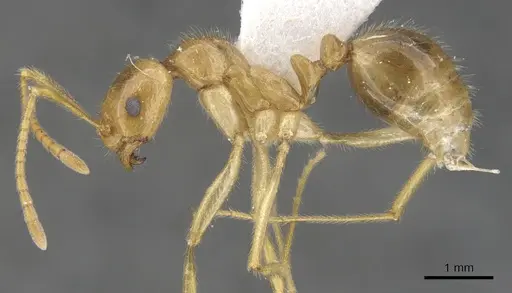
Megalomyrmex cyendyra is a small ant belonging to the leoninus species group. Workers have a 4-5 segmented antennal club and a continuous promesonotal profile (the back of their middle body section forms one smooth curve without a dip). They come from mountain forests of Colombia (Valle del Cauca, Nariño) and Ecuador (Imbabura), at elevations of 1300–1850 m in the Andes . Foraging takes place in leaf litter, and they nest in logs and shallow soil . What makes this ant interesting is its chemical weaponry. Like other Megalomyrmex species, workers produce venom containing pyrrolidine alkaloids, specifically trans-2-butyl-5-heptylpyrrolidine and trans-2-heptyl-5-hexylpyrrolidine . They use this venom for hunting, competing with other ants, and defending their colony and the honeydew-producing insects they tend . The species name 'cyendyra' means 'mother-sister' in Tupi, referring to the gamergate (reproductive worker) found with the type specimens .
Quick Summary
- Difficulty: Medium
- Origin & Habitat: Mountain forests of Colombia (Valle del Cauca, Nariño) and Ecuador (Imbabura) at 1300–1850 m elevation. They nest in logs and shallow soil, foraging in leaf litter [1][2][3].
- Colony Type: Colony structure is not fully documented. A gamergate (reproductive worker) was found with the type series, indicating worker reproduction may occur [5].
- Size & Growth:
- Queen: Size data unavailable (no total length measurements in literature).
- Worker: Size data unavailable (no total length measurements in literature).
- Colony: Unknown – no published colony size data.
- Growth: Unknown – growth has not been studied directly.
- Development: Unknown – no studies on development time exist.
- Antkeeping:
- Temperature: Estimated 20–24 °C based on high‑elevation habitat (1300–1850 m). Avoid prolonged heat above 26 °C [1][2].
- Humidity: Moderate to high – keep nest substrate consistently moist but not waterlogged, mirroring the mountain forest environment [3].
- Diapause: Unknown. High‑elevation origin suggests seasonal cooling may be beneficial, but no direct evidence exists. Monitor colony behavior.
- Nesting: Naturally uses logs and shallow soil nests. In captivity, provide a naturalistic setup with soil or plaster nesting media and a leaf‑litter foraging area [3].
- Behavior: Aggressively territorial. Forages in leaf litter, hunts small invertebrates, and defends honeydew‑producing insects from rivals. Uses alkaloid‑based venom for prey capture and colony defense [3]. Small size demands excellent escape prevention (fine mesh and tight seals).
- Common Issues: escape prevention is critical – workers can slip through tiny gaps due to small body size., limited species‑specific research forces many care estimates from genus patterns., venom can cause skin irritation – handle with gloves or tools, avoid bare‑skin contact., colony growth is slow and poorly understood – patience needed, avoid overfeeding., high temperatures (above 26 °C) stress the colony – keep the nest cool.
Natural History and Distribution
Megalomyrmex cyendyra is recorded from the Colombian Andes (Valle del Cauca, Nariño) and from Imbabura province in Ecuador – the first record outside Colombia [2]. It inhabits mountain forests and cloud forests at 1300–1850 m elevation [1]. The ants nest in rotting logs and shallow soil chambers, and foragers actively hunt in the leaf litter [3]. Type specimens were collected from 'mountain rain forest' and 'mountain forest' habitats in the Farallones de Cali region [1][6].
Venom and Chemical Defense
M. cyendyra workers produce venom containing pyrrolidine alkaloids: trans-2-butyl-5-heptylpyrrolidine (major component) and trans-2-heptyl-5-hexylpyrrolidine, in a 20:1 ratio, plus trace amounts of related compounds [4]. An additional alkaloid, trans-2-butyl-5-pentylpyrrolidine, has also been reported [7]. The venom is used to subdue prey, compete with other ants for food, and defend the colony and its honeydew‑producing insects [3]. For keepers: these ants can sting, and the venom may cause skin irritation – handle with care.
Reproduction and Colony Structure
The species name 'cyendyra' ('mother-sister' in Tupi) records the discovery of a gamergate in the type series [5]. A gamergate is a worker that becomes reproductive, functioning as a queen replacement. This strongly suggests worker reproduction can occur in this species. However, the typical number of queens, founding method, and colony size remain undocumented. No data exist on nuptial flights or pleometrosis.
Housing and Nesting
In nature M. cyendyra nests in logs and shallow soil nests [3]. For captive colonies, use a naturalistic setup: a Y‑tong, plaster, or soil nest kept consistently moist but not waterlogged. Provide a foraging area with leaf litter or small hiding structures to mimic the natural microhabitat. A water test tube should always be available. Because of their small size, ensure all openings are sealed with fine mesh.
Feeding and Diet
M. cyendyra is a predator that actively hunts small invertebrates in the leaf litter [3]. It also tends honeydew‑producing insects and aggressively defends them from other ants. In captivity, offer small live prey such as fruit flies, pinhead crickets, or small mealworms. Protein should be the main dietary component, sugar water or honey can be offered occasionally. Feed every 2–3 days and remove uneaten prey to prevent mold.
Temperature and Seasonal Care
Based on the high‑elevation origin (1300–1850 m), M. cyendyra prefers cooler conditions than lowland tropical ants. Keep the nest at 20–24 °C, and avoid prolonged temperatures above 26 °C [1][2]. A gentle heat gradient (e.g., with a small heating cable on one side) allows workers to self‑regulate. Seasonal cooling may be beneficial, but no specific diapause data exist. Watch colony behavior – sluggishness may mean it is too cold, while avoiding warm areas indicates overheating.
Frequently Asked Questions
What do Megalomyrmex cyendyra eat?
They are predators of small invertebrates. In captivity, feed small live prey like fruit flies or pinhead crickets. They also tend honeydew‑producing insects, so sugar water or honey can be offered occasionally, but protein should be the main diet [3].
What temperature do Megalomyrmex cyendyra need?
Based on their high‑elevation mountain forest habitat (1300–1850 m), keep the nest at 20–24 °C and avoid prolonged temperatures above 26 °C [1][2].
Can I keep multiple Megalomyrmex cyendyra queens together?
The social structure is not well documented. A gamergate (reproductive worker) was found in the type series [5], which suggests worker reproduction can occur, but whether colonies are typically monogyne or polygyne is unknown. It is not recommended to house multiple unrelated queens together without further information.
Report an Issue
The current care sheet is based fully on literature. See inconsistencies, or something that's incorrect? Please , it will be resolved after review from an admin. Contributing to the blogs tab also helps providing information, to make us be able to further improve the caresheets. Thank you for your support!
References

This caresheet is licensed under CC BY-SA 4.0 .
Community Blogs
CASENT0902329
View on AntWeb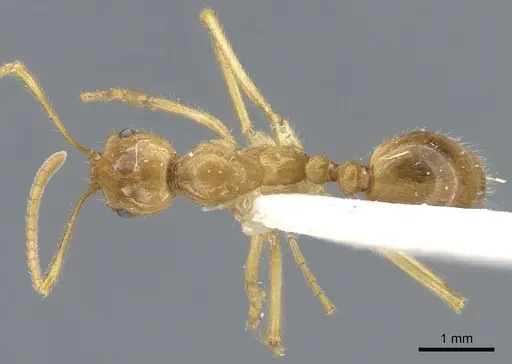
Literature
Loading distribution map...Loading products...