
Megalomyrmex bidentatus
- Sci. Name
- Megalomyrmex bidentatus
- Tribe
- Solenopsidini
- Subfamily
- Myrmicinae
- Author
- Fernández & Baena, 1997
- Distribution
- Found in 2 countries
Introduction
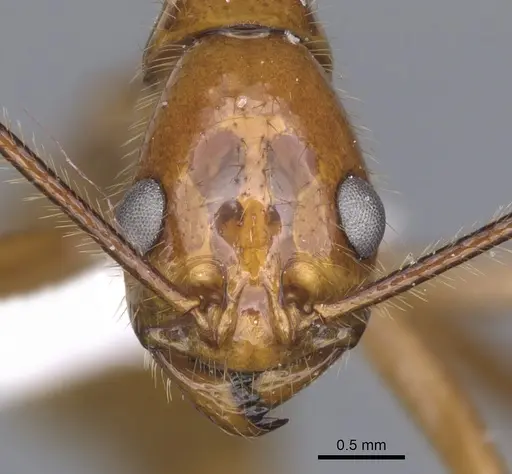
Megalomyrmex bidentatus is a small, distinctive ant belonging to the Myrmicinae subfamily, found only in the highland forests of southern Colombia and northern Ecuador. Workers are recognized by their unique bidentate propodeum - the only species in the entire genus with this feature - along with an unusually long, modified head shape. This species inhabits pre-montane rainforest environments at elevations around 1000 meters in the Andean region, making it one of the highest-elevation species in the Leoninus group. The species remains poorly documented, with only a handful of specimens ever collected.
Quick Summary
- Difficulty: Expert
- Origin & Habitat: Highland pre-montane rainforest in the Andes of southern Colombia (Nariño province) and northern Ecuador (Pichincha), at elevations between 750-1000 meters [1][2].
- Colony Type: Unconfirmed, likely single-queen colonies based on typical Megalomyrmex patterns.
- Size & Growth:
- Queen: Size data unavailable, no measurements exist in primary literature
- Worker: Size data unavailable, no measurements exist in primary literature
- Colony: Unknown, likely small colonies based on leaf-litter ant patterns
- Growth: Unknown
- Development: Unconfirmed, no development data exists for this species (No direct development data exists for this species.)
- Antkeeping:
- Temperature: Unconfirmed, likely 22-26°C based on highland tropical origin. Start in this range and observe colony activity.
- Humidity: Unconfirmed, likely 60-80% based on pre-montane rainforest habitat. Keep substrate consistently moist but not waterlogged.
- Diapause: Unlikely, being a tropical/highland species from near the equator, it probably does not require diapause.
- Nesting: In nature, this leaf-litter species likely nests in rotting wood, under bark, or in soil cavities. In captivity, a naturalistic setup with moist substrate or a Y-tong/plaster nest works well. Provide small chambers scaled to their tiny size.
- Behavior: Behavior is poorly documented. Based on related Megalomyrmex species, this ant is likely predatory or omnivorous, foraging through leaf litter for small invertebrates. It likely has a stinger typical of Myrmicinae, though its small size means any sting would be negligible to humans. Escape prevention is important given their small size, use fine mesh and tight-fitting barriers.
- Common Issues: extremely rare in the hobby, wild-caught colonies are essentially unavailable, no captive breeding data exists, making established protocols nonexistent, specific humidity and temperature requirements remain unconfirmed, wild-caught colonies may have high parasite load due to limited collection data, this species should not be kept by hobbyists due to its extreme rarity and conservation concern
Identification and Distinguishing Features
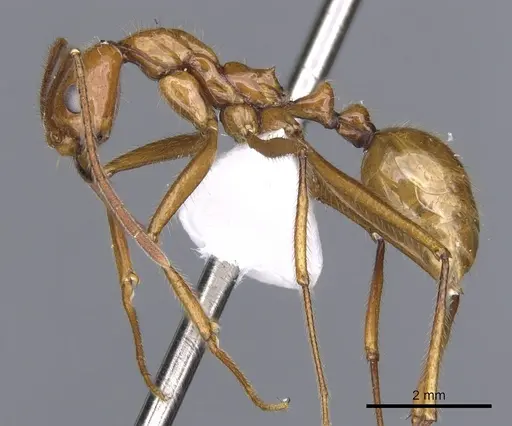
Megalomyrmex bidentatus is easily distinguished from all other Megalomyrmex species by its unique bidentate propodeum, the only species in the genus possessing notable teeth on this body part [1][2]. The head is also unusually modified, being much longer than broad compared to related species in the Leoninus group. It can be distinguished from the similar M. foreli by the presence of a sharp tooth on the ventral side of the postpetiole. This species is known from only a handful of specimens collected in two Colombian localities and one Ecuadorian site.
Natural History and Distribution
This species is known only from the highland forests of the Andes in southern Colombia (Nariño province) and northern Ecuador (Pichincha province). The type localities are Tajadas at 1000m elevation and the Reserva Natural Río Nambí, both in the Barbacoas region of Nariño, Colombia [1]. An Ecuadorian record from Pichincha at 750m elevation represents the southern limit of its known distribution [2]. It inhabits pre-montane rainforest leaf litter communities, where it occurs at low frequency [3]. This is the only species in the Leoninus group recorded at such high Andean altitudes.
Housing and Nesting
In captivity, provide a naturalistic setup that mimics its leaf-litter forest floor habitat. A setup with moist substrate allows for natural foraging behaviors. Alternatively, a Y-tong or plaster nest with small chambers scaled to their tiny size works well. Given their small size, ensure escape prevention is excellent, use fine mesh and check all connections regularly. Provide a water source and maintain moderate to high humidity. Start with conditions typical for tropical Myrmicinae: around 22-26°C and 60-80% humidity, then adjust based on colony behavior.
Feeding and Diet
Based on typical Megalomyrmex behavior, this species is likely predatory or omnivorous, foraging through leaf litter for small invertebrates. In captivity, offer small live prey like fruit flies and tiny insects. Sugar sources like honey or sugar water may also be accepted. Feed small amounts and remove uneaten prey after 24 hours.
Challenges and Ethical Considerations
Megalomyrmex bidentatus is not a species for beginners or hobbyists. It has never been documented in the antkeeping hobby, and no established care protocols exist. Wild populations are extremely limited, and collection for the pet trade would be highly unethical given its rarity and restricted range. If available at all, it would only be from dedicated researchers or conservation programs. For these reasons, antkeepers should appreciate this species primarily through scientific literature rather than attempting to keep it.
Frequently Asked Questions
Is Megalomyrmex bidentatus available in the antkeeping hobby?
No. This species is extremely rare, known from only a handful of specimens in scientific collections. It is not available in the antkeeping hobby and should not be sought after. Wild collection would be unethical given its extremely limited distribution.
What makes Megalomyrmex bidentatus different from other Megalomyrmex?
It is the only species in the entire genus with a bidentate propodeum. This unique feature makes it easily distinguishable from all other Megalomyrmex species. It also has an unusually long, modified head shape compared to related species in the Leoninus group.
Where does Megalomyrmex bidentatus live in the wild?
It lives only in highland pre-montane rainforest in the Andes of southern Colombia (Nariño province) and northern Ecuador (Pichincha), at elevations between 750-1000 meters.
How big do Megalomyrmex bidentatus colonies get?
Colony size is unknown. No colony size data exists in the scientific literature.
Do Megalomyrmex bidentatus ants sting?
This species belongs to the Myrmicinae subfamily, which typically have stingers. However, given their very small size, any sting would be negligible to humans.
What do I feed Megalomyrmex bidentatus?
While not directly studied for this species, based on related Megalomyrmex species, they likely accept small live prey and may also take sugar sources. However, since this species is not kept in captivity, these are unconfirmed.
What temperature and humidity does Megalomyrmex bidentatus need?
Specific requirements are unconfirmed. Based on its highland tropical origin, aim for temperatures around 22-26°C and humidity in the 60-80% range. However, no captive care data exists for this species.
Is Megalomyrmex bidentatus a good species for beginners?
No. This species is not recommended for any keeper because it is not available in the hobby, has no established care protocols, and wild populations are too rare and restricted to justify collection.
Does Megalomyrmex bidentatus need hibernation?
Unlikely. Being a tropical/highland species from near the equator, it probably does not require a diapause or hibernation period.
How long does it take for Megalomyrmex bidentatus to develop from egg to worker?
This is unconfirmed. No development data exists for this species.
Report an Issue
The current care sheet is based fully on literature. See inconsistencies, or something that's incorrect? Please , it will be resolved after review from an admin. Contributing to the blogs tab also helps providing information, to make us be able to further improve the caresheets. Thank you for your support!
References

This caresheet is licensed under CC BY-SA 4.0 .
Community Blogs
CASENT0902332
View on AntWeb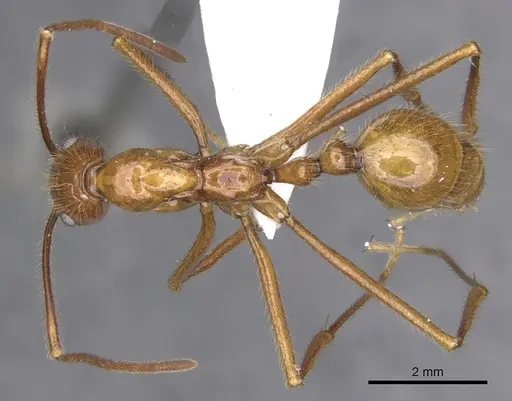
Literature
Loading distribution map...Loading products...