
Mayriella ebbei
- Sci. Name
- Mayriella ebbei
- Tribe
- Crematogastrini
- Subfamily
- Myrmicinae
- Author
- Shattuck & Barnett, 2007
- Distribution
- Found in 1 countries
Introduction
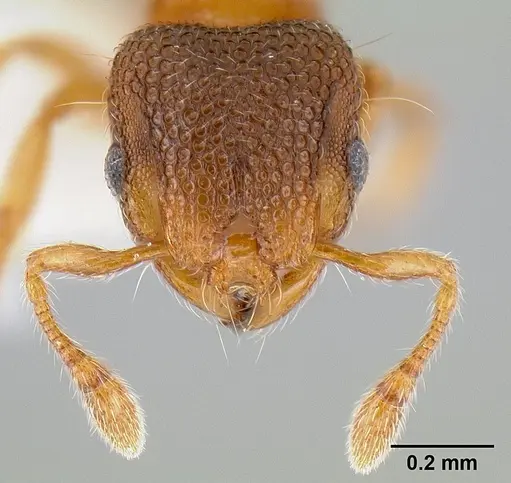
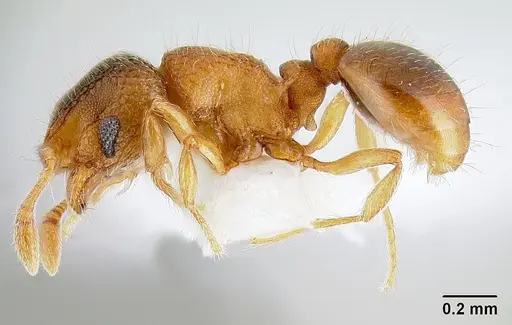
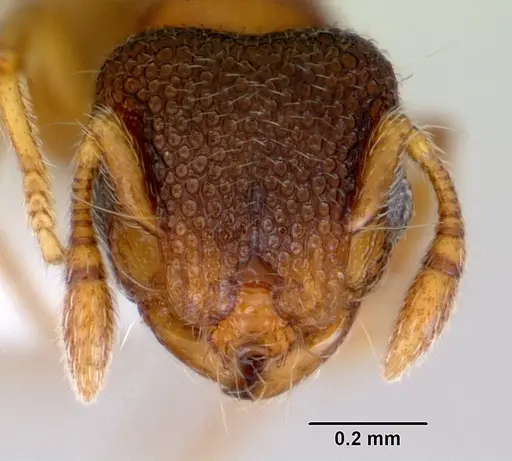
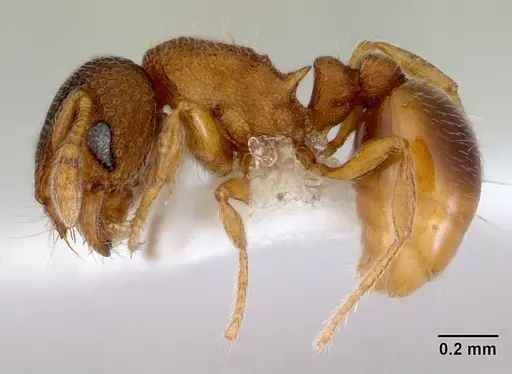
Mayriella ebbei is an ant species native to Australia, found in states including Australian Capital Territory, New South Wales, South Australia, and Victoria . It is the southernmost species of Mayriella and occurs in drier habitats such as sclerophyll woodlands, low scrub, and coastal heath . The species can be identified by numerous erect hairs on the gaster . This species is notable for its adaptation to drier sites compared to other Mayriella species, making it unique within the genus .
Quick Summary
- Difficulty: Medium
- Origin & Habitat: Australia (Australian Capital Territory, New South Wales, South Australia, Victoria) in drier habitats including sclerophyll woodlands, low scrub, ti-tree scrub, and coastal heath [1][2].
- Colony Type: Colony structure is unconfirmed. Nests occur in soil, under stones, or in rotten wood [1].
- Size & Growth:
- Queen: Size data unavailable [1]
- Worker: Size data unavailable [1]
- Colony: Colony size in the wild is not well documented, field studies show small numbers of individuals but this reflects trap samples, not colony size [3].
- Growth: Unknown
- Development: Estimated 6-8 weeks at optimal temperatures, based on typical Myrmicinae patterns [1]. (Development timeline is not directly studied, estimate based on genus-level patterns.)
- Antkeeping:
- Temperature: Temperature needs are unclear, start around 22-25°C and observe, as this species is classified as a Tropical-Climate Specialist [3].
- Humidity: Keep nest substrate moderately moist but allow drying between waterings, as this species occurs in drier habitats [1].
- Diapause: Based on southern Australian distribution, likely requires a winter diapause of 2-3 months at 10-15°C [1].
- Nesting: Natural nesting sites include soil, under stones, and in rotten wood [1]. Use Y-tong (AAC), plaster, or soil nests with moderate humidity.
- Behavior: Mayriella ebbei is a non-aggressive species. Workers are small and slow-moving. Defense mechanism involves smearing venom with a modified stinger, typical of Myrmicinae. Escape prevention is critical due to tiny size, use fine mesh and tight-fitting lids.
- Common Issues: escape prevention is critical due to tiny worker size, standard barriers may allow escapes., overwatering can be fatal due to drier habitat preferences., winter dormancy requirements may be easily overlooked in captive settings., colonies may develop slowly, requiring patience.
Housing and Nest Setup
Mayriella ebbei is an extremely small ant that requires careful attention to escape prevention. Use test tubes with cotton plugs for founding colonies, but ensure the cotton is packed tightly and consider adding a secondary barrier like fluon. For established colonies, a Y-tong (AAC) nest or plaster nest works well, these allow you to control humidity precisely. The species naturally nests in soil, under stones, and in rotten wood, so a naturalistic setup with a soil chamber also works. Keep chambers appropriately sized for their tiny workers, large open spaces can stress them. Ensure all connections between outworld and nest have barriers that account for their small size [1].
Feeding and Diet
Mayriella ebbei is a typical Myrmicinae ant, likely feeding on small insects and honeydew in the wild. Offer small live prey such as fruit flies, pinhead crickets, and small mealworms. Sugar water or honey should be offered regularly as an energy source. Due to their tiny size, prey items should be appropriately sized, even a single fruit fly is a substantial meal for these ants. Feed small amounts every 2-3 days and remove uneaten prey to prevent mold. Their small colony sizes in the wild suggest they are not heavy foragers [3].
Temperature and Seasonal Care
This species is classified as a Tropical-Climate Specialist, suggesting they prefer warmer conditions [3]. Maintain temperatures around 22-25°C for optimal colony health, but specific requirements are unclear. A heating cable on one side of the nest can create a temperature gradient, allowing ants to self-regulate. Given their southern Australian distribution, they likely experience cooler winters and will benefit from a hibernation-like rest period. Provide 2-3 months at 10-15°C during winter months to mimic their natural seasonal cycle [1].
Humidity Requirements
Mayriella ebbei occurs in generally drier habitats compared to other Mayriella species [1]. This means you should avoid keeping them in constantly humid conditions. Allow the nest substrate to dry partially between waterings. Provide a water tube in the outworld so they can access drinking water. The key is balance, some moisture for brood development, but not saturated conditions.
Colony Development and Growth
Little is known about the exact development timeline for Mayriella ebbei. Based on typical Myrmicinae patterns and their small size, expect approximately 6-8 weeks from egg to first worker at optimal temperatures. Colonies appear to remain small in the wild, limited field data shows small numbers of individuals but this does not reflect colony size [3]. This suggests they are not a fast-growing species and keepers should not expect rapid colony expansion. Patience is key with this species.
Frequently Asked Questions
How long does it take for Mayriella ebbei to produce first workers?
The exact timeline is not documented, but based on typical Myrmicinae development patterns, expect approximately 6-8 weeks from egg to first worker at optimal temperatures of 22-25°C [1].
Can I keep Mayriella ebbei in a test tube?
Yes, test tubes work well for founding colonies. However, escape prevention is critical due to their tiny size, pack cotton firmly and consider additional barriers like fluon on the rim [1].
What do Mayriella ebbei ants eat?
They likely accept small live prey like fruit flies and pinhead crickets, plus sugar water or honey. Their tiny size means prey must be appropriately small [3].
Do Mayriella ebbei ants need hibernation?
Likely yes, given their southern Australian distribution, a winter rest period of 2-3 months at 10-15°C is recommended to mimic their natural seasonal cycle [1].
Are Mayriella ebbei good for beginners?
They are rated Medium difficulty. Their tiny size makes escape prevention challenging, but their drier habitat preferences and non-aggressive nature make them manageable for intermediate antkeepers [1].
How big do Mayriella ebbei colonies get?
Colony size is not well documented in the wild, but field samples show very small numbers of individuals [3]. Expect relatively small colonies compared to common pet ant species.
Do Mayriella ebbei ants sting?
They are not known to sting and present no danger to keepers. Their tiny size and non-aggressive temperament make them safe to handle [1].
When should I move my Mayriella ebbei colony to a formicarium?
Move to a formicarium once the colony shows signs of space constraints in the test tube. Their small colony size means this may take longer than with faster-growing species [1].
What temperature is best for Mayriella ebbei?
Keep them around 22-25°C, but specific needs are unclear. They are classified as a Tropical-Climate Specialist and prefer warmer conditions [3].
Why are my Mayriella ebbei escaping?
Their extremely small size means they can squeeze through standard barriers. Use fine mesh, tight-fitting lids, and apply fluon to all connection points [1].
Report an Issue
The current care sheet is based fully on literature. See inconsistencies, or something that's incorrect? Please , it will be resolved after review from an admin. Contributing to the blogs tab also helps providing information, to make us be able to further improve the caresheets. Thank you for your support!
References

This caresheet is licensed under CC BY-SA 4.0 .
Community Blogs
CASENT0106116
View on AntWeb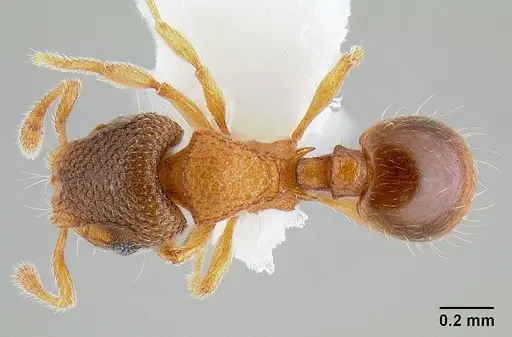
CASENT0172441
View on AntWeb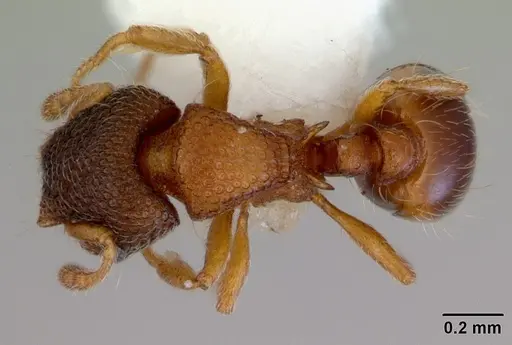
Literature
Loading distribution map...Loading products...