Red-headed Spider Ant
Leptomyrmex erythrocephalus
- Sci. Name
- Leptomyrmex erythrocephalus
- Tribe
- Leptomyrmecini
- Subfamily
- Dolichoderinae
- Author
- Fabricius, 1775
- Common Name
- Red-headed Spider Ant
- Distribution
- Found in 1 countries
Introduction
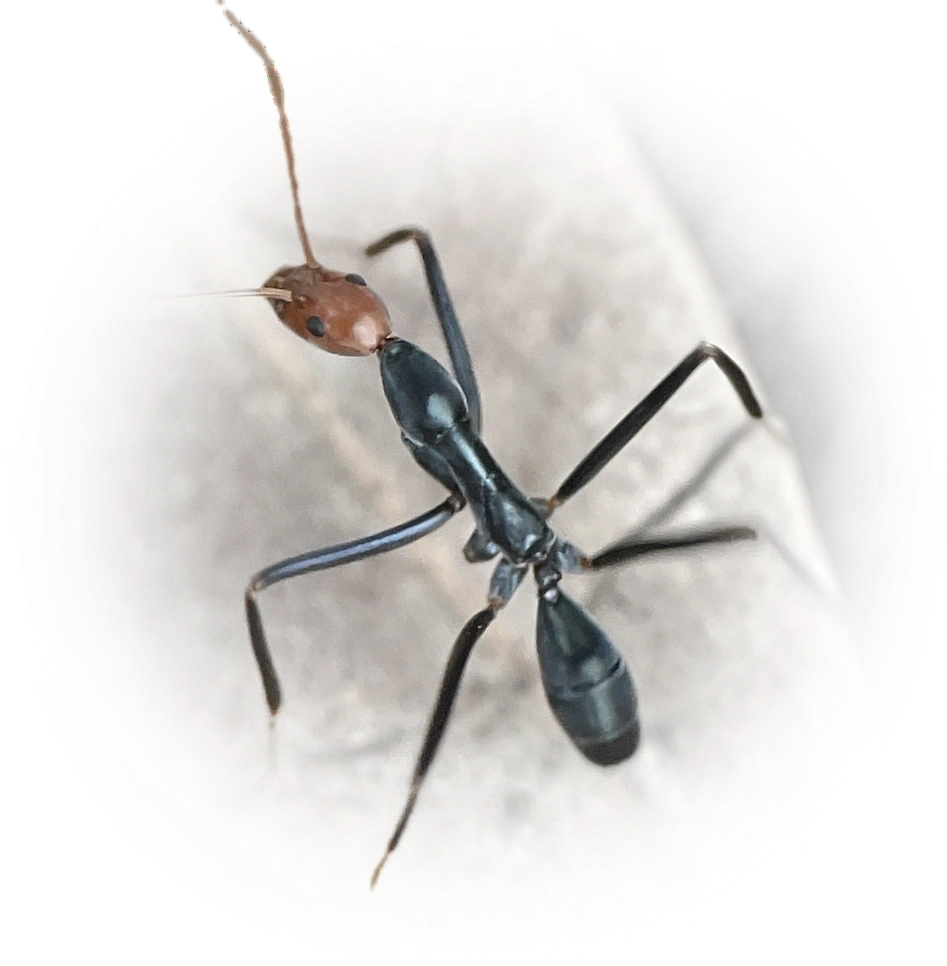
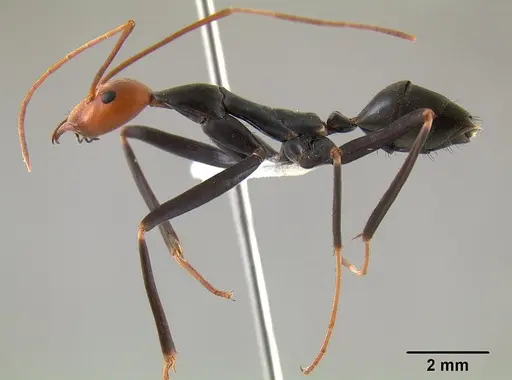
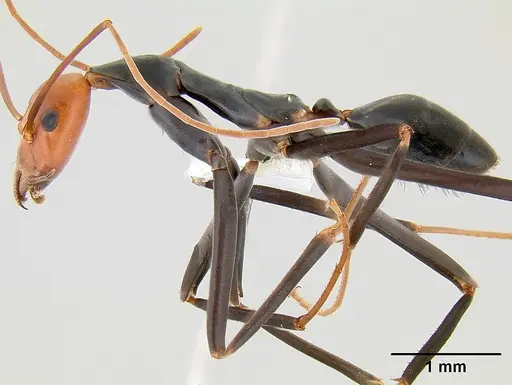
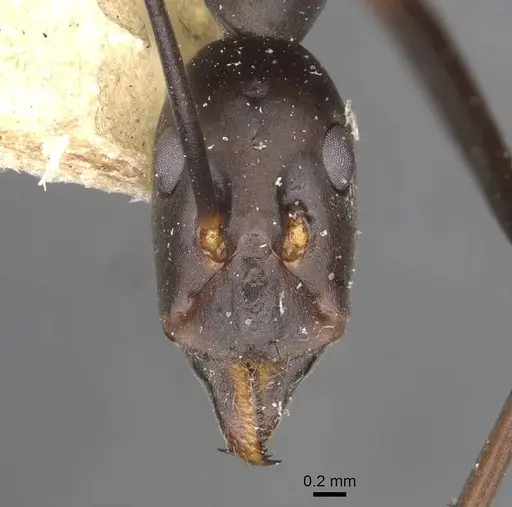
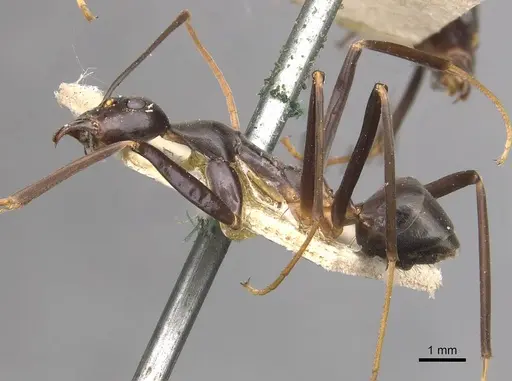
Leptomyrmex erythrocephalus is an Australian ant with an extremely elongated body and legs, giving it a spider-like appearance. Workers have a black body contrasted by a reddish-brown head, antennae, and tarsi . This species is found in eastern Australia, from Victoria to Queensland, in habitats like wet sclerophyll forest, dry sclerophyll, rainforest, and beach scrub . What makes this species unique is its ergatoid queen system, queens are wingless and worker-like, only slightly larger than workers .
Quick Summary
- Difficulty: Medium
- Origin & Habitat: Eastern Australia, in wet sclerophyll, dry sclerophyll, rainforest, gallery rainforest, and beach scrub. Nests in ground, under rocks, in soil at base of trees, or under logs [1][3].
- Colony Type: Colonies have ergatoid queens that are wingless and resemble large workers. Queen number is unconfirmed from research [1][4].
- Size & Growth:
- Queen: Size data unavailable, no total length measurements provided in research
- Worker: Size data unavailable, no total length measurements provided in research
- Colony: Up to several hundred workers, inferred from genus patterns [1]
- Growth: Moderate, inferred from typical Dolichoderine development
- Development: Estimated 6-10 weeks based on related species, no specific data for this species (Development time may vary with temperature, specific data not available)
- Antkeeping:
- Temperature: Keep warm and stable, roughly low-to-mid 20s°C, as they are classified as Cold-Climate Specialists [5]. Provide a gentle temperature gradient.
- Humidity: Keep nest substrate consistently moist but not waterlogged, based on their natural nesting habits [1].
- Diapause: Yes, likely requires 3-4 months of cool dormancy (10-15°C) during winter, based on their temperate distribution and classification [5].
- Nesting: Prefer naturalistic setups with soil substrate or Y-tong/plaster nests, mimicking ground and under-rock nesting in nature [1].
- Behavior: Generally docile and non-aggressive. As Dolichoderines, they lack a stinger and use chemical defense from their cloacal gland [6]. Active foragers with elongated legs, escape risk is moderate due to size. Provide textured surfaces to prevent leg entrapment.
- Common Issues: colonies may be slow to establish due to ergatoid queen system, patience is required, winter dormancy is often misunderstood, they need a cool period to trigger seasonal cycles, wild-caught colonies may carry parasites that cause collapse in captivity, avoid temperature fluctuations to maintain stable conditions, elongated legs can catch on smooth surfaces, provide climbing textures
Appearance and Identification
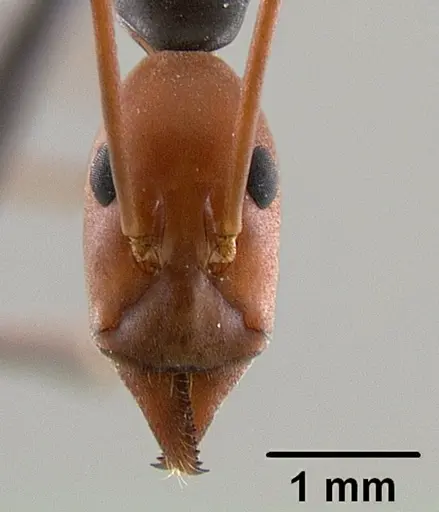
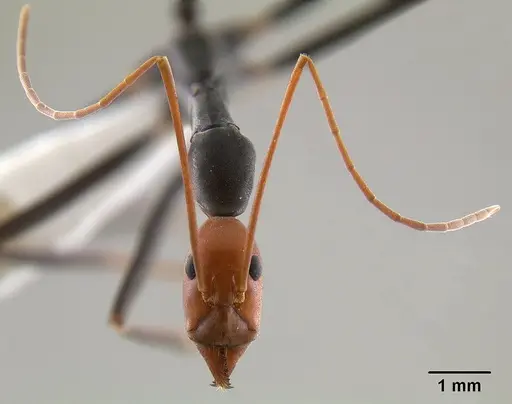
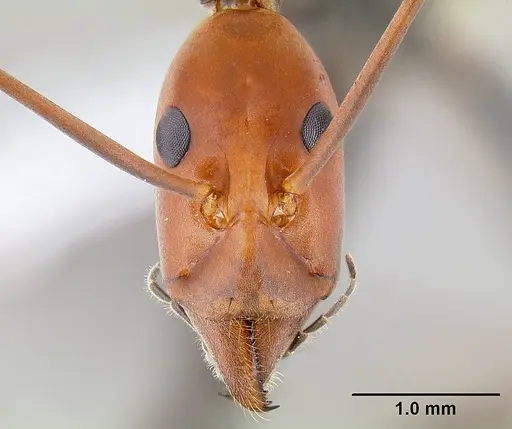
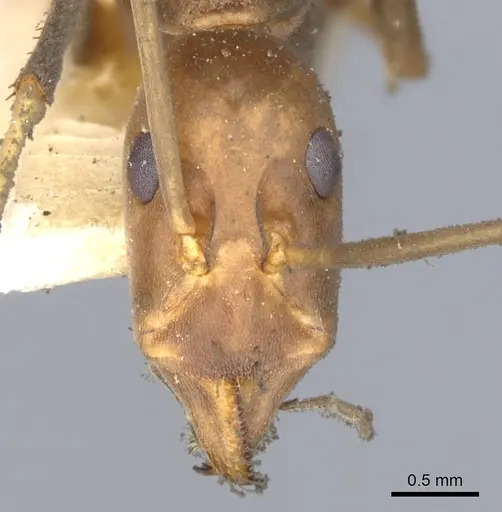
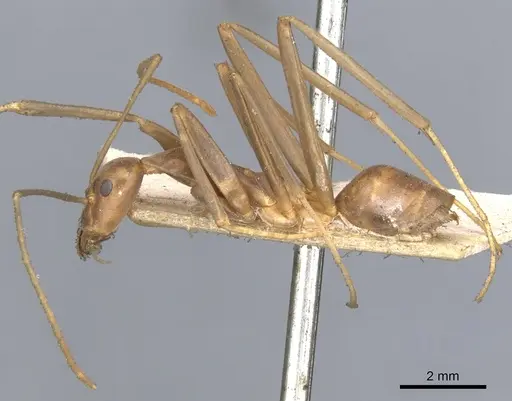
Leptomyrmex erythrocephalus has an elongated body and very long legs, giving it a spider-like look. Workers are black with a reddish-brown head, antennae, and tarsi [1][2]. Queens are ergatoid, wingless and slightly larger than workers, resembling large workers rather than typical queens [1][4]. Identification can be tricky in areas where it overlaps with similar species, but the clypeal setae count helps distinguish it [1].
Natural History and Distribution
This species is endemic to eastern Australia, found in Victoria, New South Wales, and Queensland [1]. It inhabits various forests and beach scrub, nesting in ground, under rocks, or in logs [1][3]. In Sydney regions, it may overlap with Leptomyrmex cnemidatus but prefers inland areas over 100km from the coast [1].
Colony Structure and Reproduction
Colonies feature ergatoid queens that are wingless and worker-like, a trait common in the Leptomyrmecini tribe [4][7]. Queens are slightly larger than workers and reproduce within the colony. Research does not specify if colonies are monogyne or polygyne, so queen number is unconfirmed [1].
Housing and Nesting
Use naturalistic setups with soil substrate or Y-tong/plaster nests, as they nest in ground and under rocks in nature [1]. Provide flat stones or bark for cover and textured climbing surfaces for their long legs. A water tube should be available, and escape prevention is moderate due to their size.
Feeding and Diet
They likely feed on honeydew from aphids and small insects in the wild [8]. In captivity, offer sugar water or honey regularly, plus protein like small crickets or mealworms. Feed every 2-3 days and remove uneaten prey to prevent mold.
Temperature and Seasonal Care
Keep temperatures warm and stable, around low-to-mid 20s°C, as they are Cold-Climate Specialists [5]. During winter, reduce to 10-15°C for 3-4 months to allow dormancy, then resume normal care in spring.
Behavior and Temperament
These ants are docile and use chemical defense from their cloacal gland when threatened [6]. They are active foragers with a distinctive walking style. Escape risk is moderate, ensure barriers are secure for their size.
Frequently Asked Questions
How long does it take for Leptomyrmex erythrocephalus to have first workers?
Based on related species, expect first workers in approximately 6-10 weeks, but specific data is not available for this species [1].
What do Leptomyrmex erythrocephalus eat?
They likely feed on honeydew and small insects. In captivity, offer sugar water and protein sources like crickets or mealworms [8].
Can I keep multiple queens together?
Research does not specify if multiple queens are tolerated. It is not recommended to combine unrelated queens, as it may lead to fighting [1].
Do they need hibernation?
Yes, they likely require a 3-4 month cool dormancy period during winter, based on their temperate habitat [5].
Are they good for beginners?
They are rated medium difficulty due to specific temperature needs and dormancy requirements. Not recommended for absolute beginners.
What size colony do they reach?
Colonies may reach up to several hundred workers, inferred from genus patterns [1].
When should I move them to a formicarium?
Wait until the colony has at least 20-30 workers, but they do well in naturalistic setups from the start.
Why is my colony dying?
Common causes include incorrect temperature, improper humidity, lack of dormancy, or parasites from wild-caught colonies. Ensure stable conditions and varied diet.
Report an Issue
The current care sheet is based fully on literature. See inconsistencies, or something that's incorrect? Please , it will be resolved after review from an admin. Contributing to the blogs tab also helps providing information, to make us be able to further improve the caresheets. Thank you for your support!
References

This caresheet is licensed under CC BY-SA 4.0 .
Community Blogs
CASENT0011746
View on AntWeb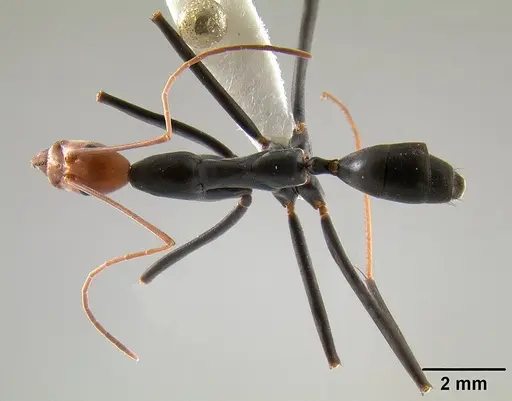
CASENT0011765
View on AntWeb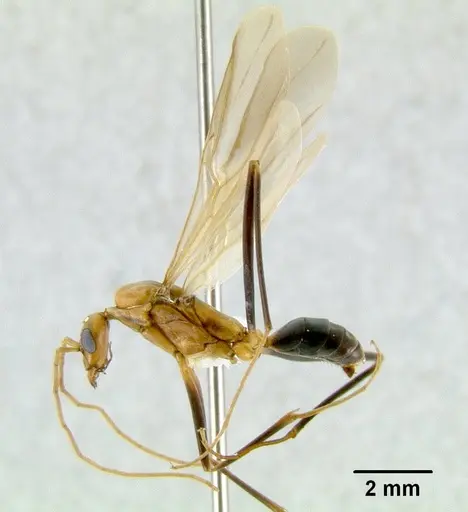
CASENT0106077
View on AntWeb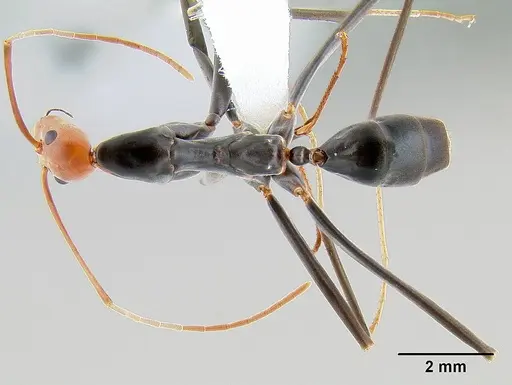
CASENT0902940
View on AntWeb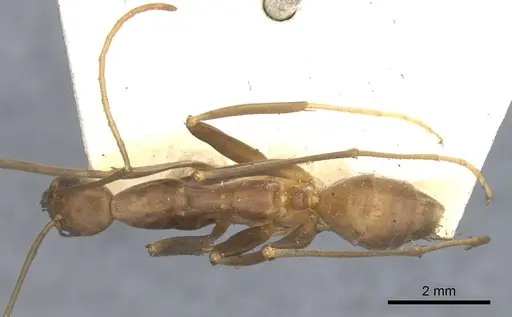
CASENT0909492
View on AntWeb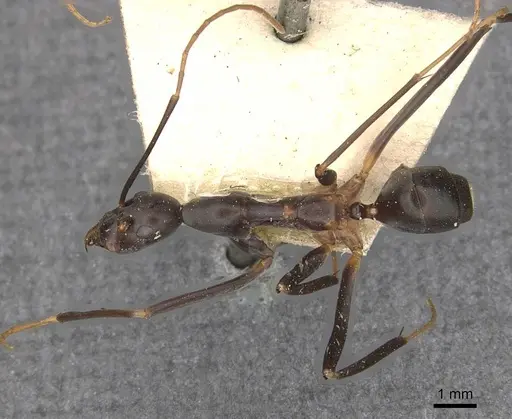
Literature
Loading distribution map...Loading products...