
Leptomyrmex darlingtoni
- Sci. Name
- Leptomyrmex darlingtoni
- Tribe
- Leptomyrmecini
- Subfamily
- Dolichoderinae
- Author
- Wheeler, 1934
- Distribution
- Found in 1 countries
Introduction
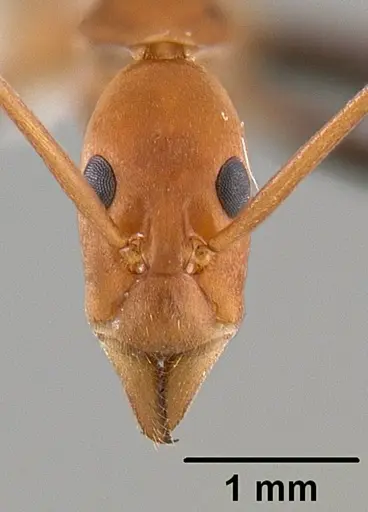
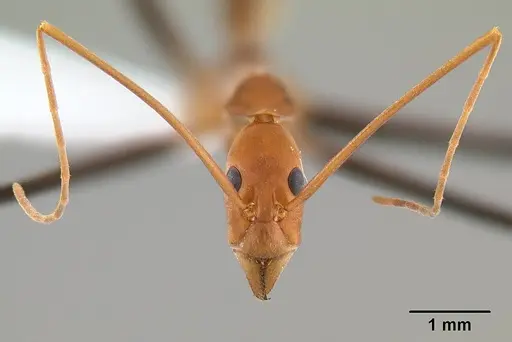
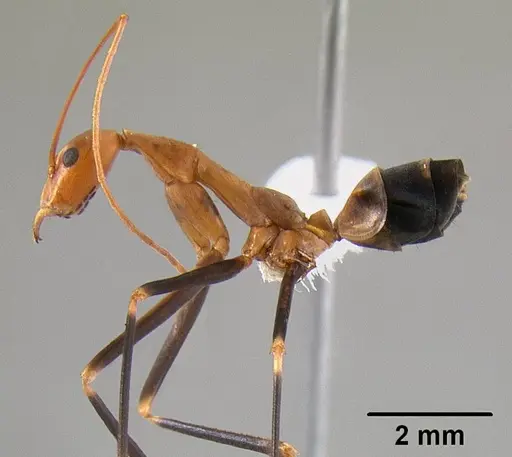
Leptomyrmex darlingtoni is a tiny ant species endemic to Cape York Peninsula in Queensland, Australia. Workers are among the smallest in the genus, with extremely elongated bodies and remarkably long slender antennae that extend well past the back of the head. Coloring is highly variable - ranging from dark forms with reddish legs to entirely pale yellow . Unlike most Leptomyrmex species which are arboreal, this species nests in the ground across rainforest, savannah, Araucaria forest, and Eucalyptus woodland . Queens have never been collected, making captive breeding extremely challenging .
Quick Summary
- Difficulty: Expert
- Origin & Habitat: Cape York Peninsula, Queensland, Australia, found as far south as the vicinity of Cooktown. Nests in ground in rainforest, savannah, Araucaria forest, and Eucalyptus woodland [1][2].
- Colony Type: Unknown colony structure, queens have never been collected. Males are known but colony organization is unconfirmed.
- Size & Growth:
- Queen: Unknown, queens have never been collected [2]
- Worker: size data unavailable, worker measurements given (HW 0.94-1.03mm, WL 3.11-3.30mm) represent head width and mesosoma length, not total body length [1]
- Colony: Unknown, no colony size data available
- Growth: Unknown, no development data available
- Development: Unknown, no published development data exists for this species (No development data available. Queens have never been collected, so founding behavior and development timeline cannot be estimated from wild colonies.)
- Antkeeping:
- Temperature: Temperature requirements unconfirmed, infer warm tropical conditions from Cape York habitat. Observe colony activity and adjust accordingly.
- Humidity: High humidity preferred, being ground-nesters in rainforest environments, keep substrate consistently moist but not waterlogged.
- Diapause: Likely minimal or no diapause, being a tropical Australian species from Cape York, they probably do not require a cold winter rest.
- Nesting: Ground-nesting species. A naturalistic setup with moist soil or a plaster nest with a deep chamber works well. Unlike most Leptomyrmex which are arboreal, this species clearly prefers ground nests [1]. Provide a deep soil chamber for burrowing.
- Behavior: These ants are very small and delicate with extremely long legs and antennae. They are likely docile and non-aggressive like other Leptomyrmex species. Their tiny size means excellent escape prevention is essential, they can squeeze through remarkably small gaps. Foraging style is likely typical of Dolichoderinae, they probably scout for nectar and small insects. Lacks a functional sting, uses defensive chemical secretions from the abdomen (typical of Dolichoderinae).
- Common Issues: queen unavailability, queens have never been collected, making wild founding nearly impossible, tiny size means escapes are likely without fine mesh barriers, no published care information exists, all advice is inferred from genus patterns, humidity control is critical, being rainforest ground-nesters, they likely suffer in dry conditions, temperature requirements are unconfirmed, no species-specific data available
Housing and Nest Setup
Leptomyrmex darlingtoni is a ground-nesting species, which is unusual for the genus Leptomyrmex, most spider ants are arboreal but this species clearly prefers soil [1]. A naturalistic setup with moist soil works best, or you can use a plaster nest with a deep chamber for burrowing. Unlike arboreal Leptomyrmex that need vertical space for their long legs, this species needs horizontal depth. Keep the nest chamber humid and provide a water tube for drinking water. Because workers are extremely small, use fine mesh for any ventilation holes, they can squeeze through gaps that seem impossibly small. A test tube setup can work for founding colonies if kept humid, but transfer to a naturalistic setup once the colony reaches 10-15 workers.
Temperature and Humidity
Being from Cape York Peninsula in tropical Queensland, these ants likely need warm conditions. Maintain temperatures in the low-to-mid 20s°C range with a gentle gradient so workers can move between warmer and cooler areas. High humidity is essential, keep the substrate consistently moist but never waterlogged. Being ground-nesters in rainforest environments, they are adapted to stable, humid conditions. A small water reservoir connected to the nest helps maintain humidity through evaporation. Avoid temperature drops below 20°C for extended periods. [1]
Feeding
Like other Leptomyrmex species, these ants likely have a mixed diet. Offer sugar water or honey as a constant energy source, they will readily take sweet liquids. For protein, provide small live prey appropriate to their tiny size: fruit flies, pinhead crickets, small mealworms, or other micro-insects. They may also tend aphids for honeydew if you keep any plants in the enclosure. Feed protein 2-3 times per week and keep sugar water available at all times. Remove uneaten prey after 24 hours to prevent mold.
Colony Establishment
This is one of the most challenging Leptomyrmex species to keep because queens have never been collected in the wild [2]. Unlike most ant species where you can find a queen during nuptial flights, no one has documented the queen of L. darlingtoni. This means established colonies are extremely rare in the antkeeping hobby. Your best options are: 1) Acquire an existing colony from a specialized keeper who has propagated them,2) Try to locate a dealer's stock if they have ever been collected, or 3) Consider similar but more commonly available Leptomyrmex species. If you do obtain a colony, be extremely careful with transport and setup, their small size makes them fragile.
Behavior and Temperament
Leptomyrmex ants are known for their spider-like appearance due to extremely long legs, and this species is no exception, workers also have remarkably long antennae [1]. They are likely docile and non-aggressive, typical of the genus. Workers are active foragers, probably searching for nectar and small insects on the ground. Their tiny size makes them vulnerable, they are likely preyed upon easily by larger ants and insects. They do not sting, like all Dolichoderinae, they lack a functional sting and instead use defensive chemical secretions from a slit-like opening at the tip of the abdomen.
Frequently Asked Questions
Can I find a Leptomyrmex darlingtoni queen to start a colony?
No, queens of this species have never been collected in the wild. This is extremely unusual and makes starting a colony from a wild-caught queen essentially impossible. You would need to acquire an established colony from a keeper who has propagated them.
What do Leptomyrmex darlingtoni ants eat?
They likely accept a standard ant diet: sugar water or honey for energy, and small protein sources like fruit flies, tiny crickets, or small mealworms. This is inferred from typical Leptomyrmex feeding behavior since no species-specific feeding data exists.
Are Leptomyrmex darlingtoni good for beginners?
No, this species is rated Expert difficulty. Queens have never been collected, making colony establishment nearly impossible. Additionally, their tiny size requires specialized care and excellent escape prevention. Consider more commonly available species for your first ant-keeping experience.
What temperature do Leptomyrmex darlingtoni need?
Keep them warm, low-to-mid 20s°C is a reasonable starting point. This matches their tropical Cape York Peninsula habitat in Queensland, Australia. A temperature gradient allows workers to regulate their own body temperature by moving between warmer and cooler areas.
Do Leptomyrmex darlingtoni need hibernation?
Probably not. Being from tropical northern Australia, they likely do not require a cold diapause period. However, slight reduction in activity during cooler months may occur naturally. Do not subject them to cold temperatures below 15°C.
How big do Leptomyrmex darlingtoni colonies get?
Unknown, no colony size data has been published. Based on their very small worker size, colonies are probably smaller than typical Leptomyrmex which can reach several hundred workers. Expect modest colony sizes.
What makes Leptomyrmex darlingtoni different from other spider ants?
Most Leptomyrmex species are arboreal (live in trees), but L. darlingtoni is a ground-nesting species [1]. They are also one of the smallest species in the genus. Additionally, this is the only Leptomyrmex species on Cape York Peninsula where no queen has ever been documented.
How do I prevent Leptomyrmex darlingtoni from escaping?
Excellent escape prevention is critical due to their extremely small size. Use fine mesh on any ventilation holes. Ensure all connections between the nest and outworld are sealed with cotton or other barriers. Check for gaps daily, they can squeeze through remarkably small spaces. Fluon on container rims can help but fine mesh is more reliable.
What nest type is best for Leptomyrmex darlingtoni?
A naturalistic setup with moist soil or a plaster nest with a deep chamber works best. Unlike arboreal Leptomyrmex that need vertical space, this ground-nesting species needs horizontal depth for burrowing. Keep the substrate consistently moist.
Where is Leptomyrmex darlingtoni found in the wild?
Only on Cape York Peninsula in Queensland, Australia, as far south as the vicinity of Cooktown [1]. They live in ground nests across rainforest, savannah, Araucaria forest, and Eucalyptus woodland. This is a rare endemic with a very restricted range.
Report an Issue
The current care sheet is based fully on literature. See inconsistencies, or something that's incorrect? Please , it will be resolved after review from an admin. Contributing to the blogs tab also helps providing information, to make us be able to further improve the caresheets. Thank you for your support!
References

This caresheet is licensed under CC BY-SA 4.0 .
Community Blogs
CASENT0012024
View on AntWeb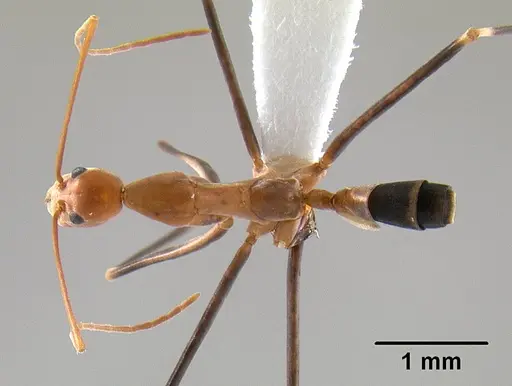
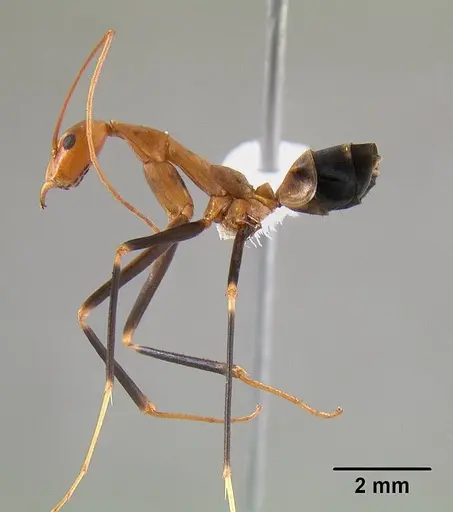
CASENT0012029
View on AntWeb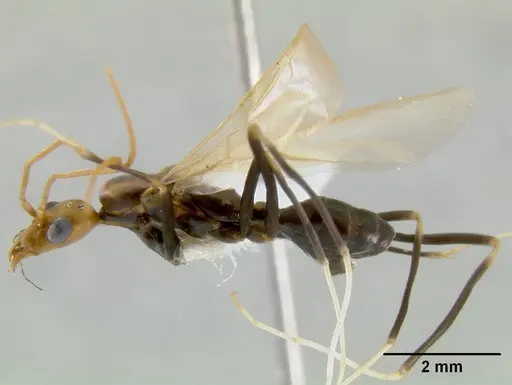
Literature
Loading distribution map...Loading products...