
Leptogenys processionalis
- Sci. Name
- Leptogenys processionalis
- Tribe
- Ponerini
- Subfamily
- Ponerinae
- Author
- Jerdon, 1851
- Distribution
- Found in 5 countries
Introduction
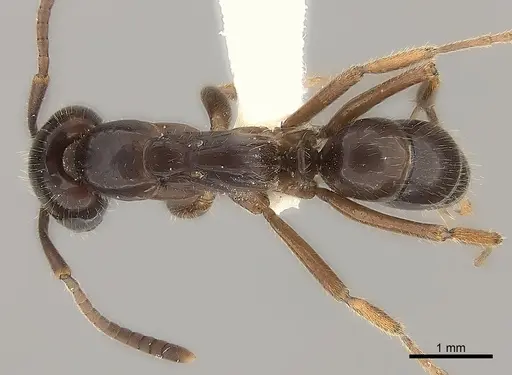
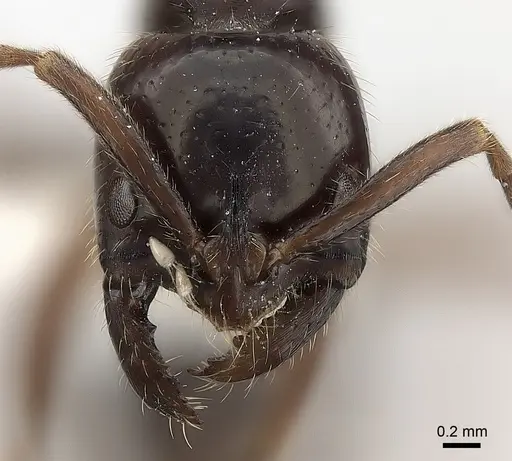
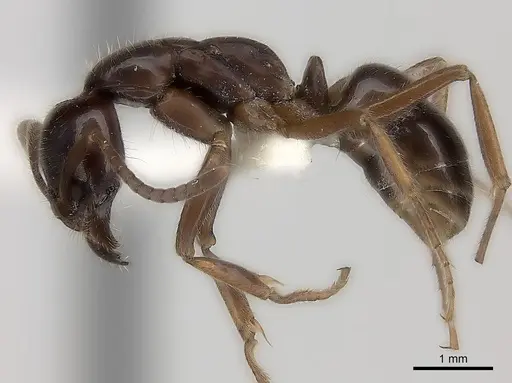
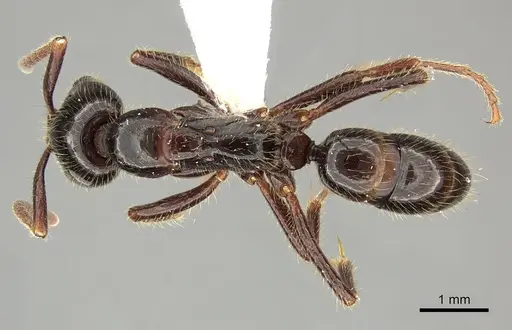
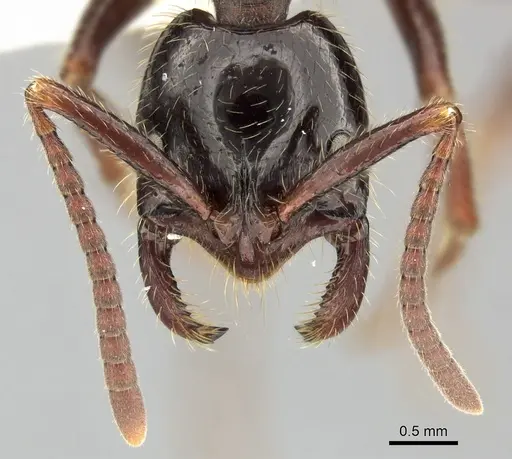
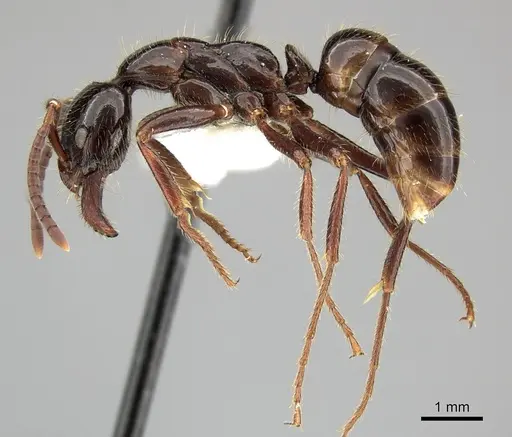
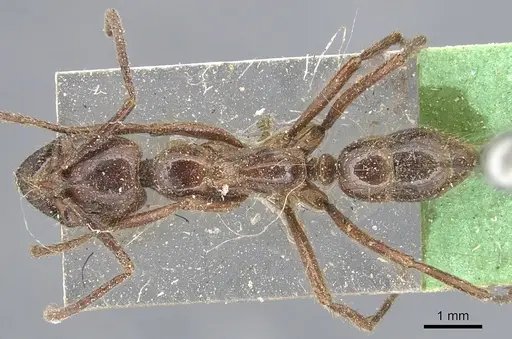
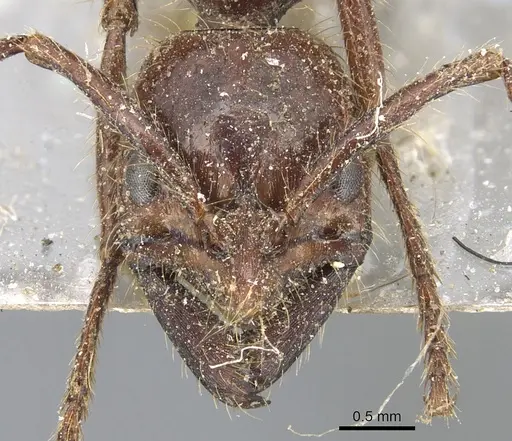
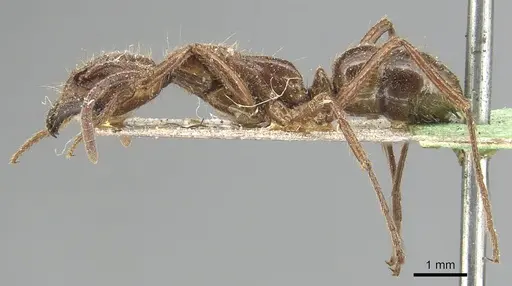
Leptogenys processionalis is a medium-sized predatory ant in subfamily Ponerinae. Workers are 8-9 mm long with a blackish-brown body, reddish-brown legs and antennae, and a polished appearance covered in brownish-yellow hairs. The head is broad and rectangular, with powerful mandibles armed with four teeth. They have an exserted sting that delivers a painful sting . This species ranges across the Indomalayan region, including India, Sri Lanka, Vietnam, and Borneo, inhabiting ground-level environments in forests and peri-urban areas . L. processionalis is known for its cooperative hunting behavior and nomadic lifestyle. Workers form raiding columns in single-file queues, specializing in hunting centipedes and other arthropods. They use coordinated attacks, with scouts assessing prey and recruiting nestmates to encircle and paralyze it. After capture, workers form chains to transport prey back to the nest .
Quick Summary
- Difficulty: Medium
- Origin & Habitat: Native to the Indomalayan region: India, Sri Lanka, Vietnam, and Borneo. Found in multiple Indian states, inhabiting ground-level in dry deciduous and evergreen forests, less disturbed areas, and peri-urban habitats [1][5][8][9].
- Colony Type: Unconfirmed, no specific data on queen number from research.
- Size & Growth:
- Queen: Size data unavailable, no total length measurements documented for queens.
- Worker: 8-9 mm [1][2][3]
- Colony: Unknown, not documented in research.
- Growth: Unknown, no data on development timeline.
- Development: Unknown, no direct measurements available. (Development timeline has not been studied for this species.)
- Antkeeping:
- Temperature: Maintain 24-28°C based on tropical distribution [10][1].
- Humidity: Keep nest substrate consistently moist but not waterlogged, with some drier areas available [8][10].
- Diapause: Unknown, no documented diapause requirement.
- Nesting: Ground-dwelling species that nests in loose soil, under objects, and in tree trunk hollows. Provide a naturalistic setup with soil or a Y-tong/plaster nest with moist substrate [8][1].
- Behavior: L. processionalis is an aggressive predator with a painful sting. Workers forage cooperatively in raiding columns, following pheromone trails in single file. They form bidirectional traffic on trails with distinctive platoon formations. Scouts locate prey and recruit nestmates through tandem running or direct recruitment. They specialize in hunting centipedes and other arthropods, using coordinated attacks and cooperative transport. Escape prevention is important, use standard barriers as they are moderate-sized ants [6][7][1][8].
- Common Issues: nomadic nature means colonies may try to relocate frequently, provide spacious outworld and secure boundaries., specialized predator requiring live prey, may not accept commercial ant foods alone., painful sting means handling requires caution, workers will sting if threatened., colonies may be sensitive to disturbance due to their nomadic/raiding lifestyle., limited availability of captive-reared colonies means most keepers source wild-caught colonies which may have parasites.
Housing and Nest Setup
L. processionalis is a ground-dwelling ant that prefers enclosed nest spaces with moist substrate. In captivity, a Y-tong nest or plaster nest works well, filled with moist soil or sand. Provide chambers scaled to their 8-9mm worker size. Since they are nomadic and often relocate their nests in the wild, they may benefit from a spacious formicarium with multiple connected chambers. The outworld should be large enough for raiding columns and cooperative prey transport. Use a water test tube as a humidity reservoir. Secure all connections and edges as these ants are agile and will exploit any gaps [8][1].
Feeding and Diet
As a specialized predator, L. processionalis requires live prey in captivity. Their primary natural prey includes centipedes, termites, cockroaches, and other arthropods. In captivity, offer live small insects like crickets, mealworms, roaches, and especially centipedes or other multi-legged prey. They will scavenge on larger dead prey like rat carcasses when available in the wild [6][1]. Feed protein-rich prey 2-3 times per week, removing uneaten prey after 24 hours. Sugar sources are not a primary part of their diet, they obtain nutrients from their prey. Some keepers report success with occasional honey or sugar water, but live prey should form the bulk of their diet [6][1][8].
Temperature and Seasonal Care
Maintain temperatures between 24-28°C, reflecting their tropical origin across India, Sri Lanka, Vietnam, and Borneo. A heating cable on one side of the nest creates a gentle gradient allowing workers to self-regulate. Place heating on top of the nest to avoid drying out the substrate too quickly. They occur in both wet and dry zones of Sri Lanka, suggesting tolerance to varying conditions, but avoid temperature extremes. During cooler months, activity may naturally decrease, no true diapause is required, but reduce feeding frequency if colony activity slows [10][1].
Foraging Behavior and Trail Dynamics
Workers form distinctive raiding columns where they follow one another in single-file queues. Research shows they form 'platoons', groups of several workers separated by roughly three body-lengths that move together. Traffic is bidirectional with a dominant direction. Average velocity is about 4-6 body lengths per second. When encountering prey, scouts assess it first, then recruit nestmates who coordinate attacks, encircling the prey and using their powerful mandibles and sting to paralyze it. After capture, workers form chains to cooperatively transport prey back to the nest [7][6].
Defense and Sting
L. processionalis possesses a painful, exserted sting that they will use defensively. Workers are not aggressive toward humans unless the nest is disturbed, but they will sting if threatened or handled roughly. The sting is described as very severe in the original species description. When working with this species, use caution and avoid disturbing the nest unnecessarily. Provide deep substrate or a retreat area so workers feel secure and are less likely to sting defensively [1][11].
Cooperative Hunting
This species demonstrates cooperative hunting strategies. Observations in the wild show scouts initially approaching prey (including centipedes) and touching the prey's cuticle with their antennae without immediately attacking. After 1-2 minutes, workers encircle the prey from every direction and use their powerful curved mandibles and sting to capture and paralyze it. After paralyzing prey, they form small chains to pull the prey toward the nest. This chain-forming behavior regularly breaks and rebuilds, especially when encountering obstacles. This cooperative behavior makes them a fascinating species to observe, but requires keepers to provide appropriately sized live prey [6].
Frequently Asked Questions
What do Leptogenys processionalis eat?
They are specialized predators that require live prey. Feed them live insects like crickets, mealworms, roaches, and especially centipedes or other multi-legged arthropods. They will scavenge on larger dead prey but do not rely on sugar sources. Offer protein prey 2-3 times per week.
What is the best nest type for Leptogenys processionalis?
A Y-tong nest or plaster nest with moist soil substrate works well. They are ground-dwelling ants that prefer enclosed spaces. Provide a naturalistic setup with soil chambers scaled to their 8-9mm size.
Why do Leptogenys processionalis walk in lines?
This is their natural raiding behavior. Workers form processional columns following pheromone trails, a characteristic that gives them the common name 'procession ant.' They use these trails to organize cooperative foraging and prey recruitment.
Where is Leptogenys processionalis found?
They range across the Indomalayan region: India (multiple states including Maharashtra, Karnataka, Kerala, Tamil Nadu, West Bengal), Sri Lanka, Vietnam, and Borneo. They inhabit ground-level environments in forests and peri-urban areas.
How do Leptogenys processionalis hunt cooperatively?
Scouts locate prey and initially approach it without attacking. They then recruit nestmates who encircle the prey from all directions. Workers use their powerful curved mandibles and sting to paralyze the prey, then form chains to cooperatively pull it back to the nest.
Report an Issue
The current care sheet is based fully on literature. See inconsistencies, or something that's incorrect? Please , it will be resolved after review from an admin. Contributing to the blogs tab also helps providing information, to make us be able to further improve the caresheets. Thank you for your support!
References

This caresheet is licensed under CC BY-SA 4.0 .
Community Blogs
Literature
Loading distribution map...Loading products...