
Leptanilla swani
- Sci. Name
- Leptanilla swani
- Tribe
- Leptanillini
- Subfamily
- Leptanillinae
- Author
- Wheeler, 1932
- Distribution
- Found in 3 countries
Introduction
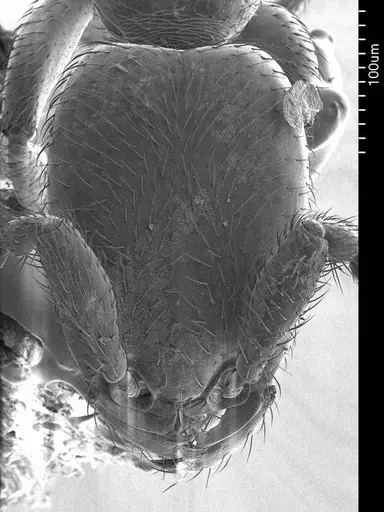
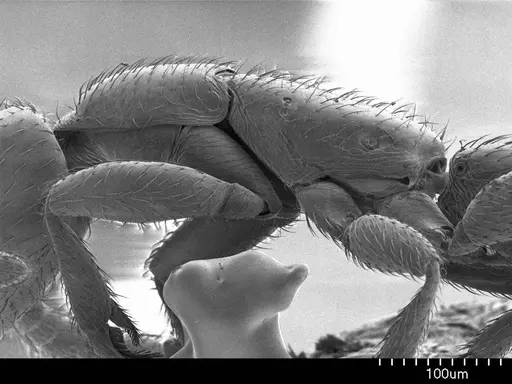
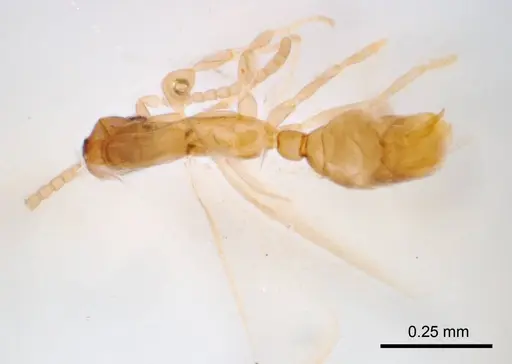
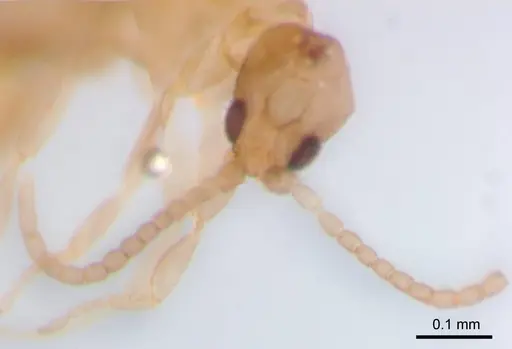
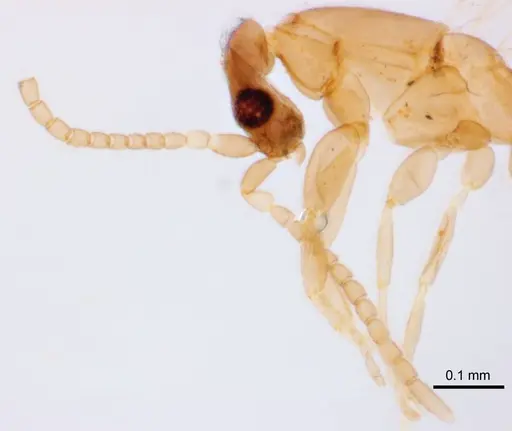
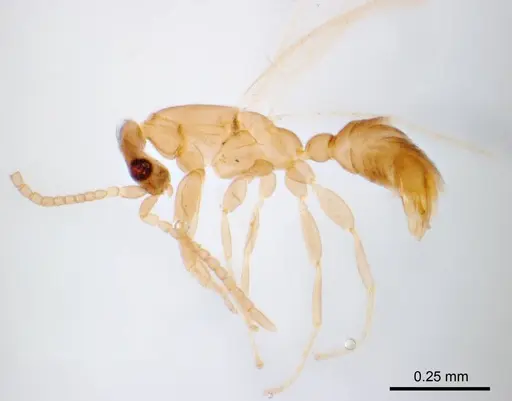
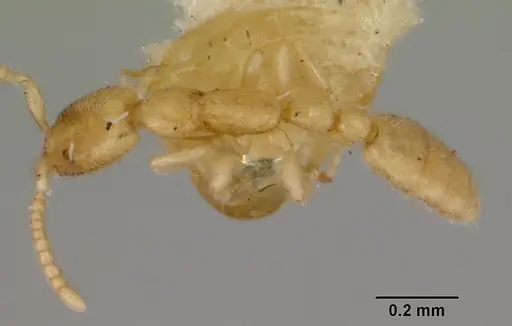
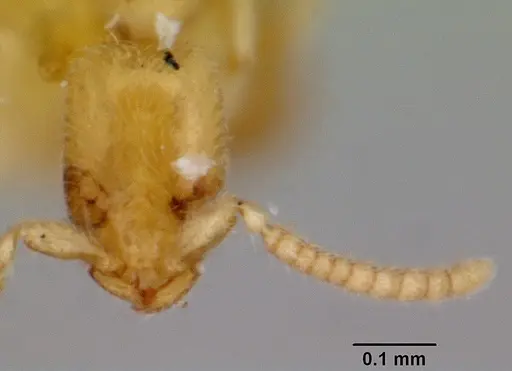
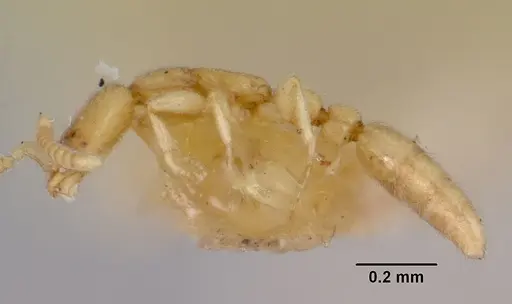
Leptanilla swani is an extraordinarily rare Australian ant species, one of just two known Leptanilla species on the continent. Workers measure a tiny 1.3-1.5mm and are pale yellow with no eyes - they are completely subterranean, living their lives underground where light never reaches. The pronotum and mesonotum are connected by a flexible hinge, a key feature distinguishing them from lookalike Myrmicinae ants. Queens reach about 2mm and are wingless (apterous), resembling enlarged workers. This species is known from only a handful of worker collections since its 1932 description, though males turn up more often in pitfall traps. Related Japanese Leptanilla species specialize in hunting geophilomorph centipedes, suggesting this species is likely a specialized predator of small soil invertebrates.
Quick Summary
- Difficulty: Expert
- Origin & Habitat: Southwestern Australia (WA), with records from NSW, QLD, and SA. Also found in New Guinea. They live underground, with the type colony collected under a large stone at Goyamin Pool near Chittering, approximately 75km north of Perth [1][2].
- Colony Type: Single-queen colonies (monogyne). The type colony contained 24 workers and one wingless queen.
- Size & Growth:
- Queen: ~2mm [3]
- Worker: 1.3-1.5mm [3]
- Colony: Up to 24 workers known from type colony, likely small colonies based on limited field collections
- Growth: Unknown, likely slow given their subterranean lifestyle and specialized diet
- Development: Unknown, no direct data available (Development timeline unconfirmed for this species.)
- Antkeeping:
- Temperature: Aim for 20-24°C. No specific data exists for this species, but Australian Leptanilla species typically inhabit moderate temperate to subtropical regions. A room-temperature setup around 22°C is a reasonable starting point.
- Humidity: High humidity is essential, these are subterranean ants that live in soil. Keep the nest substrate consistently moist but not waterlogged. Provide a gradient with slightly drier areas for the ants to self-regulate.
- Diapause: Unknown, no research on overwintering behavior. Australian temperate populations may have reduced activity during cooler months, but specific diapause requirements are unconfirmed.
- Nesting: Soil-based naturalistic setups work best. The type colony was found under a large stone, indicating they nest in shallow soil layers. Use a tight, humid setup with small chambers scaled to their tiny size. Avoid dry, airy environments.
- Behavior: Completely subterranean and extremely cryptic. Workers are blind (no eyes) and forage underground in soil. Based on related species, they are likely predaceous on small soil arthropods, especially centipedes. They are not aggressive and pose no threat to humans, their tiny size and lack of sting make them harmless. Escape prevention is critical due to their minute size, they can squeeze through the tiniest gaps. They are rarely seen above ground and are considered one of the most elusive ant species in Australia.
- Common Issues: extreme rarity makes obtaining a colony nearly impossible, workers have only been collected twice since 1932, subterranean lifestyle means they are rarely active above ground, making observation difficult, tiny size creates major escape risk, standard barriers may not contain them, specialized diet likely means they may refuse common ant foods, no established captive breeding, wild colonies are the only source, slow colony growth combined with specialized biology means high failure risk even for experts
Why This Species Is So Challenging
Leptanilla swani represents one of the most difficult ant species to keep in captivity, not because of aggression or complex care, but because of how little we know about them. Workers have been collected only twice since their 1932 description, making them arguably the rarest Australian ant in existence. Males show up in pitfall traps more often, which tells us these ants spend almost their entire lives underground where standard collecting methods cannot reach them. This also means there is essentially no captive breeding history or established care protocols. You are essentially pioneering husbandry for a species that has never been kept before. This makes L. swani a true expert-level project suitable only for experienced antkeepers with the resources and patience to experiment. [1][4]
Housing and Nest Setup
Given their subterranean nature, these ants need a soil-based setup that stays humid. A naturalistic terrarium-style setup with several inches of moist soil works best. The type colony was found under a large stone, suggesting they nest in shallow underground chambers. Use fine, sandy soil that holds moisture well but does not compact. Provide flat stones or other surfaces on top of the soil to mimic their natural under-stone nesting. Because they are blind and tiny, avoid any large open spaces, they do best with tight, small chambers. Test tubes with cotton-stoppered water reservoirs can work for founding colonies if the tube is buried horizontally in moist substrate. Escape prevention is absolutely critical, their minute size means they can slip through gaps invisible to the human eye. Use fine mesh and check all seals frequently. [4]
Feeding and Diet
This is perhaps the biggest unknown for L. swani. A related Japanese Leptanilla species is known to specialize on hunting geophilomorph centipedes (long, slender soil centipedes), suggesting this species may be a specialized predator rather than a generalist forager. In captivity, you would need to experiment with small live prey appropriate to their size, think tiny springtails, small soil mites, or fragments of small invertebrates. They likely will not accept sugar water or honey, given their predatory nature. Start with very small live prey items and observe carefully. The key challenge is that we do not know exactly what they eat or how often they need to feed. This is truly experimental antkeeping, be prepared for trial and error. [3]
Temperature and Seasonal Care
No specific temperature data exists for this species. They come from southwestern Australia, which has a Mediterranean climate with mild winters and warm summers. A room-temperature setup around 20-24°C is a reasonable starting point. Avoid temperature extremes, they have no evolutionary tolerance for harsh conditions since they live underground where temperatures are stable. Watch your colony: if workers become sluggish, slightly warm one side of the setup, if they avoid the warm area, reduce temperature. Regarding diapause or winter rest, we simply do not know. Australian temperate ants may reduce activity in winter, but specific requirements for this species are unconfirmed. Err on the side of stable, moderate conditions rather than attempting hibernation with no data to guide you.
Finding and Acquiring Colonies
Be direct: you are extremely unlikely to find L. swani for sale. Workers have been collected twice in nearly a century. Males show up occasionally in pitfall traps, but workers, and especially queens, are virtually never found. If you want this species, you would need to either collect them yourself in Australia (legally, with permits) or find a very specialized researcher or breeder who has managed to culture them. This level of rarity means there is no established supply chain. If you do obtain a colony, it would likely be from a researcher who collected them for study. Treat such a colony as irreplaceable, these ants cannot be replaced if lost. [1][4]
Frequently Asked Questions
Can I buy Leptanilla swani ants?
Almost certainly not. This is one of the rarest ant species in Australia, with workers collected only twice since 1932. There is no commercial breeding or supply chain for this species. If you want one, you would need to collect them yourself in Australia with proper permits or know a researcher working with them.
How long do Leptanilla swani colonies live?
Unknown, no captive colonies have been documented long-term. Given their likely specialized biology and the absence of any established husbandry, we simply do not know their lifespan. Related Leptanilla species are perennial like most ants, but specific data for this species does not exist.
Do Leptanilla swani ants sting?
They have a sting but it is completely irrelevant to humans. At 1.3-1.5mm worker size, their sting is far too small to penetrate human skin. They pose no danger whatsoever, these are completely harmless tiny soil ants.
What do Leptanilla swani eat?
Likely specialized predators on small soil invertebrates, especially centipedes (based on related Japanese species). In captivity you would need to experiment with tiny live prey like springtails or small soil mites. They probably will not accept sugar sources. This is entirely experimental, no one has successfully kept this species long-term to confirm diet.
Are Leptanilla swani good for beginners?
Absolutely not. This is an expert-only species. We have almost no information on their care, they are nearly impossible to obtain, and any colony would be irreplaceable. If you are interested in Leptanilla, consider starting with better-documented species in the genus.
How big do Leptanilla swani colonies get?
Unknown. The largest known collection was 24 workers. Related species suggest colonies likely stay small. Their subterranean, predatory lifestyle likely keeps colony sizes small compared to surface-dwelling ants.
Do Leptanilla swani need hibernation?
Unknown. No research exists on their overwintering requirements. Australian temperate populations may have reduced activity in winter, but specific diapause behavior is unconfirmed. Do not attempt hibernation without data, maintain stable, moderate temperatures instead.
Why are they so rarely found?
They are completely subterranean (hypogaeic), they live their entire lives underground and are blind. Standard ant collecting methods like sweeping vegetation or searching on plants will not find them. Workers have only been collected by luck (under stones), while males occasionally turn up in pitfall traps set underground. They are essentially invisible to standard ant surveys. [1]
Report an Issue
The current care sheet is based fully on literature. See inconsistencies, or something that's incorrect? Please , it will be resolved after review from an admin. Contributing to the blogs tab also helps providing information, to make us be able to further improve the caresheets. Thank you for your support!
References

This caresheet is licensed under CC BY-SA 4.0 .
Community Blogs
Literature
Loading distribution map...Loading products...