
Leptanilla islamica
- Sci. Name
- Leptanilla islamica
- Tribe
- Leptanillini
- Subfamily
- Leptanillinae
- Author
- Baroni Urbani, 1977
- Distribution
- Found in 2 countries
Introduction
Leptanilla islamica is an extremely rare ant species known only from the Arabian Peninsula, with records from Yemen, the United Arab Emirates, and Oman . This species belongs to the subfamily Leptanillinae, which contains some of the most primitive and least‑studied ants in the world . Only the male caste has ever been described – workers have never been documented . Males are small, uniformly brown with paler jaws and legs, and were collected using light traps at night in mountainous areas of Oman and the UAE . The genus Leptanilla contains tiny, hypogaeic (underground) ants that are rarely encountered due to their hidden lifestyle.
Quick Summary
- Difficulty: Expert
- Origin & Habitat: Arabian Peninsula – Yemen (type locality), United Arab Emirates, and Oman. Collected in arid to semi‑arid habitats, including mountains and desert parks, with specimens from Fujairah, Sharjah Desert Park, and Dhofar Governorate [1][3].
- Colony Type: Unknown – only males have been described. No worker or queen has ever been documented, so colony structure cannot be determined.
- Size & Growth:
- Queen: Unknown – queens have never been collected or described
- Worker: Unknown – workers have never been documented
- Colony: Unknown – no colony data exists
- Growth: Unknown
- Development: Unknown – no development data (No brood stages have ever been documented for this species.)
- Antkeeping:
- Temperature: Unknown – based on spring collection data (February–April) in the UAE and Oman, they likely tolerate a range around 15–35°C [1][3]. For related Leptanilla species,24–28°C is often used, but this is unconfirmed.
- Humidity: Unknown – their arid Arabian habitat suggests low to moderate humidity is appropriate. Avoid overly wet conditions.
- Diapause: Unknown – no seasonal data exists. The Arabian Peninsula has mild winters, so they may have reduced activity rather than true hibernation.
- Nesting: No nesting data exists. Related Leptanilla species often nest in shallow underground chambers or in decaying wood, but this is unconfirmed for Leptanilla islamica.
- Behavior: No behavioral observations exist for this species in captivity. In the wild, males were collected at night using light traps, suggesting nocturnal alate activity. The genus Leptanilla is known for very cryptic, underground lifestyles – they rarely come to the surface. Escape risk cannot be assessed without worker specimens.
- Common Issues: This species is known only from males – no workers, queen, or colony has ever been collected, making captive keeping impossible., No established husbandry protocols exist – everything from diet to nesting is unknown., The species may be extremely rare or possibly extinct – no recent records of new males are available after 2011., Any speculation about care would be purely guesswork and is not recommended.
Why This Species Is Not Suitable for Antkeeping
Leptanilla islamica is one of the most poorly known ant species in the world. Unlike most ants that can be kept, this species has only ever been documented from male specimens – no workers, queen, or colony have ever been observed or collected [3]. This means there is no established protocol for keeping them, no known diet, no known nesting preferences, and no way to obtain a colony. The males collected in light traps represent the only known specimens. For these reasons, Leptanilla islamica should be considered a species for scientific interest only, not for captive keeping. If you are interested in keeping Leptanilla species, look for better‑documented relatives from regions with more research.
What We Know About the Male
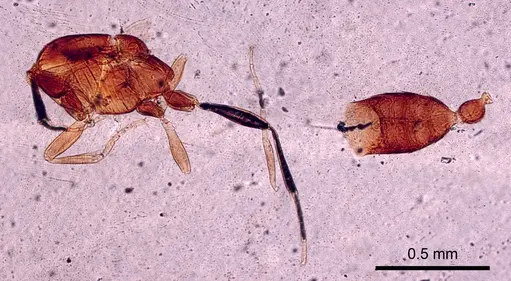
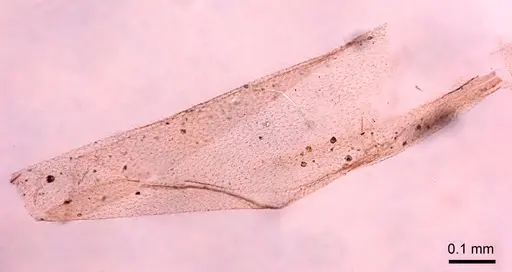
The only documented specimens of Leptanilla islamica are males. The original description was based on a single male from Yemen [3]. Males are uniformly brown except for paler jaws and legs. They have a moderately elongated head with curved sides, large strongly projecting compound eyes, thick curved mandibles without teeth, and a short scape that is longer than the first funicular segment [3]. The mesosoma is uniformly rounded and the petiole is round on both dorsal and lateral sides. The fore wing has a distinctly marked short stretch of costal vein and no pterostigma [3]. Males were collected using light traps at night from Ayn Hamran and Ayn Ashat in Oman’s Dhofar Governorate, and from Fujairah and Sharjah Desert Park in the UAE between February and April [3][5][1].
Rarity of the Subfamily Leptanillinae
The subfamily Leptanillinae contains some of the most primitive and least‑studied ants in the world. These are tiny, underground‑dwelling ants that are rarely encountered because they spend almost their entire lives below ground [4]. Many Leptanilla species are known only from males, as workers are extremely difficult to collect. The cryptic lifestyle of these ants means we have almost no information about their biology, colony structure, or behavior. This makes them fascinating from a scientific perspective but completely unsuitable for antkeeping. The Leptanillinae also includes the genus Protanilla, which shows similar patterns of rarity and poor documentation [6].
Distribution and Habitat
Leptanilla islamica is known from a limited range on the Arabian Peninsula. The type locality is Yemen, and the species has since been recorded from the United Arab Emirates (Fujairah, Sharjah Desert Park) and Oman (Dhofar Governorate) [1][2][3]. Specimens were collected using light traps between mid‑February and early April, suggesting alates emerge in spring. The habitat consists of arid to semi‑arid desert regions and southwestern mountain areas. The UAE records represent new occurrences for the country, expanding the known range beyond Yemen [1][5]. The Dhofar region of Oman, where multiple males were collected, features mountainous terrain with relatively lush conditions compared to the surrounding desert [3].
Frequently Asked Questions
Can I keep Leptanilla islamica ants?
No. This species cannot be kept because only males have ever been documented – no workers, queens, or colonies have been collected or described. There is no established husbandry protocol and no way to obtain a colony.
Where can I find Leptanilla islamica?
This species has only been collected in Yemen, the United Arab Emirates, and Oman, and only as males attracted to light traps. Workers have never been found, so there is no way to locate or collect a colony.
What do Leptanilla islamica eat?
Unknown. No feeding observations exist for this species.
How big do Leptanilla islamica colonies get?
Unknown. No colony data exists for this species.
Do Leptanilla islamica queens need to forage during founding?
Unknown. No queen or founding behavior has been documented for this species.
What temperature do Leptanilla islamica need?
Unknown. Based on collection data from February through April in the UAE and Oman, they likely tolerate a range from roughly 15°C to 35°C. Related species from similar habitats suggest 24–28°C would be appropriate, but this is unconfirmed.
Do Leptanilla islamica ants sting?
Unknown. No sting observations exist. Given their tiny size (males are only a few millimeters), any sting would likely be imperceptible to humans.
Are Leptanilla islamica good for beginners?
No. This species is completely unsuitable for antkeeping. Only males have been documented, no colony exists to keep, and no husbandry information is available. This is a species for scientific study, not captivity.
Report an Issue
The current care sheet is based fully on literature. See inconsistencies, or something that's incorrect? Please , it will be resolved after review from an admin. Contributing to the blogs tab also helps providing information, to make us be able to further improve the caresheets. Thank you for your support!
References

This caresheet is licensed under CC BY-SA 4.0 .
Community Blogs
CASENT0280999
View on AntWeb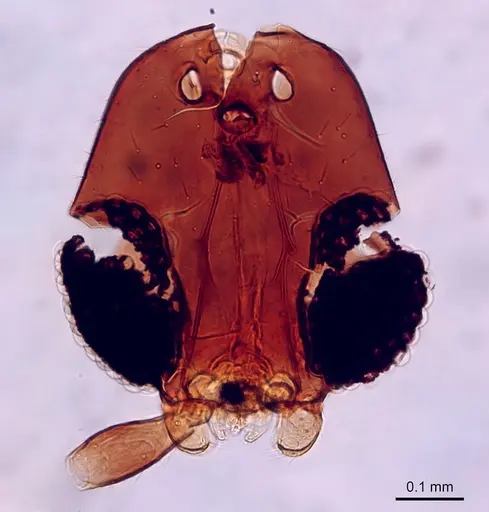
Literature
Loading distribution map...Loading products...