
Lepisiota pulchella
- Sci. Name
- Lepisiota pulchella
- Tribe
- Plagiolepidini
- Subfamily
- Formicinae
- Author
- Forel, 1892
- Distribution
- Found in 1 countries
Introduction
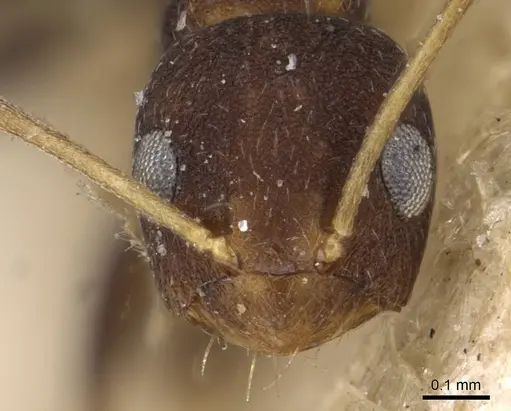
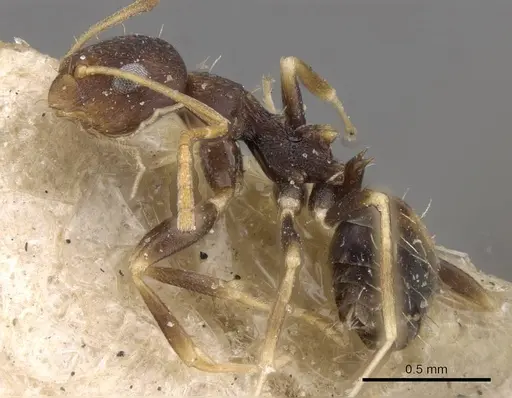
Lepisiota pulchella is a medium-sized ant native to the Western Ghats of India, Sri Lanka, and southern China. Workers measure 2.5-3mm and have a distinctive appearance with a dull, opaque head and mesosoma covered in reticulate-punctate sculpture, while the gaster is microreticulate and subopaque. The body is bicolored - the head is brown to dark brown, the mesosoma golden brown to dark brown, and the gaster is black with a characteristic light reddish-yellow patch on the first gastral segment. This species is easily distinguished from the similar Lepisiota opaca by its dull, opaque body (L. opaca is smooth and shiny) and by the gaster sculpture. They have propodeal spines that point upward and outward, and the petiole has a pair of dorsal spines. These ants are active for most of the year but disappear during the winter months.
Quick Summary
- Difficulty: Medium
- Origin & Habitat: Native to the Western Ghats and central India, with confirmed records from Karnataka, Kerala, and Maharashtra in India, as well as Sri Lanka's wet zone and southern China. They inhabit tropical and subtropical regions, typically collected from honey baits and by beating vegetation [1].
- Colony Type: Colony structure is not directly documented in available research.
- Size & Growth:
- Antkeeping:
- Temperature: Keep warm and stable, roughly low-to-mid 20s°C. They come from warm tropical and subtropical regions. A gentle gradient allowing them to move between warmer and cooler areas is ideal.
- Humidity: Moderate humidity, keep the nest substrate consistently moist but not waterlogged. They prefer slightly drier conditions compared to many tropical ants, reflecting their adaptation to seasonal monsoons with dry periods.
- Diapause: Yes, these ants are not found during winter seasons in their native range, indicating they require a winter rest period. Reduce temperature for 2-3 months during winter [2][3].
- Nesting: Use a nest that allows for moderate humidity control. Y-tong (AAC) nests or plaster nests work well. They prefer nesting in soil or rotting wood in nature, so a naturalistic setup with substrate can also work.
- Behavior: These ants are moderately active foragers. They are not particularly aggressive but will defend their nest if threatened. Workers are small (2.5-3mm) so escape prevention is important, use fine mesh and tight-fitting lids. They are known to tend aphids for honeydew and likely forage for small insects. They show seasonal activity patterns, being most active during warmer months.
- Common Issues: small worker size means escape prevention must be excellent, they can squeeze through tiny gaps, winter diapause is required, colonies that are kept active year-round may decline, humidity control is important, too wet or too dry conditions can cause colony stress, limited availability in the antkeeping hobby, this is not a commonly kept species
Appearance and Identification
Lepisiota pulchella workers measure 2.5-3mm and have a distinctive appearance that sets them apart from similar species. The head and mesosoma are dull and opaque with distinctly reticulate-punctate sculpture, this means they have a textured, net-like pattern of tiny pits. The gaster (the rear part of the ant) is microreticulate and subopaque, appearing slightly hazy rather than completely shiny. This is a key distinguishing feature from the closely related Lepisiota opaca, which has a smooth and shiny gaster. The body is bicolored: the head ranges from brown to dark brown, the mesosoma is golden brown to dark brown, and the gaster is black with a light reddish-yellow patch on the first segment. They have propodeal spines that point upward and outward, and the petiole (the narrow waist) has a pair of dorsal spines that give them a distinctive silhouette. [1]
Natural Distribution and Habitat
This species is native to the Western Ghats mountain range in India and surrounding regions. Confirmed records come from Karnataka, Kerala, and Maharashtra in India, as well as Sri Lanka's wet zone and southern China. Earlier records from northern Indian states like Himachal Pradesh, Uttarakhand, and Punjab were likely misidentifications of the similar Lepisiota opaca species. In their natural habitat, they are typically collected using honey baits and by beating vegetation, indicating they are surface-active foragers. They are found in tropical and subtropical climates with distinct seasonal patterns, they are present during Summer, Rainy, Autumn, and Spring seasons but absent during Winter, suggesting they have a winter dormancy period [1][4][2][3].
Temperature and Seasonal Care
Lepisiota pulchella comes from warm tropical and subtropical regions, so they do best at warm temperatures. You can achieve this with a room that stays warm or by using a heating cable or heating mat on one side of the nest to create a temperature gradient. The gradient is important because it lets the ants choose their preferred temperature. During the active season (roughly March through October in the Northern Hemisphere), maintain warm temperatures consistently. Come winter, you must reduce temperatures for 2-3 months to allow for proper diapause, this matches their natural cycle where they disappear during winter months. Failure to provide adequate winter rest can lead to colony decline over time [2][3].
Feeding and Diet
Based on typical Lepisiota behavior and the fact that they were collected using honey baits, these ants are omnivorous and will accept both sugar sources and protein. Offer sugar water, honey, or diluted maple syrup as a constant sugar source. For protein, provide small insects like fruit flies, small mealworms, or other tiny arthropods. They likely tend aphids for honeydew in nature, so offering sugar sources is important for their diet. Feed protein 2-3 times per week, and always have sugar water available. Remove uneaten food after 24-48 hours to prevent mold issues. [1]
Nesting and Housing
In the wild, Lepisiota pulchella nests in soil or rotting wood, typically in areas with moderate vegetation cover. For captive care, a Y-tong (AAC) nest or plaster nest works well because they allow for better humidity control than fully naturalistic setups. The chambers should be appropriately sized for their small 2.5-3mm workers, tight-fitting passages help them feel secure. Keep the nest substrate moderately moist but not waterlogged. Allow one side of the nest to be slightly drier so the ants can choose their preferred humidity zone. Since they are small ants, ensure your setup has excellent escape prevention with fine mesh barriers and tight-fitting lids. [1]
Colony Development
The colony structure of Lepisiota pulchella is not extensively documented in scientific literature. Based on typical Lepisiota genus patterns, they likely form single-queen colonies where one reproductive queen heads the colony. The queen probably seals herself in a chamber during founding and raises the first workers alone using stored fat reserves. First workers (nanitics) are typically smaller than mature workers. Development from egg to worker likely takes several weeks at optimal warm temperatures, but this is an estimate based on related species rather than direct observation. Colonies probably grow to several hundred workers over time, though maximum colony size is not documented.
Frequently Asked Questions
How long does it take for Lepisiota pulchella to produce first workers?
The exact development timeline is not documented for this species. Based on typical Lepisiota genus patterns, expect first workers (nanitics) to emerge in several weeks after the queen lays eggs, assuming optimal warm temperatures. Growth is moderate compared to some tropical species.
Do Lepisiota pulchella ants need hibernation?
Yes, they do. In their native range (India, Sri Lanka), they are absent during winter months and present only during Summer, Rainy, Autumn, and Spring. You should provide a winter rest period of 2-3 months at reduced temperatures [2][3].
What do Lepisiota pulchella ants eat?
They are omnivorous. Offer sugar water, honey, or diluted maple syrup as a constant carbohydrate source. For protein, provide small insects like fruit flies, small mealworms, or other tiny arthropods 2-3 times per week.
Are Lepisiota pulchella good for beginners?
They are rated as Medium difficulty. They require warm temperatures and must have a proper winter diapause period. Their small size also requires good escape prevention. They are not as commonly kept as some other species, so they may be harder to find.
How big do Lepisiota pulchella colonies get?
Maximum colony size is not directly documented, but based on related species, they likely reach several hundred workers. Growth is moderate, not as fast as some tropical species but steady with proper care.
Can I keep multiple Lepisiota pulchella queens together?
The colony structure is not well-documented. Based on typical Lepisiota patterns, they likely form single-queen colonies. Combining unrelated queens is not recommended as there is no documentation of pleometrosis (multiple queen founding) for this species.
What makes Lepisiota pulchella different from Lepisiota opaca?
The easiest way to tell them apart is by appearance: L. pulchella has a dull, opaque body with distinctly reticulate-punctate sculpture, while L. opaca is smooth and shiny with only superficial reticulate sculpture. The gaster of L. pulchella is microreticulate and subopaque, while L. opaca has a smooth, shiny gaster [1].
What temperature should I keep Lepisiota pulchella at?
Keep them warm during the active season. Use a heating cable on one side of the nest to create a gradient so the ants can regulate their own temperature. During winter diapause, reduce temperatures for 2-3 months.
When should I move my Lepisiota pulchella colony to a formicarium?
You can keep them in a test tube setup for the founding stage. Once the colony reaches around 20-30 workers and you see consistent activity, you can move them to a proper nest (Y-tong or plaster nest). Make sure the chambers are appropriately sized for their small 2.5-3mm workers.
Report an Issue
The current care sheet is based fully on literature. See inconsistencies, or something that's incorrect? Please , it will be resolved after review from an admin. Contributing to the blogs tab also helps providing information, to make us be able to further improve the caresheets. Thank you for your support!
References

This caresheet is licensed under CC BY-SA 4.0 .
Community Blogs
CASENT0909894
View on AntWeb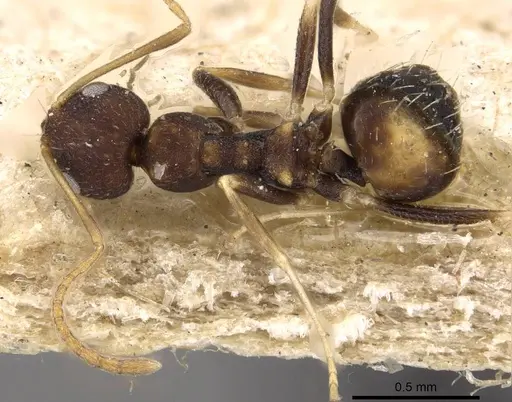
Literature
Loading distribution map...Loading products...