
Lenomyrmex wardi
- Sci. Name
- Lenomyrmex wardi
- Tribe
- Attini
- Subfamily
- Myrmicinae
- Author
- Fernández & Palacio, 1999
- Distribution
- Found in 2 countries
Introduction
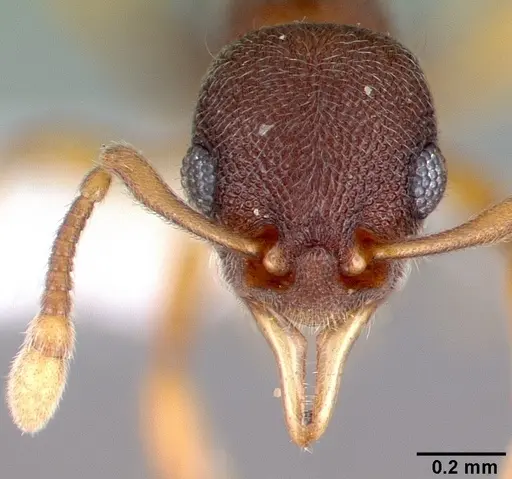
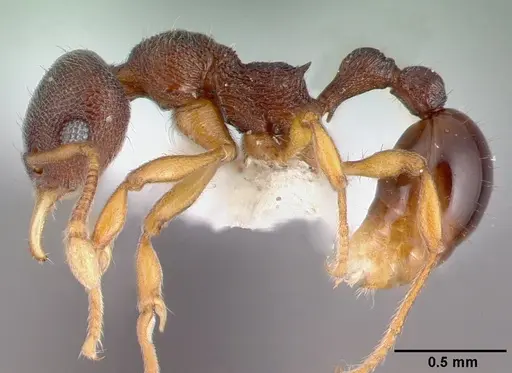
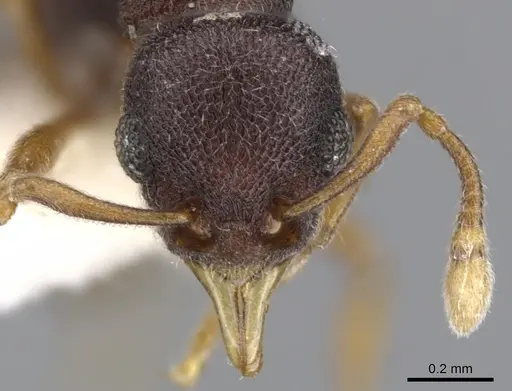
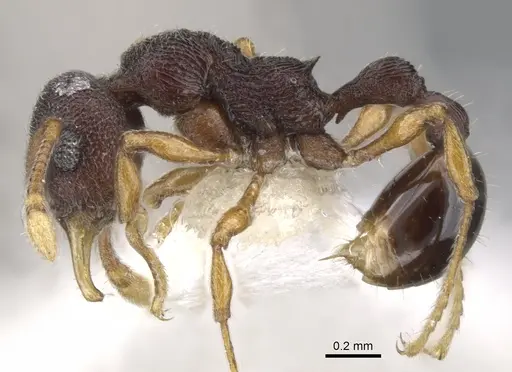
Lenomyrmex wardi is a tiny ant from the cloud forests of Ecuador and Colombia, belonging to the Myrmicinae subfamily (Attini tribe). Workers measure 3.30-3.52 mm, queens 3.52 mm, with a reddish-brown body, yellowish-brown legs and antennae, and whitish-yellow mandibles and antennal club . Their eyes are relatively large with 6-7 facets, and their propodeal spines are shorter than the distance between their bases . Described in 1999 and named after ant taxonomist Dr. Philip S. Ward, this species is collected from rainforest leaf litter at elevations of 1100-1500 m . Almost nothing is known about its biology, behavior, or captive care - keeping this ant is purely experimental.
Quick Summary
- Difficulty: Expert
- Origin & Habitat: Ecuador (Pichincha) and Colombia (Nariño) in rainforest leaf litter at 1100-1500 m elevation [1][2][4][3]
- Colony Type: Unconfirmed, colony structure (single queen vs multiple queens) has not been documented
- Size & Growth:
- Queen: 3.52 mm [1][2]
- Worker: 3.30-3.52 mm [1][2]
- Colony: Unknown, no colony size data available
- Growth: Unknown
- Development: Unknown, no development data exists. Based on typical Myrmicinae patterns, a rough estimate is 6-10 weeks at optimal temperature, but this is speculative. (Direct development data unavailable, any timeline is a guess.)
- Antkeeping:
- Temperature: Likely 22-26°C based on native cloud forest habitat (1100-1500 m elevation in Ecuador/Colombia) [1]. Start in this range and observe colony activity.
- Humidity: High humidity required, rainforest leaf litter species. Keep nest substrate consistently moist but not waterlogged.
- Diapause: Unknown, no data on overwintering requirements. Given the highland tropical origin, a slight seasonal reduction in temperature may be appropriate rather than true hibernation.
- Nesting: Natural nesting in leaf litter suggests a naturalistic setup with moist substrate, or a Y-tong/plaster nest with high humidity. Tight chambers scaled to their tiny 3-3.5 mm size.
- Behavior: Behavior is poorly documented. They belong to the Attini tribe, but their dietary and social habits are unknown. Their large eyes suggest they may be more visually-oriented than most ants. Escape prevention is important due to their small size.
- Common Issues: complete lack of captive husbandry information makes care highly experimental, diet preferences are unknown, offer a variety of foods and observe, high humidity needs can lead to mold problems if ventilation is inadequate, small size creates escape risk through tiny gaps, slow growth and long development may frustrate beginners
Species Overview and Identification
Lenomyrmex wardi is one of the rarest and most poorly understood ants in the antkeeping hobby. This tiny species measures just 3.30-3.52 mm for workers and 3.52 mm for queens, making them smaller than many common house ants [1][2]. The workers have a distinctive appearance with a reddish-brown body, yellowish-brown legs and scapes, and whitish-yellow mandibles and antennal club [1][2]. Their most notable morphological feature is their relatively large eyes (6-7 facets in diameter), which is unusual among Myrmicinae ants [1][2]. The propodeal spines are notably short, shorter than the distance between their bases [1][2]. Workers have numerous erect hairs on their body, particularly on the mesosoma and legs [1][2]. The species was discovered in Ecuador's Pichincha province and Colombia's Nariño department, living in cloud forest leaf litter at elevations between 1100-1500 meters [1][2][5].
Natural Habitat and Distribution
This species is native to the northwestern South American cloud forests, specifically the Amazonian slopes of the Andes in Ecuador and Colombia. The type locality is Maquipucuna in Pichincha, Ecuador, at 1500 m elevation, with additional specimens collected from Río Ñambí in Nariño, Colombia at 1100-1300 m elevation [1][2][5]. These locations are characterized by high humidity, moderate temperatures, and dense rainforest vegetation. The ants have been collected using Winkler samples of leaf litter, indicating they are ground-nesting or litter-dwelling species. The elevation range (1100-1500 m) suggests they prefer cooler, more temperate conditions than true lowland tropical ants [1]. In captivity, this translates to needing moderate temperatures (not hot) with consistently high humidity.
Housing and Nest Setup
Due to their tiny size and leaf-litter habitat, Lenomyrmex wardi requires careful housing considerations. A naturalistic setup with a deep layer of moist substrate (like a mixture of soil and leaf litter) works well, mimicking their natural environment. Alternatively, a Y-tong (aerated concrete) or plaster nest with narrow chambers and high humidity can work, but ensure the chambers are appropriately scaled to their 3-3.5 mm body size. The key requirement is maintaining high humidity without stagnation, use adequate ventilation to prevent mold while keeping the substrate moist. A water reservoir or moisture gradient in the nest helps maintain humidity. Because of their small size, escape prevention must be excellent, even tiny gaps can allow them to escape. Use fine mesh on any openings and check for gaps regularly.
Temperature and Humidity Requirements
Based on their cloud forest origin at 1100-1500 m elevation, these ants likely prefer temperatures in the 22-26°C range, cooler than many tropical ants but warmer than temperate species [1]. Avoid hot conditions, a room-temperature environment around 24°C is likely ideal. If additional heating is needed, use a very gentle heat source on only one side of the nest to create a temperature gradient. Humidity should be high, think damp forest floor. Keep the nest substrate consistently moist but not waterlogged. Allow some drier areas within the setup so the ants can choose their preferred microclimate. Monitor for condensation, which indicates humidity is adequate, but avoid excessive moisture that leads to mold growth.
Feeding and Diet
This is the biggest unknown area for Lenomyrmex wardi care. As members of the Attini tribe (which includes leaf-cutter ants and fungus-growers), they may have specialized dietary needs, but Lenomyrmex's own habits are completely unstudied. Start with a varied diet: offer sugar water or honey occasionally, small live prey (fruit flies, pinhead crickets, springtails), and seeds. Observe what they accept and prioritize foods they show interest in. Given the lack of specific data, be prepared to experiment. Do not rely heavily on any single food source until you confirm acceptance.
Colony Development and Growth
No specific data exists on Lenomyrmex wardi colony development. Based on typical Myrmicinae patterns and their small size, expect relatively slow growth compared to faster-developing genera like Lasius or Tapinoma. The queen measures 3.52 mm, only slightly larger than workers (3.30-3.52 mm), which is unusual, most ant species have noticeably larger queens [1][2]. This suggests their colonies may remain relatively small. Development time from egg to worker is unknown, any estimate (e.g.,6-10 weeks) is a rough guess based on unrelated species. Nanitics (first workers) will likely be smaller than normal workers. Be patient, this species is not for keepers seeking rapid colony growth.
Behavior and Temperament
Behavior is essentially unstudied in captivity. Their relatively large eyes suggest they may be more visually oriented than most ants, though the significance of this is unclear [1]. In the wild, they are collected from leaf litter samples, suggesting they are ground-dwelling and likely forage on the forest floor. Their small size and membership in the Attini tribe suggests they may be less aggressive than some Myrmicinae. However, without documented behavior, this is speculative. Approach captive care as experimental and observe your colony closely for any unique behaviors. Document your observations, captive husbandry information for this species is virtually nonexistent and your experiences could contribute to future care guides.
Frequently Asked Questions
How difficult is Lenomyrmex wardi to keep?
This is an expert-level species due to the complete lack of captive husbandry information. No established care protocols exist, making keeping this ant highly experimental. Only experienced antkeepers comfortable with uncertain conditions should attempt this species.
What do Lenomyrmex wardi ants eat?
Diet is unknown and must be determined experimentally. As Attini tribe members, they may have specialized needs, but no data exists. Start with varied offerings including sugar water, small live prey, and seeds. Document what they accept.
What temperature do Lenomyrmex wardi ants need?
Based on their cloud forest habitat (1100-1500 m elevation in Ecuador/Colombia), aim for 22-26°C. Avoid hot conditions. Room temperature around 24°C is likely ideal.
How big do Lenomyrmex wardi colonies get?
Unknown, no wild colony size data exists. Based on their small size and the queen being only slightly larger than workers, colonies likely remain relatively small.
Do Lenomyrmex wardi ants need hibernation?
Diapause requirements are unknown. Given their highland tropical origin, a slight seasonal temperature reduction may be appropriate rather than true hibernation. Monitor colony activity and adjust accordingly.
How long does it take for Lenomyrmex wardi to produce first workers?
Unknown, no development data exists. Any estimate is purely speculative.
Can I keep Lenomyrmex wardi in a test tube setup?
A test tube setup can work for founding colonies if humidity is maintained. However, their leaf-litter origin suggests a naturalistic setup with moist substrate may be better. Ensure the water reservoir is appropriately sized and escape prevention is excellent due to their small size.
Are Lenomyrmex wardi ants aggressive?
Aggression levels are unstudied. As small leaf-litter ants, they are likely less aggressive than larger Myrmicinae. However, no behavioral data exists for captive colonies.
Where is Lenomyrmex wardi found in the wild?
Ecuador (Pichincha province) and Colombia (Nariño department) in cloud forest leaf litter at 1100-1500 m elevation [1][4].
Why is Lenomyrmex wardi so rare in the hobby?
This species was only described in 1999 and has never been commonly collected. Their remote cloud forest habitat and tiny size make them difficult to find. Additionally, almost nothing is known about their biology, making captive breeding extremely challenging [1].
Report an Issue
The current care sheet is based fully on literature. See inconsistencies, or something that's incorrect? Please , it will be resolved after review from an admin. Contributing to the blogs tab also helps providing information, to make us be able to further improve the caresheets. Thank you for your support!
References

This caresheet is licensed under CC BY-SA 4.0 .
Community Blogs
CASENT0106197
View on AntWeb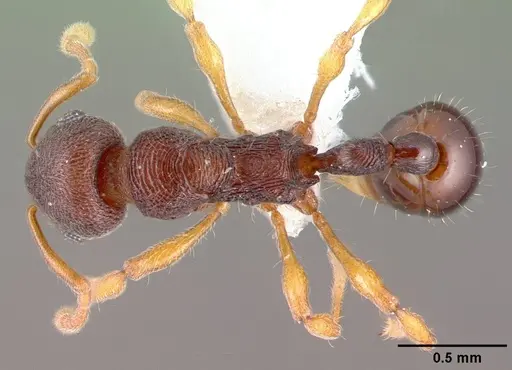
CASENT0901261
View on AntWeb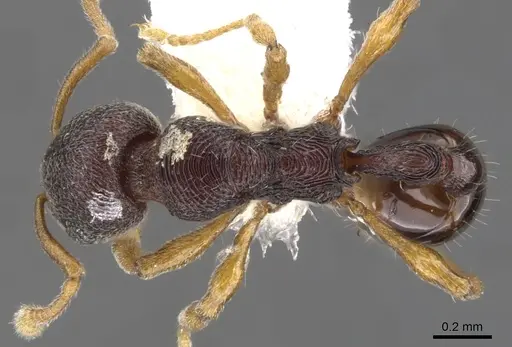
Literature
Loading distribution map...Loading products...