
Lasius reginae
- Sci. Name
- Lasius reginae
- Tribe
- Lasiini
- Subfamily
- Formicinae
- Author
- Faber, 1967
- Distribution
- Found in 2 countries
Introduction
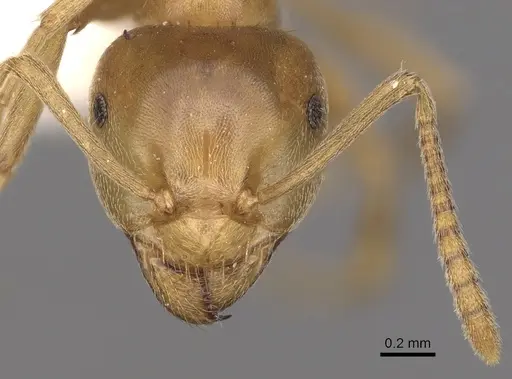
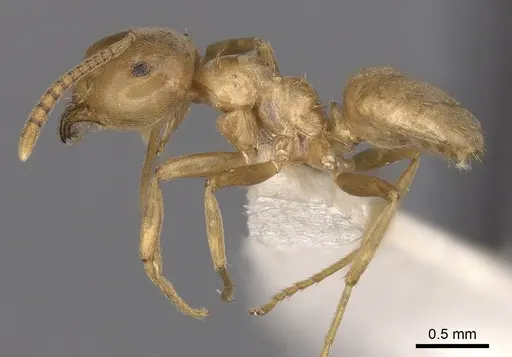
Lasius reginae is a temporary social parasite ant in the subgenus Austrolasius. Workers are small, approximately 3-4 mm inferred from Lasius genus, with pale yellow coloration covering the entire body . This species inhabits open dry forest edges, steppe habitats, and dry grasslands in eastern Europe and central Asia, from Austria to Mongolia . It is listed as Vulnerable on the IUCN Red List . Queens establish colonies by invading and taking over colonies of related Lasius species, such as Lasius alienus .
Quick Summary
- Difficulty: Expert
- Origin & Habitat: Eastern Europe to Mongolia, open dry forest edges, steppe habitats, dry and semi-dry grasslands at low to mid elevations [1][2]. Nests are in soil with a mound around the entrance, or under stones in mountainous coniferous forests up to 1480m [3].
- Colony Type: Temporary social parasite with single queen colonies. Queens invade host Lasius alienus colonies, kill the host queen, and use host workers to raise their brood [5][6].
- Size & Growth:
- Queen: ~4-6 mm, inferred from Lasius genus
- Worker: ~3-4 mm, inferred from Lasius genus
- Colony: Up to 500 workers, estimated based on related species
- Growth: Moderate
- Development: Unknown, no direct studies. Based on related Lasius species, likely 6-10 weeks at optimal temperature (Development occurs within the host colony after the parasite queen kills the host queen)
- Antkeeping:
- Temperature: Keep around 20-24°C, this species is thermophilic [7].
- Humidity: Low to moderate, dry to semi-dry conditions preferred, based on natural habitat [2][3].
- Diapause: Yes, likely requires winter diapause of 2-3 months at 5-10°C, inferred from temperate species patterns.
- Nesting: Y-tong (AAC) nests with dry to semi-dry conditions. Provide nesting sites under stones or in soil, replicating natural habitat [3].
- Behavior: These ants are peaceful toward host workers initially, using secretions to gain acceptance [8]. When threatened, they emit a citronella oil-scented substance [9]. Workers are small and not aggressive, but escape prevention is critical due to tiny size.
- Common Issues: obtaining a host colony, you need Lasius alienus or a compatible host species., escape prevention is critical due to tiny worker size., colonies are extremely rare in the antkeeping hobby., slow growth after establishment since they depend on host workers., risk of colony failure if the host colony dies.
Understanding the Parasitic Lifestyle
Lasius reginae is a temporary social parasite. Queens cannot found colonies independently, they must invade established colonies of host species like Lasius alienus. The parasite queen is smaller than the host queen but uses secretions from her mandibular glands that smell like lemon oils to enter the nest [8]. Once inside, she forces the host queen onto her back and pierces her throat with sharp mandibles [6]. After killing the host queen, she uses the orphaned host workers to raise her own brood [5].
Housing and Nest Setup
Use Y-tong (AAC) formicaria with small chambers scaled to their 3-4 mm size. Provide dry to semi-dry nest conditions with minimal moisture. Natural setups with flat stones over soil replicate their nesting under stones [3]. Escape prevention is critical due to tiny size, use fine mesh barriers.
Feeding and Nutrition
In captivity, offer sugar water or honey as a constant energy source. Provide small protein prey like fruit flies. Host colony workers will also forage and share food, as they feed partly through trophobiosis with plant-sucking insects [9].
Temperature and Seasonal Care
Keep temperatures around 20-24°C [7]. Provide a gentle temperature gradient. For winter, provide a diapause period of 2-3 months at 5-10°C, reduced feeding.
Obtaining and Establishing a Colony
This species requires both a parasite colony and a host Lasius alienus colony. The parasite queen must be introduced to the host colony and succeed in taking over. This is challenging and recommended for experienced keepers only. Obtain stock from specialized breeders [5][6][10].
Frequently Asked Questions
Can I keep Lasius reginae like other Lasius ants?
No. Unlike common Lasius species, Lasius reginae is a temporary social parasite that requires a host colony to survive. You cannot keep it as a standalone colony [5].
How do I start a Lasius reginae colony?
You need to obtain an established Lasius alienus host colony, then introduce the parasite queen to it. The queen must kill the host queen to take over the colony. This is a complex process that rarely succeeds without experience [6][8].
What do Lasius reginae eat?
They accept sugar sources like honey or sugar water, and small protein prey like fruit flies. In the wild they also obtain honeydew from aphids and scale insects [9].
Are Lasius reginae good for beginners?
No. This species is rated Expert difficulty due to its parasitic lifestyle requiring a host colony, extremely rare availability, and specific care requirements. Only experienced antkeepers should attempt this species.
What temperature do Lasius reginae need?
Keep them warm at 20-24°C. They are thermophilic ants from dry, warm habitats and do poorly in cool conditions [7].
Do Lasius reginae need hibernation?
Yes, as a temperate species they likely require a winter diapause of 2-3 months at 5-10°C. This aligns with their biology and the seasonal cycle of their host species.
Why are Lasius reginae so rare in the hobby?
They are critically endangered across most of their range, making wild collection unethical and often illegal. Additionally, their parasitic lifestyle makes them extremely difficult to propagate in captivity [2][9].
Report an Issue
The current care sheet is based fully on literature. See inconsistencies, or something that's incorrect? Please , it will be resolved after review from an admin. Contributing to the blogs tab also helps providing information, to make us be able to further improve the caresheets. Thank you for your support!
References

This caresheet is licensed under CC BY-SA 4.0 .
Community Blogs
CASENT0179907
View on AntWeb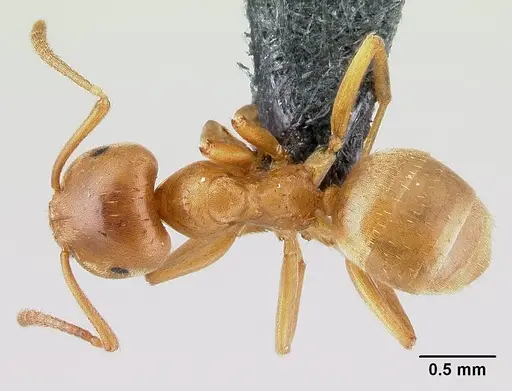
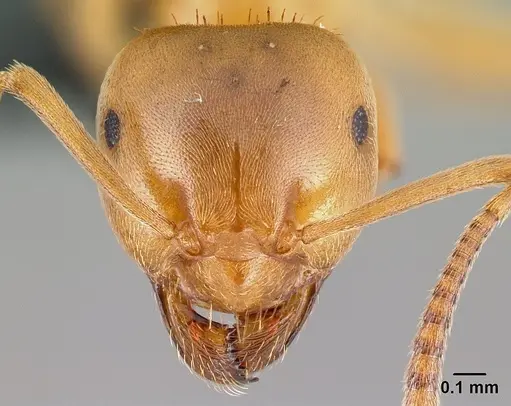
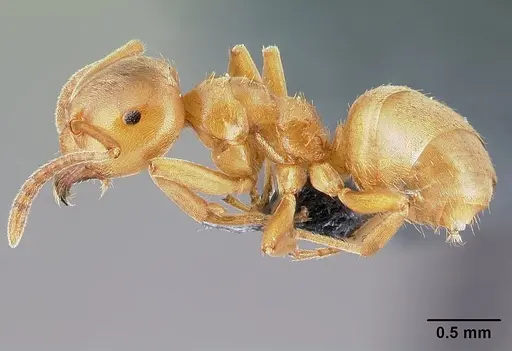
CASENT0280472
View on AntWeb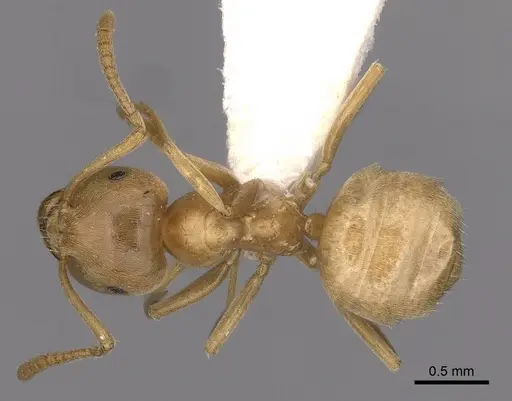
Literature
Loading distribution map...Loading products...