
Lachnomyrmex nordestinus
- Sci. Name
- Lachnomyrmex nordestinus
- Tribe
- Attini
- Subfamily
- Myrmicinae
- Author
- Feitosa & Brandão, 2008
- Distribution
- Found in 1 countries
Introduction
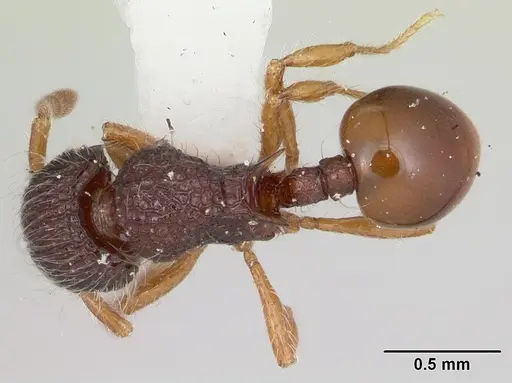
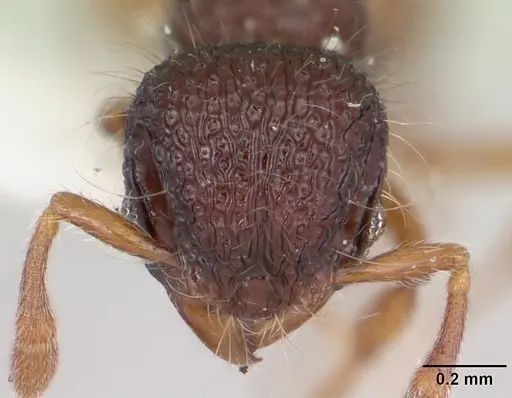
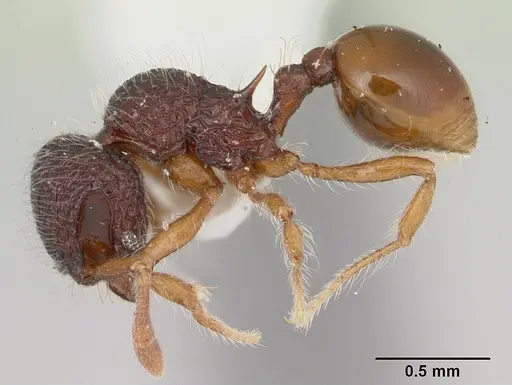
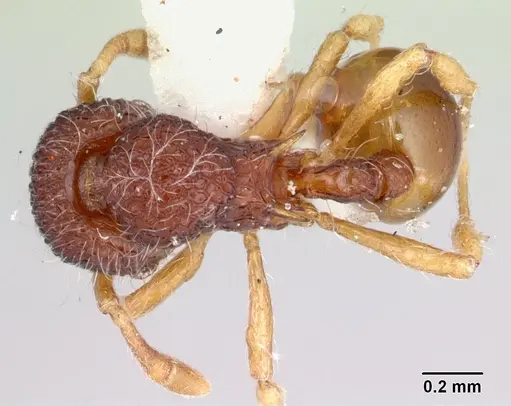
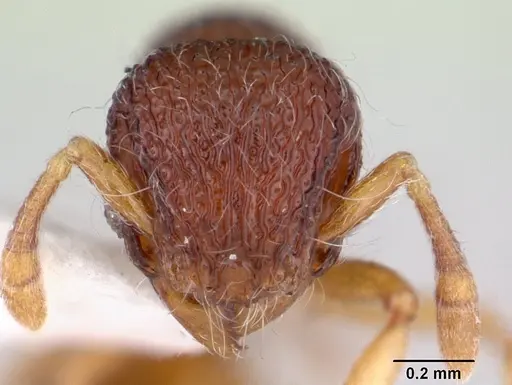
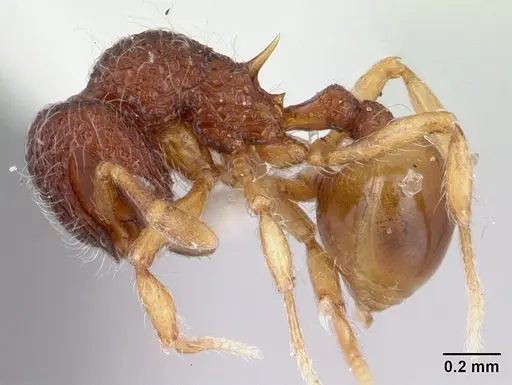
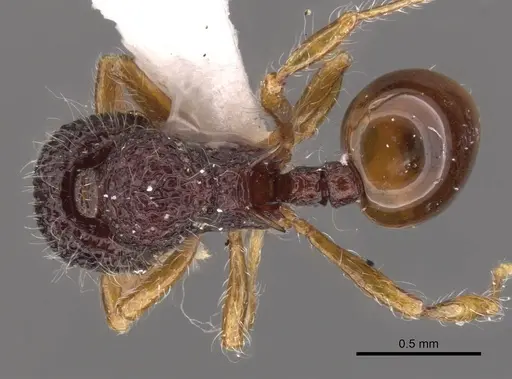
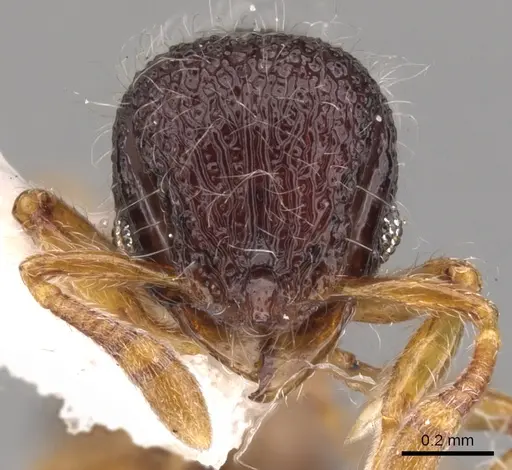
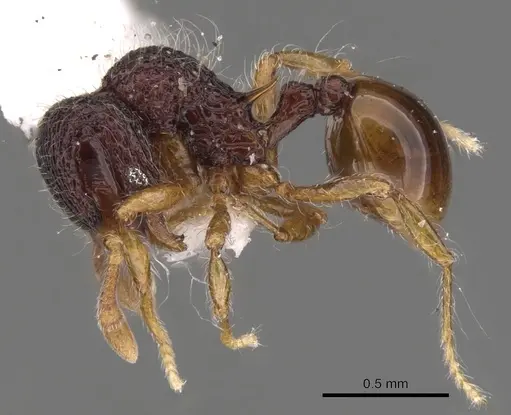
Lachnomyrmex nordestinus is a tiny myrmicine ant endemic to northeastern Brazil, specifically the Atlantic Forest regions of Paraíba, Ceará, Pernambuco, and Sergipe states . Workers measure just 2.71-3.18mm in total length, making them one of the smaller ant species you'll encounter . They have a distinctive appearance with a light brown to blackish body that contrasts sharply with yellowish appendages and gaster, and their entire body is densely covered in fine rugae creating a textured look . The promesonotum is strongly convex and raised noticeably above the propodeum when viewed from the side, and they have well-developed propodeal spines that curve slightly upward . This species was only described in 2008,making it a relatively newly discovered ant . What makes Lachnomyrmex nordestinus particularly interesting is their foraging behavior - these ants are solitary hunters that wander alone through leaf litter rather than forming trails or recruiting nestmates . They nest in small colonies with what appears to be a single queen, typically found in rotting wood or among decomposing leaves on the forest floor . This combination of tiny size, cryptic lifestyle, and specialized habitat makes them a challenging but rewarding species for experienced antkeepers interested in something truly different from the common hobby species.
Quick Summary
- Difficulty: Expert
- Origin & Habitat: Northeastern Brazil (Nordeste region), specifically the Atlantic Forest from 100-800m elevation in the states of Paraíba, Ceará, Pernambuco, and Sergipe [1]. They live in leaf litter of submontane wet forests, nesting in rotting wood and among decomposing leaves [2].
- Colony Type: Small colonies with a single queen. Based on the genus description, colonies appear to be monogynic [2].
- Size & Growth:
- Queen: ~3.27-3.40mm total length [1]
- Worker: ~2.71-3.18mm total length [1]
- Colony: Small colonies, exact maximum unknown but described as relatively small [2]
- Growth: Unknown, no development data available
- Development: Unknown, no direct development studies exist for this species (Development timeline is unconfirmed. Based on typical tropical leaf-litter ant patterns, expect several weeks to months at warm temperatures, but this is purely speculative.)
- Antkeeping:
- Temperature: Keep warm and stable, roughly low-to-mid 20s°C. They come from tropical Atlantic Forest which maintains warm temperatures year-round. Avoid temperatures below 20°C or above 30°C.
- Humidity: Keep the nest substrate consistently moist but not waterlogged. These ants live in leaf litter of wet forests. Provide a water tube and ensure the setup retains moisture well.
- Diapause: No, being a tropical species from northeastern Brazil, they do not require hibernation. Based on geographic range, no winter diapause is needed [1][2].
- Nesting: In captivity, they do well in naturalistic setups that mimic their natural leaf-litter environment. A Y-tong or plaster nest with small chambers works well. They prefer tight, humid chambers scaled to their tiny size. Avoid acrylic nests.
- Behavior: Workers are solitary foragers that hunt alone through leaf litter rather than forming recruitment trails [2]. They are not aggressive and likely avoid confrontation with larger ants. Their tiny size means they can easily escape through small gaps, excellent escape prevention is critical. They are cryptic ants that spend most of their time hidden in the nest or foraging quietly in the substrate. They possess a stinger but are too small to pose any meaningful threat to humans.
- Common Issues: escape prevention is critical, their tiny size allows them to squeeze through standard barrier setups, use fine mesh and tight-fitting lids, slow colony growth means beginners may lose patience, small colonies are vulnerable to stress, maintaining high humidity without mold is challenging, balance moisture with adequate ventilation, solitary foraging means you may not see much activity, this is normal behavior, not a sign of colony decline, wild-caught colonies may carry parasites or be stressed from collection, quarantine and careful observation are essential
Housing and Nest Setup
Lachnomyrmex nordestinus requires careful housing due to their tiny size and humidity needs. A Y-tong or plaster nest with small, tight chambers works well, but you must ensure excellent escape prevention, these ants are minuscule and can slip through gaps that would hold back larger species. Apply fluon or use fine mesh on all openings.
For substrate, use a moisture-retaining material like plaster or a thick layer of soil. These ants naturally nest in rotting wood and leaf litter, so adding small pieces of rotting wood or leaf litter material to the outworld can encourage natural foraging behavior. Keep the nest area consistently humid, think damp forest floor, not wet swamp. A water tube attached to the nest helps maintain humidity.
The outworld should be simple and scaled to their size. A small plastic container works as an outworld, just ensure all connections are secure. Because they forage solitarily, you won't see the dramatic trail-forming behavior common in many ants, so don't mistake quiet activity for colony problems. [2][1]
Feeding and Diet
In the wild, Lachnomyrmex workers are solitary foragers that hunt small prey in leaf litter [2]. They are likely predatory or omnivorous, feeding on tiny arthropods and possibly honeydew. In captivity, offer small live prey appropriate to their size, fruit flies, booklice (psocids), and tiny springtails are ideal. You can also offer small pieces of insects like fruit fly bodies or crushed mealworms.
Sugar sources may or may not be accepted, offer occasional honey water or sugar water but don't rely on it as a primary food source. The key is providing regular small prey items. Feed every 2-3 days with small prey items, adjusting based on colony size and consumption. Remove uneaten prey after 24 hours to prevent mold.
Because colonies are small and workers forage alone, avoid overfeeding. A few tiny prey items every few days is sufficient for a small colony. Watch what your ants actually consume and adjust accordingly.
Temperature and Seasonal Care
As a tropical species from Brazil's Atlantic Forest, Lachnomyrmex nordestinus requires warm, stable temperatures year-round. Keep the nest area in the low-to-mid 20s°C range, with a slight gradient allowing workers to choose their preferred temperature. Room temperature in most homes may be acceptable, but aim for the warmer end of their range for optimal colony health.
Do not hibernate this species, they have no diapause requirement and cold temperatures can be harmful or fatal. If your room temperature drops below 20°C in winter, use a gentle heating method like a heating cable on one side of the nest. Place heating on top of the nest, not underneath, to avoid drying out the substrate.
Maintain consistent conditions rather than dramatic temperature swings. Tropical forest understory environments are thermally stable, so your ants will thrive best with consistent warmth rather than cycling temperatures. [1][2]
Colony Dynamics and Behavior
Lachnomyrmex nordestinus colonies are relatively small and appear to have a single queen [2]. Workers forage alone rather than in groups, and they do not form pheromone trails or recruit nestmates to food sources [2]. This means you'll often see single workers exploring the outworld quietly, this is normal behavior, not a sign of colony decline.
The species is cryptic by nature, spending much of their time hidden in the nest or moving slowly through leaf litter. Don't expect high activity levels or dramatic behaviors. They're fascinating precisely because they're subtle and different from the more visible ant species.
Queens are known from dealate (wingless) specimens collected in the same leaf-litter samples as workers [3]. The colony structure appears simple: one queen laying eggs, with workers handling all foraging and brood care. There are no documented ergatoid (wingless) queens or complex social structures.
Acquiring and Establishing a Colony
This species is not commonly available in the antkeeping hobby, being endemic to a specific region of Brazil and only described in 2008. If you obtain a colony, it will likely be through specialized importers or collectors working with Brazilian sources.
When establishing a new colony, provide a small, humid founding chamber. If you receive a queen with workers, transfer them gently to a prepared nest with moist substrate. Allow them time to settle, queens may seal themselves in during founding if claustral, or may remain active if semi-claustral.
Given their small colony size and specialized habitat requirements, this species is best suited for experienced antkeepers who can maintain precise humidity and temperature conditions. Start with a small test tube setup or small Y-tong nest, then expand as the colony grows. [3][1]
Frequently Asked Questions
How long does it take for Lachnomyrmex nordestinus to produce first workers?
The exact development timeline is unknown as this species has not been studied in captivity. There is no available data on egg-to-worker development time for this species.
Can I keep Lachnomyrmex nordestinus in a test tube?
Yes, a test tube setup can work for founding colonies or small established colonies. Use a small-diameter tube since these are tiny ants. Keep the water reservoir filled to maintain humidity, and ensure the cotton plug is secure against escape. Transfer to a larger nest once the colony reaches around 30-50 workers.
What do Lachnomyrmex nordestinus eat?
They are likely predatory on tiny arthropods. Feed small live prey like fruit flies, booklice, and springtails. Small pieces of insects may also be accepted. Sugar sources like honey water may be offered occasionally but are not a primary food source. Feed small prey items every 2-3 days.
Are Lachnomyrmex nordestinus good for beginners?
No, this species is not recommended for beginners. Their tiny size makes escape prevention challenging, they require high humidity that can lead to mold problems, they have specific tropical temperature needs, and colony growth is slow. They are best suited for experienced antkeepers who can provide stable, humid conditions.
How big do Lachnomyrmex nordestinus colonies get?
Colonies remain relatively small. Based on the genus description of relatively small colonies, maximum size is likely under 100 workers. This is a small, cryptic species rather than one that produces massive colonies.
Do Lachnomyrmex nordestinus need hibernation?
No, they do not require hibernation. As a tropical species from Brazil's Atlantic Forest, they need warm temperatures year-round. Do not attempt to cool or hibernate this species, it can be harmful or fatal.
Why don't I see my Lachnomyrmex nordestinus workers forming trails?
This is normal behavior, Lachnomyrmex workers forage alone and do not recruit nestmates or form pheromone trails [2]. They are solitary hunters that wander individually through leaf litter. Quiet, solitary activity is typical for this species, not a sign of problems.
When should I move Lachnomyrmex nordestinus to a formicarium?
Move them when the colony reaches 30-50 workers and the test tube is becoming crowded. A small Y-tong or plaster nest with appropriately sized chambers works well. They prefer tight, humid chambers scaled to their tiny size.
Can I keep multiple Lachnomyrmex nordestinus queens together?
This is not recommended. The species appears to be monogynic (single-queen colonies) based on the genus description [2]. Combining unrelated queens has not been documented and would likely result in aggression. Stick to one queen per colony.
Report an Issue
The current care sheet is based fully on literature. See inconsistencies, or something that's incorrect? Please , it will be resolved after review from an admin. Contributing to the blogs tab also helps providing information, to make us be able to further improve the caresheets. Thank you for your support!
References

This caresheet is licensed under CC BY-SA 4.0 .
Community Blogs
Literature
Loading distribution map...Loading products...