
Iridomyrmex viridigaster
- Sci. Name
- Iridomyrmex viridigaster
- Tribe
- Leptomyrmecini
- Subfamily
- Dolichoderinae
- Author
- Clark, 1941
- Distribution
- Found in 1 countries
Introduction
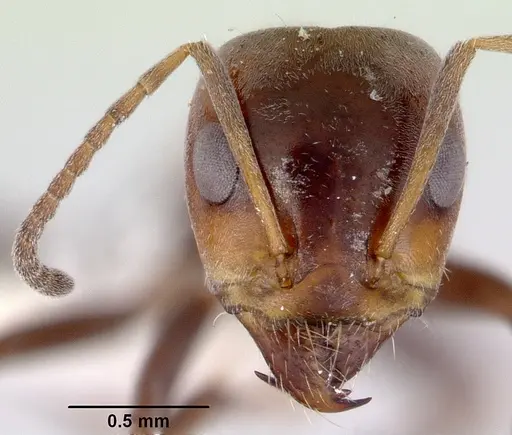
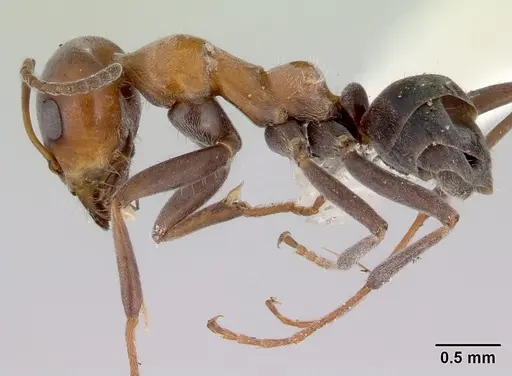
Iridomyrmex viridigaster is a small ant species native to Australia, belonging to the Iridomyrmex viridigaster species complex . Workers are relatively small - approximately 2.5-4mm in total length, inferred from genus patterns since specific measurements are unavailable . Coloration varies significantly by region: southeastern Australian populations are orange to brick-red, while those from the Flinders Ranges tend toward yellowish-brown with more erect hairs on the head . This species is the most frequently encountered member of its species complex, though it remains uncommon overall . As a Dolichoderinae ant, they are fast-moving and active foragers.
Quick Summary
- Difficulty: Medium
- Origin & Habitat: Native to Australia, specifically the southern arid zone. Found across southeastern Australia and the Flinders Ranges [4][3].
- Colony Type: Colony structure is unconfirmed. No species-specific data on queen number or colony organization exists.
- Size & Growth:
- Queen: Size data unavailable, no queen measurements have been documented for this species
- Worker: Approximately 2.5-4mm total length, inferred from Iridomyrmex genus patterns since specific TL measurements are unavailable [3]
- Colony: Unknown, no colony size data available
- Growth: Unknown, growth rate has not been documented
- Development: Unknown, no species-specific development data exists (Development timeline has not been studied for this species)
- Antkeeping:
- Temperature: Keep at 24-28°C, mimicking warm Australian conditions. A heating cable on one side of the nest creates a gradient allowing the colony to self-regulate.
- Humidity: Moderate humidity around 50-60%. These ants come from the southern arid zone, so they tolerate drier conditions better than many tropical species. Allow the nest substrate to dry partially between water additions.
- Diapause: Likely not required, Australian ants from arid regions typically do not enter true hibernation. However, a slight cooling period during winter months (15-20°C) may benefit the colony.
- Nesting: Y-tong (AAC) nests or plaster nests work well. Provide narrow chambers scaled to their small size. They will accept test tube setups for founding colonies.
- Behavior: Active, fast-moving foragers characteristic of the Dolichoderinae subfamily. They are not aggressive but will defend their nest if threatened. Workers are alert and quick to respond to disturbances. As a Dolichoderine ant, they lack a functional sting and instead use defensive chemical secretions (smear defense) when threatened. Escape prevention should be considered, while not tiny, standard barriers are recommended.
- Common Issues: lack of species-specific data means care recommendations are estimates based on genus patterns, no documented founding behavior, claustral vs semi-claustral is unknown, colony size and growth rate are unconfirmed, making it difficult to predict development timelines, wild-caught colonies may have parasites or diseases not yet characterized for this species
Nest Preferences
In the wild, Iridomyrmex viridigaster nests in soil, often under stones or in disturbed ground in the Australian arid zone [4]. For captive care, Y-tong (AAC) nests provide ideal conditions, the porous material helps maintain stable humidity while allowing proper ventilation. Plaster nests also work well. Because workers are small (approximately 2.5-4mm), ensure chambers and passages are appropriately scaled, avoid large, open spaces that may make the ants feel insecure. Test tube setups are suitable for founding colonies. Provide a shallow water reservoir and keep the nest area dark, as these ants prefer dim conditions.
Feeding and Diet
Like other Iridomyrmex species, I. viridigaster is likely an omnivore that forages for honeydew, nectar, and small insects. Offer sugar water or honey as a constant energy source. For protein, provide small insects like fruit flies, small crickets, or mealworms. Feed protein sources 2-3 times per week. Remove uneaten prey after 24-48 hours to prevent mold. Fresh water should always be available. These are active foragers, so ensure food is accessible in the outworld.
Temperature and Care
Maintain temperatures between 24-28°C during the active season. Australian ants from the southern arid zone can tolerate warmer conditions, but avoid extreme heat above 35°C. Use a heating cable on one side of the nest to create a temperature gradient, this lets the colony choose its optimal zone. During winter, a slight reduction to 18-22°C is acceptable, but true hibernation is not required. Monitor colony activity: if workers become sluggish, slightly increase temperature. Avoid temperature fluctuations and drafts. [4]
Behavior and Temperament
Iridomyrmex viridigaster workers are active, quick-moving ants typical of the Dolichoderinae subfamily. They are not particularly aggressive but will readily defend their nest if disturbed. Workers forage individually rather than in large trails, searching systematically for food. They are diurnal, most active during daylight hours. This species lacks a functional sting, their primary defense is fleeing or using defensive chemical secretions (smear defense) from a slit-like opening at the tip of the abdomen. Standard glass or acrylic formicarium setups work well, with appropriate outworld space for foraging. [3]
Frequently Asked Questions
How long does it take for Iridomyrmex viridigaster to produce first workers?
Unknown, no species-specific development data exists for this species. Development timing has not been studied.
Can I keep Iridomyrmex viridigaster in a test tube?
Yes, test tubes work well for founding colonies. Use a small test tube with a water reservoir sealed with cotton. Keep it dark and disturbance-free until the first workers (nanitics) emerge.
What temperature do Iridomyrmex viridigaster ants need?
Keep them at 24-28°C during the active season. A heating cable on part of the nest creates a gradient. They can tolerate warmer conditions but avoid temperatures above 35°C.
How big do Iridomyrmex viridigaster colonies get?
Colony size is unconfirmed, no data exists on maximum colony size for this species.
Do Iridomyrmex viridigaster need hibernation?
Likely no true hibernation is required. A slight cooling period (18-22°C) during winter months may be beneficial but is not mandatory for this Australian arid-zone species.
What do Iridomyrmex viridigaster ants eat?
They likely accept sugar sources (honey, sugar water) and small insects (fruit flies, small crickets, mealworms). Offer protein 2-3 times per week and keep sugar water available constantly.
Is Iridomyrmex viridigaster good for beginners?
Difficulty is rated Medium. While relatively straightforward to keep, the lack of species-specific data means keepers must rely on genus-level care estimates. Experienced antkeepers will have better success adapting to this species' needs.
When should I move Iridomyrmex viridigaster to a formicarium?
Move to a formicarium when the colony reaches 30-50 workers and the test tube space becomes cramped. Ensure the formicarium has appropriately sized chambers for their small worker size.
Can I keep multiple Iridomyrmex viridigaster queens together?
This has not been documented. Colony type (single queen vs multiple queen) is unconfirmed for this species.
Report an Issue
The current care sheet is based fully on literature. See inconsistencies, or something that's incorrect? Please , it will be resolved after review from an admin. Contributing to the blogs tab also helps providing information, to make us be able to further improve the caresheets. Thank you for your support!
References

This caresheet is licensed under CC BY-SA 4.0 .
Community Blogs
ANTWEB1008196
View on AntWeb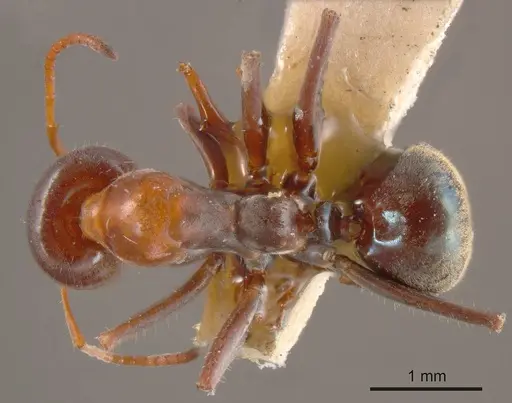
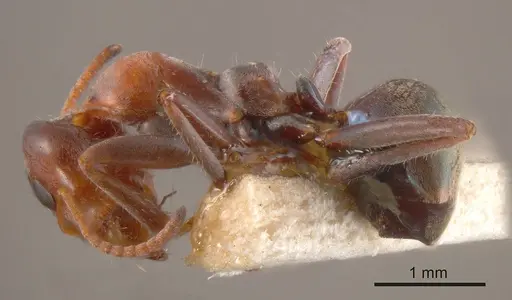
CASENT0172051
View on AntWeb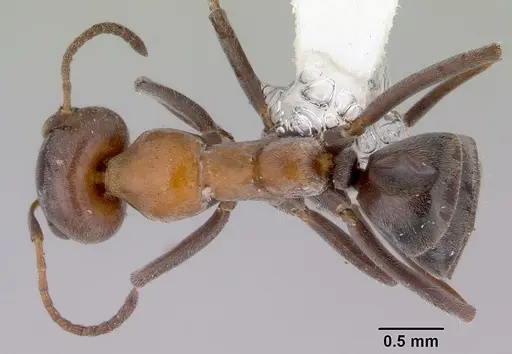
Literature
Loading distribution map...Loading products...