
Iridomyrmex suchieroides
- Sci. Name
- Iridomyrmex suchieroides
- Tribe
- Leptomyrmecini
- Subfamily
- Dolichoderinae
- Author
- Heterick & Shattuck, 2011
- Distribution
- Found in 1 countries
Introduction
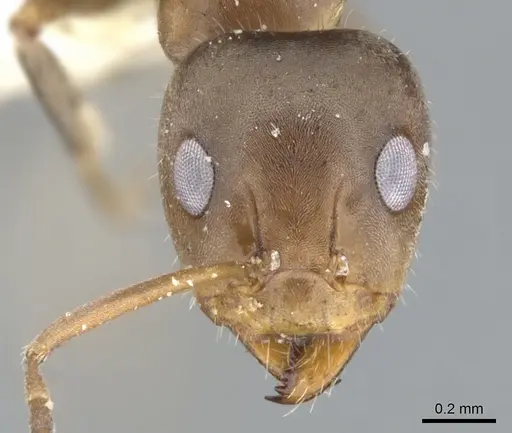
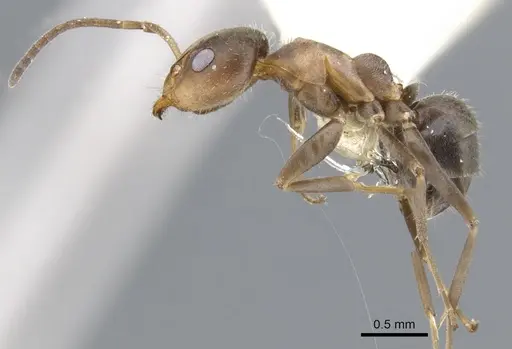
Iridomyrmex suchieroides is a small brown ant native to Australia, found throughout all mainland states but absent from Tasmania . The species gets its name from its resemblance to Iridomyrmex suchieri, with the key difference being that I. suchieroides has a very bristly appearance - short, erect setae extend down the sides of the head capsule and are clearly visible in full-face view . What makes this species interesting is its extremely timid behavior - unlike its more aggressive relative I. suchieri, I. suchieroides forages furtively, running away timidly and hiding when humans approach . They avoid contact with more aggressive ant species and maintain a small, unobtrusive nest hole . This shy nature makes them a fascinating but challenging species to observe in captivity.
Quick Summary
- Difficulty: Medium
- Origin & Habitat: Australia, found throughout all mainland states (New South Wales, Victoria, Queensland, South Australia, Western Australia, Northern Territory), absent from Tasmania [1]. Natural habitat includes ground nesting with small, unobtrusive nest holes. Workers forage mainly on the ground but can climb when searching for food [1].
- Colony Type: Colony structure is unconfirmed, the research does not specify whether this species is monogyne (single queen) or polygyne (multiple queens).
- Size & Growth:
- Queen: Size data unavailable, queen measurements have not been documented in the scientific literature
- Worker: Size data unavailable, the research provides head measurements (0.72-0.81mm width,0.85-0.94mm length) but not total body length [1]
- Colony: Unknown, colony size has not been documented
- Growth: Unknown, growth rate has not been studied
- Development: Unknown, development timeline has not been documented (No direct data available)
- Antkeeping:
- Temperature: Not directly studied. Based on Australian distribution spanning temperate to tropical regions, aim for a range of 22-28°C with a slight gradient. Room temperature (around 24°C) is likely suitable.
- Humidity: Not documented. As an Australian ground-nesting species, they likely prefer moderate humidity. Keep the nest substrate slightly moist but not waterlogged, with some drier areas available.
- Diapause: Likely yes, Australian temperate ants typically require a winter rest period. Based on related species, provide a cool period (10-15°C) for 2-3 months during winter months.
- Nesting: Small ground-nesting ant with unobtrusive nest holes [1]. In captivity, they do well in test tubes for founding and small Y-tong or plaster nests for established colonies. Provide a small, tight-fitting nest with narrow chambers scaled to their tiny size.
- Behavior: Extremely timid and shy, these ants forage furtively, running away at the slightest disturbance and hiding when humans approach [1]. They avoid confrontation with more aggressive ant species. Workers are tiny and can climb, so escape prevention must be excellent, use fine mesh and tight-fitting barriers. They are not aggressive and, like other Dolichoderinae ants, lack a functional sting, their defense is chemical secretion from the abdomen. Their shy nature means they may be less active and visible than more bold ant species.
- Common Issues: tiny size means escapes are likely without fine mesh barriers, timid behavior may make them less active and harder to observe, colony size is unknown so growth expectations are unclear, no documented diet preferences, winter diapause requirements are inferred, not confirmed
Nest Preferences and Housing
In the wild, Iridomyrmex suchieroides nests in the ground with small, unobtrusive nest holes [1]. They are tiny ants so they need appropriately scaled housing. For founding colonies, a standard test tube setup works well. Once established, a small Y-tong or plaster nest with narrow chambers works best. The nest should have tight-fitting connections to the outworld and fine mesh barriers to prevent escapes, these tiny ants can squeeze through surprisingly small gaps. Provide a small outworld space as they are not large colony builders.
Feeding and Diet
Diet preferences have not been documented for this specific species. Based on typical Iridomyrmex behavior, they likely feed on honeydew from aphids and scale insects, plus small insects and arthropods. In captivity, offer a combination of sugar water or honey as an energy source, and protein sources like small fruit flies, pinhead crickets, or other tiny arthropods. Since they are timid foragers, place food near the nest entrance and give them time to discover it. They may be less aggressive at food sources compared to other Iridomyrmex species. Remove uneaten prey after 24-48 hours to prevent mold.
Temperature and Seasonal Care
Temperature requirements are not directly documented for this species. Their range covers all mainland Australian states, from temperate Victoria to tropical Queensland, so they can likely tolerate a range of conditions. A safe starting point is 24-26°C with a slight temperature gradient, allowing workers to choose their preferred zone. Related Australian Iridomyrmex species typically require a winter diapause period. During Australian winter (roughly June-August), reduce temperatures to 10-15°C for 2-3 months. This mimics their natural seasonal cycle and supports colony health. Do not feed during the cold period and minimize disturbance.
Behavior and Observation
The most notable aspect of Iridomyrmex suchieroides is its extremely timid behavior, this is what most distinguishes it from its close relative Iridomyrmex suchieri [1]. While I. suchieri will aggressively challenge other ants, I. suchieroides forages furtively, running away at the slightest provocation and hiding when humans approach [1]. They avoid contact with more aggressive species like Iridomyrmex chasei [1]. This shy nature means they may not be the most exciting species to watch, but it makes them fascinating for observing natural avoidance behaviors. They are ground foragers but can climb when needed, as workers have been collected in malaise traps in trees [1]. They are not known to be aggressive or to sting.
Handling and Colony Dynamics
Because of their tiny size and shy nature, Iridomyrmex suchieroides requires careful handling. They are not suited for frequent disturbance or observation under bright lights. When working with them, move slowly and minimize vibrations. Colony dynamics are poorly documented, we do not know maximum colony size, whether they have ergatoid (wingless) replacement queens, or how quickly colonies grow. What we do know is they maintain small, unobtrusive nests in the wild [1]. Expect slow, steady growth and do not overfeed, their timid foraging style means they may not consume food quickly. Watch for colony stress signs like workers fleeing the nest area.
Frequently Asked Questions
How long does it take for Iridomyrmex suchieroides to produce first workers?
The egg-to-worker timeline is unknown, it has not been documented in scientific literature.
Can I keep multiple Iridomyrmex suchieroides queens together?
Not recommended, combining unrelated queens of this species has not been documented. Based on typical Iridomyrmex behavior, single-queen colonies are most likely. If you obtain a wild colony, it likely has one founding queen.
What do Iridomyrmex suchieroides eat?
Diet is not documented, but based on related species, they likely accept sugar sources (honey, sugar water) and small protein sources (fruit flies, tiny insects). They are timid foragers, so place food near the nest and give them time to discover it.
Are Iridomyrmex suchieroides good for beginners?
They are rated Medium difficulty. While their care requirements are straightforward (small nest, typical temperatures), their timid behavior and lack of documented care information make them better suited for keepers with some experience who can adapt to an unstudied species.
Do Iridomyrmex suchieroides need hibernation?
Likely yes, based on related Australian Iridomyrmex species, they probably need a winter rest period. Provide 2-3 months at 10-15°C during winter months (roughly June-August in the Northern Hemisphere).
How big do Iridomyrmex suchieroides colonies get?
Colony size is unknown, it has not been documented in scientific literature. Based on their small nest size and timid behavior, colonies are likely modest.
Why is my Iridomyrmex suchieroides colony not active?
Their natural behavior is timid and furtive, they hide when disturbed and may not be visibly active unless foraging quietly [1]. Low activity could also indicate temperatures that are too cold, improper humidity, or colony stress. Ensure they have a quiet, dark location and appropriate temperature gradient.
When should I move Iridomyrmex suchieroides to a formicarium?
Keep them in a test tube for founding. Once the colony reaches 20-30 workers and the test tube shows signs of fouling (mold, condensation buildup), you can move them to a small Y-tong or plaster nest. They do not need large spaces, tight, appropriately scaled chambers work best.
Report an Issue
The current care sheet is based fully on literature. See inconsistencies, or something that's incorrect? Please , it will be resolved after review from an admin. Contributing to the blogs tab also helps providing information, to make us be able to further improve the caresheets. Thank you for your support!
References

This caresheet is licensed under CC BY-SA 4.0 .
Community Blogs
CASENT0903094
View on AntWeb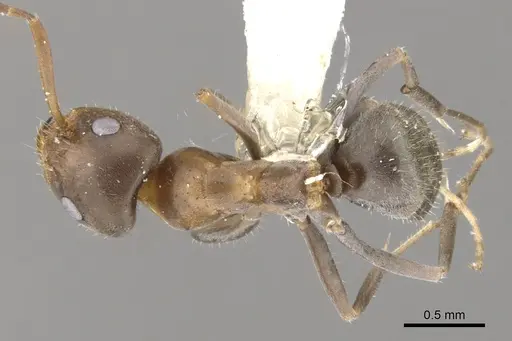
Literature
Loading distribution map...Loading products...