
Iridomyrmex splendens
- Sci. Name
- Iridomyrmex splendens
- Tribe
- Leptomyrmecini
- Subfamily
- Dolichoderinae
- Author
- Forel, 1907
- Distribution
- Found in 1 countries
Introduction
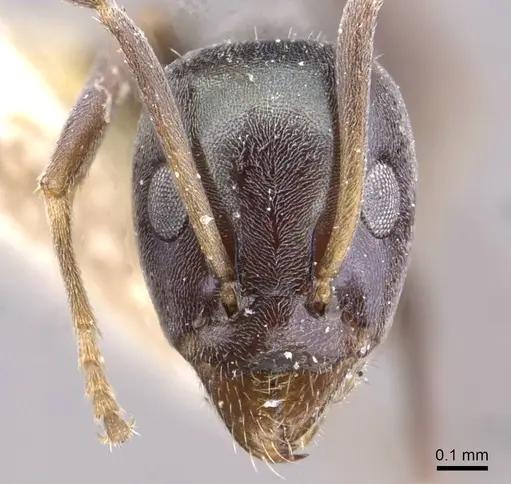
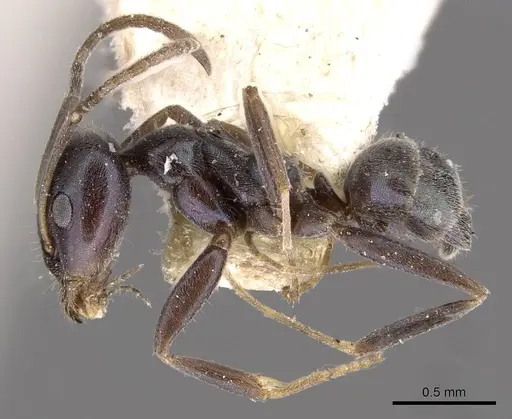
Iridomyrmex splendens is a small-medium Australian ant known for its iridescent coloring, often greenish-yellow or bluish, though some populations appear variegated brown-and-black or brown-and-orange . It is one of about a dozen similar Iridomyrmex species, distinguished by short pale bristly setae on the mesosoma and a row of erect setae on the back of the head . The species ranges across southern Australia, including Western Australia, South Australia, Victoria, Tasmania, and New South Wales, primarily in dry sclerophyll woodland where it nests under logs and forages on tree trunks and low vegetation .
Quick Summary
- Difficulty: Medium
- Origin & Habitat: Southern Australia, including Western Australia, South Australia, Victoria, Tasmania, and New South Wales. Inhabits dry sclerophyll woodland and eucalypt forest near mountain peaks, commonly nesting under logs, stones, or in uncovered soil [1][2][3].
- Colony Type: Colony structure is unconfirmed, no specific studies on queen number. Based on typical Iridomyrmex patterns, likely monogyne (single queen), but this is not confirmed [1].
- Size & Growth:
- Queen: Size data unavailable, no published measurements for queens.
- Worker: Size data unavailable, no total length measurements provided in research.
- Colony: Unconfirmed, likely moderate based on similar Iridomyrmex species [1].
- Growth: Moderate, inferred from Dolichoderinae development patterns.
- Development: Estimated 6-10 weeks based on genus-level patterns for Dolichoderinae in warm conditions. (Development time is not specifically documented for this species, estimates based on related Iridomyrmex species.)
- Antkeeping:
- Temperature: Keep at moderate temperatures around 22-26°C, based on the species' temperate distribution. Provide a gentle gradient if possible [1].
- Humidity: Provide a humidity gradient, mostly dry nest chamber with one small moist area, as the species inhabits both dry sclerophyll and wetter regions [1][2].
- Diapause: Unknown, the research context does not mention diapause requirements for this species.
- Nesting: Naturalistic setup works best, they nest under logs and stones in the wild. Use a Y-tong, plaster, or soil nest with a layer of substrate to mimic natural conditions [1][2].
- Behavior: Workers are active foragers, commonly seen climbing tree trunks and searching through vegetation for food [1]. They are not particularly aggressive but will defend the nest. Escape risk is moderate due to small size, use standard barriers.
- Common Issues: colonies may be slow to establish initially, patience is needed during founding., small colony size means resources can be quickly depleted, monitor food carefully., escape prevention is important given their small size and foraging behavior., winter dormancy requirements are unknown, align care with Australian seasons if possible., limited published care information means some trial-and-error may be needed.
Housing and Nest Setup
Iridomyrmex splendens does well in a naturalistic setup that mimics their natural nesting preferences. In the wild, they nest under logs, stones, and in uncovered soil [2][1], so a formicarium with a soil layer works well. A Y-tong nest with a layer of damp substrate on the chamber floors provides humid conditions while allowing observation. Because workers forage on tree trunks and vegetation, add vertical space or cork bark for climbing. For the outworld, use an escape-proof container with soil and small plants or branches. Test tubes can be used for founding, but move to a naturalistic setup once workers emerge.
Feeding and Diet
Like most Iridomyrmex species, these ants are omnivorous. In nature, they forage for honeydew and hunt small invertebrates. In captivity, offer sugar water or honey constantly, and protein like fruit flies or small crickets 2-3 times per week. Prey should be appropriately sized. Remove uneaten food after 24-48 hours to prevent mold.
Temperature and Seasonal Care
Iridomyrmex splendens comes from temperate regions, so keep at moderate temperatures around 22-26°C. Room temperature is often suitable. If cooler, use a heating cable on one side of the nest for a gentle gradient. Diapause requirements are unknown, but if providing a cool period, align with Australian winter (June-August). [1]
Humidity and Water
The species tolerates a range of humidity conditions. Aim for a humidity gradient, mostly dry nest chamber with one small moist area. Keep the substrate moist but not waterlogged, allowing slight drying between waterings. Provide a water tube or reservoir in the nest, and small water droplets in the outworld for drinking. [1][2]
Behavior and Colony Dynamics
Workers are active foragers, commonly seen climbing tree trunks and searching vegetation [1]. They likely use chemical trails for recruitment. Colonies establish foraging territories and may become active when food is introduced. They are not aggressive toward keepers but defend the nest if threatened. Iridescence is most visible under good lighting.
Frequently Asked Questions
How long does it take for Iridomyrmex splendens to produce first workers?
The exact timeline is not documented, but based on typical Dolichoderinae development, expect 6-10 weeks from egg to first worker at warm temperatures (24-26°C).
Can I keep Iridomyrmex splendens in a test tube?
Test tubes work for the founding stage, but these ants naturally nest under logs and stones, so a naturalistic formicarium with soil is better for long-term housing.
What temperature do Iridomyrmex splendens need?
Keep them at 22-26°C, based on their temperate distribution. A slight temperature gradient allows the colony to choose their preferred spot.
Do Iridomyrmex splendens need hibernation?
Diapause requirements are unknown, the research context does not specify. If providing a cool period, align with Australian winter.
How big do Iridomyrmex splendens colonies get?
Colony size is not specifically documented, but similar Iridomyrmex species reach moderate sizes. Growth is moderate, expect several months to establish a solid colony.
What do Iridomyrmex splendens eat?
They are omnivorous. Offer sugar water or honey constantly, and protein like small insects 2-3 times per week.
Are Iridomyrmex splendens good for beginners?
This species is rated as medium difficulty. They are more forgiving due to tolerance of varying conditions, but limited published care information means some experimentation may be needed.
When should I move Iridomyrmex splendens to a formicarium?
Move from test tube to a proper nest once the colony has a few dozen workers and the test tube shows signs of drying or space constraints.
Why does my Iridomyrmex splendens have iridescent colors?
The greenish-yellow or bluish iridescence is a natural characteristic of this species [1]. It results from light reflecting off the cuticle and is most visible under good lighting.
Report an Issue
The current care sheet is based fully on literature. See inconsistencies, or something that's incorrect? Please , it will be resolved after review from an admin. Contributing to the blogs tab also helps providing information, to make us be able to further improve the caresheets. Thank you for your support!
References

This caresheet is licensed under CC BY-SA 4.0 .
Community Blogs
ANTWEB1008195
View on AntWeb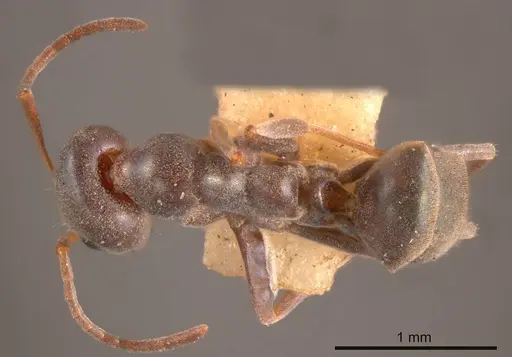
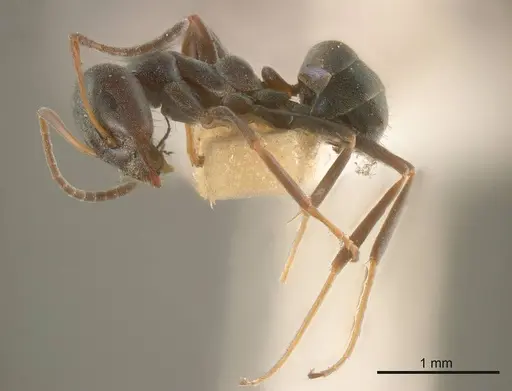
CASENT0909547
View on AntWeb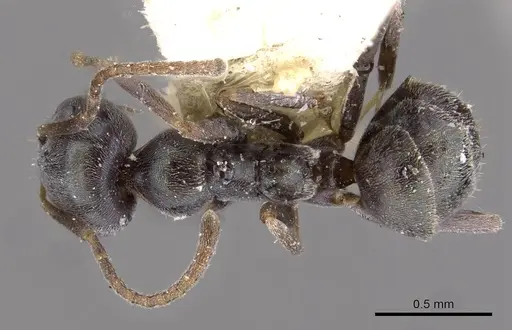
Literature
Loading distribution map...Loading products...