
Iridomyrmex nudipes
- Sci. Name
- Iridomyrmex nudipes
- Tribe
- Leptomyrmecini
- Subfamily
- Dolichoderinae
- Author
- Heterick & Shattuck, 2011
- Distribution
- Found in 1 countries
Introduction
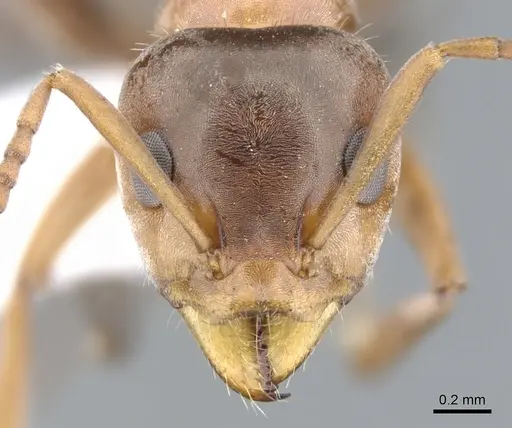
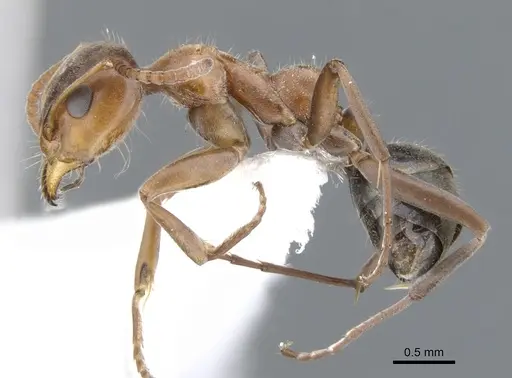
Iridomyrmex nudipes is a small ant native to Australia, specifically found in New South Wales and South Australia. Workers have a plain appearance typical of the viridigaster complex, with tawny orange to brown coloring on the head and legs, an orange to brick-red mesosoma, and a brown gaster. The species gets its name from the Latin words for 'naked' and 'foot' because workers lack the erect hairs on their hind tibiae that many related species have. These ants are active foragers during the day - workers have been observed on mallee stems during mid-morning around 10am .
Quick Summary
- Difficulty: Medium
- Origin & Habitat: Australia, specifically New South Wales and South Australia. These ants live in mallee habitats and are diurnal foragers, active during mid-morning hours [1][2].
- Colony Type: Colony structure is unconfirmed for this species.
- Size & Growth:
- Queen: Size data unavailable for this species
- Worker: Approximately 4-6mm, inferred from Iridomyrmex genus patterns
- Colony: Unknown for this specific species
- Growth: Unknown
- Development: Unconfirmed (Development time is unconfirmed for this species.)
- Antkeeping:
- Temperature: Keep at 22-26°C. Based on their Australian distribution, they likely prefer warm temperate conditions. Provide a gentle temperature gradient so ants can self-regulate.
- Humidity: Moderate humidity around 50-70%. These are mallee-forest ants, so they prefer drier conditions than rainforest species. Allow the nest to dry out partially between water additions.
- Diapause: Likely required, Australian temperate ants typically need a winter rest period. Consider reducing temperature for 2-3 months during winter.
- Nesting: Use a Y-tong (AAC) or plaster nest. These ants are relatively small and will do well in nests with medium-sized chambers. Provide a water reservoir for humidity control.
- Behavior: These ants are diurnal foragers, meaning they search for food during the day. Workers are moderately active and will forage for protein and sugar sources. They are not particularly aggressive toward keepers but may defend their nest if threatened. Escape risk is moderate, use standard barrier methods.
- Common Issues: limited species-specific data means care requirements are estimated from related species, diurnal foraging pattern means they may be less active in evening hours, winter diapause is likely required but specific timing is unconfirmed, colonies may be slow to establish due to unknown founding behavior
Nest Preferences
In the wild, Iridomyrmex nudipes nests in soil and under stones in mallee habitats. For captive care, a Y-tong (AAC) nest works well because it provides good humidity control and allows you to observe the colony. Plaster nests are another good option, they hold moisture steadily and are easy to maintain. Use chambers that aren't excessively large, but also avoid extremely tight spaces. Provide a water reservoir connected to the nest so humidity stays stable. These ants do well with a moderate humidity level, around 50-70%, which you can achieve by adjusting the water tube fill level. [1]
Feeding and Diet
Like other Iridomyrmex species, these ants are omnivorous and will accept both protein and sugar sources. Offer sugar water, honey, or diluted maple syrup as a constant sugar source. For protein, provide small insects like fruit flies, small crickets, or mealworms. Since they're small ants, cut prey into appropriately sized pieces. Feed protein 2-3 times per week, removing any uneaten food within 24 hours to prevent mold. They are diurnal foragers, so place food in the outworld during morning hours when they're most active. Remove any sugar water that hasn't been consumed within 2 days.
Temperature and Seasonal Care
Keep the nest at 22-26°C during the active season. A heating cable on one side of the nest can create a temperature gradient, which lets the ants choose their preferred temperature. Since they're from NSW and SA in Australia, they're adapted to temperate conditions with distinct seasons. During winter, consider reducing temperature to 10-15°C for 2-3 months to simulate their natural rest period. This winter rest may be important for colony health. Don't feed them during cold periods, they will be mostly inactive and can survive on stored fat reserves. [1]
Behavior and Observation
Iridomyrmex nudipes is a diurnal species, meaning workers are most active during daylight hours. In the wild, foragers have been observed active around 10am on mallee stems [1]. This means you'll see most activity in the morning and early afternoon. The colony will likely establish a foraging routine, sending workers out to search for food at consistent times each day. They're not particularly aggressive but will defend their nest if disturbed. Workers are small but not so tiny that escape is a major concern, standard barrier methods like fluon or talcum powder barriers work well. Watch for alates (reproductives) in spring and summer, which indicates the colony is mature and ready to reproduce.
Defense Mechanism
Iridomyrmex nudipes belongs to the Dolichoderinae subfamily, which lacks a functional sting. Instead, these ants defend themselves by secreting defensive chemical compounds from a slit-like opening at the tip of the abdomen. This is called a smear defense. They may bite if threatened, but the bite is minor. These ants are not considered dangerous to humans.
Colony Establishment
Since this species was only described in 2011,there's limited information on their founding behavior [3]. The colony may take several months to establish. Be patient during founding and avoid disturbing the queen's chamber. Once workers emerge, they will begin foraging and the colony should grow more steadily.
Frequently Asked Questions
How long does it take for Iridomyrmex nudipes to produce first workers?
The exact timeline is unconfirmed for this species. Expect several months from founding to first workers emerging.
What do Iridomyrmex nudipes ants eat?
They accept both sugar and protein foods. Offer sugar water, honey, or maple syrup as a constant sugar source. For protein, provide small insects like fruit flies, small crickets, or mealworms cut to appropriate sizes. Feed protein 2-3 times per week.
Do Iridomyrmex nudipes ants need hibernation?
Likely yes. Since they're from temperate Australia, they probably need a winter rest period. Consider reducing temperature to 10-15°C for 2-3 months during winter. Stop feeding during this period as they will be mostly inactive.
What temperature is best for Iridomyrmex nudipes?
Keep them at 22-26°C during the active season. A temperature gradient is ideal so ants can move between warmer and cooler areas. During winter rest, reduce to 10-15°C.
Are Iridomyrmex nudipes good for beginners?
This species is rated as medium difficulty. While not the hardest species, there's limited species-specific care data available since it was only described in 2011. Some experience with ant keeping is helpful.
How big do Iridomyrmex nudipes colonies get?
The maximum colony size is unconfirmed for this specific species.
Can I keep multiple Iridomyrmex nudipes queens together?
This is unconfirmed for this species. It's best to start with one queen. Combining unrelated queens has not been documented and could result in fighting.
When are Iridomyrmex nudipes most active?
They are diurnal foragers, meaning they're most active during the day. In the wild, workers have been observed foraging around 10am on mallee stems. Expect most activity in the morning and early afternoon hours.
What size nest should I use for Iridomyrmex nudipes?
A Y-tong (AAC) or plaster nest works well. Use medium-sized chambers, not too large (ants may feel insecure) but not cramped either. Provide a water reservoir for humidity control.
Why is this species called Iridomyrmex nudipes?
The name comes from Latin: 'nudus' means 'naked' and 'pes' means 'foot'. This refers to the species' distinguishing feature, workers lack the erect setae (bristles) on their hind tibiae that many related species have [1].
When should I move Iridomyrmex nudipes to a formicarium?
Keep them in a test tube setup for the founding stage. Once the colony reaches 20-30 workers and you're seeing consistent activity, you can move them to a proper nest. Make sure the formicarium has appropriate humidity and a connected outworld before transferring.
Report an Issue
The current care sheet is based fully on literature. See inconsistencies, or something that's incorrect? Please , it will be resolved after review from an admin. Contributing to the blogs tab also helps providing information, to make us be able to further improve the caresheets. Thank you for your support!
References

This caresheet is licensed under CC BY-SA 4.0 .
Community Blogs
CASENT0903101
View on AntWeb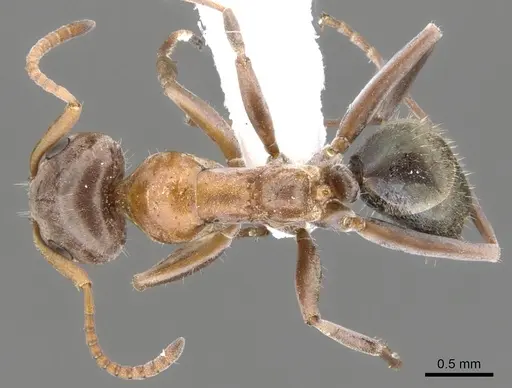
Literature
Loading distribution map...Loading products...