
Iridomyrmex cappoinclinus
- Sci. Name
- Iridomyrmex cappoinclinus
- Tribe
- Leptomyrmecini
- Subfamily
- Dolichoderinae
- Author
- Shattuck, 1993
- Distribution
- Found in 1 countries
Introduction
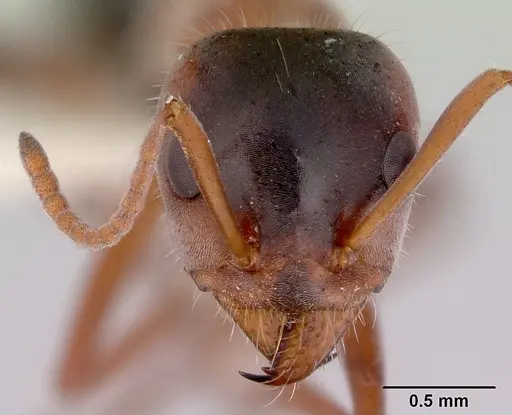
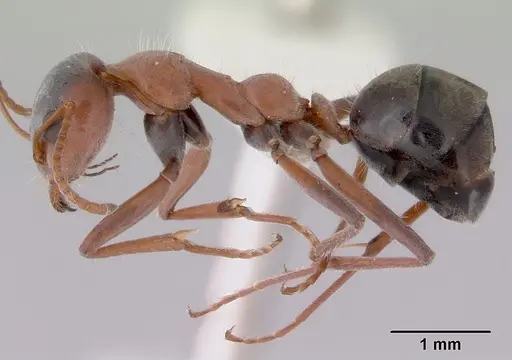
Iridomyrmex cappoinclinus is a small ant native to the arid regions of central Australia. Workers have a distinctive color pattern with dark brown to blackish frons, coxae, and gaster, and brick-red mesosoma . This species occurs in the central arid zone and nests in low sand dunes vegetated by Triodia and Acacia, with single entrances in slight depressions . Size data unavailable - no total length measurements are provided in the research. This species is part of the I. rufoinclinus complex and is distinguished by its unique coloration . It uses a smear defense mechanism, lacking a functional sting and secreting defensive chemicals from the abdomen tip based on its subfamily Dolichoderinae.
Quick Summary
- Difficulty: Medium
- Origin & Habitat: Central arid zone of Australia, found in low sand dunes vegetated by Triodia and Acacia [2][1][3]
- Colony Type: Colony structure is unconfirmed, likely monogyne (single queen) based on typical Iridomyrmex patterns, but no specific studies exist for this species
- Size & Growth:
- Queen: ~5-7 mm, inferred from Iridomyrmex genus patterns
- Worker: ~3-5 mm, inferred from Iridomyrmex genus patterns
- Colony: Unknown, no colony size data available for this species
- Growth: Moderate, inferred from typical arid-zone Iridomyrmex development patterns
- Development: Estimated 6-10 weeks based on related Iridomyrmex species in similar habitats (Development time likely varies with temperature, arid species typically develop faster in warmer conditions)
- Antkeeping:
- Temperature: Keep at room temperature with a warm gradient, roughly 24-30°C, based on adaptation to arid conditions
- Humidity: Low to moderate, keep nest substrate relatively dry with occasional misting, based on arid habitat adaptation
- Diapause: Likely, Australian arid-zone ants typically reduce activity during cooler winter months. Reduce temperature to 15-18°C for 2-3 months
- Nesting: Use Y-tong or plaster nests with a dry to moderately humid nesting chamber. Provide access to a humid outworld, based on nest observations from AntWiki [3]
- Behavior: Active foragers that likely scavenge and tend honeydew-producing insects. Workers are moderately aggressive when defending the nest. Escape risk is moderate, use standard barrier methods. They lack a stinger and use smear defense, secreting defensive chemicals from the abdomen tip based on subfamily Dolichoderinae.
- Common Issues: limited availability, this species is rarely available in the antkeeping hobby, temperature stress, avoid temperatures below 15°C or above 35°C, humidity problems, too much moisture can kill colonies from arid regions, no specific care data, keepers must adapt from related species, queen confirmation needed, colony structure unconfirmed, verify queen status on acquisition
Natural History and Distribution
Iridomyrmex cappoinclinus is endemic to the arid interior of Australia, specifically occurring in the central arid zone [2]. The species was described by Shattuck in 1993 and belongs to the I. rufoinclinus species group, distinguished by its unique color pattern where the front of the head and rear portions are dark while the mesosoma is yellowish to reddish [1]. Nests have been found in low sand dunes with sparse vegetation of Triodia (spinifex grass) and Acacia (wattle). The nests consist of a single entrance located in a slight depression in the sand [3]. This habitat suggests adaptation to extreme temperature variations and low rainfall, typical of Australian desert ants.
Identification and Appearance
Workers of Iridomyrmex cappoinclinus are small ants with a distinctive two-tone color pattern: the frons (front of head), coxae (leg joints), and gaster (abdomen) are dark brown to blackish, while the mesosoma (middle body) and other parts are brick-red [1]. The body is covered in numerous erect setae (bristles), particularly on the mesosoma where there are 12 or more long, curved setae [3]. This coloring helps separate it from other Iridomyrmex species in its range.
Housing and Nest Setup
For keeping Iridomyrmex cappoinclinus, use a Y-tong or plaster nest with a dry to moderately humid nesting chamber. These arid-zone ants prefer conditions drier than typical rainforest species. Provide a small water tube for drinking but do not over-humidify the nest. The outworld can be maintained at normal room humidity. Ensure the nest is kept at warm temperatures between 24-30°C, with a temperature gradient allowing workers to regulate their body temperature. Use a heating cable on one side of the nest if room temperature falls below 20°C. Escape prevention is important, use standard barrier methods as Iridomyrmex are active and curious. [3]
Feeding and Diet
Based on typical Iridomyrmex behavior, these ants are generalist foragers that likely scavenge for protein and sugar sources. Offer sugar water or honey as a constant energy source. For protein, provide small insects such as fruit flies, small crickets, or mealworms. They may also tend honeydew-producing insects like aphids if given the opportunity. Feed protein sources 2-3 times per week, removing uneaten prey after 24 hours. Fresh water should always be available.
Seasonal Care and Overwintering
Australian arid-zone ants experience seasonal temperature changes and likely have reduced activity during winter. During the cooler months (roughly May through August in the Southern Hemisphere), reduce the nest temperature to 15-18°C to simulate natural conditions. Do not feed as actively during this period, once or twice weekly is sufficient. Return to normal temperatures (24-30°C) in spring. This winter rest period helps maintain natural colony cycles and may improve queen longevity. Avoid complete hibernation at temperatures below 10°C as this may be too cold for this species.
Frequently Asked Questions
How long does it take for Iridomyrmex cappoinclinus to produce first workers?
The exact timeline is unknown for this species, but based on related Iridomyrmex species from similar habitats, expect first workers (nanitics) within 6-10 weeks after the queen lays eggs. Temperature affects development speed, warmer conditions (around 28°C) will speed development while cooler temperatures slow it.
What temperature do Iridomyrmex cappoinclinus ants need?
Keep the nest at 24-30°C with a warm side gradient. These desert ants tolerate higher temperatures well but should be protected from temperatures above 35°C or below 15°C. A heating cable on one side of the nest can help maintain optimal temperatures.
Is Iridomyrmex cappoinclinus a good species for beginners?
This species is rated as medium difficulty. While not as challenging as some tropical species, the limited available care information means keepers should have some experience with Australian ants. The main challenges are providing appropriate arid conditions and the species' rarity in the hobby.
How big do Iridomyrmex cappoinclinus colonies get?
Colony size data is not available for this specific species. Based on typical Iridomyrmex patterns, colonies likely reach several hundred to a few thousand workers over several years. Growth is moderate, expect gradual expansion rather than rapid colony explosion.
What do Iridomyrmex cappoinclinus ants eat?
Feed them sugar water or honey as a constant energy source. For protein, offer small insects like fruit flies, small crickets, or mealworms 2-3 times per week. They may also accept honeydew from aphids if given access.
Do Iridomyrmex cappoinclinus need hibernation?
Yes, a reduced activity period during winter is recommended. Lower temperatures to 15-18°C for 2-3 months during the cooler season. Reduce feeding frequency during this period. This mimics their natural seasonal cycle in the Australian arid zone.
Can I keep multiple Iridomyrmex cappoinclinus queens together?
The colony structure is unconfirmed for this species. Based on typical Iridomyrmex patterns, single-queen colonies are most likely. Do not combine unrelated foundress queens as aggression is likely. If you acquire a colony, verify the queen number.
Where is Iridomyrmex cappoinclinus found in the wild?
This species is native to the central arid zone of Australia. It nests in low sand dunes vegetated by Triodia (spinifex grass) and Acacia. The nests have a single entrance in slight depressions in the sand.
How do I identify Iridomyrmex cappoinclinus?
Workers have a distinctive two-tone color pattern: the head front (frons), leg joints (coxae), and abdomen (gaster) are dark brown to blackish, while the middle body (mesosoma) is yellowish to brick-red. They are small ants with numerous erect bristles on the body.
Report an Issue
The current care sheet is based fully on literature. See inconsistencies, or something that's incorrect? Please , it will be resolved after review from an admin. Contributing to the blogs tab also helps providing information, to make us be able to further improve the caresheets. Thank you for your support!
References

This caresheet is licensed under CC BY-SA 4.0 .
Community Blogs
CASENT0172058
View on AntWeb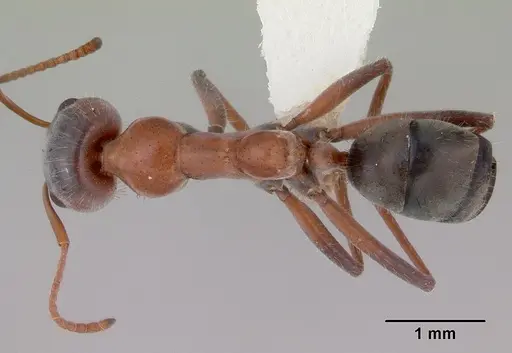
Literature
Loading distribution map...Loading products...