
Iridomyrmex calvus
- Sci. Name
- Iridomyrmex calvus
- Tribe
- Leptomyrmecini
- Subfamily
- Dolichoderinae
- Author
- Emery, 1914
- Distribution
- Found in 3 countries
Introduction
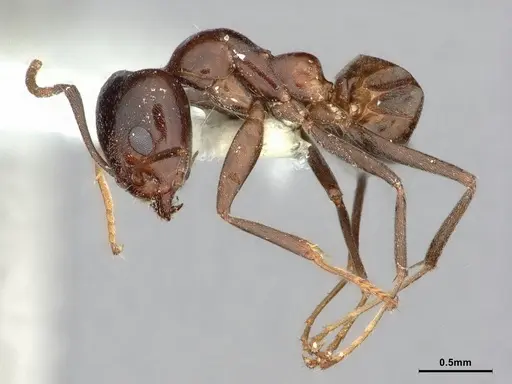
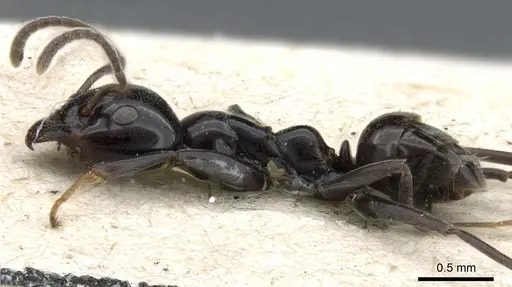
Iridomyrmex calvus is a small ant species native to southern Australia, Tasmania, Lord Howe Island, Norfolk Island, and New Caledonia. Workers are tiny, measuring approximately 2-3mm total length, with a honey-brown body and darker head. They can be identified by their very small size, relatively short antennae, and having fewer than 6 erect hairs on their middle body section. This species is the most broadly distributed member of its species group, found across diverse habitats from arid interior regions to subtropical islands. They prefer cool, moist conditions typical of well-shaded forests and are sensitive to habitat disturbance, making them an indicator of ecosystem health.
Quick Summary
- Difficulty: Medium
- Origin & Habitat: Southern Australia (mainland, Tasmania), Lord Howe Island, Norfolk Island, and New Caledonia. In Australia they occur throughout subhumid and semi-arid southeastern and southwestern regions, including the McDonnell Ranges of central Australia. In New Caledonia they are restricted to savanna habitats with niaouli trees and are sensitive to habitat disturbance [1][2][3].
- Colony Type: Likely single-queen colonies based on typical Iridomyrmex patterns.
- Size & Growth:
- Queen: ~4-6mm, inferred from Iridomyrmex genus
- Worker: ~2-3mm total length, inferred from Iridomyrmex genus
- Colony: Likely up to several hundred workers
- Growth: Moderate
- Development: 6-10 weeks estimated based on similar small Dolichoderinae (Development timeline is not directly studied for this species. Estimates based on genus-level patterns.)
- Antkeeping:
- Temperature: Keep at room temperature, roughly 20-26°C. They prefer cooler conditions than many tropical ants, research shows they thrive in cool, moist, shaded forest environments [4]. Avoid overheating.
- Humidity: Moderate to high humidity preferred. They naturally inhabit areas with good moisture availability and shaded conditions [4]. Keep nest substrate consistently moist but not waterlogged.
- Diapause: Likely required, as a temperate to subtropical Australian species, they probably need a cooler winter period. Specific requirements unconfirmed.
- Nesting: In nature they nest in soil and under objects in forested areas. In captivity, a test tube setup or Y-tong/plaster nest with moderate moisture works well. They are small ants, so chambers should be appropriately scaled.
- Behavior: These ants are active foragers with a strong presence at food resources. Research shows they can dominate food baits, successfully monopolizing 71 out of 122 resources in one study [4]. They are aggressive competitors but their small size means they pose minimal sting risk to humans, they lack a functional sting and defend by secreting defensive chemicals. Escape prevention is important due to their tiny size, they can squeeze through small gaps.
- Common Issues: small size makes escape likely without fine mesh barriers, sensitive to habitat disturbance, wild-caught colonies may struggle in captivity, low abundance in the wild means colonies may already be stressed when collected, preference for cooler conditions means overheating can be fatal, specific humidity requirements not well documented, start with moderate moisture and adjust
Distribution and Range
Iridomyrmex calvus has the broadest distribution of any species in its group, found across southern Australia, Tasmania, Lord Howe Island, Norfolk Island, and New Caledonia. This wide distribution is unusual, most close relatives have much more restricted ranges. The species was previously recognized as three separate taxa (I. calvus in New Caledonia, I. albitarsus on Lord Howe and Norfolk islands, and I. notialis on the Australian mainland), but these were consolidated into one species in 2011 due to overlapping variation [3]. In Australia they occur throughout subhumid and semi-arid southeastern and southwestern regions, extending into the McDonnell Ranges of central Australia [2]. In New Caledonia they are restricted to specific savanna habitats and are considered sensitive to environmental disturbance [1].
Identification and Appearance
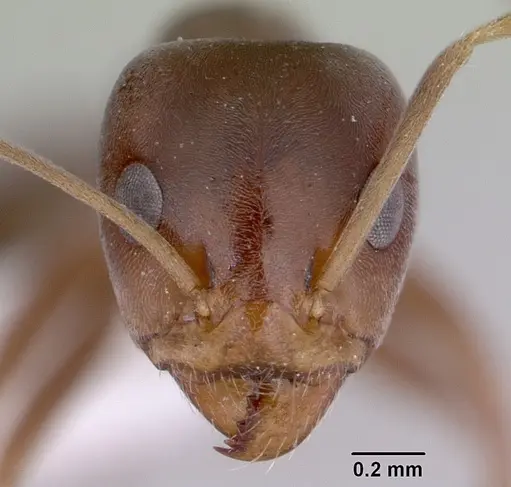
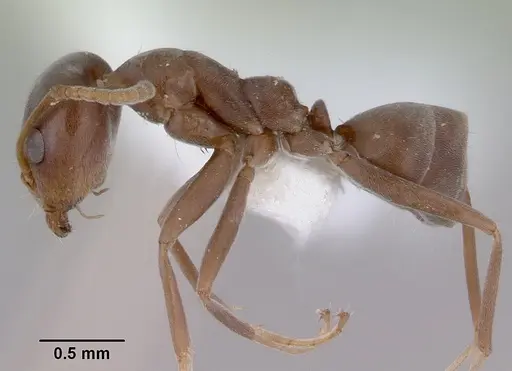
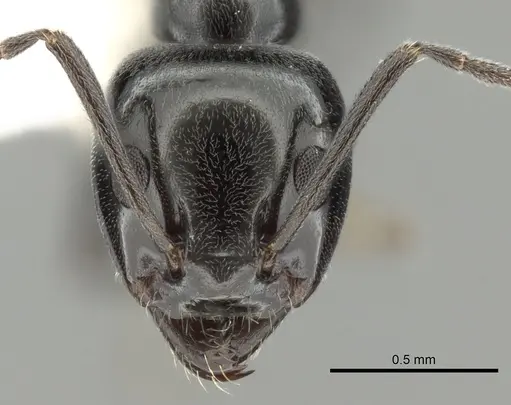
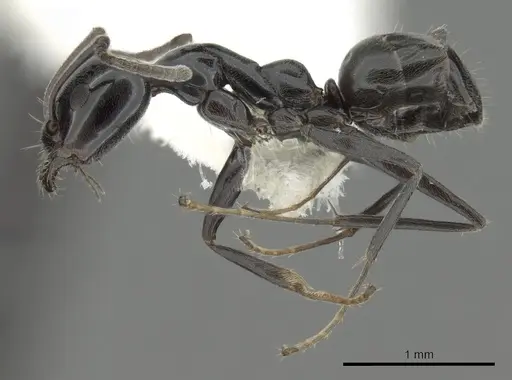
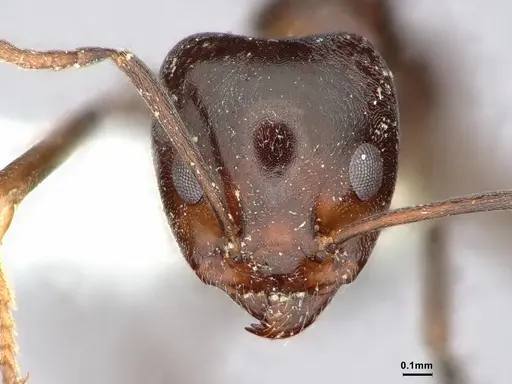
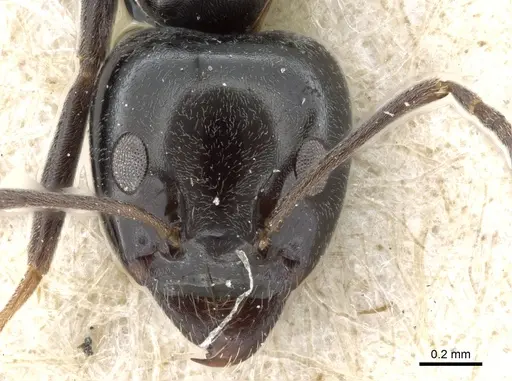
Workers are among the smallest in the genus, with total body length around 2-3mm. They have relatively short antennae that barely extend past the back of the head. The body is largely smooth with very few erect hairs, typically fewer than 6 on the entire middle body section. Color is generally honey-brown with the head noticeably darker than the rest of the body. The eyes are positioned slightly below the midpoint of the head. These identification traits help distinguish them from related species in the I. calvus group [3][5].
Habitat Preferences
This species shows a strong preference for cooler, moist, shaded forest conditions. Research specifically notes they prefer environments that typify well-shaded forests [4]. In New Caledonia they are restricted to savanna habitats dominated by niaouli trees (Melaleuca quinquenervia), where they occur at low abundance. They are considered part of the vestigial native ant fauna in degraded habitats and are sensitive to environmental disturbance [1]. This preference for stable, cooler conditions should guide captive care, avoid placing colonies in warm, dry, or brightly lit areas.
Foraging and Diet
Iridomyrmex calvus is an aggressive forager that can dominate food resources. Studies show they accounted for the majority of total ant abundance in test areas and successfully monopolized 71 out of 122 food baits in one trial, the highest rate in the genus Iridomyrmex [4]. They likely feed on honeydew, small insects, and nectar like other Dolichoderine ants. In captivity, offer sugar water or honey regularly, along with small protein sources like fruit flies or small mealworm pieces.
Defense Mechanism
Like other Dolichoderine ants, Iridomyrmex calvus lacks a functional sting. They defend by secreting defensive chemical compounds from a slit-like opening at the tip of the abdomen. This is the typical defense method for the subfamily Dolichoderinae.
Colony Structure
The exact colony structure of I. calvus has not been directly studied. Based on typical patterns in the genus Iridomyrmex, they likely form single-queen colonies. The species is not known to be polygynous (multiple queens) or socially parasitic. Colonies probably reach several hundred workers at maturity, though exact maximum sizes are unconfirmed. Related species in the genus typically show moderate growth rates with distinct worker castes developing over time.
Frequently Asked Questions
How long does it take for Iridomyrmex calvus to produce first workers?
The exact development timeline is unconfirmed for this species. Based on similar small Dolichoderinae ants, expect roughly 6-10 weeks from egg to worker at optimal temperature. Patience is key as colonies establish slowly.
What temperature do Iridomyrmex calvus ants need?
Keep them at room temperature, roughly 20-26°C. They prefer cooler conditions than many tropical ants, research shows they thrive in cool, moist, shaded forest environments. Avoid overheating with heating cables unless the room is very cold.
Are Iridomyrmex calvus good for beginners?
They are rated as medium difficulty. Their small size and specific moisture requirements can be challenging. They are sensitive to habitat disturbance and prefer cooler conditions, which may require more attention than easier species.
How big do Iridomyrmex calvus colonies get?
Colony size is not well documented, but based on related species, they likely reach several hundred workers at maturity. They are moderate growers over time.
Can I keep multiple Iridomyrmex calvus queens together?
Based on typical Iridomyrmex patterns, they likely form single-queen colonies. Combining unrelated queens is not recommended without evidence they can coexist.
What do Iridomyrmex calvus ants eat?
Like other Dolichoderine ants, they likely feed on honeydew, nectar, and small insects. In captivity, offer sugar water or honey regularly, along with small protein sources like fruit flies or tiny insect pieces.
Do Iridomyrmex calvus need hibernation?
As a temperate to subtropical Australian species, they likely benefit from a cooler winter period, but specific diapause requirements are unconfirmed. Reduce temperatures slightly in winter rather than maintaining constant warmth.
Why are my Iridomyrmex calvus dying?
Common issues include: overheating (they prefer cooler conditions), too dry conditions (they need moisture), escape through small gaps (they are tiny), and stress from habitat disturbance. Ensure proper humidity and avoid warm, dry environments.
When should I move Iridomyrmex calvus to a formicarium?
Wait until the colony has established with at least 20-30 workers. They can start in a test tube setup and move to a formicarium once the colony is stable. Given their preference for cooler, moist conditions, ensure the formicarium maintains appropriate humidity.
Report an Issue
The current care sheet is based fully on literature. See inconsistencies, or something that's incorrect? Please , it will be resolved after review from an admin. Contributing to the blogs tab also helps providing information, to make us be able to further improve the caresheets. Thank you for your support!
References

This caresheet is licensed under CC BY-SA 4.0 .
Community Blogs
CASENT0172063
View on AntWeb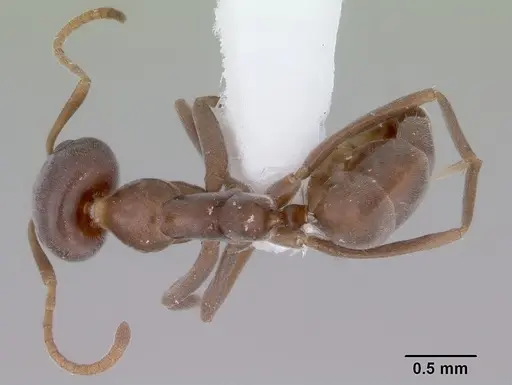
CASENT0249712
View on AntWeb
CASENT0886039
View on AntWeb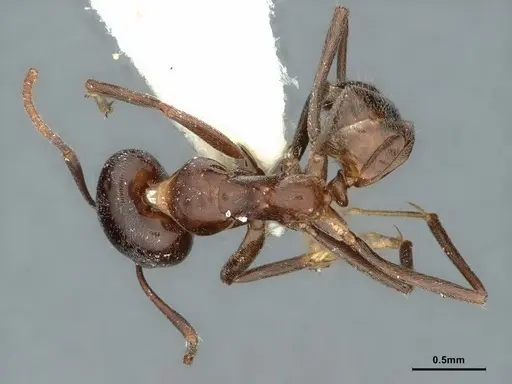
CASENT0905051
View on AntWeb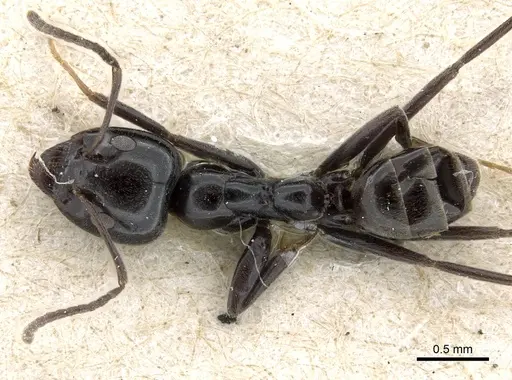
Literature
Loading distribution map...Loading products...