
Hypoponera silvestrii
- Sci. Name
- Hypoponera silvestrii
- Tribe
- Ponerini
- Subfamily
- Ponerinae
- Author
- Donisthorpe, 1947
- Distribution
- Found in 1 countries
Introduction
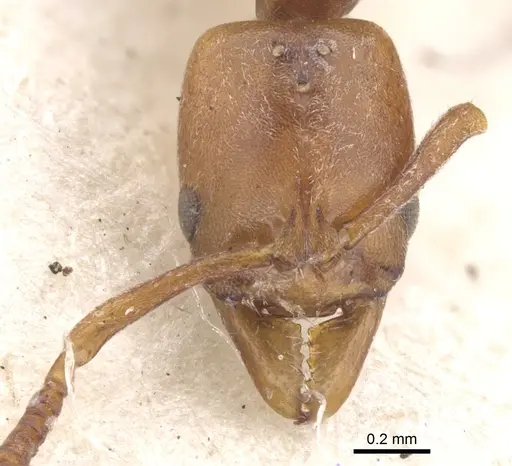
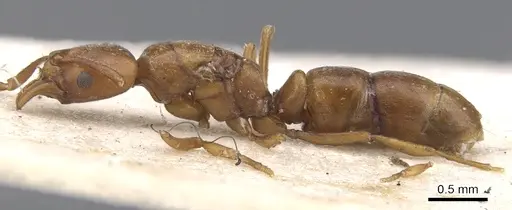
Hypoponera silvestrii is a medium-sized ponerine ant with workers measuring 5.25-7.05 mm in total length, making them the smallest species in the Bothroponera sulcata complex . Workers have a dark brown to brownish-black body with lighter brown legs, clypeus, mandibles, and antennae . The head, pronotum, and propodeum have a dull, roughly sculpted appearance with foveolae, while the mandibles are smooth and shiny with about 6-7 teeth . This species is distinguished by having few to no erect hairs on the head dorsum and sides . Originally described from Vietnam, the species is now primarily documented across tropical Africa including Ghana, Ivory Coast, Nigeria, Kenya, and Tanzania, where it inhabits various forest environments from dry forests to primary rainforest . The type specimen was collected from within a termite nest, indicating this species may have ecological associations with termites .
Quick Summary
- Difficulty: Medium
- Origin & Habitat: Tropical Africa (Ghana, Ivory Coast, Nigeria, Kenya, Tanzania) and originally described from Vietnam. Found in various forest habitats including dry forests below summits, primary forest, and under rocks among leaf litter at elevations from 700m to 2200m [2]. The type specimen was collected from Aburi City, Ghana, approximately 37.8 km north of Accra [1].
- Colony Type: Colony structure is not documented in available research.
- Size & Growth:
- Queen: Size data unavailable, no specific measurements for queens in available literature
- Worker: 5.25-7.05 mm total length [1]
- Colony: Maximum colony size is not documented
- Growth: Growth rate is unconfirmed
- Development: Development time is unconfirmed for this species (No specific development data available. Ponerine ants typically develop faster in warmer conditions.)
- Antkeeping:
- Temperature: Keep at 24-28°C based on their tropical African distribution. A gentle temperature gradient allows workers to self-regulate
- Humidity: High humidity is essential, these ants come from humid forest environments. Keep nest substrate consistently moist but not waterlogged. Aim for 70-85% humidity
- Diapause: No, this is a tropical African species and does not require hibernation
- Nesting: In the wild, they nest under rocks among leaf litter and in forest floor microhabitats [2]. In captivity, a naturalistic setup with moist substrate works well, or a Y-tong/plaster nest with good moisture retention. Provide leaf litter or small hiding structures.
- Behavior: Hypoponera silvestrii is a cryptic, ground-nesting ant that forages primarily on the forest floor. Based on genus patterns, they are likely predaceous on small invertebrates. Workers are medium-sized and can deliver a sting if threatened. They are not aggressive colony defenders but will respond to nest disturbance. Escape prevention should be moderate, their medium size means standard barriers are usually sufficient.
- Common Issues: colonies may fail if humidity drops too low, these forest floor ants need consistent moisture, wild-caught colonies may contain parasites that can devastate captive colonies, slow founding phase means colonies are vulnerable to stress during the first few months, tropical species may struggle if temperatures fall below 22°C for extended periods, lack of documented care information means keepers must adapt from related species
Nest Preferences and Housing
In their natural habitat across tropical Africa, Hypoponera silvestrii nests under rocks and within leaf litter on the forest floor [2]. They have been collected from diverse forest types including dry forests, primary rainforest, and forest at elevations ranging from 700m to 2200m [2]. The type specimen was found in a termite nest, suggesting they may occasionally associate with termites in natural settings [1]. For captive care, a naturalistic setup works best, a mixing bowl style or terrarium with moist substrate allows them to create their own chambers. Alternatively, a Y-tong or plaster nest with good moisture retention provides a more controlled environment. Regardless of nest type, maintain consistently moist substrate and provide leaf litter or small structures for cover.
Feeding and Diet
Based on typical Hypoponera and Ponerine ant biology, these ants are likely predaceous, hunting small invertebrates on the forest floor. They probably accept small live prey such as fruit flies, pinhead crickets, and small mealworms. They may also collect honeydew from aphids and accept sugar water or honey as an energy source. Feed protein-rich prey 2-3 times per week and provide a constant sugar source. Remove uneaten prey after 24-48 hours to prevent mold.
Temperature and Seasonal Care
Hypoponera silvestrii originates from tropical Africa, so they require warm, stable temperatures. Keep the nest area at 24-28°C, with a slight gradient allowing workers to self-regulate. A heating cable on one side of the nest can help maintain warmth. They do not require hibernation like temperate species. Monitor colony behavior, if workers become less active, reduce feeding frequency but maintain temperature and humidity. Avoid temperatures below 22°C for extended periods as this could stress the colony. [2]
Defense Mechanism
Hypoponera silvestrii belongs to the subfamily Ponerinae, which are primitive hunters with a highly functional, visible stinger. They can deliver a sting if threatened, though the venom is not medically significant to healthy humans.
Behavior and Colony Dynamics
These are cryptic, ground-dwelling ants that spend most of their time within the nest or foraging on the forest floor. Workers are medium-sized. While not aggressive toward humans, they can deliver a sting if handled roughly or if their nest is threatened. The queen rears the first brood alone until nanitic workers emerge. Workers likely forage individually rather than in raiding parties. Provide enrichment opportunities like leaf litter and small hiding spots to encourage natural behavior. [1]
Frequently Asked Questions
How long does it take for Hypoponera silvestrii to produce first workers?
The exact timeline is not documented. The founding phase can be slow, so patience is essential.
What do Hypoponera silvestrii ants eat?
Based on typical Ponerine biology, they are likely predaceous on small invertebrates. Offer small live prey like fruit flies, pinhead crickets, or small mealworms. They may also accept sugar water or honey. Feed protein 2-3 times per week with constant sugar availability.
Can I keep Hypoponera silvestrii in a test tube setup?
A test tube can work for founding colonies, but these ants prefer humid forest floor conditions. A naturalistic setup with moist substrate or a Y-tong/plaster nest with good moisture retention is more suitable for long-term keeping.
Are Hypoponera silvestrii good for beginners?
This species is rated as medium difficulty. They require warm temperatures and high humidity, which can be challenging to maintain consistently. Some experience with ant keeping is helpful.
How big do Hypoponera silvestrii colonies get?
Colony size is not well documented. They are not among the largest ant species.
Do Hypoponera silvestrii need hibernation?
No, they are tropical ants from Africa and do not require hibernation. Simply maintain stable warm temperatures year-round.
Why is my Hypoponera silvestrii colony dying?
Common causes include: low humidity (keep substrate consistently moist), temperatures below 22°C, mold from overwatering or uneaten prey, parasites from wild-caught colonies, or stress from excessive disturbance. Ensure proper humidity, warmth, and minimal interference during founding.
Report an Issue
The current care sheet is based fully on literature. See inconsistencies, or something that's incorrect? Please , it will be resolved after review from an admin. Contributing to the blogs tab also helps providing information, to make us be able to further improve the caresheets. Thank you for your support!
References

This caresheet is licensed under CC BY-SA 4.0 .
Community Blogs
CASENT0902541
View on AntWeb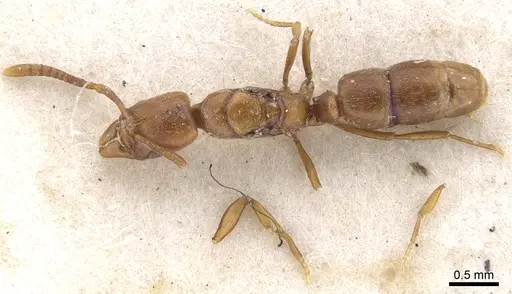
Literature
Loading distribution map...Loading products...