
Hypoponera papuana
- Sci. Name
- Hypoponera papuana
- Tribe
- Ponerini
- Subfamily
- Ponerinae
- Author
- Emery, 1900
- Distribution
- Found in 3 countries
Introduction
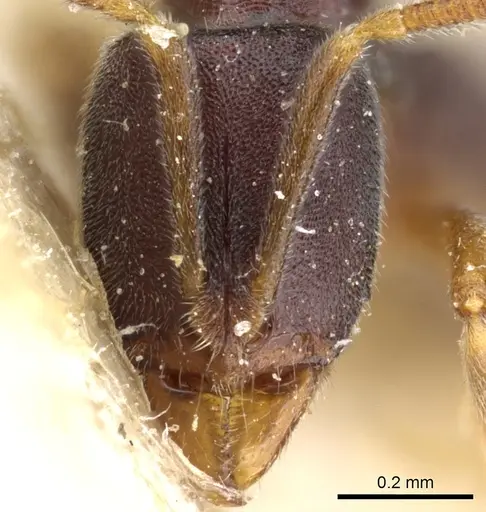
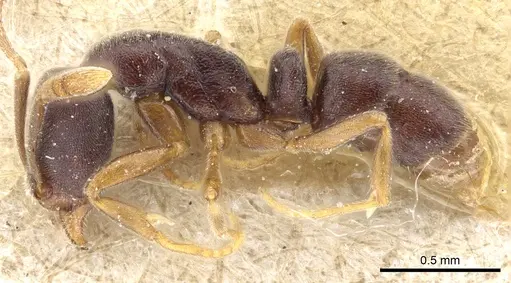
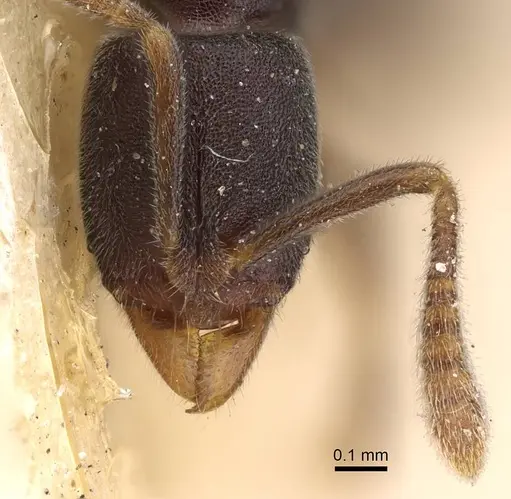
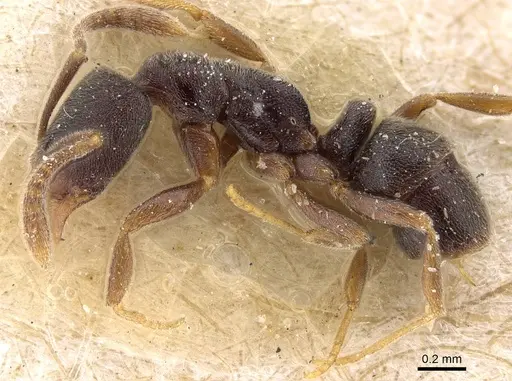
Hypoponera papuana is a small ponerine ant native to New Guinea and the Solomon Islands. Workers are small, with a body plan featuring a distinct petiole and stinger . The species was originally described by Emery in 1900 as Ponera papuana and is recorded from Makira and Guadalcanal in the Solomon Islands . These ants nest in soil and rotting wood in tropical forests .
Quick Summary
- Difficulty: Medium
- Origin & Habitat: Native to New Guinea and the Solomon Islands, found in tropical forest environments nesting in soil and rotting wood [1][2].
- Colony Type: Colony structure is unconfirmed for this species. Based on typical Hypoponera patterns, likely monogyne, but not documented.
- Size & Growth:
- Queen: ~4-5 mm, inferred from Hypoponera genus
- Worker: ~3-4 mm, inferred from Hypoponera genus
- Colony: Unknown, no specific data available
- Growth: Moderate, inferred from Ponerine ant patterns
- Development: Estimated 8-12 weeks at tropical temperatures, inferred from Ponerine development patterns (Specific data for H. papuana is not available)
- Antkeeping:
- Temperature: Keep at 24-28°C, as this is a tropical species. A gentle gradient is recommended [3].
- Humidity: Keep nest substrate consistently moist but not waterlogged, reflecting tropical forest conditions [3].
- Diapause: No, tropical species do not require hibernation.
- Nesting: Prefer soil and rotting wood nests. In captivity, use test tubes, Y-tong, or plaster nests that retain humidity [3].
- Behavior: Workers are relatively docile but possess a stinger for defense. They are primarily predatory and forage for small invertebrates. Escape prevention is important due to small size.
- Common Issues: cold temperatures below 22°C can stress or kill colonies, overfeeding can lead to mold in the nest, wild-caught colonies may have parasites, small size requires careful escape prevention
Housing and Nest Setup
You can use test tube setups for founding colonies with a water reservoir to maintain humidity. Once the colony grows, move to a formicarium like Y-tong or plaster nests that hold humidity well [3]. Provide a small outworld connected to the nest for foraging, and use barriers to prevent escapes due to their small size.
Feeding and Diet
Feed small live prey such as fruit flies, pinhead crickets, and small mealworms 2-3 times per week. Remove uneaten prey after 24-48 hours to prevent mold [3].
Temperature and Humidity
Maintain temperatures between 24-28°C with a gentle gradient if needed. Keep humidity high by ensuring the nest substrate is moist but not waterlogged [3].
Colony Development
Expect slow growth typical of Ponerine ants. First workers may emerge 8-12 weeks after queen lays eggs, but specific timelines are unconfirmed for this species.
Behavior and Temperament
Workers are docile but can sting if threatened. They are nocturnal or crepuscular foragers, hunting small invertebrates in soil. Escape risk is high due to small size, so use proper barriers.
Frequently Asked Questions
How long does it take for Hypoponera papuana to produce first workers?
Estimated 8-12 weeks at optimal temperatures, based on Ponerine ant patterns [3].
What do Hypoponera papuana ants eat?
They are primarily predatory, feeding on small live prey like fruit flies and crickets [3].
Do Hypoponera papuana ants need hibernation?
No, as a tropical species, they do not require hibernation.
Are Hypoponera papuana ants good for beginners?
They are rated Medium difficulty due to humidity and temperature needs, suitable for intermediate keepers.
What temperature do Hypoponera papuana ants need?
Keep them at 24-28°C, with a gentle gradient recommended [3].
How big do Hypoponera papuana colonies get?
Colony size is unknown due to lack of specific data.
Do Hypoponera papuana ants sting?
Yes, as ponerine ants, they possess a stinger for defense, but they are relatively docile.
Can I keep multiple queens together?
Colony structure is unconfirmed, but Hypoponera species are typically single-queen, so combining queens is not recommended.
When should I move Hypoponera papuana to a formicarium?
Move them once the colony has several workers, but specific timing is unconfirmed.
What humidity level do Hypoponera papuana ants need?
Keep humidity high with moist substrate, reflecting their natural forest habitat [3].
Report an Issue
The current care sheet is based fully on literature. See inconsistencies, or something that's incorrect? Please , it will be resolved after review from an admin. Contributing to the blogs tab also helps providing information, to make us be able to further improve the caresheets. Thank you for your support!
References

This caresheet is licensed under CC BY-SA 4.0 .
Community Blogs
CASENT0903914
View on AntWeb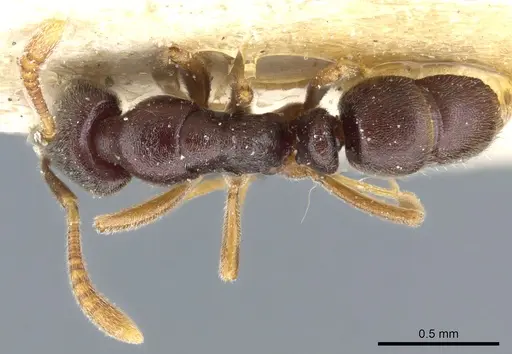
CASENT0922244
View on AntWeb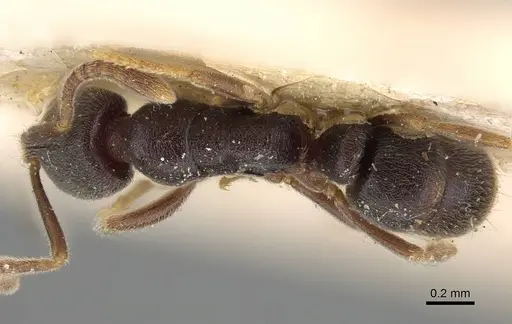
Literature
Loading distribution map...Loading products...