
Hypoponera monticola
- Sci. Name
- Hypoponera monticola
- Tribe
- Ponerini
- Subfamily
- Ponerinae
- Author
- Mann, 1921
- Distribution
- Found in 2 countries
Introduction
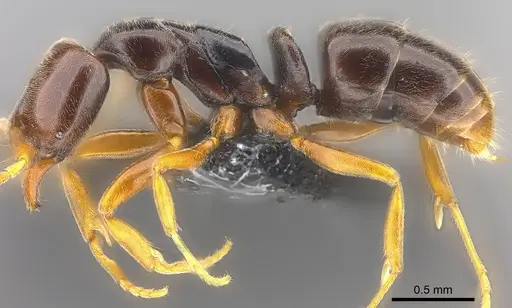
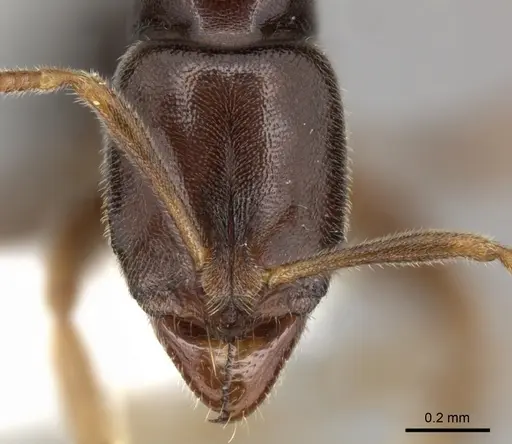
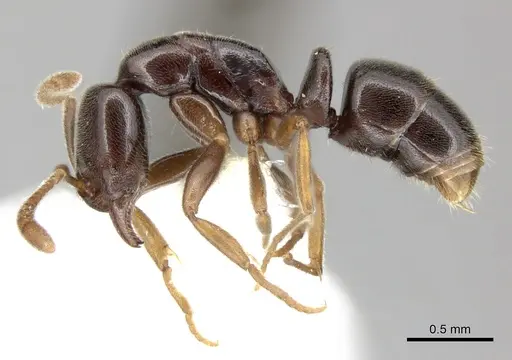
Hypoponera monticola is a medium-sized ponerine ant endemic to Fiji, found on islands like Viti Levu, Ovalau, and the Lau group . Workers are 5.00-5.78 mm long and dark brown to black, with distinctive propodeal spines and a petiole tooth . They forage in leaf litter and nest in fallen logs in elevated, rainy regions . This species was originally described as Ponera monticola in 1921 and later reclassified to Hypoponera . It is a cryptic forager with a functional stinger for defense.
Quick Summary
- Difficulty: Medium
- Origin & Habitat: Fiji islands (Viti Levu, Ovalau, Lau), endemic species found in scrub habitat and leaf litter at elevated locations [1][2][6].
- Colony Type: Unconfirmed
- Size & Growth:
- Antkeeping:
- Temperature: Keep around 22-26°C, they inhabit elevated regions so prefer cooler conditions [4].
- Humidity: Keep substrate consistently moist but not waterlogged, as they live in rainy regions [4].
- Diapause: Unknown, no data on diapause requirements.
- Nesting: Naturalistic setup with damp soil and wood pieces works best, as they nest in fallen logs [4][7].
- Behavior: Hypoponera monticola is a cryptic leaf-litter forager that hunts small prey. As a ponerine ant, it has a functional stinger for defense, but it is not aggressive toward humans. Workers are modest in size but can sting if threatened. Escape risk is moderate, use standard barrier methods.
- Common Issues: lack of specific care data makes precise requirements uncertain., humidity control is critical, too dry causes colony decline., they may be difficult to establish from queen founding due to limited data., wild-caught colonies may have parasites.
Natural History and Distribution
Hypoponera monticola is endemic to Fiji, found on Viti Levu, Ovalau, and the Lau group [1][2]. The species was originally described by Mann in 1921 as Hypoponera monticola before being reclassified to Hypoponera [5]. In their natural habitat, these ants inhabit elevated, rainy regions where they forage in leaf litter and establish nests in fallen logs and rotting wood [4]. The frequency of occurrence in scrub habitat is approximately 5%, with lower frequency in leaf litter quadrats [6]. Specimens from Colombia have been recorded under this name at high altitudes, but these may represent a different species, as the species is considered endemic to Fiji [8][9].
Identification and Morphology
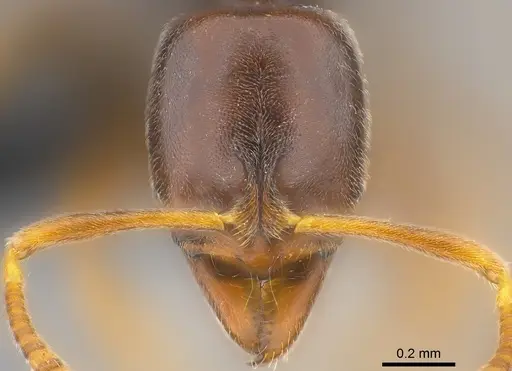
Workers of Hypoponera monticola measure 5.00-5.78 mm in length [3]. Their body color ranges from dark brown to black [3][4]. The species has distinctive morphological features including longer propodeal spines compared to similar species, and a prominent tooth on the posterior apex of the petiole [3][4]. Mandibles are triangular with approximately 8 small teeth [4].
Housing and Nest Preferences
In captivity, use a naturalistic setup with damp soil and pieces of wood or bark, as they nest in fallen logs [4][7]. A Y-tong or plaster nest with soil substrate works, provided humidity is maintained. Avoid dry conditions.
Feeding and Diet
As predatory ants, they hunt small invertebrates in leaf litter [4]. In captivity, offer small live prey like fruit flies or pinhead crickets. Protein should be the primary food source.
Temperature and Seasonal Care
Keep temperature around 22-26°C, as they prefer cooler conditions from elevated regions [4]. Diapause is unknown, but a slight cooling in winter may be beneficial.
Behavior and Defense
Hypoponera monticola is a cryptic forager that spends time in leaf litter. As a ponerine ant, it has a functional stinger for defense, but it is not aggressive toward humans. Workers will sting if threatened.
Frequently Asked Questions
How long does it take for Hypoponera monticola to produce first workers?
No specific data on development timeline for this species. Based on related Ponerinae ants, development may take several weeks, but this is an estimate.
What do Hypoponera monticola eat?
They are predatory ants that hunt small invertebrates. In captivity, feed them small live prey like fruit flies or pinhead crickets [4].
Are Hypoponera monticola good for beginners?
This species is rated as Medium difficulty. Lack of specific care data makes them less ideal for complete beginners.
What temperature do Hypoponera monticola need?
Keep them around 22-26°C [4].
Do Hypoponera monticola need hibernation?
Unknown, no data on diapause requirements.
What type of nest should I use for Hypoponera monticola?
A naturalistic setup with damp soil and wood pieces works best [4][7].
How big do Hypoponera monticola colonies get?
Colony size data is not available.
Can I keep multiple Hypoponera monticola queens together?
Colony structure is unconfirmed, likely single-queen based on genus patterns, but no specific data.
Where is Hypoponera monticola found in the wild?
This species is endemic to Fiji, found on Viti Levu, Ovalau, and the Lau group islands [1][2].
Report an Issue
The current care sheet is based fully on literature. See inconsistencies, or something that's incorrect? Please , it will be resolved after review from an admin. Contributing to the blogs tab also helps providing information, to make us be able to further improve the caresheets. Thank you for your support!
References

This caresheet is licensed under CC BY-SA 4.0 .
Community Blogs
CASENT0186141
View on AntWeb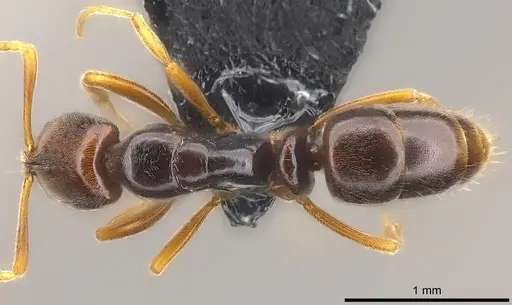
CASENT0270526
View on AntWeb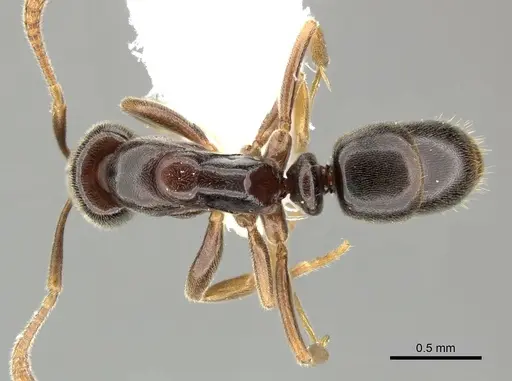
Literature
Loading distribution map...Loading products...