
Holcoponera acuta
- Sci. Name
- Holcoponera acuta
- Tribe
- Ectatommini
- Subfamily
- Ectatomminae
- Author
- Brown, 1956
- Distribution
- Found in 1 countries
Introduction
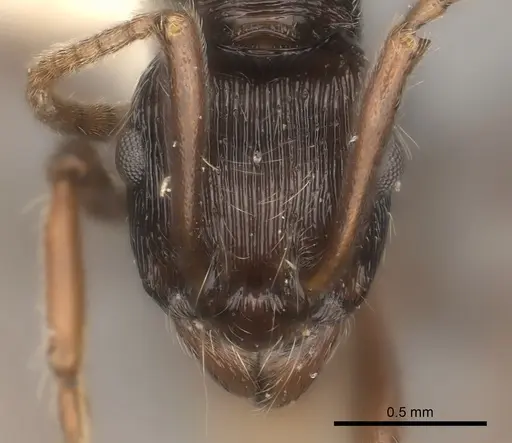
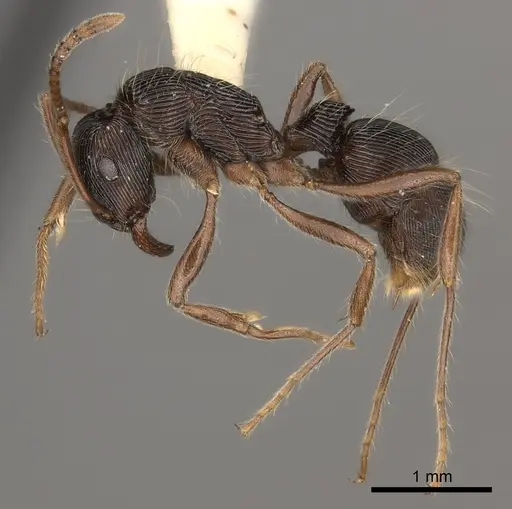
Holcoponera acuta is a small predatory ant found in low to premontane humid rainforests of northern South America, ranging from Colombia and Ecuador through Peru to Bolivia and into Brazil . Its body is dark brown to black with brown legs, and it has a distinctive ridged (costulate) sculpture on the front of the pronotum and the rest of the mesosoma . Formerly classified as Gnamptogenys acuta, recent taxonomic revisions place it in Holcoponera . These ants hunt small invertebrates on the forest floor and have been observed foraging on trees . They are an interesting species for keepers looking for predatory poneromorph ants, but specific care data is very limited.
Quick Summary
- Difficulty: Expert
- Origin & Habitat: Low to premontane humid rainforests in Colombia, Ecuador, Peru, Bolivia, and Brazil at elevations of 180-780 m [1][2]. Some specimens have been collected foraging on trees [1].
- Colony Type: Colony structure is unknown, no scientific data is available on queen number or social organization.
- Size & Growth:
- Queen: Size data unavailable. Inferred from related Holcoponera species to be around 6-7 mm.
- Worker: Size data unavailable. Inferred from related Holcoponera species to be around 5-6 mm.
- Colony: Likely under 500 workers, based on typical sizes of related species.
- Growth: Moderate (estimated)
- Development: Estimated 8-12 weeks at optimal warm temperatures, based on typical ponerine development. (No specific studies exist for this species, timeline is an estimate.)
- Antkeeping:
- Temperature: Based on their tropical humid forest habitat, they require warm, stable conditions. A range of 24-28°C is commonly recommended by keepers, but the exact needs are not documented. Provide a temperature gradient so workers can self-regulate.
- Humidity: High humidity is essential, the natural habitat is humid rainforest. Keep the nest substrate consistently moist but not waterlogged. Aim for a relative humidity around 70-85% if measured, but focus on substrate moisture rather than exact numbers.
- Diapause: Unlikely, as a tropical species, they probably do not require a true diapause. However, they may show reduced activity during cooler or drier periods.
- Nesting: In captivity, they do well in setups that retain humidity well: Y‑tong (AAC) nests, plaster nests, or naturalistic setups with moist substrate. They forage both on the ground and in vegetation, so vertical space in the outworld is beneficial [1].
- Behavior: Predatory ants that hunt small invertebrates [1]. Workers are moderately active and will defend the colony with a functional stinger if disturbed. Escape prevention is standard, they are not extremely small but are agile climbers.
- Common Issues: high humidity requirements can cause mold problems if ventilation is inadequate, predatory diet requires constant access to live prey, colony starvation is a real risk, tropical species may struggle in cool or dry indoor conditions, slow colony growth can be frustrating for keepers expecting rapid development, wild‑caught colonies may carry parasites or have trouble adapting to captivity
Housing and Nest Setup
Because Holcoponera acuta comes from humid forests, you need to keep the nest chamber dark and very moist. Y‑tong (AAC) or plaster nests work well, they hold moisture without becoming waterlogged. Provide some vertical climbing space in the outworld since these ants forage on trees [1]. A small water feeder or cotton wick is essential for drinking. For escape prevention, apply a standard barrier like fluon or oil, they are agile climbers.
Feeding and Diet
These are strict predators, they need live small invertebrates. Offer fruit flies, small crickets, mealworms, and similar sized prey. Feed every 2-3 days, adjusting based on consumption, and remove leftovers after 24 hours to prevent mold. Some Ectatomminae will occasionally accept sugar, but protein should make up most of their diet. Always provide a constant source of clean water.
Temperature and Humidity
Keep the colony warm and humid, reflecting their tropical rainforest home [1][2]. A temperature of 24-28°C is recommended by keepers, but the exact needs are unknown, use a gradient so ants can choose. Humidity should be high: keep the nest substrate consistently moist (but not soaking). Avoid placing the nest near air conditioning vents or in rooms with big temperature swings. A heating cable on one side can create a useful gradient.
Behavior and Temperament
Holcoponera acuta workers are moderately defensive. They possess a functional stinger and will use it if the colony is disturbed, but they are not overly aggressive toward keepers. They forage either alone or in small groups, actively hunting for prey. Although no detailed studies exist, related species suggest they may be more active during dawn/dusk or night. They do not engage in mass raiding.
Colony Acquisition
This species is rare in the hobby and considered advanced. If you can find a wild‑caught established colony (with queen and workers), that is the best starting point, founding queens are very hard to get and no founding data is published. Imported colonies may carry parasites or struggle with captive conditions. Expect to pay a premium. Because almost nothing is known about their biology, be prepared to experiment and take careful notes.
Frequently Asked Questions
Is Holcoponera acuta a good beginner ant?
No, this species is expert‑level because of its high humidity needs, strictly predatory diet, and the difficulty of obtaining established colonies.
What do Holcoponera acuta ants eat?
They are predators that need live small invertebrates like fruit flies, small crickets, and mealworms. Remove uneaten prey after 24 hours.
Do Holcoponera acuta ants sting?
Yes, they have a functional stinger. The sting is mild compared to larger ponerines, but they will use it if they feel threatened.
What temperature do Holcoponera acuta ants need?
Keep them warm and stable, aim for 24-28°C based on their tropical habitat [1][2]. Avoid sudden temperature drops.
How big do Holcoponera acuta colonies get?
Colony size is unknown, but related species suggest it stays under 500 workers. They are not a large‑colony species.
Do Holcoponera acuta need hibernation?
No, as a tropical rainforest ant, they do not require a hibernation period. Keep them warm all year.
What humidity level do Holcoponera acuta ants need?
High humidity is essential, keep the nest substrate consistently moist. Exact numbers are not documented, but aim for conditions you’d expect in a humid rainforest [1][2].
How long does it take for Holcoponera acuta to develop from egg to worker?
Unconfirmed. Based on typical ponerine development, estimate 8-12 weeks under optimal warm temperatures.
Can I keep Holcoponera acuta in a test tube setup?
Test tubes can work for founding if humidity stays high, but a Y‑tong or plaster nest is better for established colonies because they hold moisture more evenly.
Where is Holcoponera acuta found in the wild?
It lives in low to premontane humid rainforests of Colombia, Ecuador, Peru, Bolivia, and Brazil at 180-780 m elevation [1][2][4].
Is Holcoponera acuta aggressive?
They are not particularly aggressive toward keepers but will defend the colony with their stinger if provoked.
Why is Holcoponera acuta so hard to find for sale?
It comes from remote rainforest areas in South America and is rarely collected. The lack of care information and specialized needs also means few hobbyists breed it.
Report an Issue
The current care sheet is based fully on literature. See inconsistencies, or something that's incorrect? Please , it will be resolved after review from an admin. Contributing to the blogs tab also helps providing information, to make us be able to further improve the caresheets. Thank you for your support!
References

This caresheet is licensed under CC BY-SA 4.0 .
Community Blogs
CASENT0217479
View on AntWeb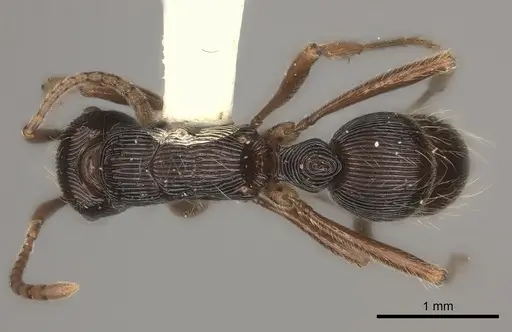
Literature
Loading distribution map...Loading products...