
Quebec Guest Ant
Formicoxenus quebecensis
- Sci. Name
- Formicoxenus quebecensis
- Tribe
- Crematogastrini
- Subfamily
- Myrmicinae
- Author
- Francoeur, 1985
- Common Name
- Quebec Guest Ant
- Distribution
- Found in 2 countries
Introduction
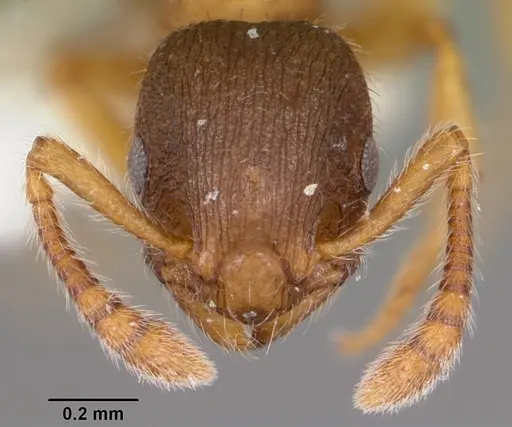
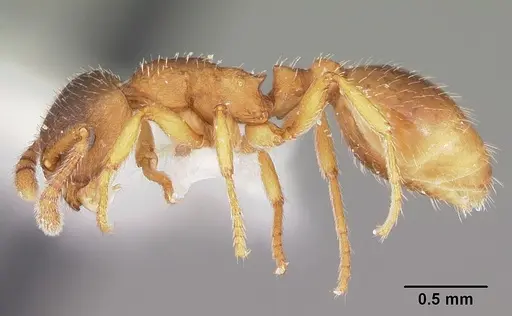
Formicoxenus quebecensis is a tiny guest ant native to boreal North America. Workers are small and yellowish-brown to reddish-brown. This species is one of the rarest ants in Canada, known only from scattered locations in Quebec, Saskatchewan, Alberta, and recently Wisconsin . It lives exclusively in association with the host ant Myrmica alaskensis, nesting within or immediately adjacent to host colonies . The species was described in 1985 from Quebec and remains infrequently collected . What makes F. quebecensis remarkable is its xenobiotic lifestyle - it lives in the nests of another species without being a true parasite. These ants can raise their own brood but also beg food from their hosts . They use chemical mimicry to blend in with their host colony, essentially fooling the Myrmica workers into accepting them . This is a species for advanced antkeepers interested in social parasitism, as keeping it requires maintaining a healthy host colony.
Quick Summary
- Difficulty: Expert
- Origin & Habitat: Boreal coniferous forests of northern North America, from Quebec west to Alberta and recently discovered in Wisconsin. Found in dead wood, mosses, and humus under litter, sometimes under rocks [4]. The Wisconsin population was found in a rotting stick in a boreal-like microclimate at Ridges Sanctuary [1].
- Colony Type: Guest ant (xenobiotic) living in association with Myrmica alaskensis. Colonies are functionally polygynous with multiple intermorphic queens that can coexist [4]. Intermorphs (worker-sized queens with ocelli) make up about 38% of the population, while true gynomorphic queens are rare at only 2.2% [4].
- Size & Growth:
- Antkeeping:
- Temperature: Keep host colony at typical Myrmica temperatures: 20-24°C with a slight gradient. The boreal origin suggests they prefer cooler conditions.
- Humidity: Moderate to high, maintain nest substrate moist but not waterlogged. Boreal species prefer damp conditions.
- Diapause: Yes, requires hibernation period typical of boreal ants. Keep host colony cold for several months during winter.
- Nesting: This is the critical challenge, F. quebecensis cannot be kept alone. You must maintain a healthy Myrmica alaskensis colony and introduce the guest ants to it. They nest in dead wood, so a naturalistic setup with rotting wood pieces works best. The 2023 Wisconsin study found them in chambers within rotting sticks [1].
- Behavior: Very shy and non-aggressive. They are not true parasites, they beg food from hosts but can care for their own brood [2]. Workers are small and unlikely to escape if properly contained. They are rarely aggressive toward hosts due to chemical mimicry [3]. The main challenge is establishing coexistence with the host colony.
- Common Issues: This species cannot be kept without its host Myrmica alaskensis, it is not a free-living ant., Host colony rejection is likely if chemical mimicry is not effective, introduction must be done carefully., Small colony size means the population is fragile and prone to collapse., Extremely rare in the hobby, virtually impossible to acquire legally., Captive breeding is difficult due to the complex social relationship with hosts., This species is listed as vulnerable (VU) on the IUCN Red List, legal restrictions may apply in some areas.
The Guest Ant Lifestyle
Formicoxenus quebecensis is what researchers call a guest ant or xenobiotic species, it lives in close association with another ant species without being a true parasite. This is different from social parasites that completely depend on host workers to survive. F. quebecensis can rear its own brood but also engages in trophallaxis, begging food directly from host workers [2]. The ants achieve this coexistence through chemical mimicry: they produce the same colony-specific hydrocarbons as their host Myrmica alaskensis, essentially wearing the host colony's chemical uniform [3]. This allows them to move freely within the host nest without being detected as intruders. In the 2023 Wisconsin study, four Myrmica workers were found living alongside 62 Formicoxenus workers in the same nest structure [1]. This makes F. quebecensis one of the most fascinating examples of ant social biology, but it also makes them extraordinarily difficult to keep in captivity.
Colony Structure and Castes
F. quebecensis has one of the most complex social structures among North American ants. Colonies are functionally polygynous with multiple reproductive intermorphs (worker-sized individuals that can lay eggs) [4]. The population is divided into three morphs: workers, intermorphs (making up ~38% of adults), and rare gynomorphs (only ~2.2% of adults) [4]. Intermorphs have ocelli (simple eyes) and sutures on their mesosoma, making them look like intermediate forms between workers and queens. They have 6 ovarioles and a spermatheca for mating [4]. Males come in two forms: normal winged males and apterous (wingless) ergatoid males [4]. This polymorphism allows colonies to produce both flying males for dispersal and ground-dwelling males for within-nest mating. The colony collected in Wisconsin had 15 intermorphs and 47 workers, plus about 35 larvae but no pupae [1].
Housing Requirements - The Critical Challenge
You cannot keep Formicoxenus quebecensis without first establishing a healthy Myrmica alaskensis colony. This is not optional, they are obligate guest ants that require a host. The host colony should be kept in a naturalistic setup with rotting wood pieces, as this is their natural nesting substrate [1]. The Wisconsin colony was found in a rotting stick with chambers [1]. Introduce the guest ants slowly: place them near the host nest entrance and allow chemical integration to occur over time. Some keepers recommend cooling both colonies before introduction to slow down host aggression. The guest colony will need its own chambers within the host territory. Expect the combined colony to remain small, F. quebecensis colonies max out around 100 workers [5]. Do not expect the guest ants to thrive in a formicarium without their host.
Feeding and Nutrition
In captivity, F. quebecensis workers readily accept honey and have been observed eating protein like Spam [1]. They did not accept dead fruit flies in one study [1]. This suggests they are opportunistic foragers that will accept what they can get from their hosts plus some independent foraging. In the wild, they primarily obtain food through begging trophallaxis from host workers. When keeping this species, you should provide honey water constantly for the guest ants, plus small protein offerings. The host colony should be fed a normal Myrmica diet (insects, sugar water). The guest ants will likely obtain most of their nutrition from the host colony through trophallaxis, so focus on maintaining a well-fed host colony.
Seasonal Care and Hibernation
As a boreal species, F. quebecensis requires a winter dormancy period. Keep the combined colony (host and guest) at cold temperatures for several months, mimicking the subarctic winter. The Wisconsin population was collected in September, suggesting they remain active late into the season [1]. Reduce feeding during hibernation and ensure the nest remains slightly moist but not wet. Do not allow the colony to freeze completely. The boreal origin means they are adapted to cold and may be damaged by warm, constant temperatures. After hibernation, gradually warm the colony back to room temperature over several days.
Report an Issue
The current care sheet is based fully on literature. See inconsistencies, or something that's incorrect? Please , it will be resolved after review from an admin. Contributing to the blogs tab also helps providing information, to make us be able to further improve the caresheets. Thank you for your support!
References

This caresheet is licensed under CC BY-SA 4.0 .
Community Blogs
CASENT0104822
View on AntWeb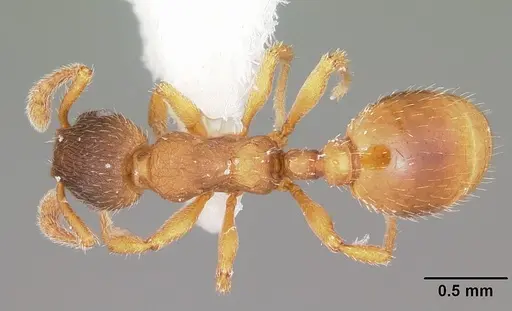
Literature
Loading distribution map...Loading products...