
Formica tarimica
- Sci. Name
- Formica tarimica
- Tribe
- Formicini
- Subfamily
- Formicinae
- Author
- Seifert & Schultz, 2009
- Distribution
- Found in 1 countries
Introduction
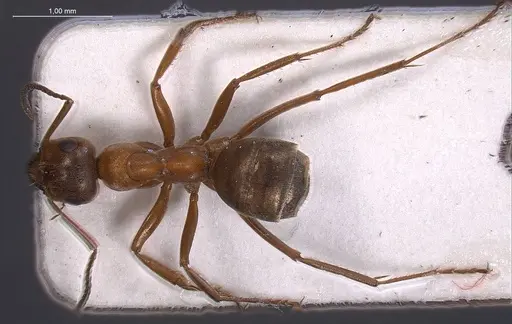
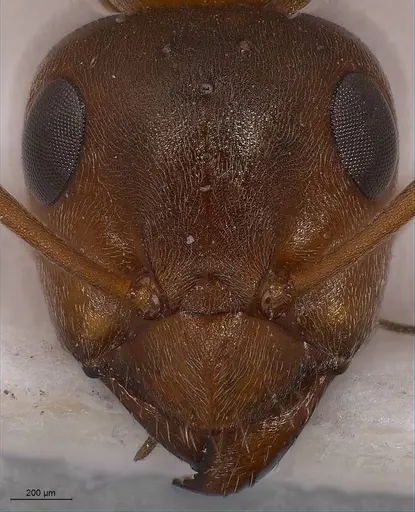
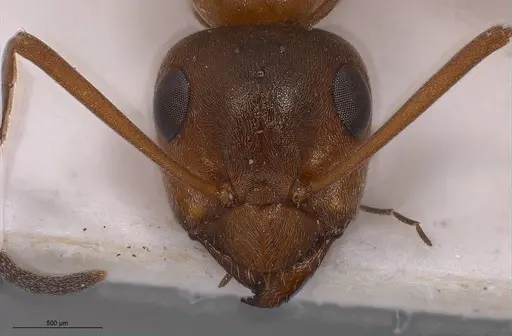
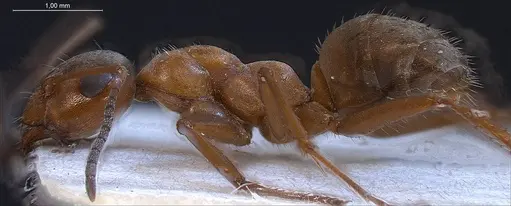
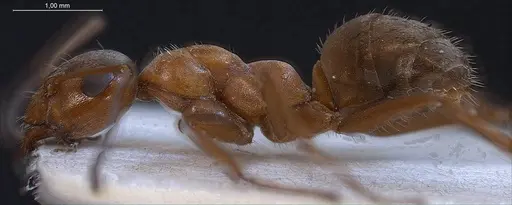
Formica tarimica is a small ant species endemic to the Tarim Basin in Central Asia. Workers have a reddish-yellow head, mesosoma, and legs, while the abdomen (gaster) is always brown and covered in dense silvery pubescence . They have elongated heads, the smallest eyes in their species group, and a narrow petiole . Worker body size is approximately 4–5 mm (inferred from related Formica species). This species belongs to the Formica rufibarbis group and can be identified by its numerous pronotal setae (bristles on the thorax) and longer head compared to similar species . Its geographic range is remarkably narrow, a band of about 5° longitude along the northern edge of the Tarim Basin, at elevations between 849 and 1528 m . It occupies a wide variety of habitats: semi-desert, pastures, irrigated crop plantations, gardens, and open alluvial sand banks, always near water-influenced ground like the Tarim River . Nests are built in moderately dry sand, often with a characteristic slant entrance leading underground . A notable observation is that colonies relocate after flooding, showing behavioral flexibility .
Quick Summary
- Difficulty: Medium
- Origin & Habitat: Central Asia – Tarim Basin, Xinjiang, China. Elevations 849–1528 m in semi-desert, pastures, irrigated farmland, gardens, poplar/tamarisk stands, often near the Tarim River [1][2].
- Colony Type: Colony structure is unconfirmed. Based on typical Formica rufibarbis group patterns, likely single-queen (monogyne) colonies, but this has not been directly documented.
- Size & Growth:
- Queen: Undocumented – estimated 5–7 mm based on related Formica species
- Worker: Approximately 4–5 mm (inferred from Formica genus)
- Colony: Unknown – likely moderate, similar to related Formica species (hundreds of workers) [1]
- Growth: Moderate (estimated)
- Development: 6–10 weeks (estimated based on typical Formica development at optimal temperature) (Exact timeline unconfirmed for this species, estimates based on related Formica.)
- Antkeeping:
- Temperature: Keep at 20–26 °C with a gradient. Native habitat has hot summers and cold winters, they tolerate variation [1].
- Humidity: Moderately dry conditions preferred. Nests in moderately dry sand in nature, avoid overly humid setups. Keep nest substrate slightly moist but not wet [1].
- Diapause: Yes – likely required. Native range has cold winters, a winter dormancy period of 2–3 months at 5–10 °C is recommended (inferred from habitat).
- Nesting: Prefers dry to slightly moist sand/soil substrate. Slanted entrances in wild, Y-tong or naturalistic setups work well [1].
- Behavior: Generally calm and non-aggressive. Like other Formicinae, they spray formic acid for defense. Their small size requires fine mesh barriers to prevent escapes. Workers actively forage and tend trophobionts (aphids, scale insects) on plants [1].
- Common Issues: limited captive care information available – much of their biology is inferred from related species., small worker size makes them prone to escaping through tiny gaps., improper hibernation may weaken or kill colonies., colony founding may be challenging since specific requirements are undocumented., nest substrate must not become waterlogged as they prefer drier conditions.
Natural History and Distribution
Formica tarimica is endemic to China's Tarim Basin in Xinjiang. Its range is remarkably narrow, a band of only about 5° longitude (82°E to 87°E) along the northern margin of the basin, at elevations from 849 to 1528 m [2]. It occupies a surprising variety of habitats: semi-desert steppe, pastures, irrigated crop plantations, gardens, open alluvial sand banks, and poplar or tamarisk stands. The common thread is water-influenced ground, often near the Tarim River [1]. This diversity suggests that competition from other Formica species is low in this region, allowing Formica tarimica to exploit multiple niches [1]. One behavioral observation worth noting: researchers documented a colony relocating its nest after flood inundation, showing that these ants can adapt when conditions change [1].
Identification and Morphology
Formica tarimica is a small species with an elongated head (the longest relative to width in the Formica rufibarbis group), the smallest eyes in the group, and the narrowest petiole [1]. The head, mesosoma, coxae, legs, and petiole are typically reddish-yellow, while the gaster (abdomen) is always brown. The gaster is covered in dense silvery pubescence and has transverse microripples with the largest average spacing found in the species group [1]. The pronotum carries many setae (bristles), an average of 12.8 bristles for a worker of standard size, which easily distinguishes it from the similar Formica orangea [1]. The metanotal depression is relatively deep, and the propodeal dome is rounded or angulate-convex [1]. Workers have no functional sting: instead, they spray concentrated formic acid as a chemical defense (typical of Formicinae).
Nesting and Housing
In the wild, Formica tarimica nests in moderately dry sand and constructs characteristically slanted gateways that lead underground, likely helping with drainage and temperature regulation [1]. For captive care, provide a naturalistic setup with a sand‑based substrate. Keep the substrate slightly moist but never waterlogged, mimicking their semi‑desert home. A test tube setup works for founding, but as the colony grows you may need to transition to a larger formicarium. Y‑tong (AAC) nests with appropriately sized chambers are also suitable. Because their natural habitat experiences extreme temperature swings, giving the colony a temperature gradient (warm on one end, cooler on the other) allows workers to self‑regulate.
Feeding and Diet
Field observations show that Formica tarimica forages on poplar trees and probably tends trophobionts, aphids, scale insects, and other honeydew‑producing insects [1]. This means they have a strong sweet tooth. Offer sugar water or honey water regularly, along with protein sources such as small insects (fruit flies, pinhead crickets, mealworms). A varied diet with both sugars and proteins supports healthy brood production. Remove uneaten food after 24–48 hours to prevent mold. Start with small portions and adjust based on their consumption.
Seasonal Care and Hibernation
Formica tarimica originates from an area with a continental climate, hot summers and cold winters. Its native elevation range (849–1528 m) in the Tian Shan foothills ensures significant seasonal temperature variation [1][2]. Therefore, a winter dormancy period (diapause) is likely crucial. Provide a hibernation period of 2–3 months during the Northern Hemisphere winter (roughly November–February). Reduce the temperature to 5–10 °C, and reduce or stop feeding. Keep the nest substrate slightly moist but not wet, a completely dry nest can be fatal. Proper winter rest is probably required for colony health and spring reproduction. Without it, colonies may become stressed or fail to produce alates.
Behavior and Temperament
Formica tarimica is generally calm and non‑aggressive. Workers actively forage and patrol their territory, tending aphids and other trophobionts [1]. When threatened, they spray formic acid (typical of Formicinae), but their small size makes them harmless to humans. The main challenge in captivity is their tiny size: they can squeeze through very small gaps. Use fine mesh barriers and seal any cracks in the enclosure. Despite being small, they are not particularly skittish and can be observed easily. They have demonstrated behavioral flexibility, the documented nest relocation after flooding suggests they can adapt to changing conditions [1].
Frequently Asked Questions
How long does it take for Formica tarimica to produce first workers?
The exact timeline is unconfirmed, but based on related Formica species, expect 6–10 weeks from egg to worker at optimal temperature (around 24 °C). Founding colonies may take longer as the queen raises her first brood alone.
What temperature do Formica tarimica ants need?
Keep them at 20–26 °C with a slight gradient. They originate from an area with extreme temperatures, so they tolerate variation, but moderate warmth supports best growth. Room temperature is typically suitable.
Do Formica tarimica ants need hibernation?
Yes, a winter dormancy period of 2–3 months at 5–10 °C is recommended. This mimics their natural climate in the Tian Shan foothills and is important for colony health and spring reproduction [1][2].
What do Formica tarimica ants eat?
They are omnivorous. Offer sugar sources (honey, sugar water) regularly and protein (small insects like fruit flies, pinhead crickets, mealworms). They likely tend aphids in the wild, so honeydew is a natural food source [1].
Are Formica tarimica good for beginners?
This species is rated as medium difficulty. While generally calm and manageable, there is limited captive care information available, making it more challenging than well-documented species. Their small size also requires good escape prevention.
How big do Formica tarimica colonies get?
Colony size is not well documented, but based on related Formica rufibarbis group species, expect moderate colonies of several hundred workers over time. Growth is moderate.
Can I keep multiple Formica tarimica queens together?
Colony structure is unconfirmed for this species. Based on typical Formica patterns, they likely form single-queen colonies. Combining unrelated queens is not recommended without evidence they accept multiple queens.
What type of nest is best for Formica tarimica?
A naturalistic setup with dry to slightly moist sand/soil substrate works well, reflecting their natural nesting in moderately dry sand [1]. Y-tong (AAC) nests with appropriately sized chambers can also work for established colonies.
Where is Formica tarimica found in the wild?
Only in the Tarim Basin, Xinjiang, China. Their range is restricted to a narrow band along the northern margin of the Tarim Basin at elevations 849–1528 m, near the Tarim River [1][2].
Why is my Formica tarimica colony declining?
Common causes include: improper hibernation (too warm or too dry), overfeeding leading to mold, poor escape prevention (losing workers), or stress from unstable conditions. Ensure proper winter rest, maintain appropriate humidity, and remove uneaten food promptly.
Is Formica tarimica invasive anywhere?
No. This species is endemic to the Tarim Basin in Central Asia and has not been documented as invasive. It is not known to have been introduced to any other regions [1].
Report an Issue
The current care sheet is based fully on literature. See inconsistencies, or something that's incorrect? Please , it will be resolved after review from an admin. Contributing to the blogs tab also helps providing information, to make us be able to further improve the caresheets. Thank you for your support!
References

This caresheet is licensed under CC BY-SA 4.0 .
Community Blogs
ANTWEB1008423
View on AntWeb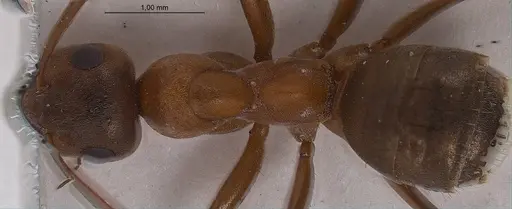
Literature
Loading distribution map...Loading products...