
Formica foreliana
- Sci. Name
- Formica foreliana
- Tribe
- Formicini
- Subfamily
- Formicinae
- Author
- Wheeler, 1913
- Distribution
- Found in 2 countries
Introduction
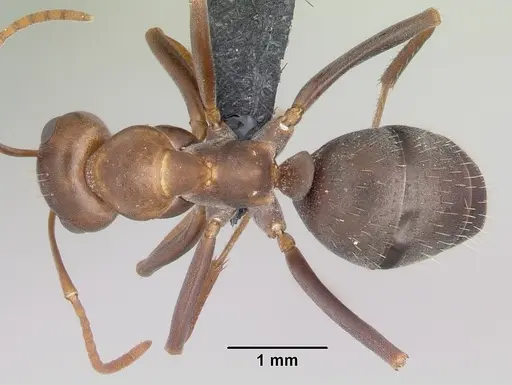
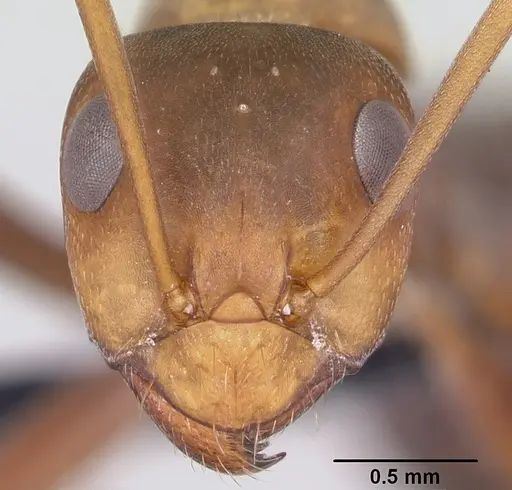
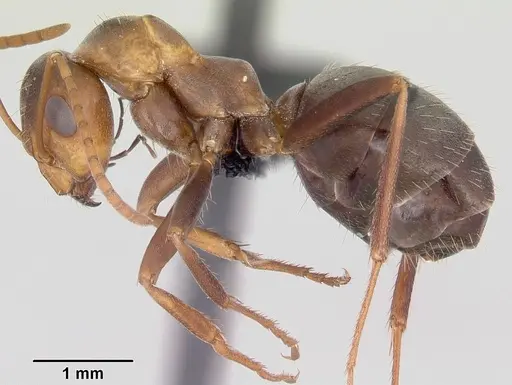
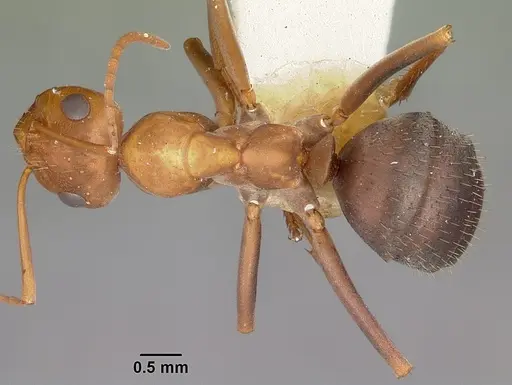
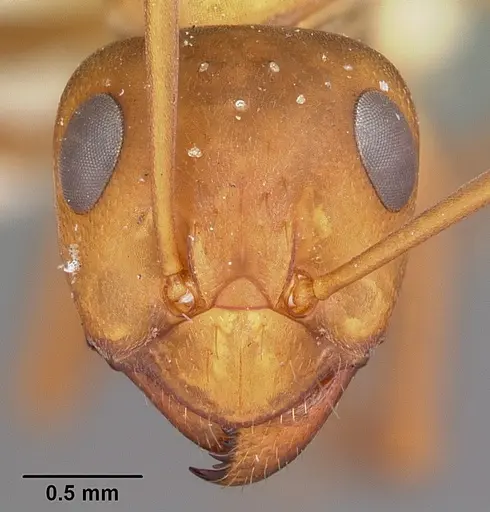
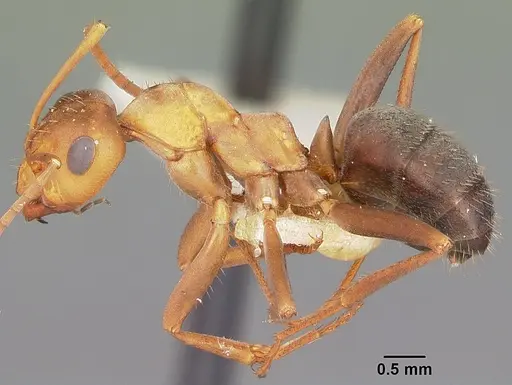
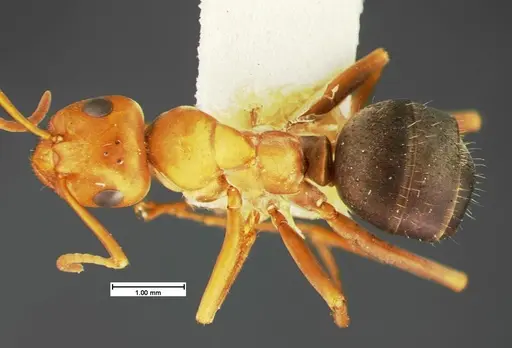
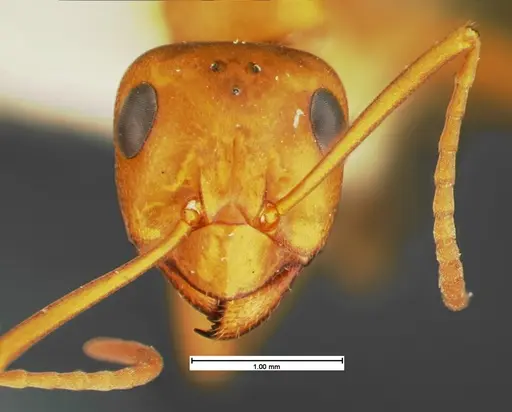
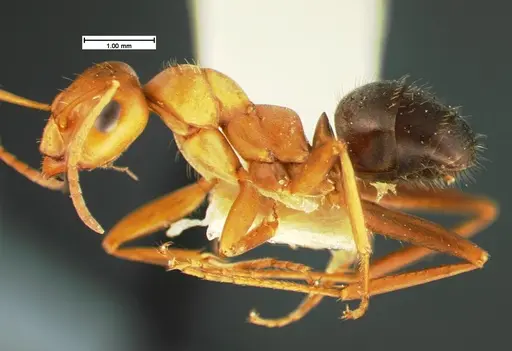
Formica foreliana is a North American ant from the fusca group. Workers measure 4-6 mm and are bicolored: head and thorax mostly red, gaster black. They have abundant long, erect hairs (24–43 on the first abdominal segment) and very long maxillary palpi. The species resembles Formica rubicunda but differs in its projecting clypeus and slender antennae . It lives in mountainous areas of the southwestern U.S. and Mexico, at elevations between 1370 and 1760 m . Very little else is known about its biology.
Quick Summary
- Difficulty: Medium
- Origin & Habitat: Mountainous regions of the southwestern United States (Arizona, Utah) and Mexico, at elevations between 1370 and 1760 m [1][2].
- Colony Type: Unknown – no published data on queen number or social structure.
- Size & Growth:
- Queen: ~7–9 mm (inferred from related Formica fusca group species) [1]
- Worker: 4–6 mm [1]
- Colony: Unknown – probably several hundred workers based on related fusca group species
- Growth: Moderate (inferred from related Formica)
- Development: Estimated 6–10 weeks at typical room temperature (based on related Formica species – no direct data for F. foreliana) (Development time is only an estimate, actual timing may vary with temperature.)
- Antkeeping:
- Temperature: Keep at 20–24 °C with a slight gradient. Research on related Formica shows temperature affects worker morphology, so stable conditions are beneficial [3].
- Humidity: Moderate humidity – provide a test‑tube water reservoir or similar. These are not moisture‑dependent ants.
- Diapause: Presumed yes – as a temperate mountain species, a winter rest period of 4–6 weeks at 5–10 °C is likely necessary for long‑term colony health.
- Nesting: Y‑tong (AAC) or plaster nests work well. In nature they probably nest in soil or under stones, common for the fusca group.
- Behavior: Workers are active foragers, diurnal, and not aggressive toward humans. They lack a stinger but can spray formic acid as a defense. Standard escape barriers are sufficient.
- Common Issues: limited published care information means you may need to experiment with conditions., temperature management matters – avoid extremes, as worker morphology adapts to thermal conditions., skipping winter hibernation may harm the colony over time., wild‑caught colonies can carry parasites or diseases – quarantine new colonies., moderate growth rate, avoid overfeeding to prevent mold.
Housing and Nest Setup
You can keep Formica foreliana in a standard setup. A Y‑tong (AAC) or plaster nest works well, chamber sizes for 4–6 mm ants are fine. Connect a test‑tube water reservoir to provide humidity. Use a small outworld for foraging. Escape prevention is moderate – standard barrier methods (e.g., fluon) are enough.
Feeding and Diet
Like other Formica, F. foreliana hunts small insects. Offer fruit flies, pinhead crickets, or mealworms 2–3 times per week. Provide a constant sugar source (honey water or sugar water). Remove uneaten prey after 24–48 hours to prevent mold. Young colonies may prefer very small prey.
Temperature and Seasonal Care
Maintain nest temperatures around 20–24 °C. Research on related Formica species shows that warmer conditions can lead to relatively longer worker antennae, suggesting sensitivity to temperature [3]. During winter (roughly November–February), provide a diapause period at 5–10 °C for 4–6 weeks. This mimics their natural mountain habitat and supports colony health.
Colony Founding
Founding behavior is unconfirmed for F. foreliana. Based on typical Formica patterns, queens are likely claustral – they seal themselves in a chamber and raise the first workers from stored reserves. Keep founding queens undisturbed in a warm, dark place until the first workers appear.
Behavior and Defense
Workers are active, diurnal foragers. They are not aggressive to humans but will defend the nest if disturbed. As a formicine, they lack a stinger and instead spray formic acid. This is usually harmless to humans but can be irritating. They recruit nestmates to food sources using chemical signals.
Frequently Asked Questions
How long does it take for Formica foreliana to produce first workers?
No direct data. Based on related Formica species, expect first workers about 6–10 weeks after the queen lays eggs, depending on temperature.
What do Formica foreliana eat?
They hunt small insects (fruit flies, crickets, mealworms) and also accept sugary foods like honey water or sugar water.
Do Formica foreliana need hibernation?
Yes, as a temperate mountain species, a winter diapause of 4–6 weeks at 5–10 °C is recommended. Skipping it may harm colony health over time.
How big do Formica foreliana colonies get?
Colony size is not documented, but related fusca group species often reach several hundred workers. Growth is moderate.
Can I keep multiple Formica foreliana queens together?
This is not recommended. Although colony structure is unstudied, most Formica are monogyne. Combining unrelated queens usually leads to fighting.
What is the best nest type for Formica foreliana?
Y‑tong (AAC) or plaster formicariums work well. Ensure the nest has a water reservoir for humidity.
Are Formica foreliana good for beginners?
They are rated medium difficulty. The limited available care information means you may need to adapt conditions, but their moderate size and typical Formica requirements make them manageable for intermediate keepers.
What temperature should I keep Formica foreliana at?
Keep nest temperatures around 20–24 °C. Room temperature in this range is suitable. Provide a slight gradient so ants can choose their preferred zone.
Where is Formica foreliana found in the wild?
It lives in mountainous regions of the southwestern United States (Huachuca Mountains, Arizona, Uinta Mountains, Utah) and Mexico, at elevations between 1370 and 1760 m [1][2].
Report an Issue
The current care sheet is based fully on literature. See inconsistencies, or something that's incorrect? Please , it will be resolved after review from an admin. Contributing to the blogs tab also helps providing information, to make us be able to further improve the caresheets. Thank you for your support!
References

This caresheet is licensed under CC BY-SA 4.0 .
Community Blogs
Literature
Loading distribution map...Loading products...