
Eurhopalothrix pilulifera
- Sci. Name
- Eurhopalothrix pilulifera
- Tribe
- Attini
- Subfamily
- Myrmicinae
- Author
- Brown & Kempf, 1960
- Distribution
- Found in 5 countries
Introduction
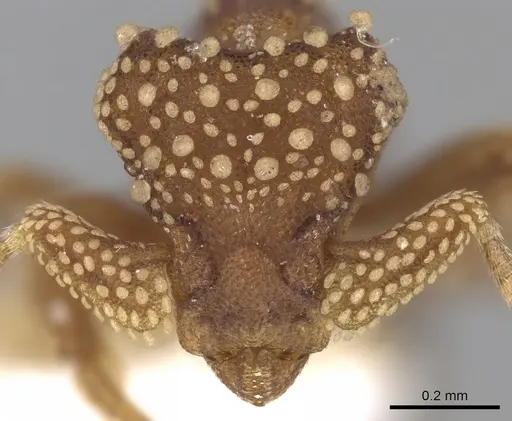
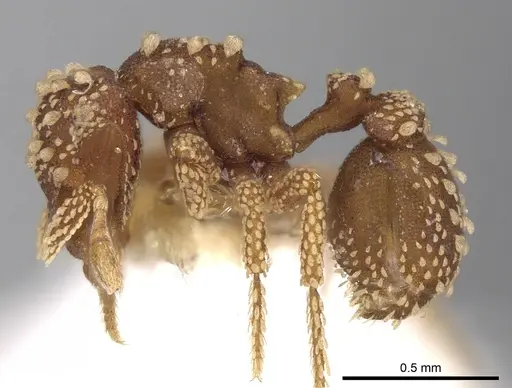
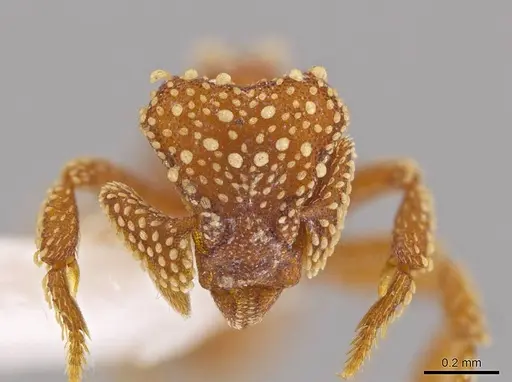
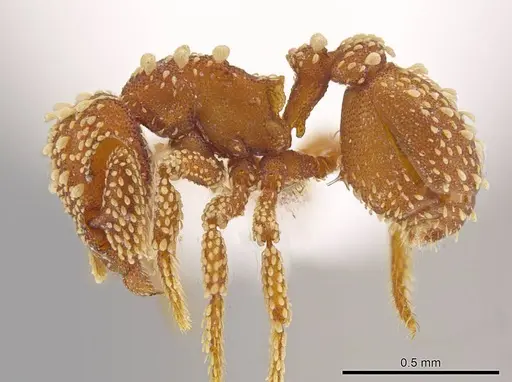
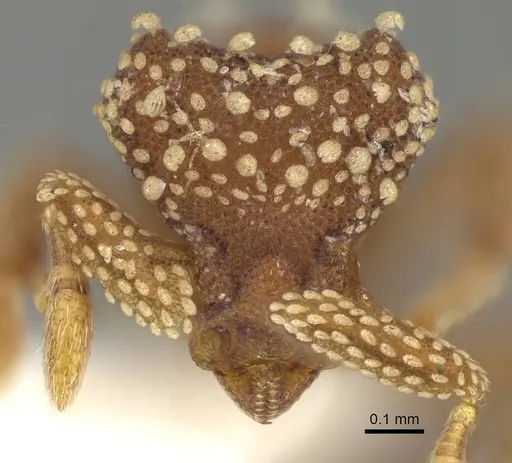
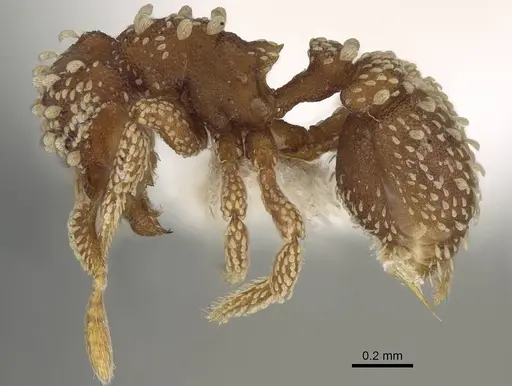
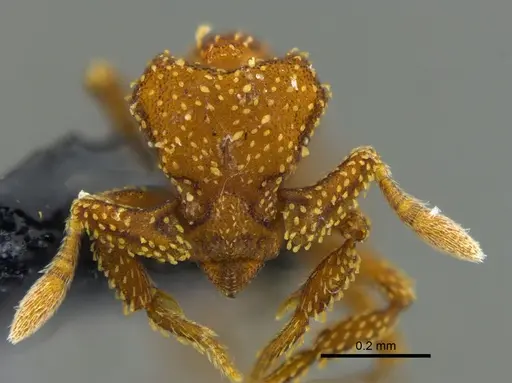
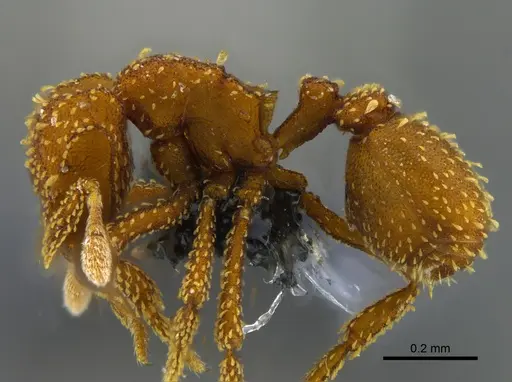
Eurhopalothrix pilulifera is a tiny ant species found across Central America and northern South America, from Mexico through Costa Rica to Brazil, Colombia, Ecuador, Peru, and Venezuela . Workers are approximately 2mm in total length - about the size of a grain of rice - making them among the smallest ants in the region . They are bright orange in color and covered with distinctive pompon-like setae (rounded, fuzzy hairs). This species is unique among Eurhopalothrix ants because the setae on the front edge of the antenna scape lie flat against the surface rather than projecting outward - a key identifying feature . They live in tropical forest floor litter and rotting wood, where they hunt tiny prey [AntWiki].
Quick Summary
- Difficulty: Expert
- Origin & Habitat: Tropical forests from Mexico to Brazil. Found in dry forest and second-growth wet forest habitats, specifically in forest floor litter and rotting wood [4][3][1].
- Colony Type: Colony structure is unconfirmed. No documented ergatoid (wingless replacement queen) presence has been reported for this species.
- Size & Growth:
- Queen: size data unavailable, no direct measurements exist in literature
- Worker: approximately 2mm total length, inferred from genus patterns for tiny leaf-litter Myrmicinae [3]
- Colony: Unknown, only known from scattered specimens in scientific collections
- Growth: Unknown, likely slow based on tiny worker size
- Development: Unknown, no direct development data exists for this species (No published development data available for this species.)
- Antkeeping:
- Temperature: Keep at 24-28°C, mimicking warm tropical forest floor conditions. Avoid temperatures below 20°C.
- Humidity: High humidity is essential. These ants live in leaf litter where it stays damp. Keep nest substrate consistently moist but not waterlogged.
- Diapause: No, this is a tropical species that does not hibernate. Maintain warm conditions year-round [4].
- Nesting: In nature they live in rotting wood and leaf litter. In captivity, a small test tube setup or very small chambers scaled to their tiny size works best. Keep the nest material moist.
- Behavior: These ants are extremely small and shy. They live and forage in the leaf litter layer, likely hunting tiny prey like springtails and micro-arthropods. Their tiny size makes them excellent escape artists, they can squeeze through gaps invisible to the human eye. They possess a stinger but due to their minute size, any sting would be negligible [3].
- Common Issues: escape prevention is critical, their tiny size means they can escape through the smallest gaps, high humidity requirements can lead to mold if ventilation is poor, very small colony sizes mean each individual is precious, difficulty finding appropriate prey, they need tiny live prey like springtails, wild-caught colonies are extremely rare since they're seldom collected, this species is rarely available in the antkeeping hobby
Why This Species Is Challenging
Eurhopalothrix pilulifera is not a beginner species. It's one of the most challenging ants to keep because of its extreme rarity in the hobby and its tiny size. Workers are only about 2mm long. This creates several problems: standard test tube setups may feel like spacious mansions to them, finding appropriately sized prey is difficult, and escape prevention becomes nearly impossible with normal barriers. Most antkeepers will never encounter this species for sale, as they're rarely collected and even more rarely kept in captivity. If you do obtain a colony, expect a steep learning curve. [3][4]
Housing and Escape Prevention
Housing these tiny ants requires thinking small. Standard test tubes work but should have very small water reservoirs to prevent flooding. If using nests, you need chambers scaled to 2mm ants, essentially what you'd use for Wasmannia or similar tiny species. The critical issue is escape prevention. These ants can squeeze through gaps that seem impossible. You need fine mesh barriers with holes smaller than 0.5mm, and you must check all connections, lid seams, and any potential gaps. Even with excellent barriers, expect escape attempts.
Feeding
Based on related leaf-litter ant species, E. pilulifera is likely a predator of tiny arthropods. They probably hunt springtails, tiny mites, and other micro-fauna living in forest floor litter. In captivity, you should offer live springtails as a primary food source. Fruit fly pupae may also be accepted. Sugar sources are unlikely to be important, these ants are predators, not honeydew feeders. Feed small amounts of live prey frequently, removing any uneaten prey after 24 hours to prevent mold.
Temperature and Humidity
As a tropical species from Central and South American forests, E. pilulifera needs warm, humid conditions. Keep temperatures in the 24-28°C range. Humidity should be high. The nest substrate should feel damp to the touch. However, you need to balance this with adequate ventilation to prevent mold. A common approach is to keep the nest moist while ensuring some airflow. Avoid temperature drops below 20°C. [4]
Colony Expectations
Realistic expectations are crucial with this species. Based on related Eurhopalothrix species and the tiny worker size, colonies likely remain small. Growth will be slow. The founding stage may take many months before the first workers appear. Queen lifespan is unknown but likely several years. Because colonies stay small, each individual is precious. [3]
Where They Live in the Wild
In the wild, E. pilulifera lives in tropical forests from Mexico to Brazil. They are found in both dry forests and wet second-growth forests. These ants don't nest in the open ground, instead, they live in the forest floor layer: in rotting wood, under fallen leaves, and in the top few centimeters of leaf litter [4]. This is the most humid, stable layer of the forest, it never dries out and stays warm year-round. The ants forage here too, hunting tiny prey among the decomposing material. This explains their pale orange color, they live in darkness and don't need dark pigmentation that protects surface-dwelling ants from UV light.
Frequently Asked Questions
How long does it take for Eurhopalothrix pilulifera to have first workers?
The exact timeline is unknown. No published development data exists for this species. Expect a slow development process typical of small tropical Myrmicinae.
What do Eurhopalothrix pilulifera ants eat?
They are predators that hunt tiny arthropods. Feed live springtails as a primary food source. Tiny fruit flies may also be accepted. Sugar water is unlikely to be important for this species. All food items must be very small, roughly the size of the ants themselves or smaller.
Are Eurhopalothrix pilulifera ants good for beginners?
No. This is an expert-level species due to its extreme tiny size, high humidity requirements, and the difficulty of finding appropriately sized prey. Most antkeepers will never even see this species available for sale.
How big do Eurhopalothrix pilulifera colonies get?
Colony size is unknown. Based on related species patterns, colonies likely remain small, probably under 100 workers at maturity. These are not colony-sized ants that produce hundreds or thousands of workers.
What temperature do Eurhopalothrix pilulifera ants need?
Keep them warm at 24-28°C. This is a tropical species that does not tolerate cool temperatures. Avoid anything below 20°C.
Can I keep multiple Eurhopalothrix pilulifera queens together?
This has not been documented. The colony structure of this species is unknown. Based on related species, single-queen colonies are most likely.
Why are Eurhopalothrix pilulifera ants so hard to find?
They are leaf-litter ants that live in the forest floor layer and are extremely small, only about 2mm. They don't nest in obvious locations and are rarely collected. Most records come from scientific sampling of leaf litter, not from antkeepers.
Do Eurhopalothrix pilulifera ants need hibernation?
No. This is a tropical species from Central and South America. They do not hibernate and need warm conditions year-round.
What is the best nest type for Eurhopalothrix pilulifera?
Small test tubes with appropriately sized water reservoirs work well. If using nests, you need very small chambers scaled to their 2mm size. The nest material must stay moist. Avoid large, open spaces that would feel cavernous to these tiny ants.
Report an Issue
The current care sheet is based fully on literature. See inconsistencies, or something that's incorrect? Please , it will be resolved after review from an admin. Contributing to the blogs tab also helps providing information, to make us be able to further improve the caresheets. Thank you for your support!
References

This caresheet is licensed under CC BY-SA 4.0 .
Community Blogs
CASENT0280765
View on AntWeb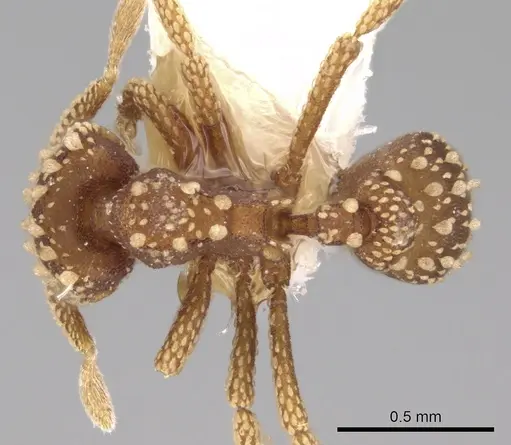
CASENT0618717
View on AntWeb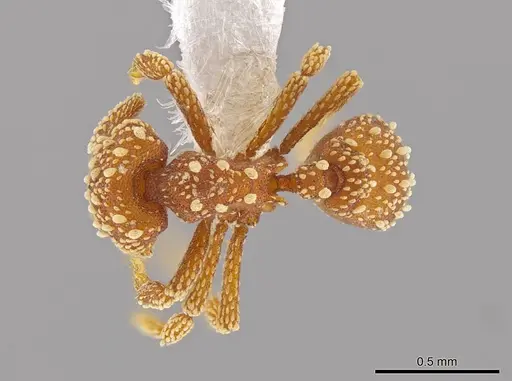
CASENT0636247
View on AntWeb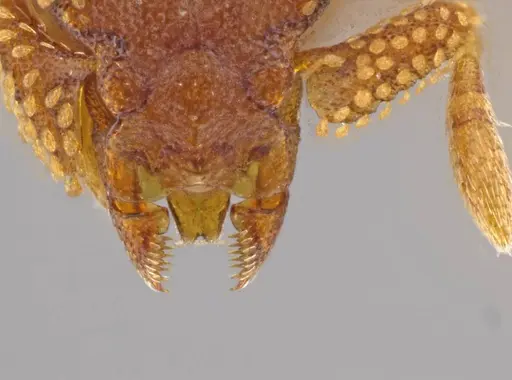
CASENT0914902
View on AntWeb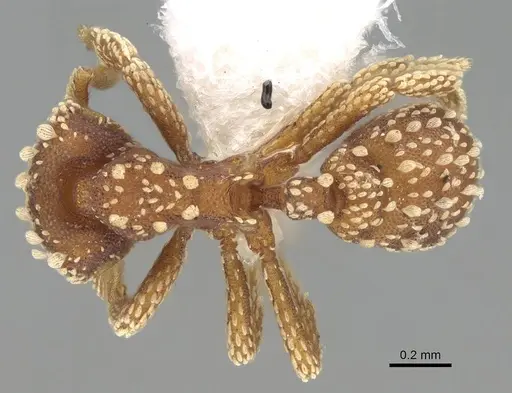
CBUMAGENT41925
View on AntWeb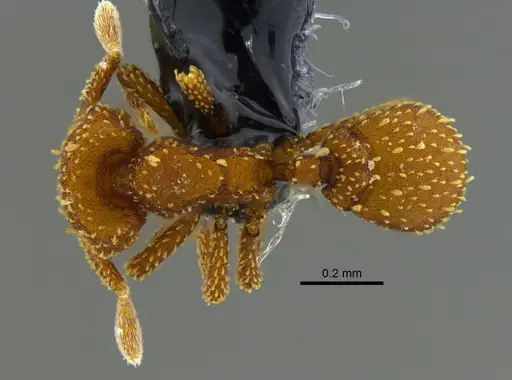
Literature
Loading distribution map...Loading products...